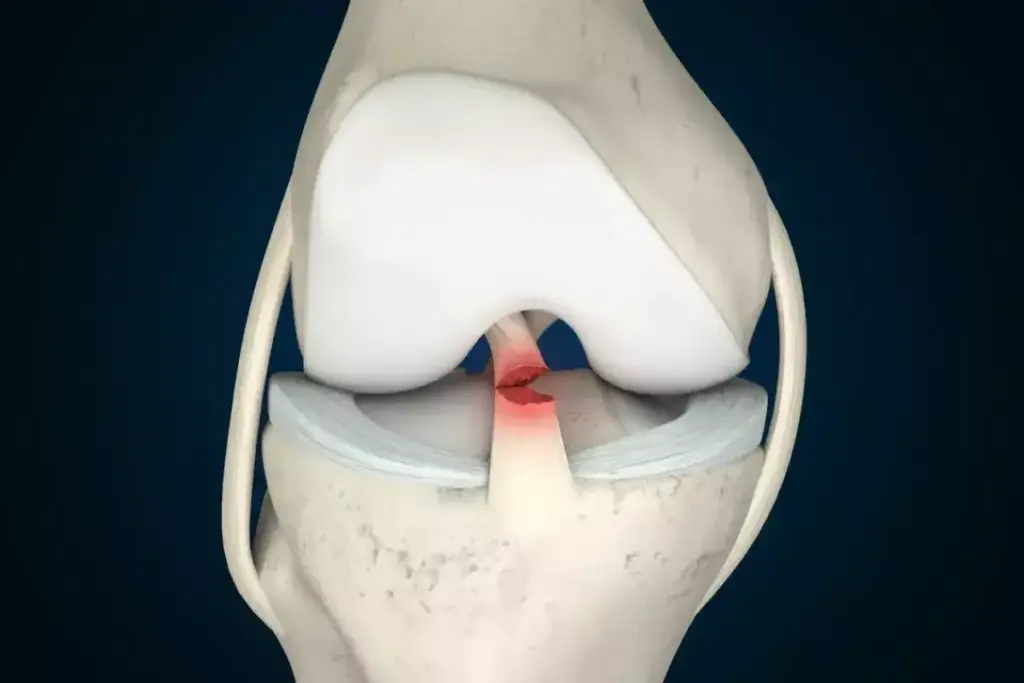
Anterior Cruciate Ligament (ACL) injuries are common in athletes and those who have knee trauma. Knowing what a torn ACL looks like on an MRI scan is key for correct diagnosis and treatment. MRI is the top choice for spotting ACL injuries because it shows soft tissue details well.
The American Academy of Orthopaedic Surgeons (AAOS) says 100,000 to 200,000 ACL injuries happen each year in the U.S. Many need surgery to heal right. A torn ACL looks very different on MRI scans than a healthy one. A healthy ACL looks like a dark, clean line. But a torn ACL shows breaks or gaps in its fibers.
Key Takeaways
- ACL injuries are common among athletes and individuals with knee trauma.
- MRI is the gold standard for diagnosing ACL injuries.
- A torn ACL appears differently on MRI compared to a healthy ACL.
- Understanding MRI images is key for accurate diagnosis and treatment.
- The AAOS reports 100,000 to 200,000 ACL injuries annually in the U.S.
Characteristics of MRI Normal ACL Appearance

The ACL looks different on MRI, which helps spot problems. Knowing what a normal ACL looks like is key to diagnosing injuries.
Structure and Function of the Anterior Cruciate Ligament
The ACL keeps the knee stable. It stops the tibia from moving too far forward and controls rotation. It has two parts: the anteromedial and posterolateral bundles.
The ACL connects the femur and tibia, crossing the knee. It keeps the knee stable during activities like running and jumping.
Normal Signal Intensity and Orientation on MRI
A normal ACL looks like a dark band on MRI. It has a striated look because of its fibers. It’s low in signal on T1 and T2 images.
A healthy ACL looks uniform and dark on MRI. A study in the Annals of Sports Medicine and Research shows MRI’s importance in ACL diagnosis.
“MRI has become an essential tool for evaluating knee injuries, including ACL and other soft tissues.”
Anteromedial and Posterolateral Bundle Visualization
The ACL’s bundles are seen on MRI, important for injury assessment. The anteromedial bundle is tight in flexion, and the posterolateral in extension.
| Characteristic | Normal ACL | Injured ACL |
| Signal Intensity | Low on T1 and T2-weighted images | High on T2-weighted images |
| Orientation | Parallel to intercondylar roof | Disrupted or abnormal |
| Bundle Integrity | Intact anteromedial and posterolateral bundles | Partial or complete disruption |
In conclusion, knowing the ACL’s normal MRI look is key for diagnosing injuries. Recognizing its features helps doctors accurately diagnose and treat ACL problems.
Diagnostic Features of Torn ACL on MRI
Knowing what a torn ACL looks like on an MRI is key for correct diagnosis and treatment. When we look at an ACL injury on MRI, we see several important signs of a tear.
Complete ACL Tear Imaging Characteristics
A complete ACL tear shows the ligament fibers are broken. On MRI, this looks like a complete break in the ACL’s normal signal. You might also see the ACL looking wavy or abnormal.
The empty notch sign is another clue. It means fluid has filled the intercondylar notch where the ACL should be.
Complete tears also show disruption of the normal dark signal on T1-weighted images. On T2-weighted images, you’ll see increased signal intensity in the ligament. This is because of edema and hemorrhage.
Partial ACL Tear Appearance and Challenges
Partial ACL tears are harder to diagnose. They show focal increased signal but some fibers are left intact. On MRI, you might see a thinned or attenuated ACL with some fibers staying together.
Spotting partial tears needs careful checking. The presence of some intact fibers can make the injury less clear. T2-weighted images are very helpful here, as they show the injury areas well.
T2-Weighted Image Signal Changes in Injured ACL
T2-weighted images are key for looking at ACL injuries. An injured ACL usually has increased signal intensity from edema and hemorrhage. This shows the ligament’s microstructure is damaged.
These images help us clearly see how bad the injury is. This is vital for figuring out the right treatment. By looking at these signal changes, we can tell if it’s a complete or partial tear.
Secondary MRI Signs Associated with ACL Injuries
When looking at ACL injuries on MRI, we find important secondary signs. These signs help when the main ACL tear diagnosis is hard or when we need to see how bad other injuries are.
Characteristic Bone Bruising Patterns
Bone bruising is seen in about 70% of ACL injuries. It shows up on the front of the lateral femoral condyle and the back of the lateral tibial plateau. This happens because of bone contusions during the injury, often when the tibia moves forward compared to the femur.
Bone bruising shows how severe the injury is. It can also point to other damage in ligaments or menisci.
Empty Notch Sign and Anterior Tibial Translation
The “empty notch sign” is when the intercondylar notch looks empty on MRI. This is because of the ACL tear. It’s a good secondary sign. Also, seeing the tibia move forward compared to the femur helps confirm the ACL injury.
These signs are key for diagnosing ACL injuries. They also help us understand how much damage there is.
Associated Meniscal and Collateral Ligament Injuries
ACL injuries often come with other knee problems like meniscal tears and collateral ligament damage. MRI can spot these injuries. This is important for making a full treatment plan.
| Associated Injury | Frequency with ACL Tears | Clinical Significance |
| Meniscal Tears | Commonly associated | Affects treatment plan and prognosis |
| Collateral Ligament Damage | Frequently observed | Influences rehabilitation and possible surgery |
| Bone Bruising | Occurs in approximately 70% | Shows injury severity and possible other injuries |
Knowing these secondary signs and related injuries is key for a full MRI assessment of ACL injuries.
Conclusion
Getting an accurate diagnosis for ACL injuries is key to good treatment. We talked about how MRI helps in diagnosing ACL tears. This includes what a normal ACL looks like on MRI and signs of a torn ACL.
When looking at acl mri images, it’s important to know the ACL’s normal look and signs of injury. This includes bone bruises and how the tibia moves forward.
In mri acl checks, it’s critical to tell the difference between a normal ACL and a torn one. A torn ACL shows up as a break or unusual signal on mri normal acl pictures.
Knowing what does an acl tear look like on an mri helps doctors plan better treatments. This can greatly improve recovery and joint health in the long run.
Early diagnosis and the right treatment plan are very important. We stress the role of MRI in finding ACL injuries. We also urge healthcare pros to keep up with MRI tech advancements.
FAQ
What does a normal ACL look like on an MRI?
A normal ACL looks like a dark band on MRI. It has a striated look from its bundles.
How is a torn ACL diagnosed on MRI?
A torn ACL shows up as a broken band on MRI. It looks different in shape and signal. Complete tears have no ligament, while partial tears have some left.
What are the secondary signs associated with ACL injuries on MRI?
Secondary signs include bone bruising in 70% of ACL injuries. The empty notch sign and anterior tibial translation are also seen. Meniscal and collateral ligament injuries often happen too.
What is the importance of MRI in diagnosing ACL injuries?
MRI is key for diagnosing ACL injuries. It shows soft tissue details well. This helps in planning the right treatment.
How do complete and partial ACL tears differ on MRI?
Complete tears show no ligament. Partial tears have some left, making them harder to spot.
What is the characteristic appearance of a torn ACL on T2-weighted MRI images?
A torn ACL changes signal intensity on T2-weighted images. This shows the injury or disruption.
Can MRI detect associated injuries with ACL tears?
Yes, MRI can spot injuries like meniscal and collateral ligament ones. These often happen with ACL tears.
What is bone bruising, and how is it related to ACL injuries?
Bone bruising is a common sign of ACL injuries, seen in 70% of cases. It shows up as signal changes in the bone on MRI.
References
National Center for Biotechnology Information. Evidence-Based Medical Insight. Retrieved from https://pmc.ncbi.nlm.nih.gov/articles/PMC11463185/