
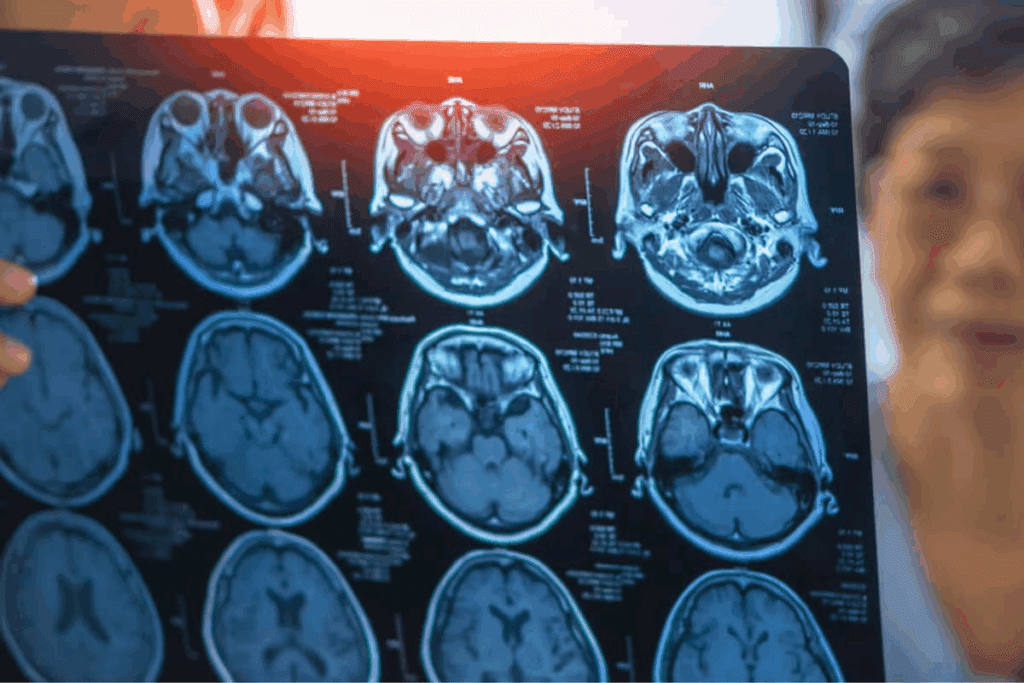
Traumatic brain injuries can have lasting effects. Diagnosing old brain injuries is key for treatment. Approximately 1.7 million people in the United States suffer from traumatic brain injuries each year, making it a big health issue.
MRI technology uses magnetic fields and radio waves to create detailed brain images. It’s a vital tool for spotting brain injuries and conditions. Knowing how MRI works helps us see its role in showing old brain injuries.what does an mri show in the brainWhat Are the Stages of Brain Cancer and Is Stage 2 Brain Tumor Curable?
Key Takeaways
- MRI is a valuable tool for diagnosing brain injuries.
- It can detect old brain injuries and provide insights into the extent of the damage.
- MRI technology uses magnetic fields and radio waves to produce detailed brain images.
- Understanding MRI results is key for proper treatment and care.
- MRI is highly effective in detecting traumatic brain injuries.
Understanding Brain Imaging Technologies
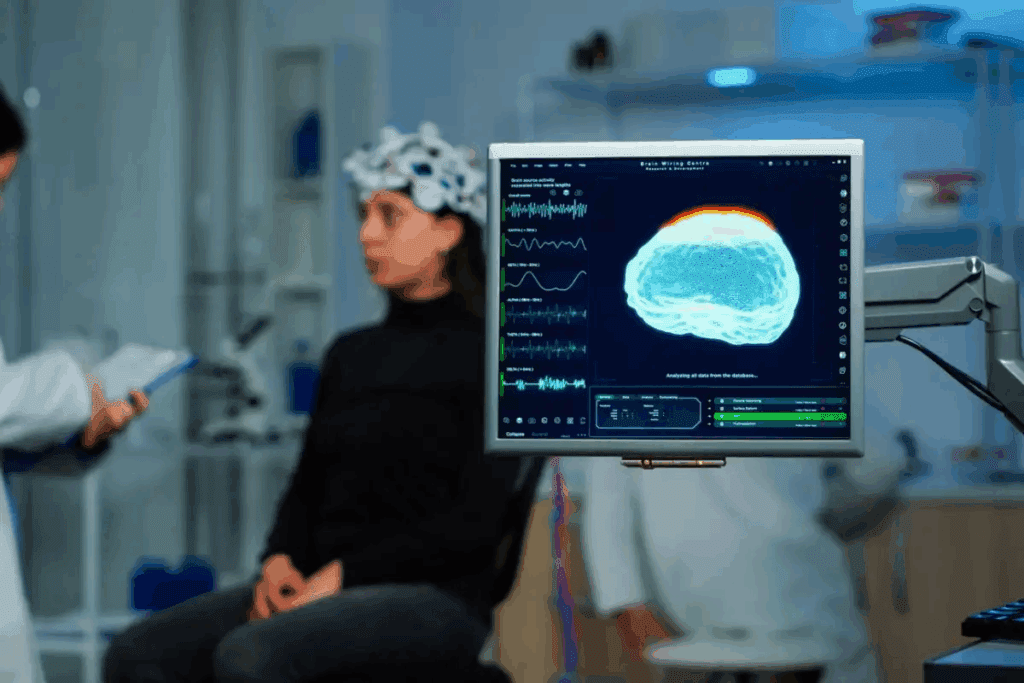
Brain imaging technologies have changed how we diagnose and treat brain injuries. These tools let us see inside the brain, helping doctors make better diagnoses. This has led to better care for people with brain problems.
Common Brain Imaging Methods
There are many ways to image the brain, each with its own benefits and drawbacks. Magnetic Resonance Imaging (MRI) is a safe way to see brain details clearly. It’s great for finding soft tissue injuries. Computed Tomography (CT) scans use X-rays to show brain images quickly. They’re often used in emergencies to spot bleeding or breaks.
Functional MRI (fMRI) shows how the brain works by tracking blood flow. Diffusion Tensor Imaging (DTI) checks the health of brain connections. The right imaging method depends on the patient’s needs and the doctor’s questions.
Development of Neuroimaging Technology
Neuroimaging has grown a lot in recent years. Old methods were risky and invasive. CT scans came in the 1970s, making brain imaging safer. MRI in the 1980s brought even better images.
New technologies keep improving brain imaging. We now have clearer images and faster scans. Techniques like Susceptibility-Weighted Imaging (SWI) and Arterial Spin Labeling (ASL) help diagnose more conditions. This means better care for patients and a better life for them.
How MRI Technology Works
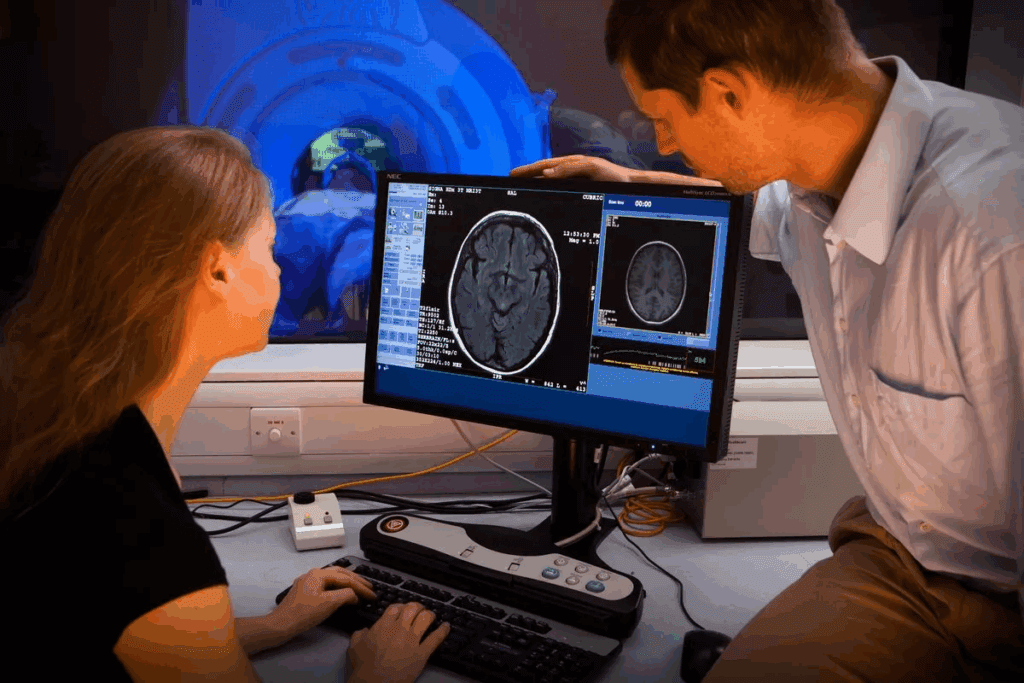
MRI technology uses magnetic fields and hydrogen atoms in the body. It’s a detailed medical imaging method. It combines strong magnetic fields and radio waves to show the body’s internal structures, like the brain.
Basic Principles of Magnetic Resonance Imaging
MRI machines have a strong magnet that aligns hydrogen atoms. Radio waves disturb these atoms, causing them to send signals. The MRI machine catches these signals to create images.
Magnetic field strength is key in MRI. Most clinical MRI machines have a field strength of 1.5 or 3 Tesla. Stronger fields give clearer images but might increase risk of artifacts.
Types of MRI Sequences Used for Brain Imaging
There are different MRI sequences for brain imaging. They highlight various brain anatomy and pathology aspects. The main sequences are:
- T1-weighted images, which show good anatomical detail
- T2-weighted images, which highlight tissue water changes
- FLAIR (Fluid Attenuated Inversion Recovery) sequences, great for finding lesions
- Diffusion-weighted imaging, which tracks water molecule movement
| MRI Sequence | Primary Use in Brain Imaging |
| T1-weighted | Anatomical detail, contrast enhancement |
| T2-weighted | Detecting edema, lesions, and white matter diseases |
| FLAIR | Suppressing fluid signals to detect lesions |
| Diffusion-weighted | Detecting acute strokes, abscesses, and certain tumors |
Knowing these MRI sequences is vital for understanding brain images. It helps in diagnosing conditions, including old brain injuries.
What Does an MRI Show in the Brain?
Healthcare professionals use MRI to understand the brain better. MRI scans show detailed images of the brain’s structures. This helps in diagnosing neurological conditions.
Normal Brain Structures Visible on MRI
An MRI scan shows the brain’s normal parts. This includes the cerebral cortex, white matter, basal ganglia, and ventricles. These are seen clearly, making it easy to evaluate them.
Key Normal Structures:
- Cerebral cortex: The outer layer of the brain that processes sensory information.
- White matter: Made of myelinated nerve fibers, it helps different brain regions talk to each other.
- Basal ganglia: A group of structures that control movement and thinking.
- Ventricles: Fluid-filled spaces that make and move cerebrospinal fluid.
Abnormalities Detectable Through MRI
MRI is great at finding problems like tumors, vascular malformations, and injuries. It also spots signs of neurodegenerative diseases.
| Abnormality | Description |
| Tumors | Abnormal cell growths that can be benign or malignant. |
| Vascular Malformations | Structural abnormalities of blood vessels that can lead to hemorrhage or other complications. |
| Traumatic Injuries | Injuries caused by external forces, such as concussions or skull fractures. |
MRI With Contrast vs. Without Contrast
Using contrast agents in MRI makes some lesions or abnormalities more visible. Contrast-enhanced MRI is best for finding tumors and inflammatory conditions.
Benefits of Contrast:
- Improved detection of tumors and metastases.
- Better visualization of vascular structures and malformations.
- Enhanced assessment of inflammatory and infectious processes.
In conclusion, MRI is a powerful tool for understanding the brain. It shows both normal structures and abnormalities. Its wide range of uses makes it essential for neurological diagnosis.
MRI’s Capabilities in Detecting Old Brain Injuries
MRI technology has changed neurology a lot. It helps find old brain injuries. This is key for diagnosing, treating, and caring for patients.
Timeframe for Injury Detection
How long MRI can spot old brain injuries depends on several things. This includes the injury’s type and how severe it was. Usually, MRI can find injuries that happened months or years ago. Advanced MRI sequences make it easier to see the effects of past traumas.
Studies show that some MRI methods, like susceptibility-weighted imaging, are great at finding microbleeds and other trauma signs.
Signs of Previous Trauma on MRI Scans
MRI scans can show many signs of past trauma. These include:
- Encephalomalacia (softening of brain tissue)
- Gliosis (scarring)
- Hemosiderin deposits (indicative of old hemorrhage)
- Ventricular asymmetry or enlargement
- White matter changes
These signs help understand the extent and location of past injuries.
Factors Affecting Detection Accuracy
Several things can affect how well MRI finds old brain injuries. These include:
- The severity of the initial injury
- The time elapsed after the injury
- The presence of other brain problems
- The type of MRI sequences used
Knowing these factors is key for accurate MRI readings. It helps make better decisions for patient care.
Types of Brain Injuries Visible on MRI
MRI technology has changed neurology by showing different brain injuries. It gives clear views of the brain’s parts. This helps doctors accurately diagnose various injuries.
Traumatic Brain Injuries (TBI)
Traumatic Brain Injuries (TBI) happen when the brain gets hurt from outside forces. MRI helps find out how bad the injury is. TBI can range from mild to severe, affecting thinking and movement.
Contusions and Hematomas
Contusions are brain bruises, and hematomas are blood clots outside blood vessels. MRI can spot these injuries. It’s key for treating them right.
Diffuse Axonal Injuries
Diffuse axonal injuries damage the brain’s axons from rotational forces. MRI spots these changes well. Finding these injuries is vital for helping patients.
CT Scans vs. MRI for Brain Injury Detection
It’s important to know the differences between CT scans and MRI for brain injury detection. Each has its own strengths and is used in different situations.
What CT Scans Can Show That MRIs Cannot
CT scans are great in emergencies because they’re fast and can spot acute hemorrhages, fractures, and foreign bodies. They’re also good at showing bone structures. This makes them a top choice for acute trauma cases.
Key advantages of CT scans include:
- Rapid scanning time, which is critical in emergency situations
- Good for detecting acute hemorrhages and bone fractures
- Wide availability in emergency departments
What MRIs Can Show That CT Scans Cannot
MRI is better for soft tissue contrast, making it perfect for finding subtle brain injuries. It can spot diffuse axonal injuries and small contusions well. MRI also does a better job at finding injuries in the brainstem and posterior fossa than CT scans.
Notable benefits of MRI include:
- Superior soft tissue contrast for detailed brain imaging
- Better detection of subtle brain injuries and abnormalities
- Ability to detect injuries in the brainstem and posterior fossa
Detecting Concussions: MRI vs. CT Capabilities
Imaging methods like MRI and CT scans are key in finding concussions. Concussions are hard to spot because they don’t show up clearly on scans.
Can Concussions Be Seen on Imaging?
It’s tough to find concussions with regular scans. But, MRI has gotten better at showing the small changes in the brain after a concussion. MRI is really good at spotting these changes.
CT scans are used to check for serious injuries quickly. But, they might miss the details of a concussion.
Limitations of Imaging for Mild Traumatic Brain Injuries
Even with MRI and CT scans, finding concussions is hard. Mild traumatic brain injuries often don’t show up on scans. Doctors have to rely on what patients say and how they act.
The small changes from a concussion might not show up right away. Or they might not show up at all if the scan is done too soon or too late.
Before and After Concussion Imaging Comparisons
Looking at scans before and after a concussion can help a lot. Advanced MRI sequences like DTI can show changes in the brain that regular scans can’t.
This helps doctors understand how bad the injury is. It also helps in finding better ways to treat and diagnose concussions.
Brain Bleeds and Hemorrhages: Imaging Detection
Imaging technologies are key in spotting brain bleeds and hemorrhages. This is vital for quick medical help. Accurate diagnosis can greatly improve patient results.
Acute vs. Chronic Hemorrhages on Imaging
Tools like MRI and CT scans help tell acute from chronic hemorrhages apart. Acute hemorrhages show up as very dense on CT scans because of fresh blood. On the other hand, chronic hemorrhages look different as the blood breaks down.
“The look of hemorrhage on scans changes with time,” say doctors. MRI is great for figuring out how old a hemorrhage is.
Can Brain Bleeds Be Missed on Imaging?
Even with imaging, brain bleeds can sometimes go unnoticed. This might happen if the bleed is small or if scans are done too soon or too late. The type of scan and the doctor’s skill also matter.
Follow-up Protocols for Suspected Bleeds
“Follow-up scans are not just to confirm the first diagnosis. They’re also to track the patient’s progress and tweak the treatment plan if needed.”
Advanced MRI Techniques for Old Brain Injury
Advanced MRI techniques help us understand old brain injuries better. They show how injuries change the brain’s structure and function. These methods are key in diagnosing and studying traumatic brain injuries.
Diffusion Tensor Imaging (DTI)
Diffusion Tensor Imaging (DTI) shows white matter tracts in the brain in detail. It’s great for checking if old injuries have damaged neural pathways. DTI tracks water molecule movement to spot tiny injury signs.
Functional MRI (fMRI)
Functional MRI (fMRI) looks at brain function, not just structure. It tracks blood flow and oxygen to see where the brain is active. This helps us understand how old injuries affect brain function.
Susceptibility-Weighted Imaging (SWI)
Susceptibility-Weighted Imaging (SWI) finds blood products in the brain. It’s good for spotting microhemorrhages and other trauma signs that regular MRI can miss. This makes SWI vital for old brain injury checks.
Using DTI, fMRI, and SWI together gives a full picture of old brain injuries. These advanced MRI methods help doctors and researchers understand the lasting effects of brain injuries. This knowledge improves how we diagnose and treat these injuries.
Diagnosing TBI Years Later: Challenges and Solutions
Diagnosing TBI years later is tough because symptoms change over time. Doctors face a big challenge in diagnosing traumatic brain injuries long after they happen. This is because TBI symptoms can be subtle and change based on many factors.
Neuroimaging Markers of Old TBI
Neuroimaging is key in spotting old TBI by finding specific signs of past brain injury. Advanced MRI scans like Diffusion Tensor Imaging (DTI) and Susceptibility-Weighted Imaging (SWI) show changes in the brain that suggest past trauma. These signs include changes in white matter, microbleeds, and other signs of past injury.
DTI shows changes in white matter, giving clues about axonal damage. SWI is great at finding hemosiderin, which is left over from old hemorrhages. These signs help doctors understand how severe the injury was.
Combining Imaging with Clinical Assessment
Neuroimaging gives insights into brain changes after TBI, but it’s also vital to look at the patient’s history and symptoms. Doctors use a detailed medical history, neurological exams, and neuropsychological tests to understand how TBI affects a person. This helps match imaging findings with symptoms and how well the person functions.
By using both imaging and clinical data, doctors can fully understand TBI’s long-term effects. This approach is key to creating effective treatment plans that cover both physical and mental aspects of TBI.
Head Injury Effects 10+ Years Later
Head injuries can have lasting effects on many areas of life. Even years later, people with TBI may face ongoing challenges with memory, mood, and physical health. These can include memory problems, mood issues like depression, and sometimes, neurodegenerative diseases.
It’s important to understand these long-term effects to provide the right care and support. It also highlights the need for more research into TBI’s lasting impacts. This research aims to find better ways to help those affected by TBI.
Frontal Lobe Damage Detection on MRI
MRI scans are key in spotting injuries to the frontal lobe. This area is vital for thinking, solving problems, and moving. Damage here can come from head injuries, strokes, or other issues, greatly affecting a person’s life.
Imaging Characteristics of Frontal Lobe Injuries
On MRI scans, frontal lobe injuries show up in different ways. You might see contusions, which look like bruises on the brain. Or hematomas, which are blood clots outside blood vessels. MRI also spots diffuse axonal injury, where brain axons are damaged, causing thinking and moving problems.
MRI is very good at finding these injuries. It uses T1-weighted and T2-weighted images. T1 images show the brain’s structure well. T2 images are better at showing swelling and brain changes.
Functional Implications of Frontal Damage
Damage to the frontal lobe can change how a person acts, thinks, and moves. The impact depends on where and how badly the injury is.
For example, damage to the prefrontal cortex can mess with making decisions and controlling impulses. Injuries to the primary motor cortex can cause muscle weakness or paralysis. Knowing this helps doctors plan the best treatment.
Case Studies of Frontal Lobe Injury Detection
Many case studies show MRI’s role in finding frontal lobe injuries. A patient in a car accident got an MRI that showed a contusion in the frontal lobe. This helped doctors treat and help the patient recover.
Another case involved a person with stroke symptoms. MRI scans found damage in the frontal lobe, including softening of brain tissue. This matched the person’s symptoms.
Brain Lesions on MRI: Interpretation and Significance
MRI-detected brain lesions can come from injuries, infections, or chronic diseases. This shows the importance of accurate interpretation. These lesions are areas of abnormal brain tissue seen through MRI. They can show up in different ways and point to various neurological issues.
Types of Brain Lesions
Lesions can be grouped by their cause, look, and where they are. Common ones include:
- Traumatic lesions from head injuries
- Infectious lesions from bacteria, viruses, or fungi
- Ischemic lesions from brain blood flow issues
- Demyelinating lesions from conditions like multiple sclerosis
- Neoplastic lesions, which are brain tumors
Each type looks different on MRI, helping doctors diagnose and plan treatment.
Can Brain Lesions Heal or Disappear?
Whether brain lesions can heal or go away depends on their cause. For example:
- Some traumatic lesions might get better over time
- Infectious lesions can get smaller with the right treatment
- Demyelinating lesions can change with the disease’s activity
- Neoplastic lesions usually need treatments like surgery or chemotherapy
Watching how lesions change over time with MRI scans is key. It helps see if treatments are working and if the disease is getting worse.
Differentiating Old Injuries from Other Conditions
To tell old injuries from other conditions on MRI, look at the lesion’s details. Old injuries might show:
- Chronic changes like gliosis or encephalomalacia
- Signs of past bleeding or calcification
- A steady look on follow-up scans
It’s often needed to match MRI findings with clinical information and do more tests to know what the lesions are.
Chronic Traumatic Encephalopathy (CTE): Can MRI Detect It?
CTE, or Chronic Traumatic Encephalopathy, is a brain disease caused by repeated head injuries. Finding CTE with MRI is a topic of research. It’s hard to diagnose CTE because it looks like other brain diseases. The only way to confirm it is after someone has died.
Current Challenges
Finding CTE before someone dies is tough. This is because its symptoms are not clear and MRI can’t pinpoint it. The main issues are:
- It’s hard to tell CTE apart from other brain diseases just by looking at MRI scans.
- We don’t know much about how CTE starts or how it gets worse.
- We need better ways to see CTE on scans.
Advances in Research
Even with these challenges, scientists are making progress:
- Advanced MRI Techniques: New MRI methods like DTI and fMRI might spot CTE changes.
- Biomarker Discovery: Researchers are looking for signs of CTE that can be seen on MRI or other tests.
- Longitudinal Studies: Long studies on people who have had head injuries are helping us understand CTE better.
Comparing CTE to Other Pathologies
CTE is similar to diseases like Alzheimer’s and Parkinson’s but is different. It’s linked to head injuries and has its own brain damage pattern. Being able to tell CTE apart from other diseases is key for the right treatment.
Research and new imaging methods are promising. They might help us find and understand CTE better. This could lead to better ways to diagnose and treat it in the future.
When to Use MRI vs. CT After Head Injury
Choosing between an MRI or CT scan after a head injury depends on the situation. Doctors look at how bad the injury is, the patient’s symptoms, and if detailed images are needed.
Emergency Situations: First-Line Imaging
“The speed and accessibility of CT scans make them an essential tool in the initial assessment of head injuries.”
Follow-Up Imaging Recommendations
For follow-up, the choice between MRI and CT depends on the first results and the patient’s progress. MRI is great for finding small injuries and seeing how much brain damage there is. “MRI gives a closer look at brain injuries, even when CT scans don’t show much.”
- MRI is best for patients with ongoing symptoms or suspected TBI.
- CT scans might be enough for follow-ups if the injury was minor and symptoms have gone away.
Post-Accident Imaging Protocols
After accidents, imaging plans change based on injury severity and hospital rules. Usually, those with serious head injuries or worsening symptoms get CT scans right away. For milder injuries, a wait-and-see approach might be used, with imaging only for concerning symptoms.
| Imaging Modality | Emergency Use | Follow-Up |
| CT Scan | Primary choice for acute injuries | Used if initial injury was severe or if MRI is not available |
| MRI | Limited due to longer acquisition time | Preferred for assessing subtle injuries and follow-up |
In the end, picking MRI or CT after a head injury should be based on careful thought. It’s about looking at each case’s unique details.
Conclusion: The Future of Brain Injury Imaging
The way we diagnose and manage brain injuries is changing fast. This is thanks to new advances in neuroimaging. Magnetic Resonance Imaging (MRI) is now key in spotting and understanding brain damage. It gives us insights we couldn’t get before.
Research is moving forward, and brain injury imaging is getting better. New MRI tech and other imaging methods are on the horizon. These could help us diagnose and treat brain injuries better, leading to better care for patients.
As this field grows, we’ll be able to spot even small brain damage better. Doctors will then be able to give more focused and effective treatments. The use of advanced neuroimaging in clinics will be key in managing brain injuries.
The future of brain damage MRI and other imaging tech looks bright. The medical world is ready to make big steps in treating brain injuries. This will greatly improve the lives of those affected.
FAQ
Can MRI show old brain injuries?
Yes, MRI can spot old brain injuries. It can find signs of past trauma and brain damage.
What does an MRI show in the brain after a concussion?
MRI can reveal various issues after a concussion. It can show signs of traumatic brain injury. But, it might miss mild concussions.
How long after a head injury can MRI detect damage?
MRI can find brain damage years after an injury. This depends on the injury’s severity and other factors.
What is the difference between MRI with contrast and without contrast?
MRI with contrast uses a special agent to make certain issues clearer. MRI without contrast does not use this agent.
Can CT scans detect old brain injuries?
CT scans can spot some old brain injuries. But, MRI is better at finding certain types of brain damage.
What are the advantages of MRI over CT scans for brain injury detection?
MRI is highly effective in detecting traumatic brain injuries.
Can brain bleeds be missed on imaging?
Yes, brain bleeds can be overlooked on imaging. This is true for small bleeds or if imaging is delayed.
What are the advanced MRI techniques used for old brain injury?
Advanced MRI techniques like Diffusion Tensor Imaging (DTI), Functional MRI (fMRI), and Susceptibility-Weighted Imaging (SWI) offer insights into brain structure and function.
Can MRI detect Chronic Traumatic Encephalopathy (CTE)?
MRI has its limits in detecting CTE. Yet, research is ongoing. MRI can help tell CTE apart from other brain issues.
When should MRI be used instead of CT after a head injury?
MRI is often preferred for follow-up after a head injury. This is true if symptoms persist or if the injury’s severity is a concern.
Can brain lesions heal or disappear?
Some brain lesions can heal or vanish over time. This outcome varies based on the lesion’s type and severity.
How can old brain injuries be differentiated from other conditions on MRI?
To tell old brain injuries from other conditions on MRI, it’s essential to carefully analyze the images. The clinical context and other diagnostic info are also key.
References
Centers for Disease Control and Prevention. MRI Detection of Old Traumatic Brain Injury. Retrieved from https://www.cdc.gov/traumaticbraininjury/index.html



 Departments
 Related Videos
 Our Doctors
 News
News