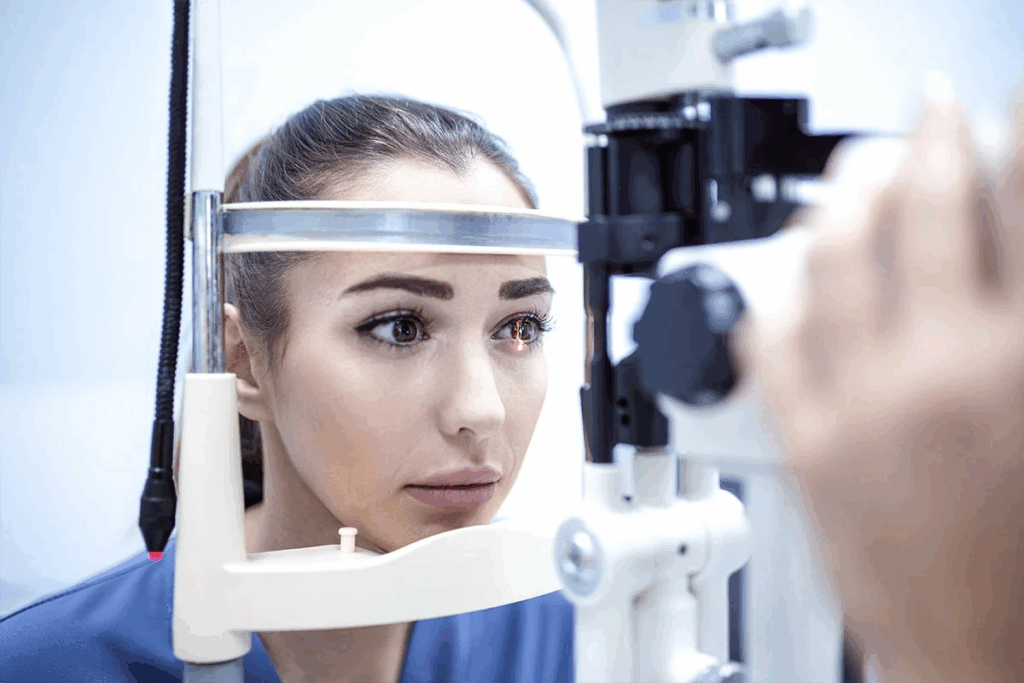
Double vision, also known as diplopia, is when you see two images of the same thing. It can be scary and make it hard to get around. It affects many people every year.
In the U.S., over 800,000 people see eye doctors because of double vision. It can be just a minor problem or a sign of something serious. It really changes how you live your day-to-day life.
At Liv Hospital, we focus on top-notch eye care. We want to help you understand what causes double vision, how to spot it, and how to treat it. Knowing this can really help manage the problem.
Key Takeaways
- Double vision, or diplopia, is a condition where a person sees two images of the same object.
- It affects a significant number of people, with over 800,000 annual visits to eye care specialists in the U.S.
- Diplopia can be a symptom of various conditions, ranging from mild to serious.
- Understanding the causes and treatment options is key to managing double vision well.
- Liv Hospital offers top eye care with standards recognized worldwide.
Understanding Double Vision (Diplopia)

It’s important to know about double vision to help those affected. Double vision, or diplopia, means seeing two images of one thing. It can happen for many reasons, like eye muscle problems or nerve issues.
Definition and Medical Terminology
Diplopia is the medical term for seeing double. It happens when you see two images of the same thing. This can be due to eye, brain, or nerve problems.
Key aspects of diplopia include:
- It can be constant or come and go.
- It might affect one eye or both.
- The double images can be in different directions.
Prevalence and Statistics in the United States
Double vision is common. About 900,000 adults in the U.S. get diagnosed with it each year. It’s more common with age, as people get older.
Age Group | Prevalence of Diplopia |
18-44 years | 1.3% |
45-64 years | 2.7% |
65 years and older | 4.5% |
Impact on Daily Life and Quality of Vision
Double vision can really affect your life. It makes things like reading and driving hard. It can also make you feel frustrated and less independent.
People with double vision face many challenges. These include:
- Difficulty with depth perception.
- Problems with balance and coordination.
- Challenges with daily activities like reading and cooking.
Understanding double vision helps us help those affected. It improves their quality of life.
What Does Double Vision Look Like?

Double vision, or diplopia, looks different based on its cause. It can happen due to eye misalignment, neurological issues, or problems with the cornea or lens.
Visual Appearance and Patient Experience
People with double vision see two images or a ghost image next to the main one. These images can be side by side, up and down, or at an angle. For example, binocular diplopia often shows images shifted horizontally or vertically.
Understanding double vision’s look is key for diagnosis. The way images are placed can tell us a lot about the cause. For instance, if images are side by side, it might point to a problem with the lateral rectus muscle.
Examples and Visual Representations
Let’s look at some examples of double vision:
- Someone might see two trees, one above the other, due to vertical diplopia.
- Oblique double vision can make images appear at an angle, making it hard to focus.
Visual aids can help show what double vision looks like. A diagram of different double image orientations can be very helpful.
Differences Between Ghost Images and Complete Doubles
Double vision can appear as ghost images or complete doubles. Ghost images are fainter, looking like a shadow or a translucent copy of the main image. Complete doubles, by contrast, are two clear images of the same intensity.
Characteristics | Ghost Images | Complete Doubles |
Intensity | Fainter than the primary image | Similar intensity to the primary image |
Appearance | Translucent or shadow-like | Distinct and clear |
Causes | Often related to corneal or lens issues | Can be due to eye misalignment or neurological conditions |
Knowing the difference between ghost images and complete doubles is vital for diagnosis and treatment. Healthcare providers can better understand the cause and plan treatment based on whether a patient sees ghost images or complete doubles.
Types of Double Vision
It’s important to know the different types of double vision. This knowledge helps doctors diagnose and treat the issue. Double vision, or diplopia, can affect one or both eyes and how images are seen.
Binocular Diplopia: When Both Eyes Are Affected
Binocular diplopia happens when both eyes are open and look at the same thing. But, the brain can’t merge the images from each eye. This often comes from eye alignment problems, like strabismus or cranial nerve palsies.
When eyes don’t line up, the brain sees two images. This causes double vision. A study in the Journal of Ophthalmology shows binocular diplopia can be from thyroid eye disease or myasthenia gravis. Treatment might include eye exercises, prism lenses, or surgery.
Monocular Diplopia: When One Eye Is Affected
Monocular diplopia is when you see double with one eye open. It’s usually due to eye problems, like corneal irregularities, cataracts, or lens problems. Unlike binocular diplopia, monocular diplopia stays even with the other eye closed.
An ophthalmology expert says, “Monocular diplopia often means there’s a problem in the eye. A detailed eye check is needed to find the cause.”
“Diagnosing monocular diplopia requires a thorough eye exam to find the underlying cause.”Ophthalmology Expert
Horizontal, Vertical, and Oblique Double Vision
Double vision can also be classified by image orientation. Horizontal double vision shows images side by side. Vertical double vision shows one image on top of the other. Oblique double vision shows images at an angle.
Type of Double Vision | Description |
Horizontal | Images are side by side |
Vertical | One image is on top of the other |
Oblique | Images are at an angle to each other |
Temporary vs. Persistent Double Vision
Double vision can be either short-term or long-lasting. Temporary double vision might happen from fatigue, some medicines, or eye strain. But persistent double vision needs medical help to find and treat the cause.
For example, you might see double after not sleeping well or from too much screen time. But if double vision doesn’t go away, seeing a doctor is key to avoid serious problems.
Common Causes of Binocular Double Vision
Binocular diplopia, or double vision, happens when both eyes can’t focus on the same point. This makes you see two images instead of one. It can make simple tasks hard to do.
Strabismus and Eye Misalignment
Strabismus is a main reason for double vision. It’s when the eyes don’t line up right. This stops them from focusing together, causing double vision. Strabismus can come from muscle problems, eye issues, or injuries.
Cranial Nerve Palsies
Cranial nerve palsies also cause double vision. These nerves control the eye muscles. Damage to these nerves can weaken or paralyze the muscles, leading to double vision. High blood pressure, diabetes, and injuries can harm these nerves.
Neurological Conditions
Neurological issues can also cause double vision. Problems like multiple sclerosis, stroke, and tumors can mess with how the brain handles vision. These conditions can damage the brain’s vision pathways, leading to double vision.
Squint-Related Double Vision
Squint, or strabismus, is when the eyes don’t align properly. This causes double vision because the brain can’t merge the images. Treatment options include glasses, vision therapy, or surgery, depending on the cause and severity.
Knowing why you have double vision is key to treating it. Doctors can suggest treatments like glasses, therapy, or surgery based on the cause. This helps fix the problem effectively.
Cause | Description | Potential Treatment |
Strabismus | Eye misalignment | Glasses, Vision Therapy, Surgery |
Cranial Nerve Palsies | Nerve damage affecting eye muscles | Treating underlying cause, Prism lenses |
Neurological Conditions | Brain or nerve disorders | Treating the underlying neurological condition |
Squint-Related Double Vision | Misalignment causing double vision | Glasses, Vision Therapy, Surgery |
Common Causes of Monocular Double Vision
Double vision in one eye, or monocular double vision, can stem from several eye issues. Unlike binocular double vision, which happens when eyes are not aligned, monocular double vision is due to eye problems.
Corneal Irregularities and Astigmatism
Corneal irregularities, including astigmatism, are common causes of monocular double vision. Astigmatism happens when the cornea or lens is not shaped right, causing blurry vision. This can sometimes lead to seeing double in one eye. Corneal irregularities can be found through a detailed eye exam.
Lens Problems and Cataracts
Lens issues, like cataracts, also cause monocular double vision. Cataracts make the lens cloudy, affecting vision. They can cause double vision or ghosting in one eye. Advanced cataracts might need surgery to fix.
Retinal Issues
Retinal problems, like retinal detachment or macular degeneration, can also lead to double vision. These issues harm the retina, the light-sensitive layer at the back of the eye. Damage to the retina can cause vision distortion. Seeking medical help quickly is important for retinal problems.
Seeing Double in One Eye: Diagnostic Significance
Finding out why you see double in one eye is key to the right treatment. A thorough eye exam can pinpoint the cause, whether it’s corneal issues, lens problems, or retinal damage. Getting an accurate diagnosis is vital for clear vision.
In summary, monocular double vision can come from many eye problems, like corneal issues, lens problems, and retinal damage. Knowing the cause is important for treatment. If you see double in one eye, seeing an eye doctor is a must for diagnosis and treatment.
Situational Double Vision Experiences
Double vision, or diplopia, happens in many situations. It can occur during daily tasks or in certain environments. Knowing when and why it happens is key to understanding it.
Seeing Double Vision at Night
Double vision at night is tough because it’s harder to see. Night driving or moving around in the dark can be dangerous. We’ll look at how things like cataracts or irregular corneas can cause this problem.
Seeing Double Letters When Reading
Double vision while reading can be really uncomfortable. It makes it hard to focus on words. Binocular diplopia can make letters or words appear double, often due to strabismus or convergence insufficiency. We’ll talk about how vision therapy can help fix this.
Double Vision When Looking Far Away
Seeing double when looking at far-off things can point to certain problems. For example, cranial nerve palsies or strabismus can make this worse. Knowing the cause is important for getting the right treatment.
Double Imaging with Digital Screens
Today, we spend a lot of time in front of screens. Seeing double on digital screens can be annoying and tiring for the eyes. We’ll look at how screen time, display settings, and eye health affect this, and offer ways to lessen the strain.
Understanding when and why double vision happens helps us tackle it. Whether it’s at night, while reading, or looking far away, knowing the context is vital for finding the right treatment.
When to Seek Medical Attention for Double Vision
Double vision, or diplopia, can be a sign of a serious problem. It’s important to know when to see a doctor. While sometimes double vision is not a big deal, other times it needs quick medical help.
Emergency Warning Signs
Some symptoms with double vision mean you need to see a doctor fast. These include:
- Severe headache: A sudden, severe headache can be a sign of a life-threatening condition.
- Eye pain: Pain in or around the eyes can indicate a serious issue.
- Difficulty speaking or swallowing: These symptoms can suggest a neurological problem.
- Weakness or numbness in the face or extremities: Such symptoms can be indicative of a stroke or other neurological conditions.
Symptoms That Require Immediate Care
If you have any of these symptoms with double vision, get medical help right away:
- Sudden onset: Double vision that comes on suddenly is more likely to be associated with serious conditions.
- Trauma: If double vision follows a head injury, it’s important to get medical help right away.
- Vision loss: Any loss of vision, even if temporary, is a red flag.
Distinguishing Between Serious and Minor Causes
Not all double vision is a cause for concern, but it can be hard to tell without a doctor. Common minor causes include fatigue, eye strain, or a minor eye infection. But serious causes can involve neurological conditions, such as multiple sclerosis, or issues like a detached retina.
“The key to managing double vision effectively lies in identifying its underlying cause. Prompt medical evaluation can make a significant difference in treatment outcomes.” — Ophthalmology Expert
Knowing when to seek medical attention for double vision is key for timely diagnosis and treatment. If you’re unsure about your symptoms, it’s best to consult a healthcare professional.
Diagnosing the Cause of Double Vision
To fix double vision, a detailed check is needed. This check helps find the real reason behind the symptom.
Initial Eye Examination Procedures
The first step is a detailed eye check. We look at how well you see, how your eyes line up, and move. We also check the cornea, lens, and retina for any problems.
Neurological Tests and Assessments
If the eye check shows a brain issue, we do more tests. These tests check the nerves and look for problems like multiple sclerosis or stroke.
Imaging Studies and Advanced Diagnostics
Scans like MRI or CT are key to finding out what’s wrong. They help spot tumors or injuries that might be causing double vision. We also use other tests to get a clear picture.
Differential Diagnosis: Double Vision vs. Blurred Vision
It’s important to tell double vision apart from blurred vision. Double vision means seeing two of the same thing. Blurred vision means things look fuzzy.
Diagnostic Approach | Description | Purpose |
Initial Eye Examination | Assesses visual acuity, eye alignment, and movement | Identifies eye-related causes of double vision |
Neurological Tests | Evaluates cranial nerve function and neurological conditions | Diagnoses neurological causes of double vision |
Imaging Studies | Includes MRI or CT scans to identify structural abnormalities | Detects tumors, injuries, or other structural issues |
Treatment Options for Double Vision
There are many ways to treat double vision, from glasses to surgery. The right treatment depends on why you have double vision, how bad it is, and your health.
Corrective Lenses and Prisms
Corrective lenses and prisms help with double vision from eye problems or misalignment. Prisms are very good at making images line up, so you see only one thing. You can wear them in glasses or use them temporarily until a better solution is found.
Treatment | Description | Benefit |
Corrective Lenses | Glasses or contact lenses to correct refractive errors | Improves vision clarity |
Prisms | Special lenses that align images seen by each eye | Eliminates double vision |
Eye Drops and Medications for Double Vision
Eye drops or medications might be given for double vision. Eye drops can lessen eye strain. Some medicines can help with symptoms from the cause of double vision.
Vision Therapy Exercises
Vision therapy is a set of exercises to improve eye coordination and muscle strength. It’s a gentle way to help with convergence insufficiency or other eye problems.
Surgical Interventions for Persistent Cases
If double vision doesn’t get better with other treatments, surgery might be needed. Surgery can fix eye alignment, remove cataracts, or solve other problems causing double vision.
Knowing about all the treatments for double vision is key to managing it well. Talking to an eye doctor can help find the best treatment for you.
Managing and Coping with Double Vision
Managing double vision needs a mix of temporary fixes, ways to adapt, and support. Knowing what’s out there and using these methods can really help. It can make life better.
Temporary Solutions and Home Remedies
One quick way to deal with double vision is using temporary fixes. Eye patches are a simple but effective way to block one eye. This helps a lot when you need to see clearly, like when reading or driving.
Changing your environment to cut down on eye strain is another quick fix. Make sure the room is well-lit and screens don’t glare too much. This can make double vision less bad.
Adaptive Techniques for Daily Activities
Making small changes in your daily life can help a lot with double vision. For example, moving furniture to make it easier to get around or using tools like magnifying glasses can really help.
For reading, using a finger or ruler to guide your eyes can help keep focus. Also, doing vision therapy exercises can improve how your eyes work together and strengthen eye muscles.
“The key to managing double vision lies in adapting our daily habits and leveraging available support systems.”
Support Resources and Community
Having support and being part of a community is very important. It gives emotional support and practical tips for dealing with double vision. Online or in-person groups are great for sharing experiences and learning from others.
Also, talking to doctors like ophthalmologists and neurologists is key. They can give advice and treatment plans that fit your specific situation.
Preventing Complications and Worsening Symptoms
Preventing problems means taking care of your health. Regular eye exams and watching for vision changes are important. Also, managing health issues like diabetes or high blood pressure can stop double vision from getting worse.
Knowing when to seek urgent care is also vital. Look out for sudden double vision, severe headaches, or trouble speaking. Catching these signs early can avoid serious issues.
By using temporary fixes, adapting, and getting support, you can manage double vision well. This can greatly improve your life quality.
Conclusion
Understanding double vision is key to managing it well. Double vision, or diplopia, can really affect your daily life and how well you see. We’ve looked into what double vision is, how common it is, and the types of diplopia.
If you’re seeing double, it’s important to see a doctor. Double vision can be a sign of a bigger problem that needs to be fixed. The treatment depends on what’s causing it, like glasses, prisms, therapy, or surgery.
To handle double vision, knowing the medical term and treatment choices is important. Fixing the root cause can help you feel better and live better. Always talk to a doctor for the right help and advice on dealing with double vision.
FAQ
What is double vision, and what is it also known as?
Double vision, also known as diplopia, is when you see two images of the same thing.
What does double vision look like?
It can look like two clear images or a ghost image next to the real one. The images can be in different directions.
What is the difference between binocular and monocular diplopia?
Binocular diplopia happens when both eyes are affected. This is often due to strabismus or nerve problems. Monocular diplopia is in one eye, usually because of eye surface issues or lens problems.
Can double vision be temporary, or is it always persistent?
Double vision can be either short-term or long-lasting, depending on the cause.
What are the common causes of binocular double vision?
Causes include strabismus, nerve problems, and some neurological conditions.
What are the common causes of monocular double vision?
Causes include eye surface problems, lens issues, cataracts, and retinal problems.
Why do I see double vision at night?
Seeing double at night can be due to the pupils getting bigger in the dark. This can make eye problems worse.
How is double vision diagnosed?
Doctors start with eye exams and tests. They might use imaging and other tests to figure out the cause.
What are the treatment options for double vision?
Treatments include glasses, prisms, eye drops, and sometimes surgery. Vision therapy is also an option.
Can double vision be treated with eye drops?
Yes, eye drops can help with double vision, like in cases of convergence insufficiency.
How can I manage and cope with double vision?
You can try temporary fixes and home remedies. There are also daily tips and support groups to help.
When should I seek medical attention for double vision?
See a doctor right away if double vision starts suddenly, is very painful, or if you have other emergency signs.
Why am I seeing double vision in one eye?
Double vision in one eye can be from many things, like eye surface issues or lens problems. A full eye check is needed to find out why.
References
National Center for Biotechnology Information. Evidence-Based Medical Guidance. Retrieved from https://www.ncbi.nlm.nih.gov/books/NBK441905/