
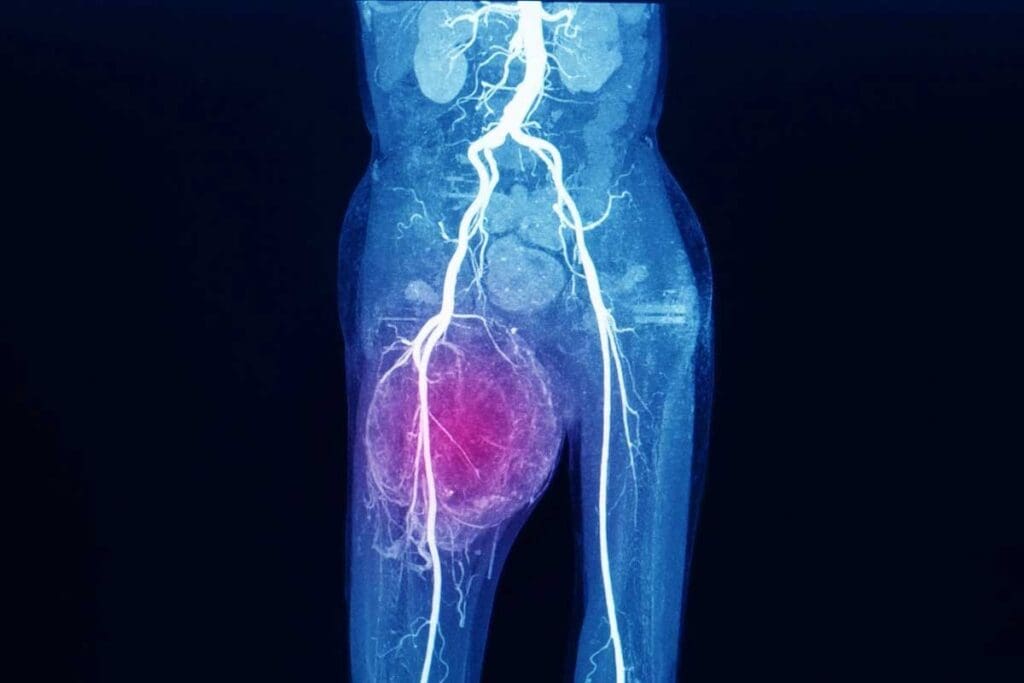
Discover what does ewing sarcoma look like on MRI and X-ray, and key imaging signs for diagnosis. Ewing sarcoma is a rare and aggressive bone cancer. It mainly affects kids and young adults. To diagnose it, doctors use X-rays and MRI.
On X-ray, Ewing sarcoma looks like an ill-defined, destructive lesion. It has a “moth-eaten” look. This unique sign is key for spotting the cancer early.
Knowing how Ewing sarcoma looks on scans is important. It helps doctors diagnose and plan treatment. Liv Hospitals is skilled in finding these signs through radiology.
Key Takeaways
- Ewing sarcoma is a malignant bone tumor common in children and young adults.
- X-ray imaging shows Ewing sarcoma as an ill-defined, destructive lesion.
- MRI provides detailed images that help in assessing the extent of the tumor.
- Accurate diagnosis relies on a combination of imaging techniques and clinical evaluation.
- Liv Hospitals offers specialized care for patients with Ewing sarcoma.
Understanding Ewing Sarcoma: An Overview
Ewing sarcoma is a cancerous tumor known for its aggressive nature. It mainly affects younger people. This type of cancer comes from a specific cell in bones or soft tissues.
Definition and Epidemiology
Ewing sarcoma is a highly malignant tumor that mostly hits teens and young adults. Epidemiologically, it’s a rare disease, more common in males than females. The exact cause is unknown, but genetic mutations are thought to play a role.
The incidence rate of Ewing sarcoma is low, making up a small part of cancers in young people. Studies show it’s more common in people of European descent.
Common Locations and Presentation
Ewing sarcoma can happen in any bone or soft tissue. But it often affects the long bones of the legs and arms. It can also be found in the pelvis, chest wall, and spine.
The presentation of Ewing sarcoma varies. Symptoms include pain, swelling, and trouble moving. Some people may also have fever and weight loss.
Knowing where and how Ewing sarcoma presents is key for early diagnosis and treatment.
The Importance of Imaging in Ewing Sarcoma Diagnosis
Imaging is key in finding Ewing sarcoma, a rare and aggressive bone cancer. It helps doctors see the tumor’s details and how far it has spread. This is vital for knowing how to treat it.
Radiological studies are vital in finding Ewing sarcoma. They let doctors see the tumor’s size, where it is, and if it has spread. This helps decide the best treatment and what the patient’s outcome might be.
Role of Radiological Studies
Studies like X-ray, MRI, and CT scans are essential in diagnosing Ewing sarcoma. Each one gives different information that helps doctors get a clear picture. Together, they make the diagnosis more accurate.
- X-ray is often the first step, giving a basic look at the bone lesion.
- MRI shows soft tissue and marrow involvement, key for staging and planning treatment.
- CT scans help see bone destruction and calcification in the tumor.
Imaging Modalities Used in Diagnosis
Diagnosing Ewing sarcoma involves using different imaging methods. MRI is very helpful for seeing soft tissue and marrow involvement. These are important for staging the disease.
The choice of imaging depends on what the doctor needs to know. For example, X-ray might be used first, but MRI and CT scans are used for more detailed checks.
In summary, imaging is very important in diagnosing and treating Ewing sarcoma. Using different studies together helps doctors make accurate diagnoses and plan the best treatment.
What Does Ewing Sarcoma Look Like on X-Ray?
Ewing sarcoma is a very aggressive bone tumor. It shows specific signs on X-ray that help doctors diagnose it. Knowing these signs is key for doctors to spot Ewing sarcoma and tell it apart from other bone problems.
Classic X-Ray Findings
On X-ray, Ewing sarcoma looks like a destructive lesion. It has a “moth-eaten” appearance, showing areas where the bone is destroyed. This look comes from the tumor’s aggressive growth, which breaks down the bone into many small holes.
The “Moth-Eaten” Appearance Explained
The “moth-eaten” look is due to many small, rounded holes in the bone. This permeative pattern is caused by the tumor spreading into the bone. It leads to both holes and new bone growth.
Periosteal Reactions and “Onion Skin” Layering
A key sign of Ewing sarcoma on X-ray is periosteal reactions. The periosteum, a bone layer, grows new bone in response to the tumor. This creates an “onion skin” appearance, with layers of new bone that look like an onion.
| X-Ray Feature | Description | Significance |
| Moth-eaten appearance | Multiple small lucencies within the bone | Indicates aggressive bone destruction |
| Periosteal reaction | New bone formation by the periosteum | Sign of tumor aggressiveness |
| Onion skin layering | Laminated appearance due to layered new bone | Characteristic of Ewing sarcoma |
These X-ray signs are important for diagnosing Ewing sarcoma. While not unique to Ewing sarcoma, a “moth-eaten” look with “onion skin” layering points strongly to this cancer.
Characteristic Periosteal Reactions in Ewing Sarcoma
Periosteal reactions are a key sign of Ewing sarcoma. They help doctors diagnose the disease. These reactions happen because the tumor grows fast, lifting the periosteum off the bone and making new bone.
Types of Periosteal Reactions
Ewing sarcoma shows different types of periosteal reactions. These include:
- Onion Skin Layering: This looks like layers of an onion, with new bone forming in layers.
- Sunray Appearance: Though more common in osteosarcoma, some Ewing sarcomas can also show sunray patterns.
- Codman’s Triangle: This happens when the tumor lifts the periosteum, creating a triangular shape of new bone at the tumor’s edge.
Significance in Diagnosis
The type and presence of periosteal reactions are very important for diagnosing Ewing sarcoma. They show the tumor’s aggressive growth. This helps doctors tell it apart from other bone problems.
Comparison with Other Bone Lesions
Periosteal reactions are not only seen in Ewing sarcoma. Other bone issues, like osteosarcoma and infections, can also show them. By comparing these reactions, doctors can better diagnose Ewing sarcoma.
| Condition | Typical Periosteal Reaction | Other Characteristics |
| Ewing Sarcoma | Onion skin layering, Codman’s triangle | Aggressive, lytic lesion with soft tissue mass |
| Osteosarcoma | Sunray appearance, Codman’s triangle | Sclerotic or mixed lytic/sclerotic lesion |
| Osteomyelitis | Variable, may include onion skin or solid periostitis | Clinical signs of infection, sequestra, or involucrum |
This comparison shows why looking at the whole picture is key when diagnosing Ewing sarcoma.
MRI Findings in Ewing Sarcoma
MRI is key in diagnosing Ewing sarcoma. It gives clear images of soft tissue and bone marrow. These images help doctors understand the tumor’s size and type, which is important for treatment.
T1-Weighted Image Characteristics
On T1-weighted images, Ewing sarcoma looks like a low to intermediate signal lesion. This helps doctors see where the tumor starts and stops. It also shows how it relates to nearby structures.
T2-Weighted Image Characteristics
T2-weighted images are great for looking at the tumor’s soft tissue part. Ewing sarcoma shows up bright on these images because of its water content. This makes it easier to see how it affects the surrounding tissues.
Contrast Enhancement Patterns
After contrast material is given, Ewing sarcoma shows uneven enhancement. This means different parts of the tumor light up differently. This unevenness can tell doctors about the tumor’s blood flow and any dead areas.
Knowing these MRI signs is vital for diagnosing Ewing sarcoma. It helps doctors tell it apart from other tumors. MRI details help in planning the best treatment for the patient.
Soft Tissue Extension and Marrow Involvement on MRI
MRI is key in checking how far Ewing sarcoma has spread. It looks at soft tissue and marrow involvement. This helps doctors plan treatment accurately.
Evaluating Tumor Size and Boundaries
MRI shows the tumor size and where it starts and ends. It’s great for seeing how much soft tissue is involved. This helps doctors plan surgery and decide on extra treatments.
Detecting Marrow Infiltration
MRI is good at finding marrow infiltration. Ewing sarcoma often gets into the bone marrow. MRI shows how far it has spread. This helps doctors know how aggressive the tumor is and plan treatment.
Importance in Staging and Treatment Planning
Knowing about soft tissue and marrow involvement is key for staging Ewing sarcoma. Accurate staging helps predict how well a patient will do and guides treatment. It also helps plan surgery and decide on extra treatments.
In short, MRI is vital for diagnosing and planning treatment for Ewing sarcoma. It helps doctors understand how far the tumor has spread.
Ewing Sarcoma vs. Osteosarcoma on X-Ray
Ewing sarcoma and osteosarcoma are two types of bone tumors. They look different on X-rays, which helps doctors tell them apart. Knowing these differences is key for the right diagnosis and treatment.
Key Differentiating Features
Doctors look at where the tumor is, how it affects the bone, and its X-ray patterns to tell them apart. Ewing sarcoma has a “moth-eaten” look because it spreads quickly into the bone marrow. On the other hand, osteosarcoma shows up as a mix of bone destruction and new bone growth.
The “Sunburst” vs. “Onion Skin” Appearance
Osteosarcoma is known for its “sunburst” pattern on X-rays. This happens when the tumor grows fast, lifting the periosteum and causing new bone to form in a pattern. Ewing sarcoma, on the other hand, has an “onion skin” look. This is because the periosteum is lifted and new bone forms in layers.
Clinical Implications of Correct Differentiation
Getting the right diagnosis between Ewing sarcoma and osteosarcoma matters a lot. It affects where the biopsy is taken, how much bone is removed, and if chemotherapy is needed before surgery. The right treatment makes a big difference in how well patients do.
Differential Diagnosis in Imaging
Differential diagnosis is key in spotting Ewing sarcoma. Its imaging signs can look like other conditions. Getting the diagnosis right is vital for the right treatment.
Distinguishing from Bone Infections
Ewing sarcoma can look like bone infections on scans. Both show bone damage and a reaction on the bone’s surface. But, there are clues to tell them apart.
- Clinical Presentation: Bone infections often come with fever and high white blood cell counts. Ewing sarcoma usually doesn’t have these symptoms.
- Imaging Characteristics: Both can damage bones, but Ewing sarcoma looks more uniform.
Other Malignancies with Similar Appearance
Other cancers, like osteosarcoma and lymphoma, can look like Ewing sarcoma on scans. Here’s how to tell them apart:
- Osteosarcoma: It shows a “sunburst” pattern on X-rays, unlike Ewing sarcoma’s “onion skin” look.
- Lymphoma: It might look more spread out on X-rays and can affect many bones or spread throughout the body.
Non-Malignant Conditions That Mimic Ewing Sarcoma
Some non-cancerous conditions, like eosinophilic granuloma or osteomyelitis, can look like Ewing sarcoma on scans. This makes them part of the differential diagnosis.
- Eosinophilic Granuloma: It shows up as a clear-out lesion without much bone reaction.
- Osteomyelitis: It can cause bone damage and bone reaction, but usually has signs of infection.
Advanced Imaging Techniques for Ewing Sarcoma
Advanced imaging techniques are key in diagnosing and staging Ewing sarcoma. They give vital info that helps decide treatment and see how far the disease has spread.
Role of CT Scans
CT scans are vital for checking the bone structure and finding calcifications in tumors. They show detailed bone images, important for seeing how much bone is damaged and if there are fractures.
Key benefits of CT scans include:
- High-resolution images of bone structures
- Detection of calcifications within the tumor
- Assessment of bone destruction and pathological fractures
PET Scan Findings
PET scans are great for checking the tumor’s metabolic activity. They spot areas with high glucose uptake, showing active tumor tissue. PET scans also find metastases and track treatment progress.
“PET scans have revolutionized the staging and monitoring of Ewing sarcoma by providing insights into the tumor’s metabolic activity.”
Whole-Body MRI for Metastasis Detection
Whole-body MRI is a new method for checking the tumor’s spread, including metastases. It shows detailed images of the main tumor and any metastatic sites without radiation.
Whole-body MRI is very good for kids because it avoids radiation. Experts say it’s getting more important for Ewing sarcoma staging and follow-up.
Advantages of whole-body MRI include:
- No ionizing radiation, making it safer for pediatric patients
- Comprehensive assessment of the primary tumor and metastases
- Detailed imaging of soft tissues and bone marrow
Correlation Between Imaging Findings and Prognosis
Understanding how imaging findings relate to prognosis is key in managing Ewing sarcoma. These findings give insights into the tumor’s characteristics. This information helps guide treatment and predict outcomes.
Predictive Radiological Features
Imaging studies reveal certain features that predict prognosis in Ewing sarcoma. Tumor size, soft tissue involvement, and metastasis are important. Large tumors with extensive soft tissue involvement and metastasis are generally associated with a poorer prognosis.
The “onion skin” appearance on X-ray and marrow involvement on MRI are also key indicators. PET scans offer more insights into tumor metabolism, helping with prognosis.
Impact of Tumor Size and Extension on Outcomes
Tumor size and extension are critical in predicting Ewing sarcoma outcomes. Larger tumors carry a higher risk of spreading and coming back. This leads to worse outcomes. The extent of tumor spread into soft tissues and bone marrow also affects prognosis.
| Tumor Size | Soft Tissue Extension | Prognosis |
| <5 cm | Minimal | Favorable |
| 5-10 cm | Moderate | Intermediate |
| >10 cm | Extensive | Poor |
The table shows how tumor size, soft tissue extension, and prognosis are linked in Ewing sarcoma. Smaller tumors with minimal soft tissue involvement have a better prognosis. This contrasts with larger tumors and extensive soft tissue involvement.
In conclusion, imaging findings are vital in predicting Ewing sarcoma prognosis. By examining predictive radiological features and tumor size and extension, healthcare providers can tailor treatments effectively.
Imaging for Treatment Planning and Monitoring
In the case of Ewing sarcoma, imaging is key for diagnosis, treatment planning, and monitoring. Effective treatment planning needs accurate imaging to know how far the disease has spread.
Pre-Treatment Staging
Pre-treatment staging is vital for Ewing sarcoma management. MRI and PET scans are used to see the tumor’s size, location, and if it has spread. Accurate staging helps predict the outcome and pick the best treatment.
Evaluating Treatment Response
Imaging is essential during treatment to check how the tumor reacts. MRI helps see if the tumor is getting smaller or changing, helping adjust treatment plans. Monitoring treatment response closely is key for the best results.
Post-Treatment Surveillance
After treatment, imaging is important for watching for any signs of the disease coming back. Regular imaging can spot problems early, allowing for quick action. Long-term surveillance is a big part of managing Ewing sarcoma.
Conclusion: The Critical Role of Imaging in Ewing Sarcoma Management
Imaging is key in finding, checking, and watching Ewing sarcoma. It shows important details about the tumor’s size, spread, and how it reacts to treatment.
Signs like the “moth-eaten” look on X-rays and specific MRI signs help doctors diagnose. CT and PET scans add more details for planning treatment.
Getting Ewing sarcoma right depends a lot on good imaging. Knowing how to read these images helps doctors make better choices for patients.
In conclusion, imaging is essential for Ewing sarcoma care, from start to finish. Its critical role in making treatment plans shows the importance of top-notch imaging and skilled radiologists.
FAQ
What are the typical imaging characteristics of Ewing sarcoma on X-ray?
Ewing sarcoma shows up as a “moth-eaten” look on X-rays. It also has a periosteal reaction, like “onion skin” layers.
How does Ewing sarcoma appear on MRI?
On MRI, Ewing sarcoma looks low on T1 images and high on T2 images. It also shows up with mixed contrast enhancement.
What is the significance of periosteal reactions in Ewing sarcoma diagnosis?
Periosteal reactions, like “onion skin” layers, are key signs of Ewing sarcoma. They help tell it apart from other bone issues.
How does Ewing sarcoma differ from osteosarcoma on X-ray?
Ewing sarcoma has a “moth-eaten” look, while osteosarcoma shows a “sunburst” pattern. This helps in telling them apart.
What is the role of advanced imaging techniques in Ewing sarcoma diagnosis?
Techniques like CT scans, PET scans, and MRI help see how big the tumor is. They also spot metastases and check how well treatment is working.
Can Ewing sarcoma be distinguished from bone infections on imaging?
Yes, Ewing sarcoma can be told apart from bone infections on X-ray and MRI. Its look and symptoms are different.
What is the correlation between imaging findings and prognosis in Ewing sarcoma?
The size and spread of the tumor on imaging can tell us about the patient’s chances of recovery.
How is imaging used in treatment planning and monitoring of Ewing sarcoma?
Imaging helps plan treatment and check how well it’s working. It also watches for any signs of the tumor coming back or spreading.
What does a tumor look like on an MRI?
Tumors show up as abnormal areas on MRI. Their look depends on the type and where it is.
What is the “moth-eaten” appearance on X-ray?
The “moth-eaten” look is a sign of a bone lesion that’s eating away at the bone. It’s often seen in Ewing sarcoma.
Referenced
- Kuleta-Bosak, E., et al. (2010). Suitability of imaging methods (X-ray, CT, MRI) in the diagnostics of Ewing’s sarcoma in children. Contemporary Oncology, 14(1), 62-67. https://pmc.ncbi.nlm.nih.gov/articles/PMC3389856/



 Departments
 Related Videos
 Our Doctors
 News
News