

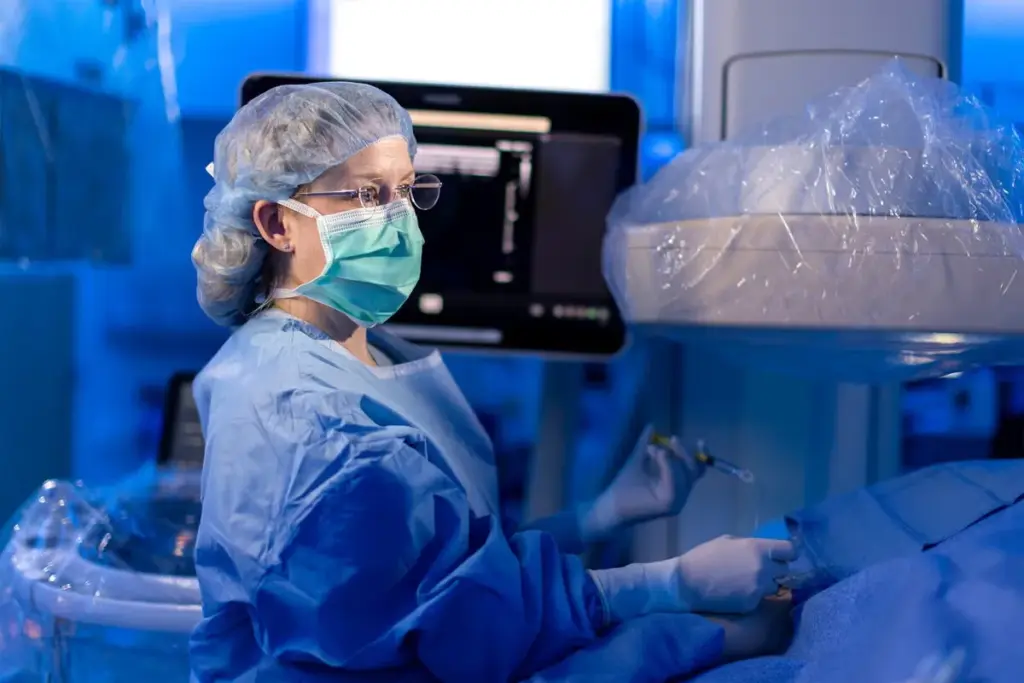
We use interventional radiology techniques to treat many complex medical conditions. These minimally invasive procedures are guided by imaging. This allows for precise treatment with fewer complications.
Medical professionals in interventional radiology get a lot of training. They get certifications like ACLS, PALS, and NRP. These show they know how to do interventional radiology procedures well and care for patients.
The role of interventional radiology uses in medicine is growing. It helps reduce recovery times and improves patient outcomes all over the world.
Key Takeaways
- Interventional radiology treats a wide range of complex medical conditions.
- Minimally invasive procedures reduce complications and recovery times.
- Medical professionals undergo rigorous training and obtain various certifications.
- Interventional radiology improves patient outcomes worldwide.
- Imaging technologies guide precise treatment.
Understanding Interventional Radiology: A Modern Medical Approach
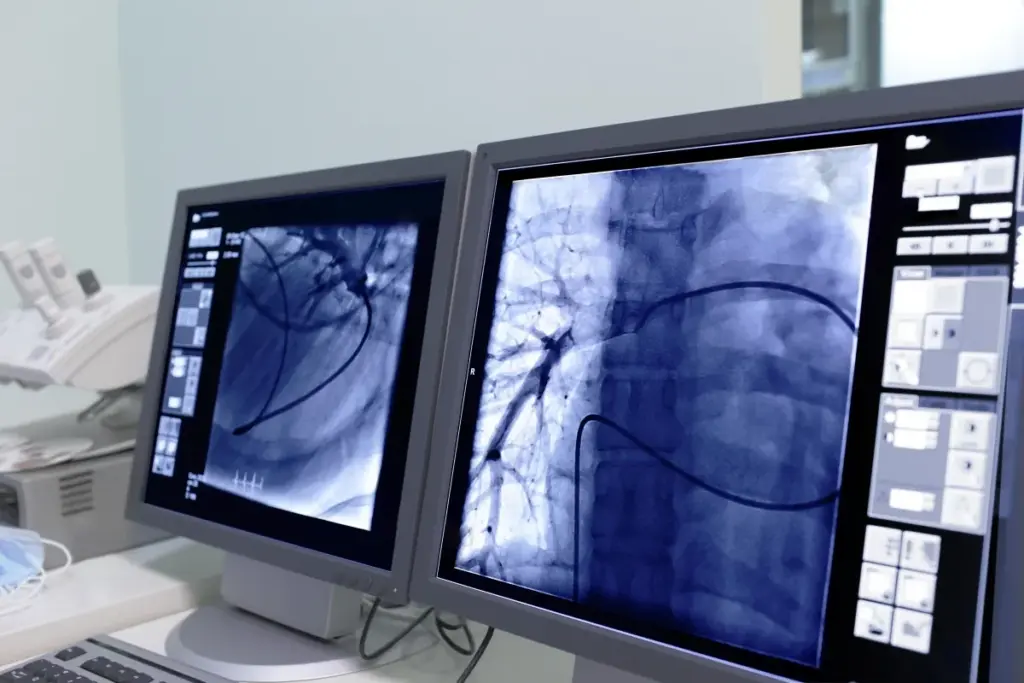
Interventional radiology is a key part of modern medicine. It offers innovative approaches to treating various health issues. Knowing about this field and its benefits is important for better patient care.
Definition and Core Principles
Interventional radiology (IR) uses imaging to guide small procedures. It helps diagnose and treat diseases without big surgeries. IR focuses on being precise, minimally invasive, and using advanced imaging for accurate and effective treatments.
IR has many benefits. It leads to faster recovery, less pain, and fewer complications than traditional surgery. Interventional radiology specialists perform many procedures, like vascular and tumor treatments, using new and effective methods.
Historical Development of Interventional Techniques
Interventional radiology has grown a lot over the years. The first procedures were done in the 1960s. Now, IR is a vital part of healthcare, treating conditions that used to need big surgeries.
Groups like the American Heart Association set important standards for IR. These standards help ensure specialists can give top-notch care.
|
Technique |
Description |
Benefits |
|---|---|---|
|
Angioplasty |
A procedure to widen narrowed or obstructed arteries |
Restores blood flow, reduces symptoms |
|
Embolization |
A technique to block blood flow to a specific area |
Reduces bleeding, treats tumors |
|
Ablation |
A procedure to destroy diseased tissue |
Minimally invasive, preserves healthy tissue |
As we learn more about interventional radiology, it’s clear it’s changing healthcare for the better. IR specialists play a big role in bringing these advanced treatments to patients.
What Does Interventional Radiology Do? Scope and Applications
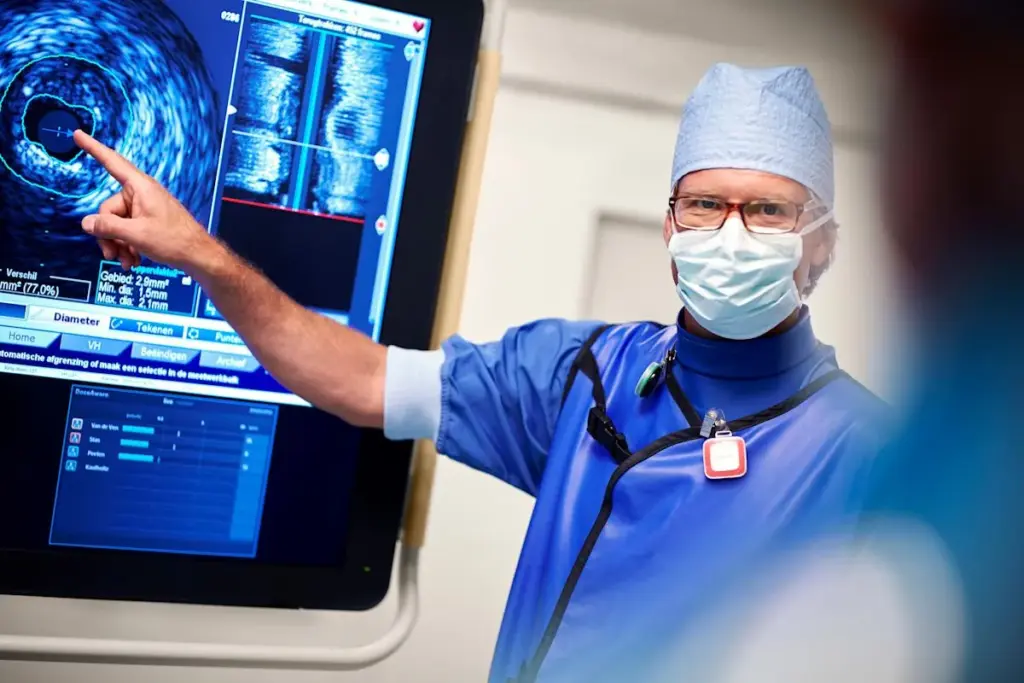
Interventional radiology (IR) has changed how we treat medical conditions. It offers many minimally invasive procedures. These treatments help patients avoid the risks of traditional surgery.
IR covers a wide range of procedures. These include angiography, embolization, and tumor ablation. We use X-ray, ultrasound, and MRI to guide these treatments.
The Range of Minimally Invasive Procedures
IR includes many minimally invasive treatments. Some key ones are:
- Cardiovascular Interventions: We use angioplasty and stenting to fix artery blockages.
- Cancer Treatments: IR offers treatments like tumor ablation and embolization to target cancer.
- Vascular Anomalies and Malformations: IR helps treat vascular malformations, improving patient outcomes.
These treatments are done under image guidance. This ensures precision and reduces risks. Real-time imaging helps us navigate complex anatomy accurately.
Image-Guided Precision in Treatment
IR’s main advantage is its image-guided precision. Advanced imaging technologies allow us to:
- Enhance Accuracy: Real-time imaging helps us target treatment areas precisely.
- Reduce Complications: Minimally invasive procedures have fewer complications than open surgery.
- Improve Recovery Times: Patients recover faster because IR procedures are less invasive.
Certifications like ENLS and TNCC show the diverse applications and specialized training needed. This ensures patients get top-notch care.
In conclusion, interventional radiology is key in modern medicine. It offers many minimally invasive treatments. These are vital for treating cardiovascular diseases, cancer, and more.
Cardiovascular Conditions Treated with Interventional Radiology
IR techniques are now used to treat many cardiovascular conditions. They offer safer options than traditional surgery. Cardiovascular diseases are a big health issue worldwide. Interventional radiology is playing a bigger role in managing these diseases.
We use interventional radiology to treat different cardiovascular conditions. This helps improve patient outcomes with less invasive procedures. The benefits include shorter recovery times and fewer complications than traditional surgery.
Angioplasty and Stenting for Arterial Blockages
IR is key in managing cardiovascular diseases through angioplasty and stenting. This method uses a balloon to widen narrowed arteries and a stent to keep them open. It improves blood flow.
- Benefits: It’s minimally invasive, reduces the need for open surgery, and shortens recovery time.
- Procedure: It involves accessing the blocked artery through a small incision. Imaging guidance is used to navigate to the blockage. Then, the stent is deployed.
Treatment of Peripheral Vascular Disease
Peripheral vascular disease (PVD) is another condition treated with IR. PVD narrows blood vessels outside the heart, reducing blood flow to limbs.
The treatment for PVD with IR includes angioplasty and stenting, similar to arterial blockages. IR specialists may also perform atherectomy, which removes plaque from arteries.
- Diagnosis through imaging techniques.
- Minimally invasive treatment to restore blood flow.
- Monitoring and follow-up to prevent disease progression.
Departments dealing with cardiovascular conditions need professionals with ACLS (Advanced Cardiovascular Life Support) certification. This ensures they can handle emergencies during procedures.
By using interventional radiology, we can greatly improve managing cardiovascular diseases. This enhances patient care and outcomes.
Interventional Oncology: Cancer Treatments
Interventional radiology has changed how we treat cancer. It offers new, less invasive ways to manage cancer. This field is key in fighting cancer, working with other treatments.
Tumor Ablation Techniques
Tumor ablation kills cancer cells with heat, cold, or chemicals. Interventional radiology techniques target tumors precisely, protecting healthy tissue. Radiofrequency and microwave ablation are showing great promise in cancer treatment.
These treatments are guided by images, allowing for quick adjustments. They cause less pain and faster recovery than surgery.
Embolization Procedures for Cancer Management
Embolization blocks blood flow to tumors, slowing their growth. It’s great for tumors that don’t respond to usual treatments or cause a lot of symptoms.
Interventional radiology procedures like TACE and TARE help with liver cancer and other cancers. They improve patient outcomes and quality of life, reducing symptoms and need for invasive treatments.
IR in cancer treatment is always improving, thanks to new tech and techniques. Doctors in oncology need special training, like APHON Chemotherapy and Biotherapy Provider certification, to give the best care.
Using interventional radiology advantages, like faster recovery and fewer complications, doctors can tailor cancer treatments. As IR in oncology advances, we’ll see more innovative uses.
Neurological Disorders Addressed Through IR
Interventional radiology (IR) is key in managing many neurological disorders. We use IR to treat conditions that were once hard to manage or cure.
Stroke Intervention and Management
Stroke is a big cause of illness and death around the world. IR specialists are vital in stroke care, using methods like mechanical thrombectomy to get blood flowing again. This method has greatly improved outcomes for those with acute ischemic stroke.
Quick action is very important. IR teams work with neurologists and others to give patients the best care. They often need special training, like in Emergency Neurological Life Support (ENLS), to handle these complex cases.
Treatment of Aneurysms and Vascular Malformations
Aneurysms and vascular malformations can also be treated with IR. We use embolization to stop blood flow to these problems, lowering the chance of rupture and other issues.
The advantages of IR for these conditions include:
- Less invasive procedures, leading to quicker recovery
- More precise targeting, which means less damage to healthy tissue
- Lower risk of complications compared to old-school surgery
IR specialists are part of a team to give full care to patients with neurological issues. By mixing IR with other treatments, we can create plans that meet each patient’s specific needs.
Women’s Health: Uterine Fibroids and Reproductive Conditions
Interventional radiology has greatly helped women’s health. It offers non-invasive treatments for many gynecological issues. We aim to provide top-notch healthcare, supporting patients from around the world.
Uterine Fibroid Embolization
Uterine fibroid embolization (UFE) is a key procedure for treating uterine fibroids. This condition is common, causing heavy bleeding, pain, and pressure.
Benefits of UFE:
- It’s minimally invasive, cutting down recovery time
- It keeps the uterus safe, avoiding big surgeries
- It effectively shrinks fibroids and eases symptoms
A leading medical journal says UFE is a safe, effective choice for many women with fibroids.
“Uterine fibroid embolization has become a popular choice. It’s minimally invasive and keeps the uterus safe.”
Other Gynecological Applications
Interventional radiology treats more than just uterine fibroids. It also helps with postpartum bleeding and some infertility issues.
|
Condition |
IR Procedure |
Benefits |
|---|---|---|
|
Postpartum Hemorrhage |
Embolization |
Controls bleeding, reduces risk of complications |
|
Infertility (certain types) |
Fallopian tube recanalization |
Minimally invasive, preserves fertility options |
Having certifications like PALS is key for those in these fields. It ensures they can handle emergencies and give top care.
We keep improving in interventional radiology. We’re getting better at treating many women’s health issues.
Vascular Anomalies and Malformations
Interventional radiology (IR) is key in treating vascular anomalies and malformations. These issues are complex and need precise treatment plans.
Classification and Diagnosis
Vascular anomalies and malformations are sorted by their features and symptoms. Accurate diagnosis is vital. It often involves ultrasound, MRI, and angiography.
Knowing the type of anomaly helps decide the best treatment. IR experts use various tools to understand the anomaly’s extent. This guides a personalized treatment plan.
Key diagnostic factors include:
- Location and size of the anomaly or malformation
- Flow characteristics (high or low flow)
- Symptoms and clinical presentation
Interventional Treatment Approaches
IR has changed how we treat vascular anomalies and malformations. It offers less invasive methods that speed up recovery and reduce risks. The choice of treatment depends on the condition’s specifics and the patient’s health.
Some common treatments are:
- Embolization: Blocking blood flow to the anomaly or malformation
- Sclerotherapy: Injecting a sclerosing agent to reduce the size of the lesion
- Angioplasty and stenting: Improving blood flow through narrowed or blocked vessels
IR specialists team up with other healthcare experts for full care of patients with vascular anomalies and malformations. These cases often need a team effort, involving many medical fields and certifications.
“The integration of IR techniques into the management of vascular anomalies and malformations represents a significant advancement in patient care, providing effective and minimally invasive treatment options.” –
Expert in Interventional Radiology
As IR keeps growing, we’ll see better ways to diagnose and treat vascular anomalies and malformations. This will improve patient outcomes and quality of life.
Gastrointestinal and Hepatobiliary Interventions
Interventional radiology offers new ways to treat many gastrointestinal and hepatobiliary problems. These methods are less invasive than traditional surgery. They make treatment safer and more effective for patients.
Portal Hypertension Management
Portal hypertension is a serious issue. It happens when the portal vein, which carries blood from the digestive organs to the liver, has too much pressure. Interventional radiology helps manage this condition with procedures like Transjugular Intrahepatic Portosystemic Shunt (TIPS).
TIPS Procedure: This creates a shunt between the hepatic vein and the portal vein. It lowers portal pressure. TIPS is great for stopping variceal bleeding and managing ascites, which are common problems of portal hypertension.
- Reduces portal pressure
- Controls variceal bleeding
- Manages refractory ascites
Biliary and Digestive Tract Procedures
Interventional radiology is also key in treating biliary and digestive tract issues. It uses procedures like percutaneous transhepatic cholangiography (PTC) and drainage for biliary obstructions.
Biliary Drainage: This involves putting in a drain or stent to clear biliary blockages. Blockages can be from stones, tumors, or other causes. It helps bile flow again, easing symptoms like jaundice and itching.
“Interventional radiology has revolutionized the treatment of complex biliary diseases, providing patients with minimally invasive options for quicker recovery.”Interventional Radiologist
Teams handling gastrointestinal emergencies need experts with special training like Advanced Cardiovascular Life Support (ACLS). This training ensures they can handle emergencies well.
Using interventional radiology, we can greatly improve results in treating gastrointestinal and hepatobiliary issues. These treatments have many benefits, like shorter recovery times and fewer complications. They are a good choice for both patients and healthcare providers.
Urological Applications of Interventional Radiology
Interventional radiology has grown, giving patients new ways to treat urological problems. It’s now a key part in handling many urological issues. It offers less invasive options compared to old surgery methods.
Kidney Stone Management
Kidney stones can be very painful and may lead to serious problems if not treated right. IR offers great solutions for managing kidney stones. These include PCNL and ureteral stenting, done with precise image guidance.
The benefits of interventional radiology in treating kidney stones are clear. Patients recover faster and face fewer complications than with open surgery. IR helps patients get relief from symptoms quickly and return to their daily lives sooner.
Prostate Artery Embolization
Prostate artery embolization (PAE) is a new IR method for treating BPH. It shrinks the prostate by blocking its arteries. This helps with urinary issues like retention and frequency.
This interventional radiology treatment is great for those who can’t have surgery or want a less invasive option. PAE offers lasting symptom relief with little risk of side effects. It greatly improves the lives of patients with BPH.
As interventional radiology keeps improving, its role in urology will grow. This means more hope and treatment options for those with urological issues.
Pulmonary Conditions Treated with IR Techniques
Interventional radiology (IR) has made a big leap in treating lung diseases. It now helps manage many lung conditions better. This leads to better patient results and shorter recovery times.
Pulmonary Embolism Interventions
Pulmonary embolism is a serious condition that needs quick and effective treatment. IR specialists use special procedures to treat it. These include dissolving or removing the clot with catheter-directed thrombolysis and mechanical thrombectomy.
These treatments are done under precise imaging. This helps target the clot accurately. IR’s role in treating pulmonary embolism has lowered complication risks and boosted survival chances.
Key Benefits of IR in Pulmonary Embolism:
- Minimally invasive procedures reduce recovery time
- Image-guided precision enhances treatment efficacy
- Lower risk of complications compared to traditional surgery
Management of Pleural Effusions
Pleural effusions are when fluid builds up in the pleural space, causing breathing problems. IR specialists use thoracentesis and indwelling pleural catheters to manage this. These methods drain the fluid, ease symptoms, and boost lung function.
IR’s role in treating pleural effusions has made patients more comfortable. It also cuts down on the need for more treatments.
The importance of certifications like ACLS for professionals working in pulmonary departments cannot be overstated, as they ensure that IR specialists are equipped to handle emergencies effectively.Advantages of IR in Managing Pleural Effusions:
- Effective symptom relief through fluid drainage
- Minimally invasive procedures reduce patient discomfort
- Improved lung function and overall patient outcomes
The Growing Market and Demand for Interventional Radiology
Interventional radiology is becoming more popular because it’s less invasive and works well. As healthcare changes, interventional radiology plays a bigger role in treating many conditions.
Current Market Value and Projections
The global market for interventional radiology is growing fast. It’s expected to hit over $30 billion by 2025. This growth comes from more people using IR, new tech, and more chronic diseases needing treatment.
IR services are in high demand in fields like oncology, cardiology, and neurology. Its benefits, like quicker recovery and fewer side effects, make it a top choice for patients and doctors.
Factors Driving Growth in IR Services
Several things are making IR services more popular. Key drivers include:
- More chronic diseases like cancer and heart issues.
- New IR tech, like better imaging and devices.
- More people knowing about IR’s benefits.
- Outpatient procedures that cut down on hospital stays and recovery times.
The table below shows what’s driving the IR market growth and its effects:
|
Factor |
Description |
Impact |
|---|---|---|
|
Increasing Prevalence of Chronic Diseases |
Rise in conditions like cancer and cardiovascular diseases |
Higher demand for IR procedures |
|
Technological Advancements |
Improved imaging and device innovations |
Enhanced precision and safety of IR procedures |
|
Growing Awareness |
Increased understanding of IR benefits among healthcare providers and patients |
Greater adoption of IR procedures |
As healthcare keeps changing, we see more demand for IR services. The interventional radiology advantages in patient care and cost will keep driving growth. With new tech and more uses of IR, the market is set for big growth in the future.
Patient Benefits and Preferences for IR Procedures
More and more patients are choosing IR procedures because of their benefits. These include shorter recovery times. Interventional radiology has changed the way we approach medical treatments by providing less invasive options.
Reduced Recovery Times and Complications
One big advantage of interventional radiology is how quickly patients can get back to their lives. IR procedures use smaller cuts, causing less damage and fewer problems than open surgery. This means patients can recover faster and enjoy a better quality of life sooner.
Research shows that IR’s minimally invasive approach lowers the risk of infections and other complications. This is great for people who are at high risk for surgery problems or have health issues.
Patient Satisfaction Statistics
Patient happiness with IR procedures is very high. Studies show that 92% of patients prefer IR over traditional surgery when they have a choice. This is because IR procedures are less painful, have shorter recovery times, and carry lower risks.
The skills of interventional radiology specialists are key to keeping patient satisfaction high. Their expertise helps make sure procedures are done right, reducing risks and improving results for patients.
In summary, the benefits of IR, like its minimally invasive nature and quick recovery times, make it a popular choice for patients. As technology gets better, IR will likely become even more important in healthcare.
Technological Advancements in Interventional Radiology
Technology is making IR treatments more precise and safe for patients. We’re seeing big changes in interventional radiology thanks to new tech.
Real-Time Imaging Innovations
Real-time imaging is key in IR, helping guide procedures accurately. New imaging tech, like better fluoroscopy and ultrasound, has made IR treatments more precise. Real-time imaging innovations let doctors see what’s happening during the procedure. This cuts down on risks and boosts patient results.
Modern IR uses advanced imaging to give detailed, real-time feedback. This allows for adjustments during the procedure. It makes treatments more effective and safer for patients.
AI Integration in Interventional Procedures
Artificial Intelligence (AI) is another big step forward in IR. AI can quickly analyze lots of data, giving insights for treatment decisions. AI integration in IR is expected to make diagnoses more accurate and treatments more tailored.
AI helps in many IR areas, from planning to post-procedure care. It looks at past cases to predict complications and suggest treatments. This teamwork between humans and AI is changing IR.
As we keep using these new technologies, we expect even better care and results. The future of IR looks bright, with tech leading the way.
The Multidisciplinary Approach in Modern IR Practice
Modern interventional radiology (IR) is all about teamwork. It brings together many medical fields. This teamwork is key to giving patients the best care and results.
Collaboration with Other Medical Specialties
IR specialists team up with other doctors to find the best treatments. This teamwork is vital for complex conditions. For example, in vascular diseases, they work with vascular surgeons and cardiologists.
Certifications like TNCC and ENPC show the value of training and teamwork. By working together, they make better decisions and improve patient care. This teamwork also leads to new ideas and better treatments in IR.
Comprehensive Patient Care Models
IR works best when it’s part of a full care plan. This plan includes before, during, and after the procedure. It makes sure patients get support from start to finish.
These care models focus on what each patient needs. IR is all about giving patients care that fits them. This leads to faster recovery, fewer problems, and better results for patients.
The success of IR comes from working with other doctors. This teamwork ensures patients get the best care. As IR grows, its team approach will keep improving patient care and results.
Global Standards and Protocols in Interventional Radiology
Interventional radiology around the world follows strict standards and protocols. These rules focus on keeping patients safe and making sure procedures work well. They are key to making sure IR procedures are top-notch, reducing risks, and improving patient results.
Academic and Clinical Guidelines
Groups like the American Heart Association and the Society of Interventional Radiology set important guidelines. These cover everything from choosing patients to caring for them after procedures. For example, the American Heart Association ensures doctors are up-to-date with the latest knowledge and skills.
We follow these guidelines to give our patients the best care. Sticking to these standards helps us keep treatment consistent and high-quality. This leads to better health for our patients.
“The development and implementation of guidelines and standards are critical in ensuring the quality and safety of interventional radiology procedures.”
Society of Interventional Radiology
Quality Assurance in IR Procedures
Quality assurance is a big part of IR work. It includes regular checks, peer reviews, and ongoing learning to keep procedures at the highest level. We watch things like complication rates and how happy patients are to find ways to get better.
Using the latest technology and imaging is also key. It makes IR procedures more precise and safe. A recent report shows the IR market is growing fast, thanks to new tech and more demand for less invasive procedures.
|
Quality Assurance Measure |
Description |
Benefit |
|---|---|---|
|
Regular Audits |
Systematic review of IR procedures |
Identifies areas for improvement |
|
Peer Review |
Evaluation of practitioner performance |
Ensures adherence to standards |
|
Continuous Education |
Ongoing training for IR practitioners |
Enhances knowledge and skills |
By keeping our standards high and always getting better, we make sure patients get the best care through interventional radiology.
Conclusion: The Future of Interventional Radiology in Modern Medicine
Interventional radiology uses minimally invasive procedures to treat many medical conditions. This offers patients effective treatment options. The field has grown a lot, thanks to new technology and the skills of specialists.
The need for interventional radiology services is rising. New technologies are making treatments better. We think interventional radiology will keep being key in modern medicine, helping patients get better care.
As healthcare changes, the role of interventional radiology specialists becomes more important. Their skills and the latest technology will shape the future of medical treatment.
FAQ
What is interventional radiology, and how does it differ from traditional surgery?
Interventional radiology uses small incisions and imaging to treat conditions. It’s different from traditional surgery because it’s less invasive. This means less trauma, quicker recovery, and fewer complications.
What conditions are treated using interventional radiology?
IR treats many conditions. These include heart diseases, cancer, and neurological disorders. It also helps with women’s health, vascular issues, and problems with the digestive system, kidneys, and lungs.
What are the benefits of choosing interventional radiology over traditional surgical methods?
IR offers many advantages. Recovery times are shorter, and there’s less pain. The incisions are smaller, leading to higher patient satisfaction. IR can be done under local anesthesia, reducing risks.
How do interventional radiologists achieve precision in their treatments?
Radiologists use advanced imaging like X-ray and MRI. This guides their tools in real-time. It helps target the treatment area accurately, reducing damage to other tissues.
What certifications are important for interventional radiology professionals?
ACLS and PALS certifications are key for IR professionals. They ensure specialists can handle emergencies and provide top-notch care.
How is interventional radiology contributing to cancer treatment?
IR helps in cancer treatment with techniques like tumor ablation. These methods can shrink tumors, ease symptoms, and improve life quality. They’re often used alongside other cancer treatments.
What is the future of interventional radiology in modern medicine?
IR’s future looks bright. It’s driven by demand for less invasive treatments and new technologies. As it evolves, IR will play a bigger role in patient care, providing innovative treatments.
Are interventional radiology procedures painful?
Most IR procedures are done under local anesthesia or sedation. This makes them less painful. Some discomfort may follow, but it’s usually managed with medication.
How do I know if interventional radiology is right for me?
Talking to a healthcare provider or radiologist is best. They can check if IR fits your needs. They’ll suggest the best treatment based on your health and medical history.

























