

Learning how to read NIPT test results brings clarity and peace to expectant parents. Getting these updates is a big moment in your pregnancy. At Liv Hospital, we mix top medical knowledge with caring support for every family.
When your report says no aneuploidy detected means the lab found the right number of chromosomes in the fetal DNA. This is very good news, showing a low risk for common genetic issues. We see this as a positive sign for a healthy baby.
Chromosomes are like the blueprints for our bodies. There are usually twenty-three pairs that help us grow right. We check cell-free DNA to give accurate interpretation and counseling. This way, you get top-notch healthcare insights to feel empowered.
Key Takeaways
- The finding signifies that the expected count of 23 chromosome pairs was found.
- A “not detected” result shows a significantly low risk for Down syndrome.
- This screening analyzes fragments of fetal DNA found in the mother’s bloodstream.
- Liv Hospital provides internationally competitive expertise for all prenatal screenings.
- While highly reliable, these findings serve as a screen, not a final diagnosis.
- We offer complete support services to help parents grasp every detail.

Understanding NIPT Screening for Chromosomal Disorders
Noninvasive Prenatal Testing (NIPT) has changed how we care for pregnant women. NIPT looks at DNA in the mother’s blood to check the fetus’s chromosomes. This DNA comes from the placenta and shows the fetus’s genetic makeup.
How Noninvasive Prenatal Testing Works
NIPT checks the DNA in the mother’s blood. This DNA comes from the placenta and shows the fetus’s chromosomes. It can spot chromosomal problems like Down syndrome and others.
Doctors say NIPT is great for finding common chromosomal issues. It’s very good at spotting problems like Down syndrome.
What Conditions Does NIPT Screen For
NIPT looks for many chromosomal problems. It checks for:
- Down syndrome (Trisomy 21)
- Edwards syndrome (Trisomy 18)
- Patau syndrome (Trisomy 13)
- Turner syndrome
- Klinefelter syndrome
NIPT gives parents important info about their baby’s health. It’s very good at finding Down syndrome, spotting over 99% of cases.
No Aneuploidy Meaning: What Your Results Indicate
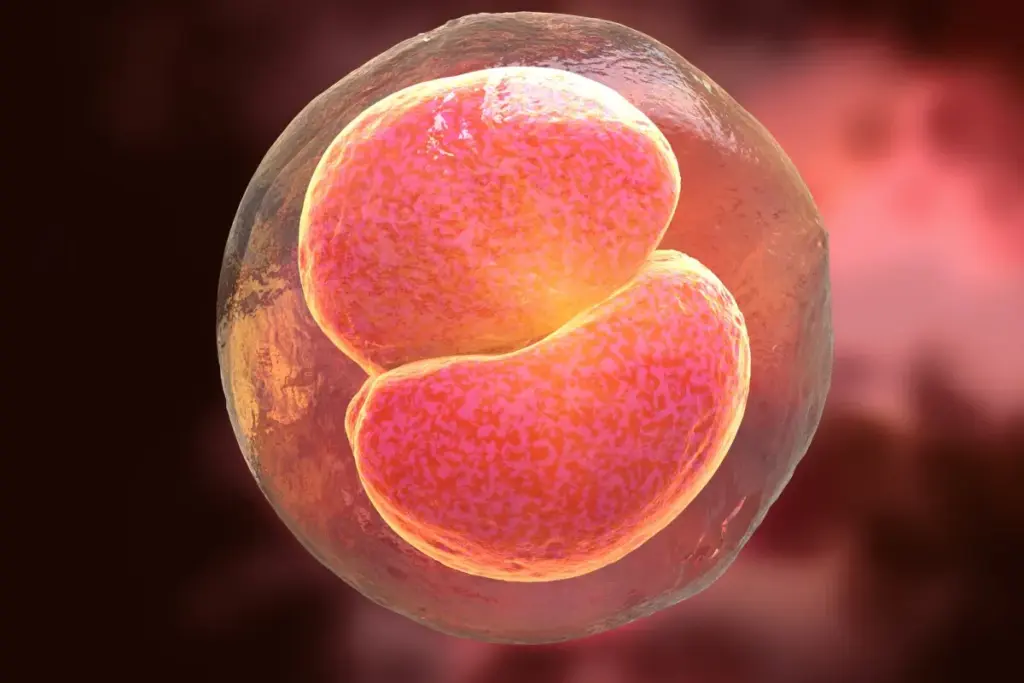
Knowing what a “no aneuploidy detected” result means is key for parents-to-be. This result shows the test didn’t find common chromosomal problems. It’s seen as a “low-risk” sign.
We want you to fully get what this means for your baby. A “no aneuploidy detected” result means the NIPT test didn’t find common chromosomal issues. This includes Down syndrome and other trisomies.
What No Aneuploidy Detected Means
A “no aneuploidy detected” result is reassuring. It shows a low risk for certain chromosomal conditions. But, it’s important to remember this doesn’t mean your baby is completely safe from all genetic problems.
Key points to consider:
- The test screens for common chromosomal abnormalities.
- A “low-risk” result doesn’t guarantee the absence of all genetic conditions.
- Some rare conditions might not be detected by NIPT.
Screening Negative: Understanding NIPT as a Screening Tool
NIPT is a screening test, not a diagnostic one. It’s very accurate for the conditions it checks for. But, there’s a small chance of false negatives or undetected conditions.
It’s essential to differentiate between screening and diagnostic testing to manage expectations and make informed decisions about your pregnancy. Diagnostic tests, like amniocentesis or CVS, can provide more definitive results but carry a higher risk.
NIPT Test Accuracy and Reliability
NIPT is very accurate for detecting common aneuploidies. But, no test is perfect, and there’s a small chance of incorrect results.
Factors influencing NIPT accuracy include:
- The specific conditions being screened for.
- The quality of the test and the laboratory processing it.
- Factors related to the pregnancy itself, such as the presence of twins or mosaicism.
Understanding these aspects can help you better interpret your NIPT results. This way, you can make informed decisions about your pregnancy care.
How to Read NIPT Test Results for Specific Conditions
It’s important for expectant parents to know how to read NIPT test results. NIPT, or Non-Invasive Prenatal Testing, checks for certain chromosomal conditions in the fetus. It looks at cell-free DNA in the mother’s blood to find genetic issues.
Autosomal Aneuploidy Screening Results
Autosomal aneuploidy means the fetus has an abnormal number of chromosomes. This can cause conditions like Down syndrome, Trisomy 18, and Trisomy 13. A “not detected” result for autosomal aneuploidy is good news, showing a low risk for these issues.
Key points to understand about autosomal aneuploidy screening results:
- A “not detected” result means the test did not find evidence of the screened chromosomal abnormalities.
- A “detected” result indicates a possible issue, needing more testing for confirmation.
- NIPT is a screening test, not diagnostic, so it can have false positives or false negatives.
Sex Chromosome Aneuploidy Not Detected Meaning
NIPT also checks for sex chromosome aneuploidies, like Turner syndrome and Klinefelter syndrome. A result showing “sex chromosome aneuploidy not detected” means the test didn’t find any abnormalities in the sex chromosomes.
Understanding sex chromosome aneuploidy results involves:
- Knowing the test can spot conditions like Turner syndrome and Klinefelter syndrome.
- Understanding that a “not detected” result is reassuring but not a 100% guarantee against all sex chromosome abnormalities.
- Realizing that more testing might be suggested if there are other risk factors or concerns.
Conclusion
It’s important for expectant parents to understand aneuploidy screening results. This knowledge helps them make informed choices about their pregnancy care. Our guide helps you understand NIPT results and what “no aneuploidy detected” means.
This summary shows how important NIPT is as a screening tool. It gives valuable insights into prenatal testing. Knowing the implications of NIPT test results helps parents feel more confident in their pregnancy journey.
It’s key to talk to your healthcare provider about your results. They can guide you on what to do next. We’re here to help you understand NIPT results, so you can make the best choices for your pregnancy.
FAQ
What does no aneuploidy mean on my NIPT report?
Seeing “no aneuploidy” on your NIPT report is good news. It means the test didn’t find any extra or missing chromosomes for common conditions like Down syndrome. This is a low-risk result.
What is the sex chromosome aneuploidy not detected meaning?
If the test says no sex chromosome aneuploidy, it’s a positive sign. It means your baby likely has the usual number of sex chromosomes (XX or XY).
How to read NIPT test results for my baby’s gender?
To find out your baby’s gender, look at the fetal sex section of your report. If it says “consistent with male,” a Y chromosome was found. If it says “consistent with female,” no Y chromosome was found.
What does no Y chromosome detected means during screening?
If the test shows no Y chromosome, it means only X chromosomes were found. This is a sign of a female fetus.
What is the aneuploidy screening low risk meaning?
A low-risk aneuploidy screening means your baby is likely not at risk for certain chromosomal problems. It’s a reassuring sign, but not a 100% guarantee.
Can you provide an NIPT result example of a negative screen?
A negative NIPT screen might say “Not Detected” or “Low Risk” for Trisomy 21, 18, and 13. It will also show a fetal fraction percentage (usually above 4%).
How to read NIPT test results if they mention “no aneuploidy detected”?
To understand your NIPT results, look at the “Result” column. If it says “no aneuploidy detected,” it means the lab didn’t find any chromosomal imbalances.
What does it mean if no aneuploidy detected means my results are negative?
If your results say “no aneuploidy detected,” it means you’re at a lower risk for certain disorders. It’s a negative result for those specific conditions.
What does what does NIPT results look like for sex chromosomes?
NIPT results for sex chromosomes will list the chromosomes. It will say if an aneuploidy was found or if the findings are consistent with a specific biological sex.
What is the aneuploidy screening meaning in simple terms?
References
National Center for Biotechnology Information. Evidence-Based Medical Insight. Retrieved from https://pmc.ncbi.nlm.nih.gov/articles/PMC4613463/



 Departments
 Related Videos
 Our Doctors
 News
News