

The human ear is a complex and fascinating organ. It is responsible for both hearing and balance. To understand its anatomy, we need to explore its different parts.
Explore the intricate anatomy of the human ear and discover what the inside of your ear looks like.
The ear has three main parts: the outer ear, middle ear, and inner ear. The outer ear includes the auricle and ear canal. These parts collect sound waves and direct them towards the eardrum.
Healthcare providers use an otoscope to see inside the ear. This tool shows the delicate anatomy that makes hearing possible. A healthy eardrum looks clear and pinkish-gray when viewed with an otoscope.
Key Takeaways
- The ear has three main parts: outer ear, middle ear, and inner ear.
- The outer ear consists of the auricle and ear canal.
- An otoscope is used to visualize the internal structures of the ear.
- A healthy eardrum appears clear and pinkish-gray.
- Understanding ear anatomy is key to maintaining ear health.
The Anatomy of the Human Ear
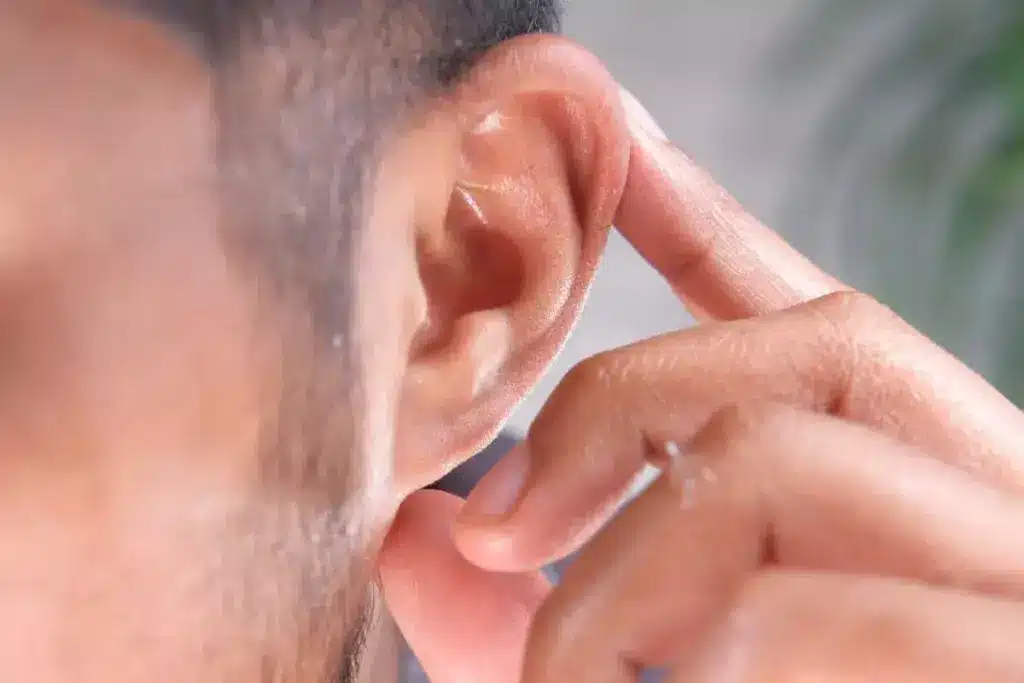
The human ear has three main parts: the outer, middle, and inner ear. Each part is important for hearing and balance. Knowing how the ear works helps us understand its role in our lives.
Three Distinct Regions: Outer, Middle, and Inner
The outer ear catches sound waves and sends them into the ear canal. The middle ear then sends these vibrations to the inner ear. The inner ear handles both hearing and balance, with the cochlea and vestibular system.
The ear canal has skin, hair, and glands that make earwax. This wax traps dust and keeps the ear safe from harm.
How These Regions Process Sound and Balance
Sound waves start in the outer ear and move to the eardrum. The eardrum vibrates, and these vibrations go through the middle ear. The middle ear has three tiny bones that help send these vibrations to the inner ear.
In the inner ear, the cochlea turns these vibrations into electrical signals. The brain then understands these signals as sound. The inner ear also has the vestibular system for balance. It includes the otolith organs and semicircular canals.
Each part of the ear is essential for hearing and balance. The ear’s complex mechanisms show its beauty and importance in our lives.
What Does the Inside of an Ear Look Like: The Ear Canal
The ear canal, or auditory canal, is a tube-like passage. It connects the outer ear to the eardrum, helping us hear and balance.
The S-Shaped Structure of the Ear Canal
The ear canal has a unique S-shaped structure. The outer third is cartilage, and the inner two-thirds are bone. This helps sound waves travel well.
Skin, Hair Follicles, and Ceruminous Glands
The ear canal’s skin has hair follicles and ceruminous glands. These glands make earwax. Earwax traps dust, bacteria, and small particles, protecting the eardrum.
What a Healthy Ear Canal Looks Like
A healthy ear canal looks clean with a thin layer of earwax. The skin should be smooth and free of debris. The S-shaped structure keeps out foreign objects.
| Characteristics | Healthy Ear Canal | Potential Issues |
| Color | Pinkish or normal skin tone | Redness or inflammation |
| Earwax | Thin layer, not excessive | Excessive buildup or impaction |
| Discharge | None | Presence of discharge or odor |
Knowing what a healthy ear canal looks like helps spot problems early. Regular visits to a healthcare professional are key to catching issues quickly.
The Eardrum and Middle Ear Structures
The eardrum is a key part of the ear’s inner workings. It acts as a barrier between the outer ear and the middle ear. It’s vital for our hearing.
Appearance of a Healthy Eardrum
A healthy eardrum looks like a thin, cone-shaped membrane. It sticks out a bit into the middle ear. It’s very sensitive to sound.
The eardrum’s look can tell us a lot about ear health. A healthy one is whole, with no holes or pulling back. It’s also clear, letting us see the middle ear.
Viewing Your Eardrum with an Otoscope
An otoscope lets doctors see inside the ear and at the eardrum. It helps them check for problems like infections or damage.
Looking at the eardrum with an otoscope can show a lot. A red or swollen eardrum might mean an infection. A hole in the eardrum could be from an injury or long-term infection.
The Three Tiny Ossicles Behind the Eardrum
Behind the eardrum are three small bones called ossicles: the malleus, incus, and stapes. They help move sound vibrations from the eardrum to the inner ear. There, these vibrations become electrical signals our brain turns into sound.
The ossicles work together to make sound louder. If they get damaged, we might have trouble hearing.
Knowing about the eardrum and ossicles helps us understand how we hear. Taking care of these parts is important for keeping our hearing sharp.
Conclusion
Exploring the human ear shows us how important ear health is. The ear has three main parts: the outer, middle, and inner. These parts help us hear and stay balanced.
The ear canal, eardrum, and ossicles work together to send sound vibrations. The inner ear helps with balance and equilibrium. Knowing what the ear drum looks like can help us understand ear health better.
Understanding ear anatomy helps us protect our hearing and keep our ears healthy. We should prevent ear damage and see a doctor if we have problems. Learning more about ear anatomy and health helps us value this vital organ.
Inside the ear, delicate structures work together for hearing and balance. Knowing what a healthy ear looks like helps us value ear care. It encourages us to keep our ears in good shape.
FAQ:
What does the inside of your ear look like?
The inside of the ear includes the ear canal leading to the eardrum, with deeper structures like the middle and inner ear not visible without medical instruments.
What should the inside of your ear canal look like?
A healthy ear canal looks pink or light flesh-colored, clean, and slightly shiny, with a small amount of earwax present.
What does a clean ear canal look like?
A clean ear canal appears clear and unobstructed, with no swelling, redness, discharge, or excessive earwax.
What does an eardrum look like on camera?
On camera, a healthy eardrum appears thin, pearly gray, and slightly translucent with visible landmarks.
What does your eardrum look like on camera?
A normal eardrum looks smooth and intact, with a light reflection and no holes, redness, or bulging.
What are the three tiny ossicles behind the eardrum?
The three ossicles are the malleus, incus, and stapes, which transmit sound vibrations from the eardrum to the inner ear.
What does the inside of a healthy ear look like?
A healthy ear has a clear ear canal, minimal earwax, and an intact eardrum without redness, fluid, or damage.
What is the function of the ear canal?
The ear canal directs sound waves to the eardrum and protects the ear by trapping debris and producing earwax.
How do the different parts of the ear work together?
The outer ear collects sound, the middle ear amplifies vibrations, and the inner ear converts them into nerve signals for hearing and balance.
References:
National Center for Biotechnology Information. Evidence-Based Medical Insight. Retrieved from https://www.ncbi.nlm.nih.gov/books/NBK553163/[4