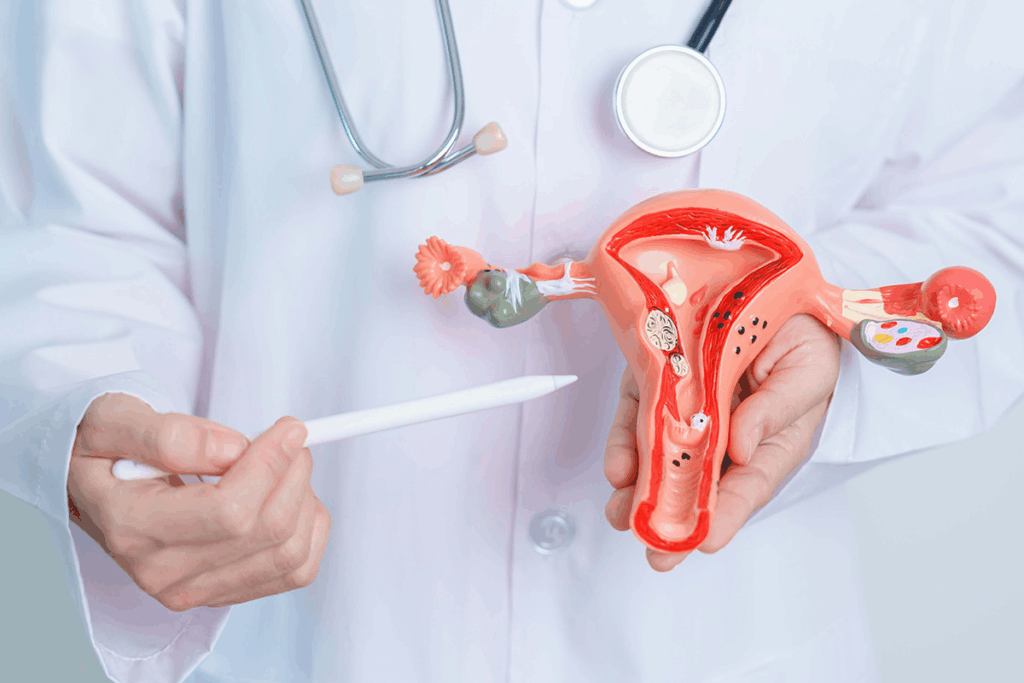
Ovarian cysts are fluid-filled sacs that form in the ovaries during ovulation. When an ovarian cyst ruptures, the fluid-filled sac breaks open. It releases its contents into the pelvic cavity, potentially triggering various symptoms.
Ruptured ovarian cysts can cause sudden and severe pain, among other symptoms. Understanding ovarian cyst rupture symptoms is key for seeking the right medical care. At Liv Hospital, we offer top-notch medical care and patient-centered service. We help you understand and manage this condition.
Key Takeaways
- Ovarian cysts are common and can rupture, releasing fluid into the pelvic cavity.
- Ruptured ovarian cysts can cause severe pain and other symptoms.
- Understanding the symptoms is key for seeking medical care.
- Liv Hospital provides complete care for managing ruptured ovarian cysts.
- Internationally competitive medical expertise is available for complex cases.
Understanding Ovarian Cysts

Ovarian cysts are fluid-filled sacs on the ovaries common in women of childbearing age. They are usually not cancerous and can be different sizes. Knowing about ovarian cysts helps in treating them well.
Types of Ovarian Cysts
There are many types of ovarian cysts, each unique. The most common ones are:
- Functional Cysts: These are linked to the menstrual cycle and are the most common. They can be follicular or corpus luteum cysts.
- Dermoid Cysts: Also known as teratomas, these cysts have hair, skin, or teeth and are usually harmless.
- Cystadenomas: These cysts grow from the ovarian surface and can be serous or mucinous.
- Endometriomas: These cysts are linked to endometriosis, where tissue like the uterus lining grows outside the uterus.
How Common Are Ovarian Cysts?
Ovarian cysts are common in women of childbearing age. Many women get cysts, often without serious symptoms. Knowing why they happen is key.
Risk Factors for Developing Cysts
Some factors make getting ovarian cysts more likely. These include:
- Hormonal Imbalances: Hormonal changes can cause functional cysts.
- Endometriosis: Women with endometriosis are more likely to get endometriomas.
- Polycystic Ovary Syndrome (PCOS): PCOS is linked to many small cysts on the ovaries.
Most ovarian cyst ruptures don’t show symptoms or are mild. They usually get better on their own in a few days. Knowing about ovarian cysts helps in managing them.
What Happens If a Cyst Ruptures?

A ruptured ovarian cyst can cause a range of symptoms, from mild to severe. It’s important to know what happens and how to get help.
The Physiological Process
When an ovarian cyst bursts, its fluid spills into the pelvic area. This can irritate nearby tissues and organs, causing inflammation. The body’s reaction depends on the cyst’s size and what’s inside it.
Release of Cyst Contents
The ruptured cyst’s contents can include fluid, blood, or other substances. This can lead to sudden pain and symptoms like bloating and nausea. The severity of these symptoms depends on how much and what kind of fluid is released.
Immediate Bodily Response
The body’s first reaction to a ruptured cyst can be pain, inflammation, and other systemic responses. The pain can be mild or severe and may be accompanied by vaginal bleeding or spotting. In some cases, it can lead to serious complications like infection or internal bleeding.
It’s key to remember that symptoms can vary greatly. Some people might only feel mild discomfort, while others may experience severe pain or alarming symptoms that need urgent medical care.
Common Symptoms of a Ruptured Ovarian Cyst
The symptoms of a ruptured ovarian cyst can vary a lot. Some women might not feel anything, while others might have sharp pain. The pain can be mild or very severe, needing quick medical help.
Sudden Abdominal or Pelvic Pain
Sudden abdominal or pelvic pain is a common symptom. This pain can be sharp and intense. It usually happens on the side of the ovary where the cyst ruptured.
The pain might stay the same or change. Its intensity can also vary.
Referred Pain to Shoulder or Back
Some women might feel pain in their shoulder or back. This happens when blood from the cyst irritates the diaphragm. It causes pain to spread to the shoulder or back.
Nausea and Vomiting
Nausea and vomiting are common symptoms too. These can be caused by the pain and discomfort. They can also be due to the body’s reaction to the bleeding or irritation from the cyst rupture.
Vaginal Bleeding or Spotting
Vaginal bleeding or spotting can happen after a cyst ruptures. This bleeding is usually light. But in some cases, it can be heavier.
The symptoms of a ruptured ovarian cyst include:
- Sudden abdominal or pelvic pain
- Referred pain to the shoulder or back
- Nausea and vomiting
- Vaginal bleeding or spotting
It’s important to recognize these symptoms and get medical help if they happen. A ruptured ovarian cyst can cause serious problems if not treated.
Severity Spectrum: From Asymptomatic to Severe Cases
Ruptured ovarian cysts can vary greatly in severity. They can range from being completely symptom-free to life-threatening. It’s important for women to know how serious a ruptured ovarian cyst can be.
Asymptomatic Ruptures
Some women might not even notice when an ovarian cyst ruptures. These asymptomatic ruptures can be unnoticed and might heal on their own. But, it’s key to remember that even without symptoms, there could be risks or complications.
Mild to Moderate Symptoms
Many women feel mild to moderate symptoms when an ovarian cyst ruptures. These symptoms can include:
- Mild pelvic pain or discomfort
- Spotting or light vaginal bleeding
- Nausea or vomiting
- Slight fever
These symptoms can often be managed with pain medication and rest. But, it’s important to keep an eye on them with a healthcare provider to make sure they don’t get worse.
Severe Complications
In some cases, a ruptured ovarian cyst can cause severe complications. These can include:
- Internal bleeding, which can be life-threatening if not treated promptly
- Infection, which can spread to other parts of the reproductive system
- Adhesions or scar tissue that can cause future fertility issues
Severe cases might need immediate medical attention, like hospitalization or surgery. It’s vital for women to know the warning signs for urgent care.
We stress the need for medical evaluation if symptoms don’t go away or get worse. Knowing the severity of a ruptured ovarian cyst helps women make better health choices and get the right medical care.
Diagnosing a Ruptured Ovarian Cyst
Diagnosing a ruptured ovarian cyst requires a mix of clinical checks and tests. When symptoms point to a ruptured cyst, doctors use a detailed method. This helps confirm the diagnosis and rule out other possible causes.
Medical History and Physical Examination
First, we take a detailed medical history and do a physical check. We look at the patient’s symptoms, menstrual cycle, and past cysts or gynecological issues. A pelvic exam is done to find tenderness or other signs of a ruptured cyst.
Imaging Tests
Imaging tests are key in diagnosing a ruptured ovarian cyst. Ultrasound is the main tool, showing free fluid in the pelvis, a sign of a ruptured cyst. might be used to see how big the rupture is or to check for other issues.
Laboratory Tests
We also run lab tests. A pregnancy test is done to rule out ectopic pregnancy. Blood tests, like a complete blood count (CBC) and serum beta-hCG, check for infection or other problems.
Differential Diagnosis
When suspecting a ruptured ovarian cyst, we must also think of other possible causes. These include appendicitis, ectopic pregnancy, or other emergencies. The table below lists some conditions to consider:
Condition | Key Features | Diagnostic Tests |
Ectopic Pregnancy | Abdominal pain, vaginal bleeding, amenorrhea | Ultrasound, serum beta-hCG |
Appendicitis | Right lower quadrant pain, fever, leukocytosis | CT scan, ultrasound |
Ovarian Torsion | Sudden onset severe pelvic pain, nausea, vomiting | Ultrasound, Doppler flow studies |
By using medical history, physical exam, imaging, and lab tests, we can accurately diagnose a ruptured ovarian cyst. This helps us tell it apart from other conditions with similar symptoms.
The Body’s Natural Healing Process
When an ovarian cyst ruptures, the body starts to heal itself. Usually, the body absorbs the cyst fluid and gets better in a few days to weeks. This natural healing is a common way for the body to fix itself.
Timeline for Recovery
The time it takes to recover from a ruptured ovarian cyst varies. It depends on the cyst’s size and your overall health. Generally, symptoms start to go away in a few days to a couple of weeks. It’s important to watch how your body reacts and look out for any complications.
How the Body Absorbs Cyst Fluid
The body has a way to soak up the fluid from a ruptured cyst. This happens through the peritoneum, the lining of the belly. It absorbs the fluid, helping it to leave the body. How fast this happens can vary, but usually, the body handles it well.
Monitoring the Healing Process
It’s key to keep an eye on how you’re healing after a ruptured cyst. You might need to see your doctor for check-ups. They might use tests to see how you’re doing. Also, listen to your body and tell your doctor if things get worse.
Knowing how your body heals after a cyst rupture helps you understand your recovery. It lets you know what to expect and when to get more help if needed.
When to Seek Medical Attention
Knowing when to get medical help for a ruptured ovarian cyst is key. A ruptured cyst can cause serious problems if not treated quickly. We’ll talk about the signs that mean you need to see a doctor right away. We’ll also show you how to tell your doctor about your symptoms.
Warning Signs That Require Immediate Care
Some symptoms mean you need to see a doctor fast. These include:
- Severe abdominal or pelvic pain that is sudden and intense
- Heavy vaginal bleeding or spotting that doesn’t stop
- Fever above 100.4°F (38°C)
- Signs of infection, such as increasing redness, swelling, or pus
- Dizziness or fainting due to internal bleeding
If you have any of these symptoms, get medical help right away. Waiting too long can cause serious problems, like infection, bleeding inside, or even death in rare cases.
How to Communicate Symptoms to Healthcare Providers
When you go to the doctor, tell them about your symptoms clearly. Be ready to share:
- The severity and location of your pain
- Any vaginal bleeding or discharge
- Any fever or chills you’ve experienced
- Any other symptoms you’re experiencing, such as nausea or vomiting
Telling your doctor everything will help them figure out what’s wrong and how to fix it.
Emergency vs. Non-Emergency Situations
Not all ruptured ovarian cysts need emergency care. But, it’s hard to know how serious it is without a doctor’s check-up. If you’re not sure, it’s better to be safe and get medical help.
If your symptoms are mild, your doctor might just watch them and not do much. But if you have any of the warning signs we talked about, get help right away.
Treatment Options for a Ruptured Ovarian Cyst
The treatment for a ruptured ovarian cyst depends on how bad the symptoms are and if there are any complications. We will look at the different ways to treat it, from not doing much to surgery.
Conservative Management
Many women can manage a ruptured ovarian cyst without surgery, if the symptoms are not too bad. This means watching the symptoms, taking pain medicine, and resting a lot.
Medication Options
Managing pain is key when treating a ruptured ovarian cyst. You might start with ibuprofen from the store. If that doesn’t work, your doctor might give you something stronger.
Surgical Interventions
If the cyst rupture causes a lot of pain, bleeding, or other serious problems, surgery might be needed. The type of surgery, like laparoscopy or laparotomy, depends on how bad it is.
Treatment Option | Recovery Time | Risks | Effectiveness |
Conservative Management | 1-3 weeks | Low risk of complications | High for mild symptoms |
Medication | Varies | Side effects possible | High for pain management |
Surgical Intervention | 2-6 weeks | Risks associated with surgery | High for severe cases |
Choosing the right treatment for a ruptured ovarian cyst depends on many things. These include how bad the symptoms are and if there are any complications. Knowing about the different treatments can help patients make better choices for their care.
Potential Complications of Untreated Ruptures
Untreated ruptured ovarian cysts can cause serious health problems. It’s important to know these risks to see why quick medical care is key.
Infection Development
An untreated ruptured ovarian cyst can lead to infection. When a cyst bursts, it can spill bacteria into the pelvic area. This might cause pelvic inflammatory disease (PID). Quick medical help can lower this risk a lot.
Internal Bleeding
Internal bleeding is another risk from a ruptured ovarian cyst. The burst can cause a lot of bleeding in the pelvic area. This leads to hemoperitoneum, a buildup of blood in the peritoneal cavity. It can cause severe pain, anemia, and even shock.
Ovarian Torsion
Ovarian torsion is a rare but serious issue. A cyst can twist the ovary, cutting off blood supply. It’s a medical emergency that needs immediate surgery to save the ovary.
Long-term Reproductive Health Concerns
Untreated ruptured ovarian cysts can harm reproductive health long-term. They can cause chronic pelvic pain, adhesions, and affect fertility. Knowing these effects shows why timely medical care is vital.
In summary, untreated ruptured ovarian cysts can lead to serious health issues. Recognizing these risks and getting medical help when needed is essential. It helps prevent complications and keeps you healthy.
Living With and Preventing Ovarian Cysts
Living with ovarian cysts can be tough, but there are ways to manage it. We’ll look at lifestyle changes, medical treatments, and regular check-ups. These can help prevent cysts and ease their symptoms.
Lifestyle Modifications
Changing your lifestyle can lower the risk of ovarian cysts. Maintaining a healthy weight is key, as extra weight can lead to cysts. Eating lots of fruits, veggies, and whole grains is good for your reproductive health. Regular exercise also helps keep hormones balanced, which can stop cysts.
Hormonal Birth Control Options
Hormonal birth control is often suggested to manage and prevent ovarian cysts. These methods can regulate your menstrual cycle and lower cyst risk. Oral contraceptives are a common choice. They stop certain hormones that cause cysts. Always talk to a doctor about the pros and cons of hormonal birth control.
Regular Monitoring for Recurrent Cysts
Women who’ve had cysts before should get regular check-ups. This includes pelvic exams and ultrasound imaging. Catching new or recurring cysts early can prevent serious problems. Work with your doctor to set up a check-up schedule that fits your needs.
Managing Pain and Discomfort
Managing pain is a big part of dealing with ovarian cysts. Over-the-counter pain meds can help with mild to moderate pain. Sometimes, prescription pain medication is needed. Applying heat to the lower abdomen can also help. It’s important to talk to your doctor about the best pain relief options.
Conclusion
We’ve looked into ovarian cysts and what happens when they burst. Knowing about ruptured ovarian cysts is key to handling symptoms and getting the right treatment. Most of the time, a burst cyst isn’t serious, but some can lead to big problems.
When an ovarian cyst bursts, the body can heal on its own. But, it’s important to watch and get medical help to avoid serious issues. Being informed helps people take care of their health and make smart choices about treatment.
It’s vital to know the signs that mean you need to see a doctor right away. We stress the importance of telling your doctor about your symptoms clearly. This ensures you get the care you need quickly and correctly.
In short, knowing about ruptured ovarian cysts is key to keeping your reproductive health in check. We urge everyone to stay informed and take an active role in their health. This way, they can get the care they deserve.
FAQ
What are the symptoms of a ruptured ovarian cyst?
A ruptured ovarian cyst can cause sudden, severe pain in the abdomen or pelvis. You might also feel pain in the shoulder or back. Other symptoms include nausea, vomiting, vaginal bleeding, and in severe cases, signs of shock or significant blood loss.
What happens when a cyst bursts in the ovary?
When a cyst bursts, it spills its contents into the pelvic cavity. This can cause irritation, inflammation, and pain. The body’s response can lead to various symptoms, from mild to severe.
How do you know if a cyst on the ovary has burst?
If a cyst bursts, you’ll likely feel sudden, severe pain. This pain is often sharp and stabbing. It might also radiate to the back or shoulder. Other symptoms include nausea, vomiting, or vaginal bleeding.
What are the signs of a ruptured cyst?
The signs of a ruptured cyst include sudden pain in the abdomen or pelvis. You might also feel tenderness, muscle tension, and rebound tenderness. Other signs include nausea, vomiting, fever, or vaginal bleeding.
Can a ruptured cyst cause infection?
Yes, a ruptured cyst can cause infection if bacteria enter the pelvic cavity. This risk is higher if the cyst contents are not absorbed properly or if there’s significant tissue damage.
How is a ruptured ovarian cyst diagnosed?
To diagnose a ruptured ovarian cyst, doctors use a combination of medical history, physical exam, and imaging tests. These include ultrasound or CT scans. They also do blood work to check for signs of infection or blood loss.
What are the treatment options for a ruptured ovarian cyst?
Treatment for a ruptured ovarian cyst varies based on symptoms and complications. It can range from pain medication and monitoring to surgical interventions for bleeding or infection.
What happens if an ovarian cyst bursts and is left untreated?
If left untreated, a burst ovarian cyst can lead to serious complications. These include infection, internal bleeding, ovarian torsion, or long-term reproductive health issues. It’s important to seek medical attention quickly to prevent these problems.
How can ovarian cysts be prevented?
To prevent ovarian cysts, maintain a healthy weight and consider hormonal birth control. Regular monitoring for recurrent cysts and managing pain can also help reduce risks.
What does an ovarian cyst bursting feel like?
An ovarian cyst bursting feels like sudden, sharp pain in the abdomen or pelvis. It’s often accompanied by nausea, vomiting, or vaginal bleeding. The pain can be severe and may spread to the back or shoulder.
References
National Center for Biotechnology Information. Ovarian Cyst Rupture: Mechanisms and Potential Symptoms. Retrieved from https://www.ncbi.nlm.nih.gov/pmc/articles/PMC7185837/