


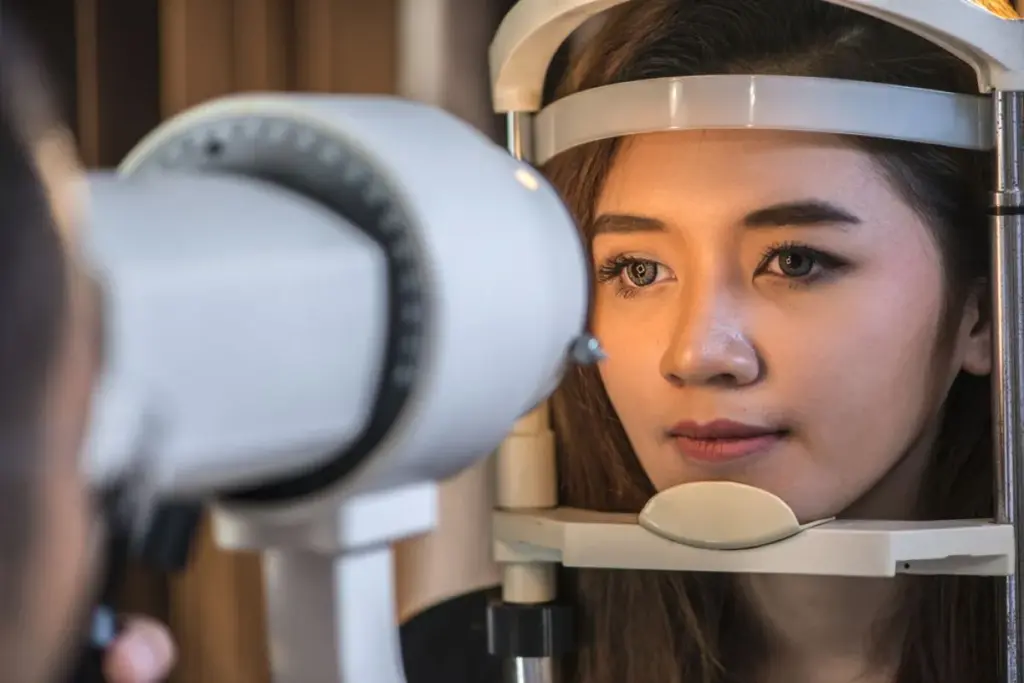
Your sight is a vital part of your health. We use special tools to keep your vision sharp. These tools help us find problems early.
We make sure you’re comfortable during these checks. It’s important to us.
The main instrument used to examine the eye is called an ophthalmoscope. Many wonder what the term ophthalmoscope means quizlet style. This device is a key tool for doctors to see inside your body.
Hermann von Helmholtz invented it a long time ago. It changed how we see inside the body forever.
With it, we can see the layers of the retina and the optic nerves. It gives us a unique view inside your body. We can spot signs of high blood pressure or diabetes during these visits.
Regular screenings help keep you healthy for a long time. They give you peace of mind too.
Our team is all about accuracy in these screenings. We aim for the best in every eye check. We’re all in this together to protect your vision.
Key Takeaways
- Ophthalmoscopy lets us see the blood vessels in the retina.
- Regular screenings can show early signs of diabetes.
- An ophthalmoscope checks the health of the optic nerve and clarity.
- This method has been around for over 170 years.
- Modern eye exams protect your vision and overall health.
- Early detection is key to preventing permanent vision loss.
The Primary Instrument Used to Examine the Eye
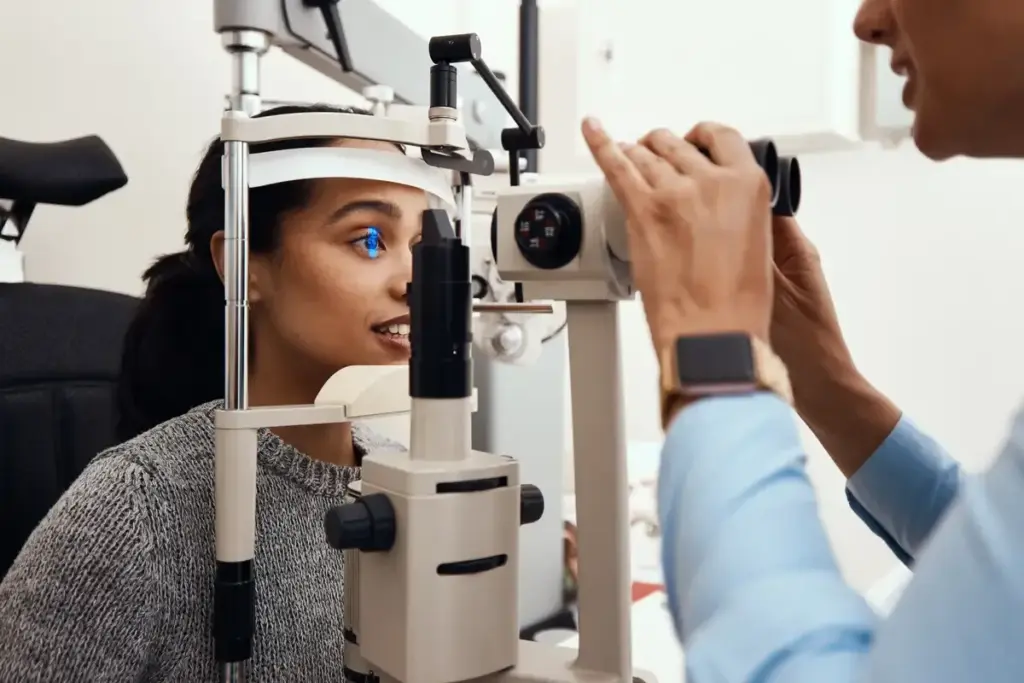
There’s a key tool for eye exams that stands out. It gives a detailed look at the eye’s inside parts. This tool is key for eye doctors to spot and treat eye problems well.
Understanding the Ophthalmoscope
An ophthalmoscope lets us see the retina, optic disc, and blood vessels inside the eye. There are two main types: direct and indirect. Direct ophthalmoscopy shows the retina up close. Indirect ophthalmoscopy gives a wider view of the retina, including its edges.
The ophthalmoscope is a must-have in eye care. It helps us see the eye’s inside parts clearly. Knowing how it works and its types helps us handle eye issues better.
How the Ophthalmoscope Functions
The ophthalmoscope shines a light through the pupil to light up the eye’s inside. The light bounces back, letting us see the retina and other parts. This is key for spotting eye diseases and keeping an eye on the eye’s health.
- Direct ophthalmoscopy gives a close-up view, perfect for checking the retina’s details.
- Indirect ophthalmoscopy shows a wider view, great for looking at the retina’s edges.
Using the ophthalmoscope helps us understand the eye’s health fully. It lets us catch problems early.
Specialized Tools for Complete Eye Health
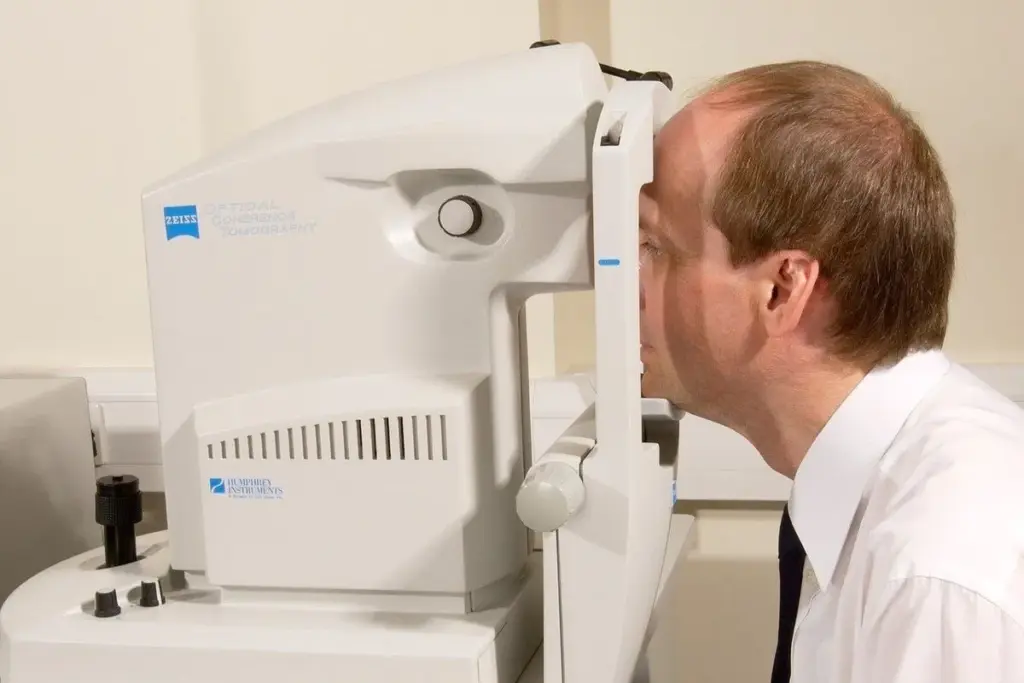
There are many tools used to check eye health beyond ophthalmoscopy. These tools help doctors find and treat many eye problems well.
Slit Lamp Biomicroscopy for the Cornea
A slit lamp is key for looking at the front part of the eye. It shows details of the cornea, iris, and lens. It helps spot issues like corneal ulcers and cataracts.
The slit lamp has a strong light and a microscope. It lets doctors see the eye’s front part well. This tool is vital for finding problems in the cornea and other parts.
Tonometers for Intraocular Pressure
Tonometers measure eye pressure, which is key for glaucoma diagnosis. High pressure can harm the optic nerve and cause vision loss if not treated.
There are many tonometers, like Goldmann and non-contact ones. Each has its own use in different situations.
| Tonometer Type | Description | Clinical Use |
| Goldmann Applanation Tonometer | Gold standard for IOP measurement, requires corneal contact | Routine glaucoma screening and diagnosis |
| Non-Contact Tonometer | Measures IOP without corneal contact, often used for screening | Initial patient screening, pediatric patients |
Retinal Imaging Systems
Retinal imaging systems give clear pictures of the retina. They help find and manage diseases like diabetic retinopathy.
These systems use tech like OCT to get detailed retina images. This helps spot problems early and track how they change.
Using these tools, we can give better eye care and help patients more.
Conclusion
We’ve looked at the tools used to check the eyes, like the ophthalmoscope and slit lamp biomicroscopy. We also talked about tonometers and retinal imaging systems. These tools are key for keeping eyes healthy and spotting other health problems.
Just like how specific tools are used for other body parts, like the bronchi, eye doctors use their own tools. This helps them see inside the eyes clearly.
Knowing about these tools helps us see why eye check-ups are important. These advanced tools help find and treat problems early. So, getting your eyes checked regularly is a big part of staying healthy.
FAQ
Which instrument is used to look at the eyes during a comprehensive medical exam?
An ophthalmoscope is commonly used to examine the inside of the eye, including the retina.
It allows doctors to assess blood vessels, optic nerve, and overall eye health.
Can you explain what the term ophthalmoscope means quizlet users and students often search for?
An ophthalmoscope is a handheld device used to look inside the eye.
It helps visualize the retina, optic disc, and internal eye structures.
Is there a specialized instrument to examine the cornea and the front of the eye?
Yes, a slit lamp is used to examine the cornea, iris, and lens in detail.
It provides a magnified, well-lit view of the front structures of the eye.
What is the most effective instrument to view the eye and its peripheral retina?
Indirect ophthalmoscopy is most effective for viewing the peripheral retina.
It gives a wider field of view compared to a standard ophthalmoscope.
How do specialists define an instrument to visually examine various parts of the ocular anatomy?
These instruments are called ophthalmic diagnostic tools used for eye examination.
They help evaluate both the external and internal structures of the eye.
To clarify for medical students, the instrument used for visual examination of the bronchi is what, and how does it differ from eye tools?
A bronchoscope is used to examine the bronchi and airways of the lungs.
Unlike eye instruments, it is inserted into the airway to directly visualize internal respiratory structures.
References
National Center for Biotechnology Information. Evidence-Based Medical Insight. Retrieved from https://pubmed.ncbi.nlm.nih.gov/33156789/


 Departments
 Related Videos
 Our Doctors
 News
News


