Many people are curious about the Doctor of Physical Therapy (DPT) degree. It’s a graduate-level professional doctorate that’s now the main qualification for physical therapists in the U.S. It’s been the only accredited entry-level degree for physical therapists in America, showing its key role in healthcare.what is a dptDeviated Septum Symptoms and Sinus Issues
The DPT program trains people to work as licensed physical therapists. They can work on their own or with others in many healthcare places. The U.S. Bureau of Labor Statistics says physical therapist jobs will grow by 17% from 2022 to 2032. This is much faster than the average job growth rate.
Key Takeaways
- The DPT is a graduate-level professional doctorate degree.
- It is the only accredited entry-level degree for physical therapists in the U.S. for over seven years.
- DPT programs prepare individuals for licensure and diverse practice settings.
- Employment for physical therapists is projected to grow significantly.
- A DPT degree is essential for a career in physical therapy.
What Is a DPT: Definition and Overview

The Doctor of Physical Therapy (DPT) degree is a postgraduate qualification. It prepares individuals for a career in physical therapy. It’s a doctoral degree that focuses on treating conditions that affect mobility and strength.
DPT programs teach students the principles and practices of physical therapy. They learn the knowledge and skills needed to become licensed physical therapists. It usually takes three to four years after a bachelor’s degree to complete a DPT. Some programs are faster, taking six to seven years.
Professional Classification and Purpose
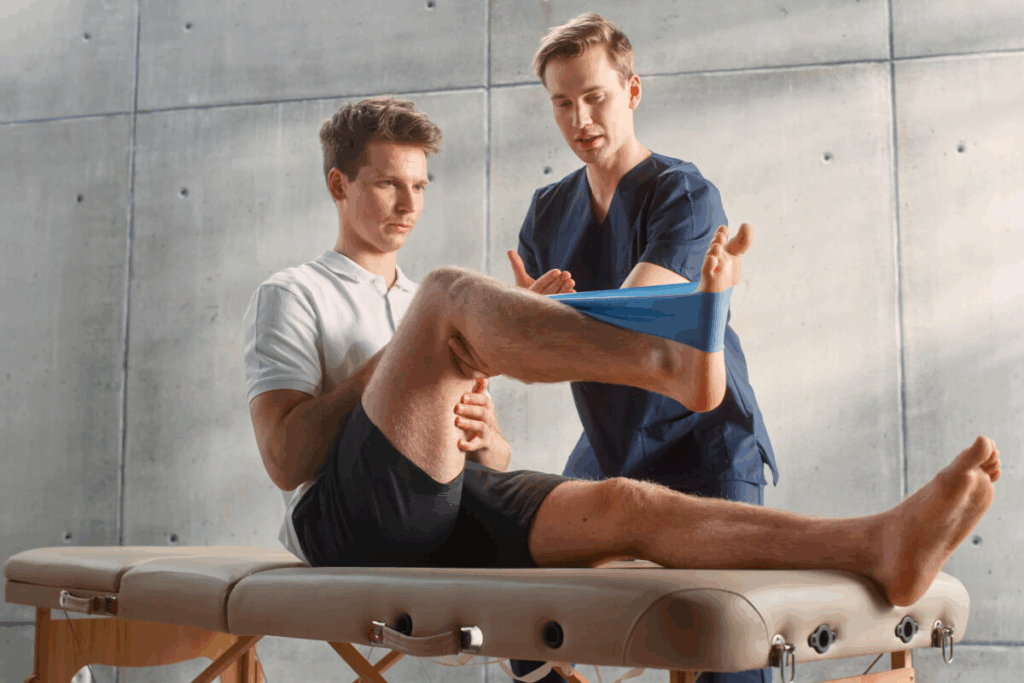
Physical therapists with a DPT degree are called movement experts. They evaluate patients, diagnose movement disorders, and create treatment plans. The main goal of a DPT program is to prepare students for clinical practice.
The Scope of Physical Therapy Practice
Physical therapy practice is wide-ranging. It includes preventing, diagnosing, and treating many conditions. Physical therapists work in hospitals, clinics, and private practices. They use techniques like exercise and manual therapy to help patients.
Understanding what a DPT degree is helps individuals decide if physical therapy is right for them. The DPT degree is a big commitment to education and training. It leads to a rewarding career that improves patients’ lives.
The Evolution of Physical Therapy Education in the US

Physical therapy education in the US has changed a lot over time. It has kept up with the healthcare system’s needs and the complexity of patient care.
From Bachelor’s to Master’s to Doctorate
At first, physical therapy education was a bachelor’s degree. But as the field grew, so did the need for more education. This led to master’s degrees, and then to Doctor of Physical Therapy (DPT) degrees.
This change shows a focus on better clinical skills and more patient care knowledge. The move to DPT programs shows a commitment to high-quality care for patients.
Key milestones in this evolution include:
- The first step was moving from bachelor’s to master’s degrees, making physical therapy education more professional.
- Then, moving to DPT programs raised the bar even higher. It focused on evidence-based practice and advanced clinical decision-making.
The 2015 Transition to DPT as Entry-Level Requirement
In 2015, the DPT became the required entry-level degree for physical therapists. This change showed the profession’s dedication to ensuring therapists are well-prepared. It aimed to improve patient care and outcomes.
DPT programs are designed to give students the knowledge and skills needed for effective practice in various settings.
The implications of this transition are multifaceted:
- It has raised the bar for physical therapy education, ensuring that graduates are prepared to meet the demands of contemporary healthcare.
- It has promoted a culture of excellence within the profession, encouraging ongoing education and professional development.
As healthcare gets more complex, the evolution of physical therapy education is key. Understanding DPT programs helps us see their value to patients and the healthcare system.
Is a DPT Truly a Doctorate Degree?
Many people wonder if a DPT is really a doctorate degree. To answer this, we need to know about the different types of doctoral degrees. We also need to see where DPT fits in.
Types of Doctoral Degrees Explained
Doctoral degrees are the highest level of education in many fields. They are either research-focused or professional. Examples include the Doctor of Philosophy (PhD) and the Doctor of Medicine (MD).
A PhD is for those who want to add new knowledge to their field. They do this through original research. In contrast, professional doctorates like the MD and DPT prepare you for work in clinics.
“The DPT is a clinical doctorate that signifies the holder has achieved a high level of competence in the practice of physical therapy.” – American Physical Therapy Association
How DPT Compares to PhD, MD, and Other Doctorates
A DPT is a doctoral degree, but it’s different from a PhD or an MD. A DPT focuses on preparing you for physical therapy, not on research like a PhD.
| Degree | Focus | Typical Career Path |
|---|---|---|
| DPT | Clinical Practice | Physical Therapist |
| PhD | Research | Researcher, Academic |
| MD | Medical Practice | Physician |
A DPT lets you call yourself “Doctor,” but it’s not the same as being an MD. DPT holders can diagnose and treat movement issues. But their job is different from a doctor’s.
It’s important to know these differences. This helps students and healthcare workers understand the world of doctoral degrees in healthcare.
DPT Program Structure and Duration
DPT programs mix classroom learning with hands-on training through internships. They aim to equip students for physical therapy careers.
Standard 3-4 Year Program Timeline
A DPT program usually lasts three years after a bachelor’s degree. The curriculum is packed with:
- Foundational sciences like anatomy, physiology, and biomechanics
- Clinical sciences including pharmacology, pathology, and physical therapy assessment
- Specialized physical therapy practices like orthopedics, neurology, and pediatrics
This broad education makes graduates ready for different clinical environments.
Accelerated 6-7 Year BS-DPT Programs
Some schools offer BS-DPT programs in six to seven years. These accelerated programs are competitive and need careful planning.
Benefits include:
- A faster educational path
- Starting DPT courses early
- Potential for lower total tuition
Part-Time and Flexible Learning Options
For those needing flexibility, some DPT programs have part-time or hybrid options. These are for students with other commitments or who prefer flexible schedules.
Key features include:
- Online classes for theory
- On-campus or in-clinic sessions for practical training
- Flexible schedules for different lifestyles
While part-time options are helpful, they might make the program longer.
Admission Requirements for DPT Programs
Starting your journey to become a physical therapist means knowing what DPT programs need. We’ll help you get ready for a strong application.
Undergraduate Prerequisites and Preparation
To get into a DPT program, you usually need a bachelor’s degree. You’ll need to have taken certain science classes like biology, chemistry, and physics. Make sure to check each program’s specific needs, as they can differ.
Common classes you might need include:
- Anatomy and Physiology
- Biology
- Chemistry
- Physics
- Exercise Physiology
- Biomechanics
GPA and Test Score Expectations
Your GPA is key for getting into a DPT program. Most programs look for a GPA of 3.0 or higher. But, the GPA of those who get in is usually even higher.
Also, many programs want your GRE scores. The GRE scores needed can vary by program, so it’s important to check each one.
Application Process and Interviews
Applying to DPT programs means sending in your transcripts, GRE scores, letters of recommendation, and a personal statement. If you pass the first checks, you might get an interview. This is a big part of getting in.
To get ready for interviews, do the following:
- Learn as much as you can about the program
- Practice answering common interview questions
- Be ready to talk about your experiences and goals
By knowing and meeting these requirements, you can boost your chances of getting into a DPT program. This is the first step towards a fulfilling career in physical therapy.
Core Curriculum in DPT Programs
DPT programs give students a broad education. They learn about foundational sciences, clinical sciences, and specialized physical therapy practices. This prepares them to give top-notch care in many settings.
Foundational Sciences
The foundational sciences are key in DPT education. They teach students about human anatomy, physiology, and biomechanics. This knowledge helps them understand the body’s structure and how it works.
Key subjects in this category include:
- Anatomy: Detailed study of human body structures
- Physiology: Understanding how the body’s systems function
- Biomechanics: Analysis of movement and the forces acting on the body
Clinical Sciences
Clinical sciences use scientific principles for patient care. Students learn about pathophysiology, disease processes, and pharmacology. They also learn how to examine, evaluate, and intervene.
Clinical sciences prepare students for real-world challenges. They teach them to:
- Assess patients’ conditions and develop appropriate treatment plans
- Apply evidence-based interventions to promote recovery and wellness
- Monitor patient progress and adjust treatment as necessary
Specialized Physical Therapy Practices
Students get to explore specific areas like orthopedics, neurology, and pediatrics. These courses give them advanced knowledge and skills. This way, they can meet a wide range of patient needs.
By adding specialized practices to the curriculum, DPT programs make sure graduates are versatile. They can work in many different clinical environments.
Clinical Experience Requirements in DPT Education
Students in DPT programs get a lot of hands-on experience. This prepares them for the real world of physical therapy. It’s key to making them skilled therapists who can give top-notch care.
These experiences cover many settings like PT clinics, hospitals, and rehabilitation centers. Students work with licensed therapists. They learn how to assess and treat different conditions.
30-38 Weeks of Full-Time Clinical Internships
Full-time clinical internships are a big part of DPT education. They last from 30 to 38 weeks. These internships let students use what they’ve learned in real situations.
- Students work with experienced physical therapists.
- They get to practice patient assessment, treatment planning, and intervention.
- These internships help students make better clinical decisions, which is key for a successful career.
Part-Time Clinical Experiences Throughout the Program
DPT programs also have part-time clinical experiences. These happen throughout the curriculum. They let students apply what they’ve learned in real-world settings while they keep studying.
Part-time clinical experiences are great for several reasons:
- They give students early practice, closing the gap between theory and practice.
- Students can improve their skills slowly, getting feedback from pros.
- These experiences help students build professional networks and learn about different areas of physical therapy.
“Clinical education is a cornerstone of physical therapy training, providing students with the practical skills and confidence needed to excel in their future careers.” — APTA (American Physical Therapy Association)
In conclusion, clinical experiences are essential in DPT education. They give students the skills, knowledge, and professional abilities needed to thrive in physical therapy.
DPT Program Accreditation and Quality Standards
Accreditation is key to making sure DPT programs are top-notch. It checks if the education given to future physical therapists is of high quality.
The Commission on Accreditation in Physical Therapy Education (CAPTE)
The Commission on Accreditation in Physical Therapy Education (CAPTE) oversees physical therapy programs. CAPTE makes sure DPT programs follow strict standards. This ensures the education quality is maintained.
CAPTE’s accreditation process is thorough. It looks at the curriculum, the teachers’ qualifications, and the clinical training. This helps spot the best parts and areas for improvement.
What Accreditation Means for Students and Employers
Students graduating from a CAPTE-accredited DPT program know they’ve had a great education. They’re ready for the National Physical Therapy Examination (NPTE) and a successful career in physical therapy.
Employers also benefit. They can be sure the physical therapists they hire are well-trained. This means they can give the best care to patients.
The advantages of CAPTE accreditation are clear:
- Ensures DPT programs meet rigorous standards
- Validates the quality of education for future physical therapists
- Prepares students for successful careers in physical therapy
- Provides employers with assurance of the competencies of graduates
Career Paths and Opportunities with a DPT Degree
The DPT degree opens many doors in physical therapy, from working directly with patients to teaching in schools. It shows that this degree is a solid base for a fulfilling career in healthcare.
Traditional Clinical Practice Settings
DPT graduates can find work in many places, like hospitals, clinics, and private practices. These settings let them use their skills to help different kinds of patients.
Some key places include:
- Hospitals and acute care facilities
- Outpatient clinics and private practices
- Rehabilitation centers and skilled nursing facilities
- Sports medicine clinics and orthopedic centers
Specialized Practice Areas and Board Certifications
DPT graduates can also dive into specialized areas. They can get certified in orthopedics, sports physical therapy, neurology, and more. This deepens their skills and knowledge.
| Specialty | Description | Certification |
|---|---|---|
| Orthopedics | Focuses on musculoskeletal conditions and injuries | OCS (Orthopedic Certified Specialist) |
| Sports Physical Therapy | Concerned with the prevention, diagnosis, and treatment of sports-related injuries | SCC (Sports Certified Specialist) |
| Neurology | Deals with the rehabilitation of patients with neurological conditions | NCS (Neurology Certified Specialist) |
Academic, Research, and Administrative Roles
DPT graduates can also work in academia, research, and administration. These roles use their advanced knowledge to help the field in new ways.
Some roles include:
- Academic faculty and educators
- Research coordinators and investigators
- Clinical directors and healthcare administrators
By exploring these different paths, DPT graduates can greatly impact physical therapy. They help improve patient care and advance the field.
Licensure and Certification After DPT Completion
After finishing a Doctor of Physical Therapy (DPT) program, the next big step is passing the National Physical Therapy Examination (NPTE). This exam is key to getting a license. It makes sure new physical therapists know how to do their job well.
National Physical Therapy Examination (NPTE) Requirements
The NPTE is a test given by the Federation of State Boards of Physical Therapy (FSBPT). It checks if a candidate knows enough about physical therapy. To take the NPTE, you usually need to graduate from a CAPTE-accredited DPT program.
NPTE Content: The test covers many areas, including:
- Musculoskeletal physical therapy
- Neuromuscular physical therapy
- Cardiovascular and pulmonary physical therapy
- Electrophysiology
State-Specific Licensure and Continuing Education
The NPTE is a national test, but getting a license varies by state. After passing the NPTE, you need to get licensed in the state where you want to work. This means filling out an application, paying fees, and meeting state rules.
Keeping your license also means taking continuing education classes. Most states require physical therapists to get a certain number of credits or hours to keep their licenses.
| State | Licensure Requirement | Continuing Education Hours |
|---|---|---|
| California | Pass NPTE, Apply for Licensure | 30 hours every 2 years |
| New York | Pass NPTE, Apply for Licensure | 36 hours every 3 years |
| Texas | Pass NPTE, Apply for Licensure | 40 hours every 2 years |
Getting a license can seem hard. But, by taking it one step at a time and knowing the rules for your state, DPT graduates can get licensed. Then, they can start their careers as physical therapists.
Conclusion: The Value and Future of DPT Education
The Doctor of Physical Therapy (DPT) degree has changed the game in physical therapy. It sets a high standard for professional work. The DPT program teaches students advanced skills and knowledge for today’s healthcare challenges.
DPT education is valuable because it covers a wide range of topics. It includes basic sciences, clinical sciences, and special physical therapy practices. This education helps physical therapists give top-notch care, leading to better health and quality of life.
The healthcare world is always changing, and so is physical therapy education. The DPT degree will keep growing in importance. It’s the key to professional growth in this field. By understanding DPT education’s value and future, we see how vital physical therapists are in healthcare.
FAQ
What is a DPT degree?
A DPT, or Doctor of Physical Therapy, degree is a post-baccalaureate degree. It’s the standard entry-level for physical therapists in the U.S. It prepares students to evaluate, diagnose, and treat various conditions.
Is a DPT a doctorate degree?
Yes, a DPT is a doctoral degree. But it’s a clinical doctorate, not like research-focused PhDs. It’s made to prepare students for physical therapy practice.
What is the difference between a DPT and a PhD?
A DPT is for practicing physical therapy, while a PhD focuses on research. Both are doctoral degrees but serve different purposes and have different curricula.
What are the admission requirements for DPT programs?
To get into DPT programs, you need undergraduate prerequisites, a minimum GPA, and GRE scores. The application also includes interviews and letters of recommendation.
How long does it take to complete a DPT program?
DPT programs usually take 3 years after an undergraduate degree. But, there are 6-7 year accelerated BS-DPT programs. Some schools offer part-time or flexible learning options too.
What kind of clinical experiences are included in DPT programs?
DPT programs include 30-38 weeks of full-time clinical internships. They also have part-time clinical experiences. These hands-on experiences are key for preparing students for physical therapy.
How is DPT program accreditation important?
Accreditation by CAPTE ensures DPT programs meet quality education standards. It’s important for students and employers. It affects licensure eligibility and job prospects.
What career paths are available to DPT graduates?
DPT graduates can work in various settings. They can practice in clinics, specialize with board certifications, or work in academia and research. The DPT degree offers many career paths and opportunities for growth.
What are the licensure requirements after completing a DPT program?
After a DPT program, graduates must pass the NPTE and meet state licensure requirements. They also need to keep up with continuing education to stay licensed.
What is the significance of the DPT degree in the field of physical therapy?
The DPT degree is now the standard for physical therapists. It shows a high level of expertise and preparation. It’s essential for delivering top-quality patient care.
What is a DPT program?
A DPT program is a graduate-level program for becoming physical therapists. It includes classroom learning and clinical training. Students learn foundational sciences, clinical sciences, and specialized physical therapy practices.
What is a Doctor of Physical Therapy?
A Doctor of Physical Therapy is a professional with a DPT degree. They are trained to help individuals with physical disabilities or conditions. They evaluate, diagnose, and treat patients.
Is a DPT a medical doctor?
No, a DPT is not a medical doctor (MD). While both are doctors, they have different roles. A DPT specializes in physical therapy, while an MD treats a wider range of medical conditions.
References
Government Health Resource. Evidence-Based Medical Guidance. Retrieved from
https://www.apta.org/your-career/careers-in-physical-therapy/becoming-a-pt