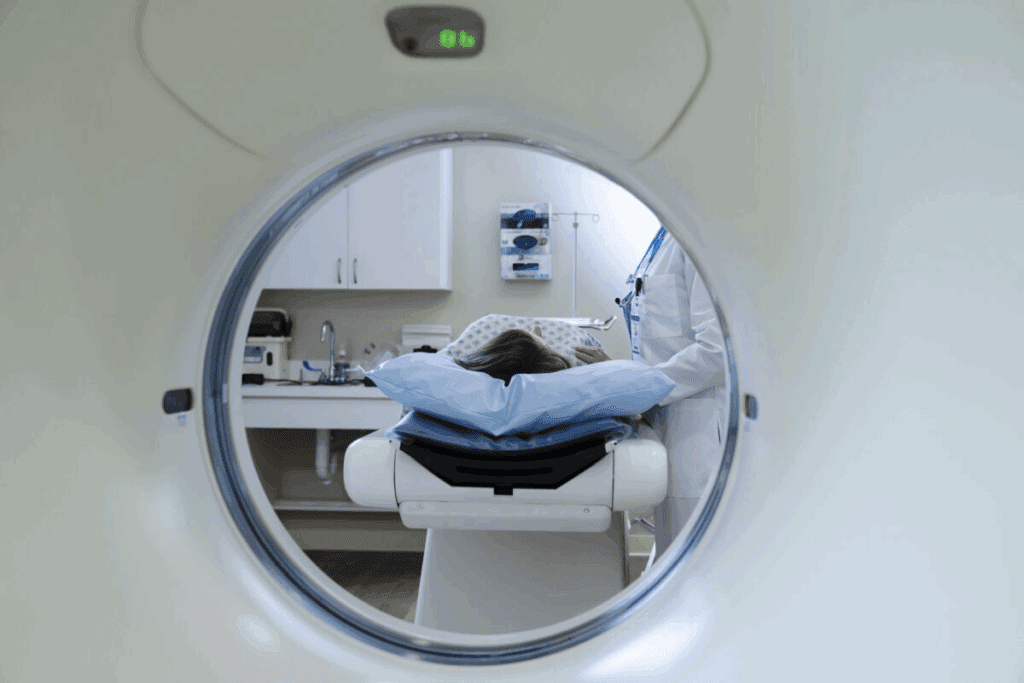
Every year, over 1.9 million new cancer cases are found in the United States. Finding cancer early is very important. Tools like PET scans help doctors do this.
A PET scan, or Positron Emission Tomography scan, is a high-tech way to see inside the body. It shows where cancer and infections are by looking at how the body works.
Key Takeaways
- PET scans are a key tool for finding cancer and infections.
- They show detailed images of the body’s activity.
- PET scans help doctors spot health problems early.
- Early detection leads to better treatment and outcomes.
- PET scans are a big help in the fight against cancer.
Understanding PET Scan Technology
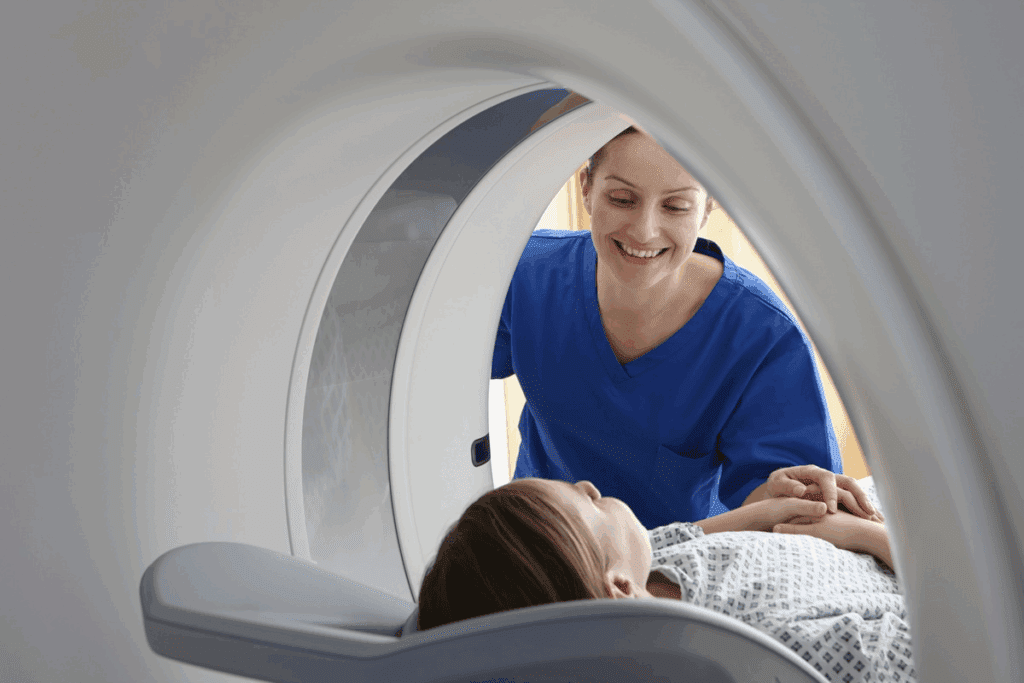
PET scan technology is at the core of modern medical imaging. It uses small amounts of radioactive tracers to show the body’s metabolic activities. This technology helps doctors see what’s happening inside us.
The Science Behind Positron Emission Tomography
Positron Emission Tomography, or PET, works by detecting energy from a tracer substance. This substance goes to areas with high activity, like growing cancer cells. When it decays, it sends out positrons that meet electrons, creating gamma rays.
The PET scanner picks up these gamma rays. It then makes detailed images of the body’s metabolic processes. This is why PET scans are great for finding and tracking diseases like cancer and heart issues.
Evolution of PET Imaging in Medicine
PET imaging has grown a lot over the years. The first PET scanners had low resolution and limited tracers. But, new research and tech have opened up more uses for PET scans.
Today’s PET scanners can show more detail and work with other scans like CT scans. This combo gives doctors both functional and anatomical views. It helps them make better treatment plans.
PET imaging keeps getting better with new tracers and scanners. This means even more help in fighting diseases.
What Is a PET Scan for Cancer?
PET scans are key in fighting cancer. They light up areas where tumors are active. This is because cancer cells use more energy than normal cells.
Basic Principles of Cancer Detection
PET scans work by spotting cancer cells’ unique energy use. Cancer cells eat more sugar than normal cells. When a special sugar tracer is given, it goes to cancer cells. The PET scan then finds these cells.
“PET scans have changed how we find and track cancer,” says a top oncologist. “They help us spot cancer early and see how it grows.”
The Diagnostic Process Using PET
The PET scan process starts with a special sugar tracer. This tracer goes to cells that use a
lot of energy, like tumors. Then, the patient goes into the PET scanner.
The scanner makes detailed pictures of where the tracer is. Doctors look at these pictures to find cancer. Using PET scans with CT scans gives even more information.
Using PET and CT scans together helps doctors understand cancer better. This lets them plan treatments that work best. It also helps track how well the treatment is going.
The Role of PET Scans in Cancer Diagnosis
PET scans are key in finding and tracking cancer. They show how active cancer cells are, helping to tell if they are harmful. This is important for spotting cancer early and understanding how far it has spread.
A study on cervical cancer found PET scans are very good at seeing how far cancer has spread. The accuracy of PET scans in cancer staging helps doctors plan better treatments. This leads to better results for patients.
Types of Cancer Commonly Detected
PET scans are used for many cancers, like lymphoma, lung cancer, and cervical cancer. They work by finding cancer cells based on how active they are. This makes them great for finding fast-growing tumors.
- Lymphoma: PET scans help find out how far lymphoma has spread, helping decide treatment.
- Lung Cancer: They check the activity of lung nodules, helping diagnose and stage lung cancer.
- Cervical Cancer: Studies show PET scans are key in finding and staging cervical cancer, spotting cancer in lymph nodes or other places.
Staging and Spread Assessment
PET scans are also important for cancer staging. They show where cancer is active, helping doctors see how far it has spread. Knowing this is key for planning the right treatment.
An expert once said,
“The use of PET scans in cancer diagnosis has changed how we stage cancer and plan treatments.”
This shows how important PET scans are in fighting cancer.
In summary, PET scans are a big help in fighting cancer. They give important information about tumors, helping doctors plan better treatments. This leads to better care for patients.
PET Scan Capabilities in Detecting Infections
Infections can be hard to spot, but PET scans help a lot. They show where infections are by looking at how cells work. This is not just for cancer; it’s also great for finding and treating infections.
How Infections Appear on PET Scans
Infections show up as hot spots on a PET scan. This is because the body gets busy when it’s fighting an infection. The FDG tracer finds these busy areas, making infections stand out.
Types of Infections That Can Be Detected
PET scans can find many kinds of infections. This includes abscesses, infected implants, and some bacterial or fungal infections. They’re really helpful when infections are hidden or hard to find.
| Infection Type | PET Scan Characteristics | Diagnostic Utility |
| Abscesses | High FDG uptake in the abscess wall | Helps in identifying the extent and location |
| Infected Prosthetic Devices | Increased activity around the prosthetic | Aids in diagnosing prosthetic infection |
| Bacterial or Fungal Infections | Variable uptake depending on the pathogen | Assists in assessing the severity and spread |
PET scans are a big step forward in finding infections. They give doctors a strong tool to spot and treat tough infections.
How Cancer Shows Up on a PET Scan
Understanding how cancer appears on a PET scan is key for accurate diagnosis and treatment planning. Cancerous tissues have higher metabolic activity than normal tissues. This is what makes them detectable on PET scans.
PET scans work by showing where cancer cells are because they use more glucose. A radioactive glucose tracer (FDG) is used. It lights up cancerous areas, making them easy to see.
Visual Characteristics of Malignancies
Cancerous lesions show up as “hot spots” on a PET scan. This is because they take up more of the FDG tracer. These spots are brighter than the normal tissue around them.
Key Features of Cancer on PET Scans:
- Increased FDG uptake
- Higher intensity compared to normal tissue
- Variable appearance depending on cancer type and stage
Comparing Cancer Patterns to Normal Tissue
Normal tissues take up some FDG, but much less than cancer cells. By comparing these, doctors can spot and measure cancer.
Doctors look at the Standardized Uptake Value (SUV) to see how much tracer is taken up. Higher SUV values usually mean cancer.
| Feature | Cancerous Tissue | Normal Tissue |
| FDG Uptake | High | Low |
| SUV Value | Typically higher | Lower |
| Appearance on PET Scan | Bright or “hot” spots | Faint or background intensity |
By looking at these signs, doctors can tell cancerous from normal tissues. This helps in diagnosing and staging cancer.
The PET-CT Combination: Enhanced Diagnostic Power
Healthcare providers now have a better way to understand patient conditions. This is thanks to the PET-CT combination. It improves how accurately they can diagnose and plan treatments.
PET-CT combines PET and CT scans. This hybrid imaging uses the best of both worlds. CT scans show detailed body structures. PET scans reveal how tissues work.
Why Combine PET with CT Scanning
Using PET and CT scans together fixes their individual weaknesses. CT scans are great for detailed body pictures. But they can’t always tell if a tissue is cancerous or not.
PET scans, on the other hand, spot cancer by looking at tissue activity. Yet, they don’t pinpoint locations as well as CT scans do.
The PET-CT combination overcomes these challenges by giving both functional and anatomical details at once. This boosts confidence and accuracy in diagnosis.
Benefits of Hybrid Imaging
PET-CT offers many advantages. It improves how accurately diseases are diagnosed and treated. This approach helps in:
- More accurate detection and staging of cancer
- Improved assessment of cancer spread (metastasis)
- Enhanced monitoring of treatment response
- Better differentiation between scar tissue and active cancer
The table below highlights the main benefits of PET-CT hybrid imaging:
| Benefit | Description | Clinical Impact |
| Enhanced Diagnostic Accuracy | Combines functional and anatomical information | Improved cancer detection and staging |
| Improved Staging | Accurate assessment of cancer spread | Better treatment planning |
| Treatment Response Assessment | Monitoring metabolic changes | Early adjustment of treatment plans |
In conclusion, PET-CT is a big leap forward in medical imaging. It’s a powerful tool for finding, staging, and managing cancer.
PET Scan Procedure: What to Expect
A PET scan is a detailed medical imaging method. It shows how the body’s cells work. Knowing what to expect can make the process easier for patients.
Before the Scan: Preparation Guidelines
Getting ready for a PET scan is important. Patients often need to fast for a few hours. This helps the tracer work better in the body.
They should also avoid hard exercise and some medicines. A doctor will tell them what to do.
On the day of the scan, wear loose, metal-free clothes. You might drink a special liquid to see your digestive tract better. A healthcare team will guide you on how to get ready.
| Preparation Step | Description |
| Fasting | Avoid eating for a few hours before the scan |
| Medication | Inform your doctor about any medications you’re taking |
| Clothing | Wear comfortable, metal-free clothing |
During the Scan: The Patient Experience
During the PET scan, you lie on a table that moves into the scanner. The scanner picks up signals from the tracer. This gives detailed images of your body’s activity.
The scan is usually painless. But, some might feel claustrophobic or uncomfortable. The whole process takes about 30 to 60 minutes. You need to stay very quiet and calm to get clear images.
After the Scan: Recovery and Results
After the scan, you can go back to your usual activities right away. The tracer leaves your body in a few hours.
A radiologist will look at the images. Then, they send the findings to your doctor. These results can help find and treat diseases like cancer and infections.
It’s important to talk to your doctor about the results. They will tell you what to do next.
Interpreting PET Scan Results
Understanding PET scan results is key. PET scans show how active the body’s cells are. This helps doctors find and treat many health issues.
Understanding SUV Values
SUV (Standardized Uptake Value) shows how much tracer is taken up by tissues. It helps tell if something is normal or not. A high SUV value often means cancer.
The SUV value compares activity in certain areas to the body’s average. This helps doctors see how serious a disease is.
What “Hot Spots” Indicate
“Hot spots” on a PET scan mean areas with high tracer uptake. These spots show high activity, which can mean cancer or other issues like infections.
Hot spots are important for finding and understanding cancer. They help doctors see where the cancer is and how far it has spread. They also check if treatments are working.
The Radiologist’s Role in Analysis
Radiologists are key in reading PET scan results. They look at the images and the patient’s history. Their skills help spot what’s normal and what’s not.
They also look at SUV values and how the tracer is taken up. Their findings help decide what tests or treatments are needed next.
Will an Infection Light Up on a PET Scan?
PET scans are great for finding cancer. They can also spot infections because of the body’s fight response. This makes it hard to tell if it’s an infection or cancer.
Inflammatory Response Visualization
When an infection hits, the body’s immune system kicks in. It brings more blood and activity to the area. This makes the infected spot show up on a PET scan because it uses more glucose.
The scan uses a tracer called FDG to see this activity. It shows up in immune cells and tissues. This makes infections look like cancer because both use more glucose.
Distinguishing Infection from Malignancy
It’s tough to tell infection from cancer on a PET scan. Doctors need to look closely at the images and know the patient’s history. They look for patterns and details that help tell them apart.
They might also use CT or MRI scans to get more info. This helps them make a better diagnosis.
Knowing how to read PET scans is key for diagnosing infections or cancer. By using the scan with other info, doctors can give better care to patients.
PET Scan Accuracy and Limitations
PET scans are a powerful tool for diagnosing diseases. But, their accuracy can be affected by several factors. It’s important to know these limitations to understand results correctly.
Causes of False Positives
False positives happen when a PET scan shows cancer or infection in someone who is healthy. Several things can cause this:
- Inflammation: Conditions like arthritis or inflammatory bowel disease can cause increased glucose uptake, mimicking cancer.
- Infection: Active infections can lead to false positives as the body’s immune response consumes more glucose.
- Recent Surgery or Trauma: Healing tissues may have higher metabolic activity, potentially leading to misinterpretation.
False Negatives: When Cancer Is Missed
On the other hand, false negatives occur when a PET scan misses existing cancer. This can happen because of:
- Small Tumor Size: Tumors that are too small may not be detectable.
- Low Metabolic Activity: Some cancers, in their early stages, may not consume enough glucose to be visible.
- Technical Issues: Equipment malfunction or improper scan technique can lead to inaccurate results.
Knowing these limitations is essential for using PET scans in cancer diagnosis and treatment monitoring. By understanding both the strengths and weaknesses of PET scan technology, healthcare providers can make better decisions.
Radiation Exposure in PET Scanning
It’s important to know about the radiation from PET scans. These scans use small amounts of radioactive tracers. They help diagnose and monitor conditions like cancer.
The amount of radiation from a PET scan is a big deal. It’s something to think about, mainly for those who need many scans. Even though PET scans are helpful, it’s good to know about the risks.
Comparing PET Scan Radiation to Other Sources
PET scan radiation is like other common sources. For example, a PET scan with Fluorodeoxyglucose (FDG) gives about 7 millisieverts (mSv) of radiation. A chest CT scan is similar, with 7 to 8 mSv.
A flight across the country might give you 0.1 mSv. Natural background radiation over a year is about 3 mSv. So, a PET scan is like a few years of natural background radiation.
Safety Considerations and Precautions
To lower radiation, there are safety steps. Patients are told what to do before the scan. This includes fasting or avoiding certain medicines.
The amount of radioactive tracer is also carefully chosen. This makes sure it’s enough for the scan but not too much. Doctors might choose other imaging methods for pregnant women or kids to lower radiation.
Key safety measures include:
- Careful patient selection and preparation
- Optimization of the tracer dose
- Use of alternative imaging techniques when appropriate
Understanding PET scan radiation and taking safety steps helps. This way, doctors can use PET scans to help patients while keeping risks low.
PET Scans vs. CT Scans for Cancer Detection
PET scans and CT scans are both key in finding cancer. They work in different ways. Knowing their differences helps pick the right tool for each cancer type.
Structural vs. Functional Imaging
CT scans show detailed pictures of the body’s inside. They help see organs, bones, and soft tissues. On the other hand, PET scans show how active tissues and organs are.
This is very important for finding cancer. Tumors often change how they work compared to normal tissues. PET scans can spot these changes, helping find cancer that CT scans might miss.
When Each Scan Type Is Preferred
Choosing between a PET scan and a CT scan depends on several things. These include the cancer type, its stage, and the patient’s health.
- PET scans are often chosen for:
- Seeing how active tumors are
- Finding where cancer has spread
- Checking how well treatment is working
- CT scans are usually used for:
- Getting detailed pictures of the body
- Helping with biopsies and other procedures
- Watching for changes in the body over time
Using both PET and CT scans together (PET-CT) is often the best choice. It gives both detailed pictures and information on how active tissues are in one scan.
Full Body PET Scans for Cancer Screening
Full-body PET scans are now a key part of cancer screening. They can spot cancer in different parts of the body. This new way of imaging has changed how we look at cancer, showing how active the body’s cells are.
These scans have many benefits in cancer screening. They can find cancer early, even before symptoms show. This early catch can lead to better treatment results. They also show how far cancer has spread, which helps doctors plan treatment.
Benefits and Limitations of Whole-Body Imaging
Whole-body PET scans give a full view of the body’s activity. They can spot cancer in many places at once. But, there are downsides. They use radiation, which is a worry for younger people. They can also be expensive, and not all insurance covers them for screening.
Another issue is false positives. Sometimes, things that aren’t cancer can look like it on a scan. This can cause extra worry and tests.
Recommended Usage Guidelines
It’s important to have rules for when to use full-body PET scans. They’re best for people at high risk of cancer, like those with a family history. They’re also used for people already with cancer to see how far it’s spread.
Doctors need to think carefully about using these scans. They should talk about the good of finding cancer early against the risks of radiation and false positives.
In short, full-body PET scans are a big help in finding cancer early. They offer a detailed look at the body’s activity. But, they also have some downsides to think about.
Advancements in PET Scan Technology
PET scan technology has seen big changes, bringing new hope to patients everywhere. These updates have made diagnoses more accurate and opened up new uses for PET scans.
The growth of PET scan tech is thanks to better tracers, scanners, and algorithms. A big step forward is the creation of new tracers beyond FDG (fluorodeoxyglucose). While FDG is key for cancer scans, new tracers aim to spot other types of cancer or metabolic issues.
New Tracers Beyond FDG
New tracers are being made to fix FDG’s limits. Some cancers don’t show up well with FDG because they don’t use glucose much. New tracers aim to find these cancers by targeting different metabolic paths or tumor traits.
- Fluorothymidine (FLT): Tracks cell growth, helping to see how aggressive tumors are.
- Fluoromisonidazole (FMISO): Finds hypoxic areas in tumors, key for radiation therapy planning.
- PSMA-targeting tracers: Made for prostate cancer, they’re very good at finding cancer spread.
Improved Resolution and Detection Capabilities
New PET scanners have improved resolution and detection. Today’s scanners can spot smaller tumors and measure them more accurately.
Some key upgrades include:
- Time-of-Flight (TOF) PET: Boosts image quality, helping with bigger patients.
- Digital PET: More sensitive and clear than old scanners.
- Hybrid imaging systems: Mix PET with CT or MRI for detailed views.
These tech upgrades are leading to better treatments for patients. As research keeps going, we’ll see even better results and care.
Cost Considerations and Insurance Coverage
Knowing the costs of medical imaging is key for those thinking about a PET scan. The price of a PET scan changes based on several things. These include where you are, the facility type, and your insurance.
Average Costs in the United States
In the U.S., a PET scan’s price can be between $1,000 and $5,000 or more. Hospital-based PET scans are usually pricier than those done in outpatient centers. For example, a PET scan at a big hospital in a city might cost over $3,000. But the same scan at an outpatient center could be much cheaper.
A study in the Journal of Nuclear Medicine found the national average for a PET scan is about. But prices can really vary based on where you are and other things.
Insurance Requirements and Approvals
Insurance for PET scans differs by provider and policy. Most plans cover PET scans for cancer and some other conditions. But, you might need to meet certain criteria or get pre-approval first.
“Insurance coverage is a big deal for what patients pay out of pocket,” says a radiologist. “Patients should check their insurance and know any costs they might face.”
To make sure you’re covered, do the following:
- Check your insurance to see if it covers PET scans.
- Get pre-approval from your insurance if needed.
- Know about any co-pay or deductible you might have to pay.
Understanding PET scan costs and insurance can help patients plan their diagnostic journey better.
Conclusion
PET scans are now a key tool in finding cancer and some infections. They show how tissues work, helping doctors diagnose, stage, and track treatments.
Looking at PET scan benefits and limits, we see they’re very good at spotting cancer and infections. But, they’re not perfect. They can sometimes say a tissue is sick when it’s not, or miss a problem. Also, they use a bit of radiation.
Even with these downsides, PET scans are vital in today’s medicine, mainly in cancer care. They give extra details that CT and MRI scans can’t, making diagnoses more accurate. This helps doctors make better treatment plans.
As technology gets better, PET scans will likely get even more useful. They might help find and manage more diseases in the future.
FAQ
What is a PET scan, and how does it work?
A PET (Positron Emission Tomography) scan is a medical test. It uses a small amount of radioactive tracer to see how the body works. The tracer goes into the body and builds up in active areas, like tumors. Then, the PET scanner finds it.
Can a PET scan detect cancer?
Yes, PET scans can find cancer by showing where the body is most active. This is true for many cancers. They help see how far cancer has spread and if treatment is working.
Will an infection light up on a PET scan?
Yes, PET scans can spot infections by showing where the body is extra active. This helps find infections like abscesses or problems with prosthetics.
How does cancer show up on a PET scan?
Cancer looks different on PET scans because it’s more active than normal tissue. This makes it show up as “hot spots” on the scan.
What is the difference between a PET scan and a CT scan?
A PET scan shows how active the body is, while a CT scan shows the body’s structure. Together, they give a clearer picture of what’s going on inside.
What is a PET-CT scan?
A PET-CT scan combines the activity information from a PET scan with detailed images from a CT scan. This makes diagnoses more accurate.
How is a PET scan used in cancer diagnosis?
PET scans help find cancer, figure out how far it has spread, and check if treatment is working. They’re used for cancers like lymphoma, lung cancer, and cervical cancer.
Can a PET scan detect all types of cancer?
PET scans are good for finding many cancers, but not all. They might miss cancers that are small or don’t use much energy.
What are the limitations of PET scans?
PET scans can sometimes show false positives or negatives. This can happen if there’s inflammation or if the cancer is small or not very active.
How much radiation is involved in a PET scan?
PET scans use a little bit of radiation from the tracer. The benefits are usually worth the small risk, but safety steps are taken to keep exposure low.
What is the cost of a PET scan in the United States?
The cost of a PET scan varies a lot. It depends on where you are, the facility, and your insurance. Costs can range from a few hundred to several thousand dollars.
Are PET scans covered by insurance?
Many insurance plans cover PET scans for certain conditions, like cancer. But, what’s covered and how much can vary a lot.
What are the benefits of using PET scans for cancer screening?
PET scans can find cancer in different parts of the body. They help doctors diagnose, stage, and monitor treatment. They’re great for spotting some cancers and seeing how far they’ve spread.
What are the recent advancements in PET scan technology?
New PET scan technology includes better tracers, higher resolution, and better detection. These improvements help PET scans diagnose more accurately.
Reference
- Love, C., Tomas, M. B., Tronco, G. G., & Palestro, C. J. (2005). FDG PET of infection and inflammation. Radiographics, 25(5), 1357-1368. https://pubmed.ncbi.nlm.nih.gov/16244225/
- Zhu, Z., Sun, H., Shen, G., Liu, W., & Hao, W. (2023). Diagnostic performance of 18F-FDG PET/CT for differentiation of malignant and benign lesions: a systematic review and meta-analysis. European Journal of Radiology, 160, 110739.https://www.sciencedirect.com/science/article/pii/S0720048X2300144X