
The term “rectal” is about health issues, treatments, or actions linked to the rectum. It’s the last part of the large intestine, from the sigmoid colon to the anus. Knowing what rectal means is key to understanding many health problems and treatments.what is a rectal3 Reasons Why the Digital Rectal Exam (DRE) Is Still a Valuable Test Today
The rectum is very important for getting rid of waste. It’s a big part of our digestive system. Merriam-Webster says “rectal” was first used in 1826. At Liv Hospital, we aim to give you the right info and top-notch care, following international standards.
Key Takeaways
- The term “rectal” refers to the rectum, the last part of the large intestine.
- Understanding the rectal medical definition is essential for medical literacy.
- The rectum is a key part of the digestive system, helping with waste removal.
- Liv Hospital offers care focused on you and accurate info on what does rectal mean in health terms.
- Health issues and treatments related to the rectum are important in healthcare.
In medical terms, “rectal” means anything related to the rectum. This part of our digestive system is key for storing and getting rid of waste. Knowing about it helps keep us healthy.
Etymology and Origin of the Term
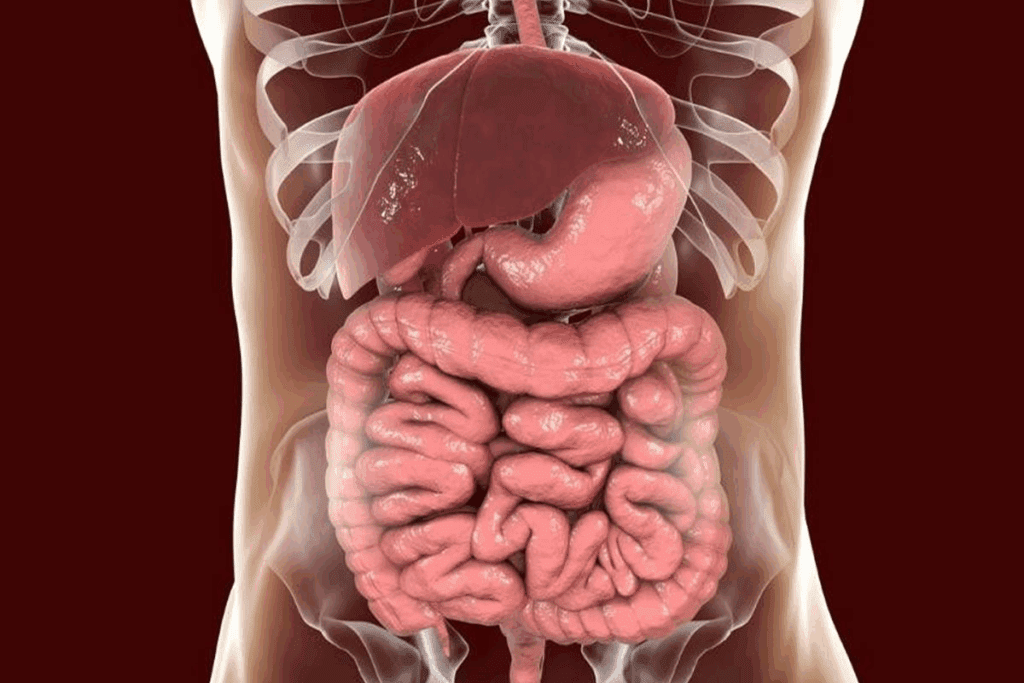
The word “rectal” comes from Latin, “intestinum rectum,” or straight intestine. This shows the rectum’s straight shape. Learning where medical words come from can help us understand them better.
Using Latin in medicine is a tradition that helps doctors around the world talk the same language. For “rectal,” its Latin roots help it fit into many medical situations.
Usage in Medical Terminology
“Rectal” is an adjective for anything about the rectum. For example, a “rectal examination” is when a doctor checks the rectum with their hands or tools.
- Rectal Anatomy: Talks about the rectum’s structure, like its layers and nearby tissues.
- Rectal Physiology: Deals with how the rectum works, like holding and passing waste.
- Rectal Conditions: Covers all kinds of problems or diseases of the rectum, like inflammation or tumors.
Knowing what “rectal” means in medicine helps doctors talk clearly and give the right care and treatments.
Anatomy of the Rectum: Understanding What Is a Rectal Structure
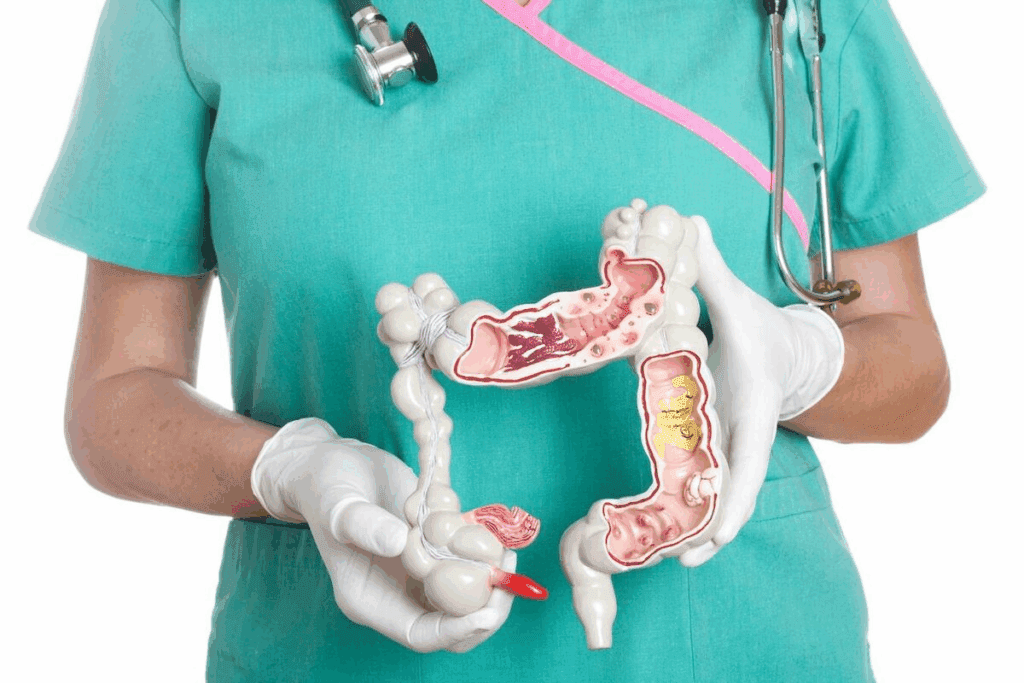
The rectum’s anatomy is quite complex. It has unique bends and is linked to other parts around it. This part of the large intestine is key to our digestion.
Location and Physical Characteristics
In adults, the rectum is about 12 centimeters long. It holds feces temporarily. It starts at S3 and ends at the anal canal. Its shape fits perfectly in the pelvic area.
The rectum has special features like its length and bends. These are vital for its job and its connection to other parts.
Relationship to Surrounding Structures
The rectum is near many important structures in the pelvis. In men, it’s next to the prostate and bladder. In women, it’s near the vagina and uterus. Knowing this helps doctors diagnose and treat rectal issues.
Being in the pelvis, the rectum is surrounded by other essential organs. This can sometimes cause problems. Issues with nearby organs can affect the rectum.
Histological Features
The rectum’s wall has several layers. These include the mucosa, submucosa, muscularis propria, and serosa. The mucosa has columnar cells that absorb water and salts.
The rectum has special features like rectal columns and the anal transitional zone. These are important for its function and in dealing with rectal problems.
Physiological Function of the Rectum
The rectum plays a key role in digestion and elimination. It acts as a temporary storage for feces. This is important for regular bowel movements and good gut health.
Role in Digestion and Elimination
The rectum is vital in the digestive system. It holds feces until it’s time to get rid of them. This helps keep bowel movements regular and supports gut health.
Feces move into the rectum, where it expands to hold them. When it’s full, it sends a signal to defecate. This tells the body it’s time to get rid of waste.
Rectal Chambers and the Ampulla
The rectum has special chambers, with the rectal ampulla being the last one. The rectal ampulla is key for storing feces before they’re eliminated. It’s the last part of the rectum and holds waste.
The ampulla can grow to hold more feces. When it’s full, it sends a signal to the nervous system. This signal tells the body it’s time to go.
Nervous System Connections
The rectum is connected to the nervous system. This connection lets it know when it’s time to go. The nervous system connections help the rectum work right.
These connections help the rectum move waste out. Knowing about these connections is important for treating rectal problems.
Function | Description |
Storage of Feces | The rectum temporarily stores feces until elimination. |
Signaling for Elimination | The rectal ampulla triggers signals to the nervous system, indicating the need to defecate. |
Nervous System Control | The rectum is controlled by both sympathetic and parasympathetic nervous systems. |
Common Rectal Examinations and Procedures
Healthcare providers use different rectal exams to check the rectum and nearby areas. These exams help diagnose and treat rectal issues. This ensures patients get the right care.
Digital Rectal Examination (DRE)
A Digital Rectal Examination (DRE) is a key procedure. It checks the rectum and nearby areas. A healthcare provider uses a gloved finger to feel for any problems.
The DRE is a valuable tool for diagnosing. It helps check the rectal lining, prostate (in men), and rectal wall for diseases. It’s often done during a routine check-up or when symptoms appear.
Proctoscopy and Sigmoidoscopy
Proctoscopy and sigmoidoscopy are endoscopic tests. They let healthcare providers see inside the rectum and sigmoid colon. Proctoscopy looks at the rectum, while sigmoidoscopy checks the rectum and sigmoid colon.
These tests use a tube with a camera and light. This lets them see the inside of the rectum. They can spot problems like inflammation or tumors.
“Endoscopic exams like proctoscopy and sigmoidoscopy are key for diagnosing and tracking rectal and colonic issues. They give important info for treatment plans.”
Rectal Biopsies
A rectal biopsy takes a tissue sample from the rectum. It’s often done during proctoscopy or sigmoidoscopy if something looks off.
The biopsy sample is examined under a microscope to find conditions like cancer or infections. This helps plan the right treatment.
Knowing about these rectal exams and procedures is important. It helps both healthcare providers and patients. Understanding these tools helps make better health decisions.
Rectal Conditions and Disorders
Rectal conditions include many disorders, from inflammation to cancer. It’s important to know about them for early treatment.
Inflammatory Conditions
Proctitis is an inflammation of the rectum’s lining. It can be caused by infections, radiation, or some medicines. Symptoms include pain, bleeding, and diarrhea.
We will look at what causes proctitis and how to treat it. This can help manage symptoms better.
Structural Abnormalities
Structural issues like rectocele and rectal prolapse affect rectal health. A rectocele happens when the rectum bulges into the vagina. Rectal prolapse is when the rectum sticks out from the anus.
These problems can come from constipation, weak muscles, or other reasons. Knowing the causes and symptoms is important for getting the right medical help.
Neoplastic Diseases
Rectal cancer is a serious issue. It starts in the rectum and can spread if not caught early. Risk factors include age, family history, and some genetic conditions.
Symptoms include bleeding, changes in bowel habits, and pain. Early detection is key for treatment.
We will discuss treatment options for rectal cancer. These include surgery, radiation, and chemotherapy. Knowing these options helps patients make better care choices.
Rectal Medications and Treatments
It’s key to know about rectal medications and how they work. These medicines go straight into the rectum. They help treat many health issues.
Suppositories and Their Uses
Suppositories are a common way to get medicine into the body. They are solid or soft and go into the rectum. There, they melt and release the medicine.
Suppositories are used for many things like pain relief, reducing swelling, and helping with bowel movements. They get the medicine right to the spot, skipping the stomach.
Rectal Enemas
Rectal enemas use liquid medicine that goes into the rectum. They help with diagnostic tests and treatments. Enemas can give medicine, clean the bowel, or help with constipation.
The liquid in enemas is absorbed by the rectum. This can help the whole body or just the area treated.
Other Forms of Rectal Administration
There are more ways to use rectal medications. These include gels, foams, and ointments. Each type works differently and is best for certain needs.
For example, gels and foams can be very soothing. They’re often used for things like hemorrhoids.
We see how vital these treatments are for rectal health. Knowing about these methods helps doctors give better care. It makes treatments more effective for each patient.
Diagnostic Imaging of the Rectum
We use different imaging methods to see the rectum and nearby areas clearly. These tools help doctors find out what’s wrong and plan the best treatment.
CT and MRI Visualization
Computed Tomography (CT) and Magnetic Resonance Imaging (MRI) are key for looking at the rectum. CT scans give detailed pictures of the inside, showing things like tumors or swelling. MRI shows soft tissues well, which is great for checking cancer and the health of the rectum and nearby tissues.
Endorectal Ultrasound
Endorectal ultrasound uses a probe in the rectum to get clear images. It’s good for checking cancer, how deep it is, and if nearby lymph nodes are affected.
Defecography and Other Specialized Studies
Defecography looks at how the rectum works when you poop. It helps find problems like prolapse or dysfunction. Other tests, like functional MRI and dynamic CT, also help check how the rectum works in certain cases.
Choosing the right imaging test depends on what the doctor needs to know. This way, doctors can make the right diagnosis and treatment plan for rectal issues.
- CT and MRI provide detailed images of the rectum and surrounding structures.
- Endorectal ultrasound is useful for staging rectal cancers and assessing the rectal wall.
- Defecography evaluates rectal function during defecation.
Patient Communication and Rectal Health
Talking openly about rectal health can greatly improve health outcomes. When patients share their symptoms, they get accurate diagnoses and treatments.
Discussing Rectal Symptoms with Healthcare Providers
Talking about rectal symptoms with doctors is key for the right care. It might feel awkward, but it’s vital. Here are some tips for talking effectively:
- Be honest about your symptoms and when they occur.
- Provide detailed information about your medical history.
- Ask questions about your diagnosis and treatment options.
As a healthcare provider once said,
“The most important thing for a patient is to feel heard and understood. This is true, even when talking about sensitive topics like rectal health.”
Preventive Health Measures
Preventive steps, like diet and lifestyle changes, can keep your rectal health in check. We suggest:
Measure | Benefit |
Increasing fiber intake | Reduces risk of constipation and hemorrhoids |
Staying hydrated | Softens stool, making it easier to pass |
Exercising regularly | Improves bowel function and overall health |
Understanding “rectal” in medical terms and taking action can boost your health. Knowing how to spell it and its meaning helps in talking to doctors.
We urge patients to be proactive in their health. Discuss any rectal symptoms with doctors and take preventive steps.
Conclusion
We’ve looked into what “rectal” means in medical terms. We’ve covered its anatomy, how it works, and related health issues. Knowing about the rectum is key for good health care.
The term “rectal” is vital for digestion and getting rid of waste. We talked about tests like the digital rectal exam (DRE) and proctoscopy. These tests help doctors find and treat problems in the rectum.
Keeping the rectum healthy is important for our overall well-being. Knowing about the rectum and its health issues helps us get medical help when we need it. This way, doctors can give us the best care possible, meeting our specific needs.
In short, “rectal” is a basic term in medicine that affects our health and life quality. Understanding the rectum and its role helps us value its importance in our health.
FAQ:
What does “rectal” mean in medical terms?
In medical terms, “rectal” means anything related to the rectum. The rectum is the last part of the large intestine.
What is the rectum’s role in the body?
The rectum holds feces temporarily before we go to the bathroom. It’s key to our digestive system.
What is a Digital Rectal Examination (DRE)?
A Digital Rectal Examination is when a doctor checks the rectum with a gloved finger. They look for any unusual signs.
What are suppositories and how are they used?
Suppositories are put into the rectum to treat issues like constipation or hemorrhoids. They can also give medicine.
What is the difference between proctoscopy and sigmoidoscopy?
Proctoscopy looks at the rectum. Sigmoidoscopy checks the sigmoid colon and rectum. Both use a tube with a camera.
What are some common rectal conditions?
Common issues include hemorrhoids, anal fissures, rectal prolapse, and rectal cancer.
How is rectal cancer diagnosed?
Doctors use a digital exam, endoscopy, and imaging like CT scans to find rectal cancer. A biopsy is also used.
What is defecography?
Defecography is an imaging study that shows how we go to the bathroom. It helps find problems with bowel movements.
How can I maintain good rectal health?
Eat well, exercise, and avoid straining when you go to the bathroom. Talk to a doctor if you have any issues.
What is endorectal ultrasound?
Endorectal ultrasound uses a probe in the rectum to see the rectal wall. It’s often used for rectal cancer.
What are rectal enemas used for?
Enemas put medicine or cleaners into the rectum. They help treat conditions or get ready for medical tests.
References:
National Center for Biotechnology Information. Rectum: Anatomy, Definition, and Function. Retrieved from https://www.ncbi.nlm.nih.gov/books/NBK537245/