

Knowing what a rheumatoid factor test shows is key for spotting autoimmune diseases like rheumatoid arthritis. We dive into why this blood test matters and what high RF levels might mean for your health.
A rheumatoid factor (RF) test looks for rheumatoid factor, a protein made by your immune system. If RF levels are high, it could mean you might have an autoimmune disease. This is why it’s important for both patients and doctors to understand what it means.
At Liv Hospital, we’re dedicated to helping you make sense of your RF test results. We want to make sure you get the help you need.
Key Takeaways
- RF test measures the levels of rheumatoid factor in the blood.
- High RF results may indicate autoimmune diseases like rheumatoid arthritis.
- Understanding RF test results is vital for patients and healthcare providers.
- Liv Hospital provides expert guidance on interpreting RF test results.
- Accurate diagnosis and thorough support are key for managing autoimmune conditions.
Understanding the Rheumatoid Factor Test

To understand the importance of rheumatoid factor testing, we need to know what rheumatoid factor is. It’s an antibody made by the immune system. It can be found in the blood through a test.
What Rheumatoid Factor Is
Rheumatoid factor is an autoantibody that targets IgG antibodies. It’s found in many autoimmune diseases, not just rheumatoid arthritis. Most people have some RF in their blood and are healthy. But, high levels can mean there’s a health problem.
Purpose of RF Blood Testing
The main goal of RF blood testing is to help diagnose rheumatoid arthritis and other autoimmune diseases. It’s useful for:
- Helping diagnose rheumatoid arthritis
- Tracking disease activity and how it changes
- Telling rheumatoid arthritis apart from other arthritis types
About 80% of rheumatoid arthritis patients test positive for RF. This makes it a key marker for diagnosis.
Prevalence in Rheumatoid Arthritis
Rheumatoid factor is more common in rheumatoid arthritis patients than in the general public. Research shows many RA patients have RF. This can link to how severe the disease is and the patient’s outlook.
Even though RF testing is helpful, it’s not enough on its own for a diagnosis. Doctors use it along with other tests and a patient’s medical history to make a diagnosis.
How the Rheumatoid Factor Test Is Performed
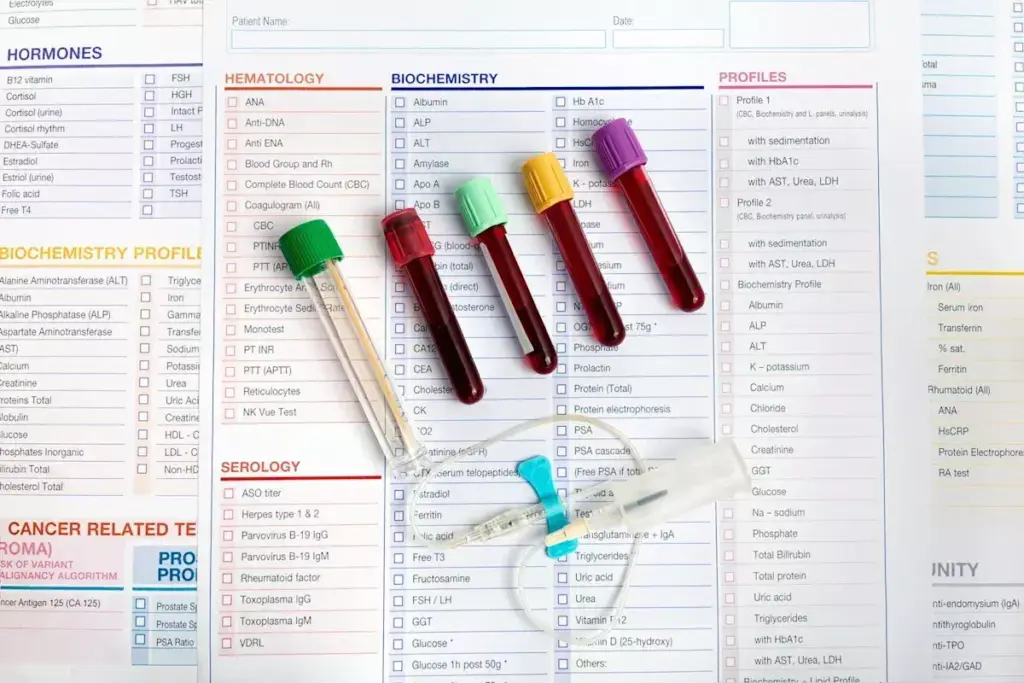
The RF test is done with a simple blood draw from a vein in your arm. This is a key step in diagnosing rheumatoid arthritis.
The Blood Draw Procedure
The blood draw for the RF test involves several steps:
- A healthcare professional will prepare the area, usually by cleaning it with an antiseptic.
- A tourniquet is applied to make the veins more visible.
- A small needle is inserted into a vein, and a blood sample is collected in a tube.
- The needle is withdrawn, and pressure is applied to the puncture site to stop any bleeding.
This process is quick and usually doesn’t hurt much.
Laboratory Analysis Methods
After the blood sample is taken, it goes to a lab for analysis. The lab uses different methods to measure rheumatoid factor levels, including:
- ELISA (Enzyme-Linked Immunosorbent Assay): A sensitive method for detecting and quantifying RF antibodies.
- Nephelometry: A technique that measures the scattering of light by particles in a solution, used to quantify RF levels.
These methods help find out if RF is present and how much.
Preparation and Aftercare
Before the RF test, patients are told to:
- Inform their healthcare provider about any medications they are taking.
- Follow any specific instructions provided by their healthcare provider.
After the test, you might see some bruising or feel a bit sore. This usually goes away on its own.
What High RF Results Mean
High rheumatoid factor (RF) results are key to diagnosing and managing autoimmune diseases. They show a higher chance of having an autoimmune disease, like rheumatoid arthritis.
Normal vs. Abnormal RF Levels
A normal RF level is under 14 IU/mL. Levels of 14 IU/mL or more are seen as high or positive. Elevated RF levels can point to health issues, such as rheumatoid arthritis, Sjögren’s syndrome, and lupus.
Here’s a table to help understand RF test results:
| RF Level (IU/mL) | Interpretation |
| < 14 | Normal |
| 14 – 20 | Mildly Elevated |
| > 20 | Significantly Elevated |
Clinical Significance of Elevated RF
Elevated RF levels alone don’t diagnose a disease but help with diagnosis when combined with symptoms and other tests. The presence of RF suggests a higher risk of rheumatoid arthritis or other autoimmune diseases.
Association with Disease Severity
High RF levels often mean more severe rheumatoid arthritis and a higher risk of complications. Patients with high RF are more likely to have aggressive disease. Early and proper treatment is very important.
Limitations of RF Testing
RF testing is useful but has its limits. Not all rheumatoid arthritis patients test positive for RF. Also, some people without the disease may have high RF levels. So, RF testing is part of a broader diagnostic approach.
We use RF testing as one tool to diagnose and understand the severity of autoimmune diseases. Knowing the meaning of high RF results helps healthcare providers make better decisions for patient care.
Conclusion
We’ve looked into how important the rheumatoid factor test is. It helps doctors diagnose and treat rheumatoid arthritis and other autoimmune diseases. This test is key in making care plans.
When RF test results are high, it might mean someone has rheumatoid arthritis. Knowing this is important for managing the disease well. Doctors use this test along with others to create a treatment plan that fits each patient.
The rheumatoid factor test is a critical tool in diagnosing and managing autoimmune diseases. Its results can greatly affect how well a patient does. As we learn more about rheumatoid arthritis and other autoimmune diseases, the RF test will keep being a vital part of patient care.
FAQ
What is a Rheumatoid Factor (RF) test?
RF test measures autoantibodies attacking healthy tissue, mainly used to aid rheumatoid arthritis diagnosis.
What does a high RF result mean?
Indicates autoimmune activity like RA, Sjogren’s, or infections; not specific to RA alone.
What is the significance of RF testing in rheumatoid arthritis?
Helps confirm RA diagnosis (positive in ~80% cases), monitors severity alongside symptoms.
What are normal vs. abnormal RF levels?
Normal: <14-20 IU/mL; abnormal: >20 IU/mL (positive).
What is the clinical significance of elevated RF?
Is a positive RF test definitive for rheumatoid arthritis?
What are the limitations of RF testing?
What is the association between RF levels and disease severity?
References
National Center for Biotechnology Information. Evidence-Based Medical Insight. Retrieved from https://www.ncbi.nlm.nih.gov/books/NBK532898/[web:8