
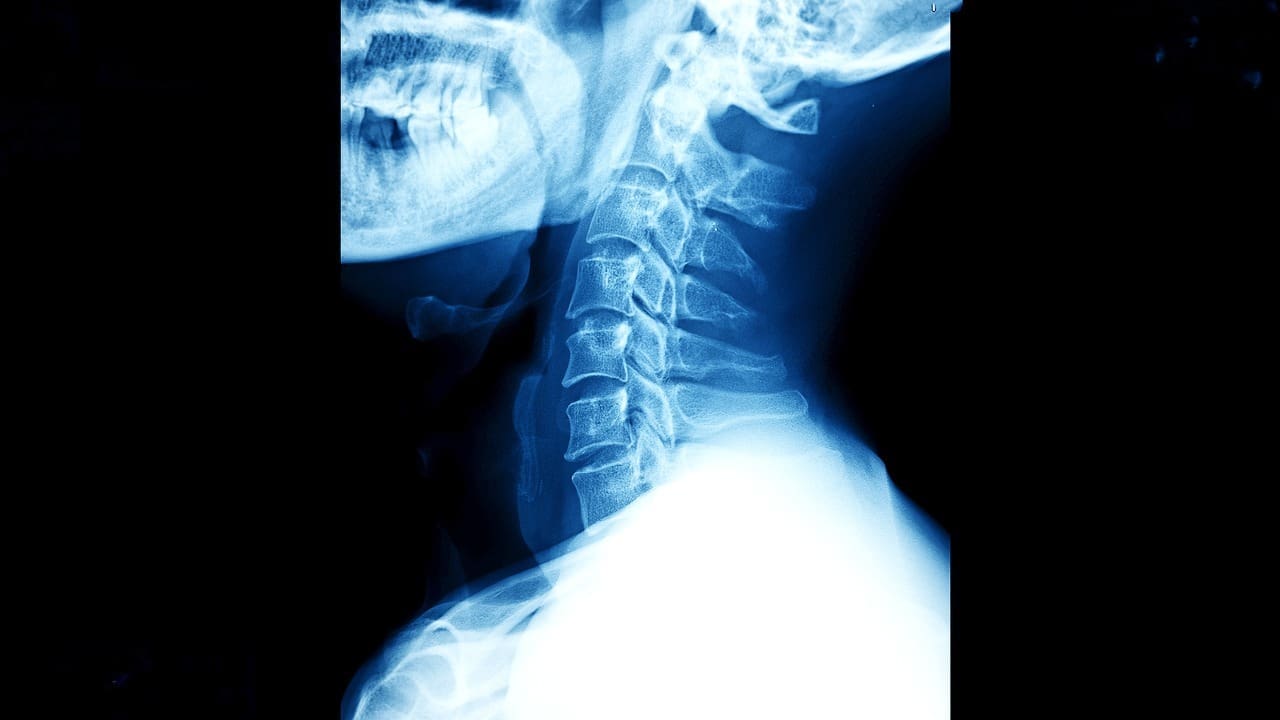
Understanding spinal surgery can be tough. At Liv Hospital, we aim to make it clear and caring. ACDF means Anterior Cervical Discectomy and Fusion. It’s a surgery to ease nerve pressure and make the neck stable.
ACDF is often used for herniated discs and worn-out discs. It removes the bad disc and joins the vertebrae. This helps reduce pain and makes moving easier. Research on using computers to predict opioid use after ACDF has shed light on its success.
At Liv Hospital, our team is all about top-notch care for international patients. We want to share our knowledge with you. So, we’re here to break down the ACDF meaning, abbreviation, and surgery details.
Key Takeaways
- ACDF stands for Anterior Cervical Discectomy and Fusion, a surgical procedure for relieving nerve compression.
- The procedure is commonly used to treat herniated discs and degenerative disc disease.
- ACDF surgery involves removing the damaged disc and fusing the surrounding vertebrae.
- The goal of ACDF is to alleviate pain and improve mobility in the cervical spine.
- Liv Hospital is committed to providing clear and compassionate care for international patients.
Decoding the ACDF Medical Acronym
The ACDF medical term is often seen in neurosurgery and orthopedics. It’s key for both patients and healthcare workers to understand it as we explore spinal surgery.
The Full Meaning: Anterior Cervical Discectomy and Fusion
The ACDF stands for Anterior Cervical Discectomy and Fusion. This surgery removes a bad or herniated disc from the neck. It’s done from the front.
“Discectomy” means taking out the disc. “Fusion” means joining vertebrae together to keep the spine stable. Knowing what ACDF means helps patients understand their treatment better.
Origins and Development of ACDF in Medical Practice
ACDF surgery started in the mid-20th century. Back then, doctors were looking for good ways to fix cervical spine problems. Thanks to new tech and techniques, ACDF has become a trusted treatment for many neck issues.
The Society of Thoracic Surgeons Congenital Heart Surgery Database shows how data helps improve surgeries. This includes ACDF. As medicine keeps getting better, ACDF stays a top choice for neck problems. It shows how doctors keep working to help patients heal faster and better.
Anatomy of the Cervical Spine
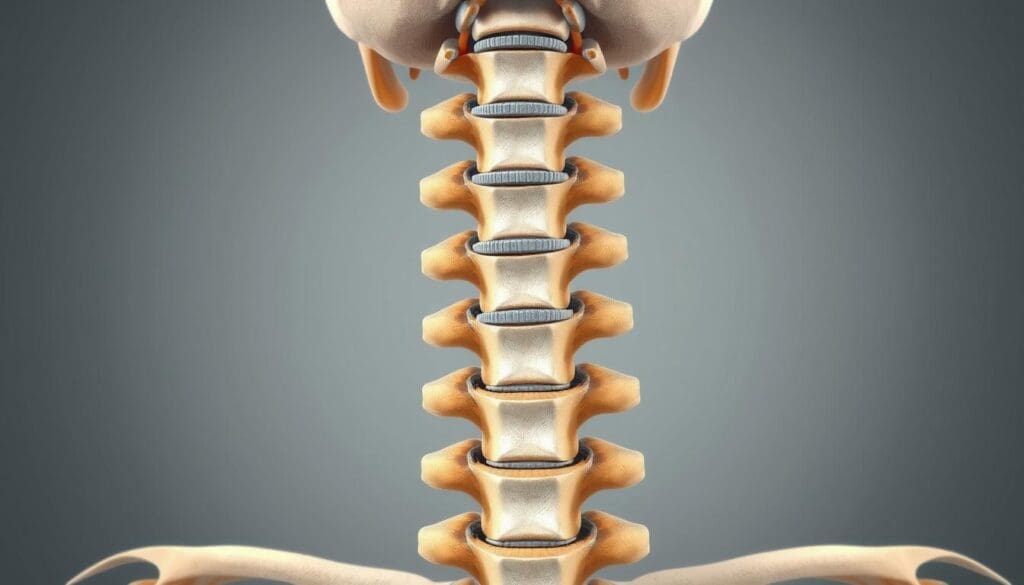
Knowing the anatomy of the cervical spine is key for diagnosing and treating conditions needing Anterior Cervical Discectomy and Fusion (ACDF) surgery. The cervical spine, made up of seven vertebrae, supports the head and allows for a wide range of motion. It has intervertebral discs, facet joints, and a network of nerves.
Structure and Function of Cervical Vertebrae
The cervical vertebrae are made for flexibility and support. The top vertebrae, C1 and C2, have special structures for rotational movement. The lower vertebrae (C3-C7) have typical structures, with vertebral bodies, pedicles, and spinous processes. The discs between these vertebrae act as shock absorbers, making motion smooth.
Medical experts say, “The cervical spine’s anatomy is a remarkable balance of stability and mobility, allowing for a wide range of movements while supporting the head.”
This complex structure, though, also makes it prone to various pathologies.
Common Pathologies Affecting the Cervical Region
Several conditions can affect the cervical spine, leading to the need for ACDF surgery. These include herniated discs, where the disc material compresses nerves; degenerative disc disease, which involves the wear and tear of discs over time; and cervical spinal stenosis, a narrowing of the spinal canal that can compress the spinal cord.
| Pathology | Description | Symptoms |
|---|---|---|
| Herniated Disc | Disc material compresses nerves | Neck pain, radiating pain |
| Degenerative Disc Disease | Wear and tear of discs | Pain, stiffness, reduced mobility |
| Cervical Spinal Stenosis | Narrowing of the spinal canal | Numbness, weakness, loss of coordination |
For more information on ACDF surgery and its applications, visit Piedmont.org, a trusted resource for spinal health and surgical treatments.
Medical Conditions Treated with ACDF Surgery
ACDF surgery is a top choice for treating many cervical spine issues. It helps fix various neck and spine problems. This surgery brings relief and helps patients regain their function.
Herniated Cervical Discs
A herniated cervical disc happens when the soft center leaks out. This can press on nerves, causing neck and arm pain, numbness, and weakness. ACDF surgery removes the herniated disc and fuses the vertebrae. This relieves nerve pressure and eases symptoms.
Degenerative Disc Disease
Degenerative disc disease makes the cervical discs wear down over time. This leads to neck pain and stiffness. ACDF surgery removes the damaged disc and stabilizes the spine through fusion.
Cervical Spinal Stenosis
Cervical spinal stenosis narrows the spinal canal in the neck. It can cause arm and leg numbness, weakness, and pain. ACDF surgery decompresses the spinal cord and stabilizes the spine, easing symptoms.
Cervical Radiculopathy and Myelopathy
Cervical radiculopathy is when a nerve root in the cervical spine gets inflamed or compressed. Cervical myelopathy is when the spinal cord gets compressed, causing weakness and coordination loss. ACDF surgery relieves pressure on nerves and the spinal cord, treating both conditions.
| Condition | Symptoms | Treatment with ACDF |
|---|---|---|
| Herniated Cervical Discs | Pain, numbness, weakness in neck and arms | Removal of herniated disc and fusion |
| Degenerative Disc Disease | Pain, stiffness in neck | Removal of damaged disc and fusion |
| Cervical Spinal Stenosis | Numbness, weakness, pain in arms and legs | Decompression of spinal cord and fusion |
| Cervical Radiculopathy and Myelopathy | Pain, numbness, weakness, loss of coordination | Relief of pressure on nerves and spinal cord |
The ACDF Procedure in Detail
The Anterior Cervical Discectomy and Fusion (ACDF) procedure is a detailed surgery. It starts with a small incision in the neck’s front, often on the side to hide scars. The ACDF surgery needs general anesthesia and takes about an hour to an hour-and-a-half for one level.
We carefully separate neck structures like the sternocleidomastoid muscle and carotid arteries. This lets us reach the cervical spine. We then remove the soft disc and add graft material to help the spine fuse. Sometimes, we use cages, plates, and screws to support the spine during healing.
After the surgery, patients often wear a collar for neck support. Symptoms like throat soreness or mild swallowing issues are common but short-lived. A study found that 98.2% of patients could drive in 16 days, and 85.7% returned to work in the same time frame.
It’s important for patients to understand the ACDF medical procedure and its results. Knowing what to expect helps them make better treatment choices.
What does ACDF stand for in medical terms?
ACDF stands for Anterior Cervical Discectomy and Fusion. It’s a surgery for neck pain and related issues.
What is the purpose of ACDF surgery?
ACDF surgery aims to ease nerve pressure and stabilize the neck. It removes a bad disc and fuses the vertebrae.
What conditions are treated with ACDF surgery?
ACDF surgery helps with herniated discs, degenerative disease, and spinal stenosis. It also treats cervical radiculopathy and myelopathy.
How is the ACDF procedure performed?
The procedure starts with a neck incision. Then, the bad disc is removed. The vertebrae are fused with a bone graft or device.
What are the benefits of ACDF surgery?
ACDF surgery can greatly reduce neck pain. It also improves mobility and function in those with cervical spine issues.
What are the possible risks of ACDF surgery?
Risks include infection, bleeding, nerve damage, and fusion complications. These are common with any surgery.
What is the typical recovery process after ACDF surgery?
Recovery starts with rest, then physical therapy. This helps patients regain neck strength and mobility.
How is ACDF surgery used in clinical documentation?
ACDF is used in medical records. It helps doctors communicate clearly and accurately document patient care.
Why is understanding the cervical spine’s anatomy important for ACDF surgery?
Knowing the spine’s anatomy is key for diagnosing and treating ACDF cases. It helps doctors pinpoint problems and plan effective treatments.