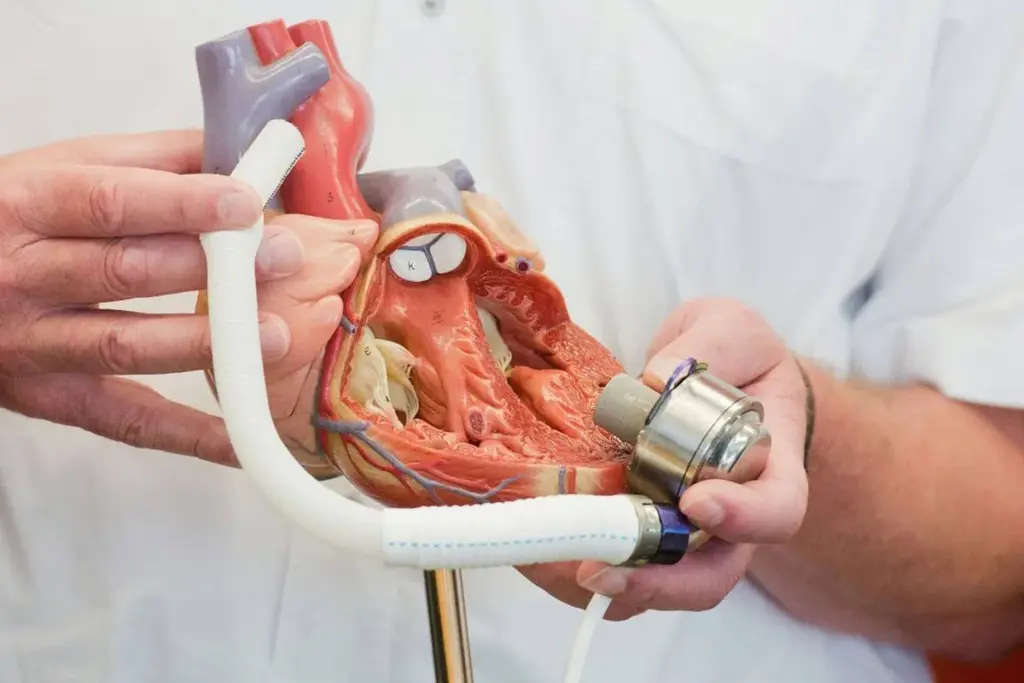
Left Ventricular Assist Devices (LVADs) have changed how we treat advanced heart failure. They give hope to patients waiting for heart transplants or those who can’t get one. A big thing to think about when using LVADs is the patient’s age. It affects who can get one and how well they do.
What is age cutoff for LVAD? Get the crucial facts on the powerful age limit and eligibility criteria for this serious assist device today.
Studies have shown LVADs work well for older patients. They help these patients live longer and feel better. This has made doctors think differently about using LVADs for older adults.
Deciding to use an LVAD is a big choice. Doctors look at the patient’s health, how much good it can do, and the risks. With more older people getting heart failure, knowing the maximum age for LVAD eligibility is key.
Key Takeaways
- LVADs are life-saving devices for patients with advanced heart failure.
- The age cutoff for LVAD implantation is a critical factor in patient selection.
- Recent studies show LVADs can be effective in elderly patients.
- LVAD therapy is considered on a case-by-case basis for older adults.
- The decision to implant an LVAD involves assessing overall patient health and possible risks.
Understanding Left Ventricular Assist Devices (LVADs)

LVADs are key for those with advanced heart failure. They are mechanical devices that help the heart’s left ventricle. This improves blood flow in severe heart failure cases.
What is an LVAD and How Does it Work?
An LVAD is implanted and helps by diverting blood flow. It sends blood to the aorta, the main artery. This reduces the heart’s workload and boosts blood flow.
The technology behind LVADs is complex. It’s a lifeline for many, helping them until a transplant or when they’re not transplant eligible.
Types of LVADs Available in the United States
In the U.S., there are different LVADs. Continuous-flow LVADs are the most common. They provide a steady blood flow. Pulsatile LVADs, on the other hand, mimic a natural heartbeat.
The choice depends on the patient’s condition and treatment needs. It also considers their lifestyle.
Indications for LVAD Therapy
LVAD therapy is for advanced heart failure patients. It’s for those who haven’t responded to other treatments. This includes those waiting for a transplant and those not eligible for one.
Deciding on an LVAD involves a detailed patient assessment. It looks at their medical history, current health, and chances of improvement with the device.
The Evolution of LVAD Technology and Age Considerations

LVAD technology has seen a big change, making heart failure treatment better. This progress has helped more patients, even the elderly, get LVAD therapy.
First-Generation vs. Current LVAD Devices
Old LVADs were big and caused many problems. They were mainly used to help patients wait for a heart transplant. Now, new LVADs are smaller, last longer, and can be used for longer-term treatment.
New LVADs have made patients live longer and feel better. For example, the switch to continuous-flow LVADs has cut down on complications.
How Technological Improvements Have Expanded Patient Eligibility
Technological advances have made LVAD therapy available to more people. Smaller devices and easier implantation methods have helped older patients and those with other health issues.
|
Feature |
First-Generation LVADs |
Current LVADs |
|---|---|---|
|
Size and Design |
Large and bulky |
Smaller and more compact |
|
Flow Type |
Pulsatile flow |
Continuous flow |
|
Indication |
Primarily bridge to transplant |
Bridge to transplant and destination therapy |
The table shows how LVAD technology has improved. These changes have made LVAD therapy a better option for more patients, including older adults.
What is the Age Cutoff for LVAD? Examining the Guidelines
To understand the age limit for LVADs, we need to look at the latest guidelines from major heart societies. Choosing to get an LVAD is a big decision. It involves many factors, not just age.
Official Guidelines from Major Cardiac Societies
The American Heart Association (AHA) and the Heart Failure Society of America (HFSA) have guidelines for LVADs. These guidelines don’t set a strict age limit. They stress the need to assess each patient individually.
“The decision to proceed with LVAD implantation should be made on a case-by-case basis, taking into account the patient’s overall health status, functional capacity, and the chance for rehabilitation.”
Heart Failure Society of America
How Age Limits Have Changed Over Time
At first, LVADs were mainly for younger patients because of the risks. But, as technology got better, more people can get them. Today’s devices are more reliable and cause fewer problems, making them suitable for older adults.
“The growth of LVAD technology has been amazing,” says a top cardiologist. “There have been big steps forward in design, durability, and how well they work.”
Regional Variations in Age Criteria
LVAD use varies by region. This is due to different healthcare policies, device availability, and how doctors practice. For example, some places might be stricter about age because of limited resources.
“There are big differences in how LVADs are used across regions,” a study found. “These differences come from how healthcare is delivered and who the patients are.”
In summary, there’s no fixed age for getting an LVAD. But, heart societies say to look at each person’s situation. The rules have changed over time, and there are differences by region. This shows we need a careful approach to deciding who gets an LVAD.
Factors That Influence LVAD Candidacy Beyond Age
Age is just one thing to think about when deciding if someone is right for an LVAD. Other important factors also play a big role. It’s key to look at the patient’s health and how well they might do with an LVAD.
Medical Comorbidities
Medical conditions like diabetes and kidney disease are big factors. These conditions can affect how well a patient does with an LVAD. For example, someone with severe kidney disease might face more risks during and after the surgery.
Common comorbidities assessed in LVAD candidacy include:
- Diabetes mellitus
- Chronic kidney disease
- COPD
- Peripheral vascular disease
- Liver dysfunction
Frailty Assessment
Frailty is also very important. Frail patients are more likely to have problems and might not live as long after getting an LVAD. Doctors check how well a patient can move, their muscle strength, and how strong they are overall. They use tools like the Fried Frailty Phenotype to measure frailty.
Cognitive Function
Cognitive function is also key. It affects how well a patient can handle the device and follow care instructions. If a patient’s thinking is not sharp, they might face more risks and not get as much benefit from an LVAD.
Dementia and Cognitive Impairment Considerations
Patients with dementia or serious thinking problems are a special case. These conditions don’t always mean they can’t get an LVAD. But, it’s very important they can understand and follow the care needed for the device. Having a good caregiver can help with these challenges.
Doctors use tests like the Mini-Mental State Examination (MMSE) to check if a patient can handle an LVAD.
LVAD Age Restrictions: Historical Perspective
The start of LVAD therapy had strict age limits, mainly for younger people. This was because of old technology and limited clinical knowledge at the time.
Early Clinical Trials and Age Limits
Early LVAD trials had strict rules, often leaving out older adults. This was because of worries about their health and how they’d handle the device. A pioneer in LVAD therapy, noted, “The initial patient selection was biased towards younger individuals with fewer comorbidities.”
“The early days of LVAD therapy were marked by a cautious approach, with age being a significant factor in patient selection.”
Age limits were based on the belief that younger people were stronger. They also reflected a lack of knowledge about how older adults would do with the device.
Shifting Paradigms in Geriatric Cardiac Care
With time, LVAD tech improved, and our understanding of heart care for the elderly grew. This led to a rethink of age limits. As more people live longer and heart failure becomes more common, treatments for the elderly are getting more attention.
- New, smaller, and more reliable LVADs have opened up more options for patients.
- Better surgery and care before and after surgery have made LVADs safer for older adults.
- More experience with LVADs in different patients has shown they can work for many ages.
These changes have helped us see LVADs in a new light. Now, age isn’t the only thing that decides if someone can get one.
Current Age-Related Criteria for LVAD Implantation
The criteria for LVAD implantation are complex. They consider many factors beyond just age. These include the patient’s health, medical history, and treatment goals.
Bridge to Transplant Considerations
For those needing an LVAD as a bridge to transplant, the main goal is to keep the heart working until a donor heart is found. The patient’s age, health, and transplant chances are all looked at closely.
The bridge to transplant option is usually for younger or healthier patients. But, older patients might also be considered if they have a strong support system and few health issues.
Destination Therapy Considerations
Destination therapy is for those who can’t get a heart transplant. This is often because they’re too old or have too many health problems. The LVAD is meant to be a long-term solution to improve their life and survival.
Choosing LVAD for destination therapy involves a detailed look at the patient’s health and lifestyle. It’s often for older patients or those with serious health issues. It can greatly improve their life and survival chances.
Decision-Making Process for Borderline Candidates
For borderline candidates, the decision is harder. These patients might have serious health issues or other challenges.
A team of doctors will carefully review the patient’s situation. They might do more tests, talk to specialists, and discuss with the patient and their family. This helps decide the best treatment plan.
LVAD in Elderly Patients: Outcomes and Statistics
Elderly patients with advanced heart failure are now getting LVAD implants more often. This raises questions about how well they do afterward. Doctors must weigh the good and bad sides of this choice for older adults.
Survival Rates by Age Group
LVAD therapy can help elderly patients live longer, but results differ by age. A study in the Journal of Heart and Lung Transplantation found that those over 70 do as well as younger patients. Yet, they face more complications.
|
Age Group |
1-Year Survival Rate |
2-Year Survival Rate |
|---|---|---|
|
65-69 |
80% |
65% |
|
70-74 |
75% |
60% |
|
75+ |
70% |
55% |
Quality of Life Measures
LVAD therapy boosts the quality of life for elderly patients. They see big improvements in how well they can move and feel overall. Studies show that older patients with LVADs do better in daily tasks and feel less sick.
Complication Rates in Older Adults
While LVADs offer many benefits, older adults face higher risks of problems like stroke and infections. A study in the Journal of Cardiac Failure stresses the need for careful choice and care after surgery to lower these risks.
The data on LVADs in elderly patients shows we need a thoughtful approach to their care. Understanding what affects their outcomes helps doctors give them the best treatment.
Case Studies: Oldest LVAD Recipients
Studies on elderly LVAD patients show they can live better and longer. These stories show LVAD therapy’s success and the challenges geriatric patients face.
Notable Success Stories
Many case studies show LVADs work well in patients over 70 and 80. For example, an 82-year-old in the Journal of the American College of Cardiology got an LVAD. They greatly improved their life quality and function.
“The use of LVADs in elderly patients requires careful consideration of their overall health status, functional capacity, and social support. But, with the right choice, LVAD therapy can be very effective for older adults.”
Cardiologist
A 79-year-old got an LVAD as a destination therapy. After, they felt much better and could do more daily tasks.
|
Age at Implant |
LVAD Type |
Survival Post-Implant |
|---|---|---|
|
82 |
HeartMate 3 |
24 months |
|
79 |
HeartWare HVAD |
18 months |
Lessons Learned from Geriatric LVAD Patients
These studies teach us a lot about LVAD therapy in the elderly. A key lesson is the need for a full geriatric assessment before LVAD therapy.
Key factors include:
- Cognitive function
- Frailty status
- Social support
- Functional capacity
By looking at these factors, doctors can find out who will really benefit from LVAD therapy.
Geriatric-Specific Assessments for LVAD Candidacy
Geriatric assessments are key in deciding if older adults can get an LVAD. These evaluations look at more than just the heart. They check if the patient can handle the device’s needs.
Comprehensive Geriatric Assessment
A CGA is a detailed check-up for older patients. It looks at how well they can function, their health, and their mental state. It helps figure out if an LVAD is right for them.
CGA checks many things, like:
- Functional status
- Cognitive function
- Comorbidities
- Polypharmacy
- Social support
- Nutritional status
Functional Capacity Evaluation
Checking how well a patient can do daily tasks is important. It shows if they can live independently with an LVAD.
Functional capacity checks include:
- Activities of Daily Living (ADLs)
- Instrumental Activities of Daily Living (IADLs)
- Physical performance tests
Caregiver Support Assessment
Looking at caregiver support is also key. A good support system is needed for LVAD care.
Caregiver assessment looks at:
- The availability of caregivers
- Caregiver burden
- Caregiver understanding of LVAD management
|
Assessment Domain |
Components |
Relevance to LVAD Candidacy |
|---|---|---|
|
Functional Status |
ADLs, IADLs, Physical Performance Tests |
Predicts ability to manage LVAD and adhere to treatment |
|
Cognitive Function |
Mini-Mental State Examination (MMSE), Montreal Cognitive Assessment (MoCA) |
Assesses ability to understand and comply with LVAD management |
|
Social Support |
Caregiver availability, social network |
Ensures presence of support system for LVAD care |
Insurance Coverage and Financial Considerations for Elderly LVAD Patients
Insurance and financial planning are key for elderly LVAD patients. As more people age, more will need Left Ventricular Assist Devices (LVADs). It’s important to know the costs of this treatment.
Out-of-Pocket Costs and Financial Planning
LVAD patients face big costs. These include copays, deductibles, and costs for care before and after surgery. Financial planning is key to handle these costs.
Patients and their families should talk to financial advisors and doctors. They need to know all the costs of LVAD therapy. This includes:
- Device implantation and upkeep
- Follow-up care and hospital stays
- Medications and equipment
- Potential complications and extra treatments
Understanding these costs helps elderly LVAD patients make smart choices about their care.
Alternative Options for Elderly Heart Failure Patients
For elderly heart failure patients not suited for LVAD therapy, alternative treatments are key. As more people age, managing heart failure in older adults is critical. LVADs help many, but not all elderly patients due to health issues or frailty.
Palliative Care Approaches
Palliative care helps with the symptoms and stress of serious illnesses like heart failure. It’s very helpful for elderly patients, improving their quality of life. It manages pain, symptoms, and side effects of treatments.
Palliative care teams include doctors, nurses, and social workers. They work together to support patients fully. They help with complex medical decisions, making sure care fits the patient’s values.
Medical Management Optimization
Optimizing medical management is vital for elderly heart failure patients. It means adjusting medications to fit each patient’s needs. Guideline-directed medical therapy uses ACE inhibitors, beta-blockers, and diuretics to manage symptoms and slow disease.
Regular check-ups with healthcare providers are important. They help fine-tune treatment plans and address new issues quickly. This approach can greatly improve outcomes and quality of life for elderly heart failure patients.
Other Mechanical Support Options
While LVADs are a big step forward, other mechanical support options are being looked into. Intra-aortic balloon pumps (IABPs) and percutaneous ventricular assist devices (pVADs) are temporary devices for specific situations.
These devices offer temporary support during acute decompensation or while waiting for more definitive treatment. Though not for long-term use like LVADs, they are valuable for managing acute heart failure in elderly patients.
Conclusion
The age limit for Left Ventricular Assist Devices (LVADs) isn’t set in stone. It depends on many factors. These include health conditions, how frail someone is, and their mental sharpness.
New tech in LVADs has opened doors for older people. This means they can now get this life-saving treatment. Major heart societies have guidelines to help decide who gets an LVAD. But, what’s best for one person might not be the same for another.
Even though older adults might face more challenges, LVADs can greatly improve their life. They can live longer and feel better. It’s important to check how well an older person can handle the treatment and if they have someone to care for them.
In conclusion, deciding if an older person can get an LVAD is complex. It involves looking at the person, the latest technology, and guidelines. This way, we can make sure LVAD therapy works best for everyone.
FAQ
What is the age cutoff for LVAD implantation?
The age limit for LVAD implantation varies. Some guidelines set an upper age limit. Others focus on each patient’s needs.
Are there different types of LVADs available?
Yes, there are many types of LVADs. They include continuous-flow and pulsatile devices. These help the left ventricle and boost cardiac output.
What factors influence LVAD candidacy beyond age?
More than age, medical conditions, frailty, and brain function matter. A detailed check is key to see if a patient is right for an LVAD.
How has LVAD technology evolved over the years?
LVAD tech has grown a lot. Improvements in design, function, and durability have opened up LVAD therapy to more patients. This includes older adults.
What is the role of a geriatric assessment in determining LVAD candidacy?
A geriatric assessment is vital for elderly LVAD candidates. It looks at how well a patient can function and if they have support at home.
Are there alternative options for elderly heart failure patients who are not suitable for LVAD therapy?
Yes, there are other choices. Options include palliative care and improving medical management. These are for those not fit for LVAD therapy.
What are the insurance coverage and financial considerations for elderly LVAD patients?
Insurance and costs are big concerns for elderly LVAD patients. Planning finances is essential to get the care needed.
Can LVAD therapy improve survival and quality of life in elderly patients?
Yes, LVAD therapy can help elderly patients live longer and better. But, the risk of complications can differ by age.
What is the significance of bridge to transplant and destination therapy considerations in LVAD implantation?
Bridge to transplant and destination therapy are key in LVAD decisions. Each patient’s situation needs careful review to choose the best path.
Are there any notable case studies of successful LVAD implantation in elderly patients?
Yes, there are success stories of LVAD therapy in the elderly. These cases offer insights into the benefits and challenges of LVADs for older adults.
References
National Center for Biotechnology Information. Evidence-Based Medical Insight. Retrieved from https://www.ncbi.nlm.nih.gov/pmc/articles/PMC10053271/