
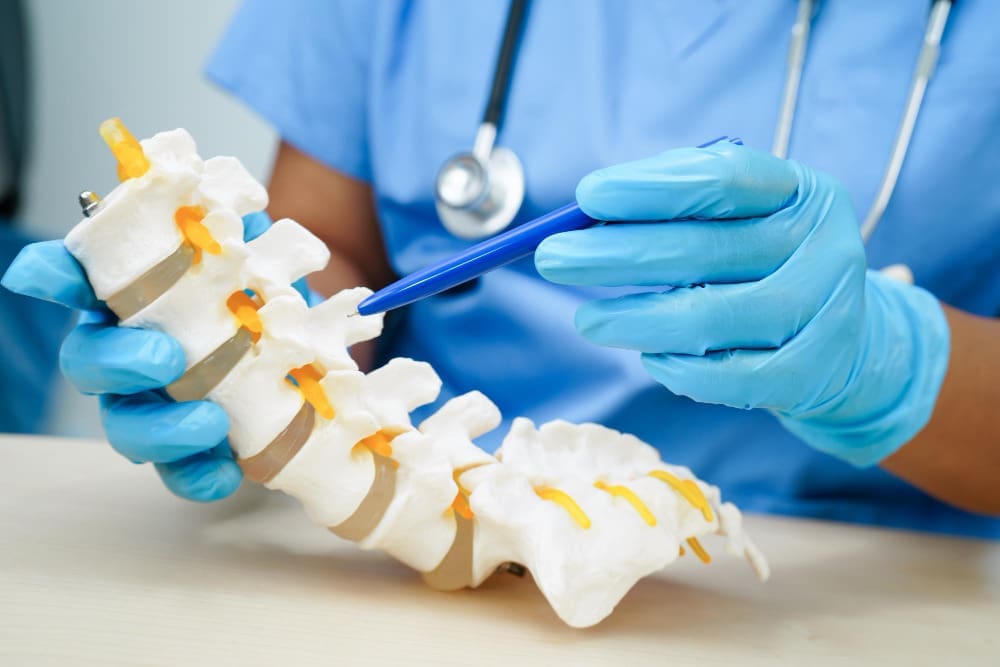
At Liv Hospital, we use Anterior Lumbar Interbody Fusion (ALIF) to help patients with chronic lower back pain. This method stabilizes the lower spine by joining two or more vertebrae. It helps with problems like degenerative disc disease and spondylolisthesis.
The ALIF procedure removes a damaged or worn-out disc. Then, a bone graft or cage is inserted to help the vertebrae fuse together. This anterior approach reduces muscle damage. It also cuts down on postoperative pain and allows for bigger grafts for more stability.
Key Takeaways
- ALIF is a surgical technique used to stabilize the lower spine by fusing vertebrae.
- The procedure involves removing a damaged disc and inserting a bone graft or cage.
- ALIF is used to treat degenerative disc disease, spondylolisthesis, and chronic instability.
- The anterior approach minimizes disruption to back muscles, reducing postoperative pain.
- Larger grafts can be placed, promoting better stability and fusion.
Understanding Spinal Fusion and the Lumbar Region
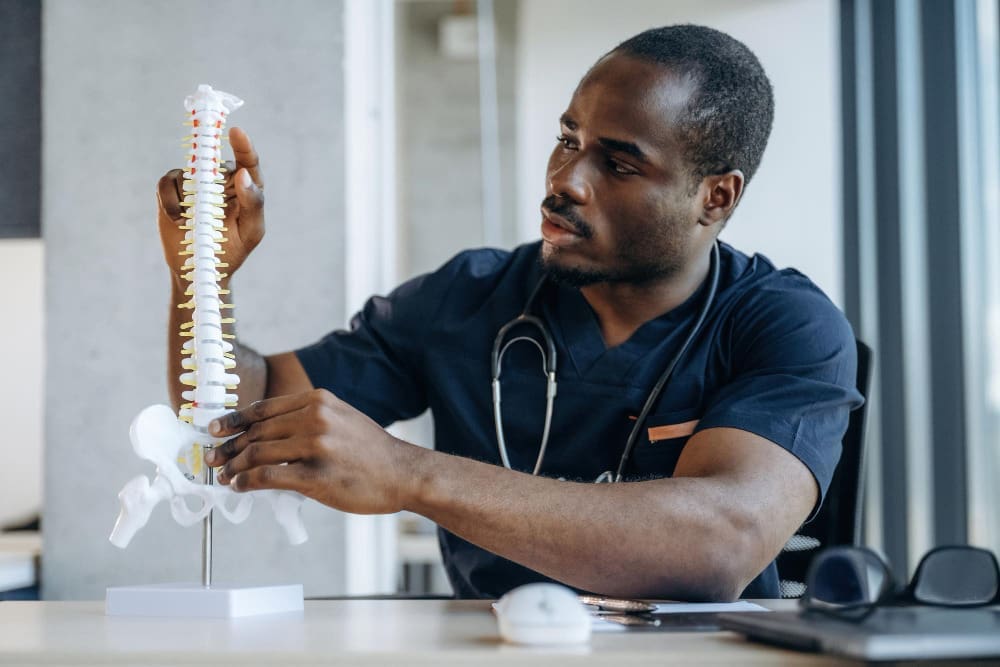
First, let’s look at the anatomy and function of the lumbar spine. The lumbar region is in the lower back. It has five vertebrae (L1-L5) that support our body and help us move.
The Structure and Function of the Lumbar Spine
The lumbar spine is made to absorb shock, be flexible, and protect the spinal cord. It has:
- Vertebral bodies: These bear the weight.
- Intervertebral discs: Soft, gel-like cushions that absorb shock.
- Facet joints: Small joints that help guide movement.
Together, these parts help us move and keep the spine stable.
Common Conditions Affecting Lumbar Vertebrae
The lumbar spine can get damaged by various conditions, including:
- Degenerative Disc Disease: This is when the discs wear out, causing pain and stiffness.
- Spondylolisthesis: A condition where a vertebra slips forward, which can press on nerves.
- Spinal Stenosis: This is when the spinal canal narrows, putting pressure on the spinal cord and nerves.
These issues can really affect a person’s life, often needing medical help.
When Spinal Fusion Becomes Necessary
Spinal fusion is considered when other treatments don’t work. This surgery:
- Joins two or more vertebrae together to stabilize the spine.
- Uses bone grafts or synthetic materials to help the vertebrae fuse.
Knowing about the lumbar spine, its problems, and spinal fusion helps us see why this surgery is important. It helps restore health and function to the spine.
What is Anterior Lumbar Spinal Fusion?

Anterior Lumbar Interbody Fusion is a special surgery that fuses lumbar vertebrae from the front. It aims to reduce muscle damage and improve fusion. This method helps treat many lumbar spine problems.
Definition and Basic Concepts
ALIF is a spinal fusion surgery done through the abdomen. It lets surgeons access the spine without harming the back muscles. By removing the damaged disc and using a bone graft, it helps vertebrae fuse together. This stabilizes the spine and relieves pain.
Historical Development of ALIF
Spinal fusion started in the early 20th century. But the front approach became more popular later. ALIF was developed to lessen muscle damage and speed up recovery. Thanks to new technologies, ALIF is now a trusted treatment for many spine issues.
The Anterior Approach Explained
The ALIF surgery involves an incision in the abdomen to reach the lumbar spine. This method lets surgeons see and work on the disc space directly. It might reduce pain and quicken recovery times. The exact method depends on the patient and their condition.
Understanding ALIF is key. We need to know its uses, advantages, and risks. This will help us see how it fits into spinal surgery options.
Indications for ALIF Surgery
ALIF surgery is a treatment for many lumbar spine issues. It’s for those who haven’t seen improvement with other treatments. We look at ALIF for patients with serious spinal problems that affect their daily life.
Degenerative Disc Disease
Degenerative disc disease is a common reason for ALIF surgery. It happens when discs in the spine lose height and strength. This leads to pain and instability. ALIF surgery removes the bad disc and fuses the vertebrae to make the spine stable again.
Spondylolisthesis and Spinal Instability
Spondylolisthesis is another reason for ALIF. It’s when a vertebra slips over another, causing pain and nerve problems. ALIF surgery fixes this by making the vertebrae stable and aligning the spine properly.
Other Conditions Treated with ALIF
ALIF is also used for conditions like recurrent disc herniation and spinal deformities. Its ability to handle complex spinal issues makes it a valuable surgery option.
| Condition | Description | How ALIF Helps |
|---|---|---|
| Degenerative Disc Disease | Loss of disc height and integrity | Fuses vertebrae to stabilize the segment |
| Spondylolisthesis | Slippage of one vertebra over another | Stabilizes vertebrae and restores alignment |
| Recurrent Disc Herniation | Repeated herniation of disc material | Removes herniated disc and stabilizes the segment |
The Anterior Lumbar Interbody Fusion Procedure
We carefully perform the ALIF procedure, making sure every step is precise. Success depends on a good preoperative check, skilled surgery, and the right tools. These include interbody fusion cages and bone grafting.
Preoperative Evaluation and Preparation
Before ALIF surgery, patients get a full check-up. This includes looking at their medical history, doing a physical exam, and using MRI or CT scans. We also check their overall health, including any health issues that might affect the surgery or recovery.
Preoperative preparation aims to make the patient as ready as possible for surgery. This might mean managing health conditions like diabetes or high blood pressure. We also make sure the patient is physically ready for the surgery and recovery.
Surgical Technique and Approach
The ALIF procedure uses an anterior approach to the lumbar spine. This means we access the spine from the front of the abdomen. This approach is direct and doesn’t require moving the spinal nerves or dura.
We then carefully open up the retroperitoneal space to reach the lumbar vertebrae. The disc space is then prepared by removing the diseased disc material and getting the endplates ready for fusion.
Interbody Fusion Cages and Bone Grafting
Using interbody fusion cages and bone grafting is key to the ALIF procedure. The cage is placed in the disc space to keep the height and provide stability.
| Component | Function | Material |
|---|---|---|
| Interbody Fusion Cage | Maintains intervertebral height, provides stability | Titanium or PEEK |
| Bone Graft | Promotes bone fusion | Autograft or Allograft |
Bone grafting helps with fusion, alongside the interbody cage. We use either the patient’s own bone (autograft) or donor bone (allograft). The choice depends on the patient’s bone health and the surgeon’s preference.
Advances in Anterior Interbody Lumbar Fusion Techniques
Medical technology and surgery have made big strides in Anterior Lumbar Interbody Fusion (ALIF). This brings new hope to those with lumbar spine issues. Now, we have more advanced and less invasive methods that help patients heal faster and feel better sooner.
Minimally Invasive ALIF Surgery
Minimally invasive ALIF surgery is a big step forward in spinal care. It uses smaller cuts and special tools to cause less damage and speed up healing. This method also cuts down on pain after surgery and lowers the chance of problems, making patients happier.
Benefits of Minimally Invasive ALIF include less blood loss, shorter hospital stays, and quicker recovery. Studies show these methods can lead to fusion rates as good as traditional surgery.
Computer-Assisted Navigation
Computer-assisted navigation is a key improvement in ALIF surgery. It gives surgeons real-time feedback, making implant placement more accurate and reducing risks. This technology helps achieve better fusion rates and patient results.
We use advanced imaging to create detailed 3D spine models. This helps in planning and guiding surgery, which is very helpful in complex cases.
Biological Enhancements for Fusion
Biological enhancements are vital for successful ALIF fusions. We’ve made big strides in bone graft substitutes and growth factors that help bones heal. These can be used with traditional grafts to boost fusion success and cut down on extra surgeries.
| Biological Enhancement | Description | Benefits |
|---|---|---|
| Bone Morphogenetic Proteins (BMPs) | Growth factors that stimulate bone growth | Improved fusion rates, reduced need for autograft |
| Synthetic Bone Grafts | Artificial materials that mimic bone structure | Avoids donor site morbidity, provides osteoconductive matrix |
| Platelet-rich Plasma (PRP) | Concentrated platelets that release growth factors | Enhances healing, promotes bone regeneration |
By mixing these biological boosts with advanced surgery, we can greatly improve ALIF results. As research keeps growing, we look forward to even more breakthroughs for our patients.
Recovery and Rehabilitation After Anterior Approach Spinal Fusion
Getting better after ALIF surgery is very important. We help our patients with a detailed plan to make their recovery smooth.
Hospital Stay and Immediate Post-Operative Care
Right after surgery, patients are watched closely in the hospital. They usually stay for 2 to 4 days. This depends on how they’re doing and the surgery’s complexity.
We focus on controlling pain and avoiding problems during this time. Our team gives clear instructions on caring for the wound, taking medicine, and moving around.
Physical Therapy and Activity Progression
Physical therapy is key after ALIF surgery. Our therapists create a special plan for each patient. It’s designed to boost strength, flexibility, and movement.
The therapy goes through different stages:
- Initial phase: Gentle movements and managing pain
- Intermediate phase: More strength and flexibility exercises
- Advanced phase: Getting back to normal activities
Long-term Recovery Timeline and Expectations
Recovery times can vary, but most see big improvements in 3 to 6 months. It might take up to a year or more to reach full strength.
Here’s what you can expect:
| Timeframe | Expected Progress |
|---|---|
| 0-6 weeks | Pain goes down, healing starts |
| 6-12 weeks | More movement, getting stronger |
| 3-6 months | Big improvements, can do most things |
| 6-12 months | Keep getting stronger, fusion is fully mature |
It’s vital to stick to the rehab plan and keep up with follow-ups. This helps ensure the best results.
Benefits and Outcomes of ALIF
ALIF surgery offers many benefits, making it better than traditional spinal fusion methods. It has changed how we treat lumbar spine problems.
Advantages Over Other Fusion Approaches
ALIF’s main advantage is its front approach. This minimizes damage to the back muscles. It also means less pain after surgery for patients. Plus, the front approach gives surgeons a better view of the area to work on.
ALIF also has a bigger area for fusion, which can lead to better fusion rates. It helps restore disc height and lordosis. This improves spinal alignment and may lower the chance of problems at other spine segments.
Success Rates and Patient Satisfaction
Research shows ALIF has high success rates in fusion and patient happiness. Patients often see big improvements in pain and function. Many can go back to their usual activities a few months after surgery.
Looking at ALIF’s clinical outcomes, we see high patient satisfaction. Many patients get a lot of relief from their symptoms. ALIF’s success comes from fixing the root causes of pain and instability in the lumbar spine.
Long-term Results and Fusion Rates
ALIF’s long-term benefits are key. Studies show it can achieve high fusion rates over time. Many patients keep their pain and function improvements.
Long-term studies also show ALIF leads to durable clinical outcomes. Patients often keep feeling better over time. The procedure’s ability to stabilize the spine and promote fusion is why it works well in the long run.
Potential Risks and Complications
It’s important for patients to know about the risks and complications of ALIF. This surgery, like any other, can have side effects that affect how well it works.
Approach-Related Complications
The way ALIF surgery is done can cause certain problems. These might include injuries to blood vessels, nerves, or even the bowel or bladder. Vascular complications are a big worry because of the blood vessels near the spine.
Doctors try hard to avoid these issues. But, it’s good for patients to know about the possible problems.
General Surgical and Fusion Complications
ALIF surgery also has general risks like infections, bleeding, and bad reactions to anesthesia. Fusion complications like pseudarthrosis (when the bones don’t fuse) can happen too. This might need more surgery.
We talk to our patients about these risks. We want them to know everything about ALIF complications.
Long-term Considerations and Adjacent Segment Disease
Long-term, ALIF patients might face problems like adjacent segment disease (ASD). This is when the spinal segments next to the fusion site wear out. While ASD isn’t just a problem with ALIF, it’s something to think about.
Knowing about these long-term issues helps patients make better choices about their treatment.
Conclusion: Making an Informed Decision About ALIF
Anterior Lumbar Interbody Fusion (ALIF) is a complex surgery. It helps patients with certain spinal problems. Knowing about ALIF’s benefits and risks helps patients choose the right treatment.
ALIF treats issues like degenerative disc disease and spondylolisthesis. New surgical methods have made it more effective. It’s important for patients to understand the procedure, its risks, and recovery.
Deciding on ALIF needs a deep understanding of the surgery. Talking to experienced doctors and learning about it helps. This way, patients can choose the best treatment for themselves. Making an informed choice about ALIF can improve their life quality.
FAQ
What is Anterior Lumbar Interbody Fusion (ALIF)?
ALIF is a surgery that makes the lower spine stable by fusing vertebrae. It uses an approach that doesn’t hurt the back muscles much. This makes the recovery easier and allows for bigger grafts for better stability.
What conditions are treated with ALIF?
ALIF treats many spinal problems. These include degenerative disc disease, spondylolisthesis, and other spinal instabilities. These issues cause pain and discomfort.
How does the anterior approach in ALIF differ from other spinal fusion techniques?
ALIF’s anterior approach lets surgeons reach the spine without harming back muscles. This can lead to less pain after surgery and quicker recovery. It also lets them use bigger grafts for more stability.
What is the role of interbody fusion cages in ALIF?
Interbody fusion cages support and stabilize the spine during fusion. They help ensure successful fusion and keep the spine aligned.
What are the benefits of minimally invasive ALIF surgery?
Minimally invasive ALIF surgery causes less tissue damage. This means less pain after surgery, shorter hospital stays, and faster recovery. It’s a good option for many patients.
What is the typical recovery process after ALIF?
After ALIF, patients stay in the hospital first. Then, they start physical therapy and gradually get back to normal activities. This process takes several weeks or months.
What are the possible risks and complications of ALIF?
ALIF can have risks like complications from the approach, general surgery risks, and long-term issues like adjacent segment disease.
How successful is ALIF in treating spinal conditions?
ALIF is often effective in treating spinal conditions. It has high success rates and patient satisfaction. But, results can vary based on individual factors.
What advancements have been made in ALIF techniques?
ALIF techniques have improved with advances like minimally invasive approaches, computer-assisted navigation, and biological enhancements. These advancements have made the procedure safer and more effective.
How does ALIF compare to other spinal fusion techniques?
ALIF has advantages over other spinal fusion techniques. It offers less postoperative pain, faster recovery, and better stability. This makes it a popular choice for treating certain spinal conditions.
What is Anterior Lumbar Interbody Fusion (ALIF)?
ALIF is a surgery that makes the lower spine stable by fusing vertebrae. It uses an approach that doesn’t hurt the back muscles much. This makes the recovery easier and allows for bigger grafts for better stability.
What conditions are treated with ALIF?
ALIF treats many spinal problems. These include degenerative disc disease, spondylolisthesis, and other spinal instabilities. These issues cause pain and discomfort.
How does the anterior approach in ALIF differ from other spinal fusion techniques?
ALIF’s anterior approach lets surgeons reach the spine without harming back muscles. This can lead to less pain after surgery and quicker recovery. It also lets them use bigger grafts for more stability.
What is the role of interbody fusion cages in ALIF?
Interbody fusion cages support and stabilize the spine during fusion. They help ensure successful fusion and keep the spine aligned.
What are the benefits of minimally invasive ALIF surgery?
Minimally invasive ALIF surgery causes less tissue damage. This means less pain after surgery, shorter hospital stays, and faster recovery. It’s a good option for many patients.
What is the typical recovery process after ALIF?
After ALIF, patients stay in the hospital first. Then, they start physical therapy and gradually get back to normal activities. This process takes several weeks or months.
What are the possible risks and complications of ALIF?
ALIF can have risks like complications from the approach, general surgery risks, and long-term issues like adjacent segment disease.
How successful is ALIF in treating spinal conditions?
ALIF is often effective in treating spinal conditions. It has high success rates and patient satisfaction. But, results can vary based on individual factors.
What advancements have been made in ALIF techniques?
ALIF techniques have improved with advances like minimally invasive approaches, computer-assisted navigation, and biological enhancements. These advancements have made the procedure safer and more effective.
How does ALIF compare to other spinal fusion techniques?
ALIF has advantages over other spinal fusion techniques. It offers less postoperative pain, faster recovery, and better stability. This makes it a popular choice for treating certain spinal conditions.
References
Yale Medicine. Anterior Lumbar Interbody Fusion. https://www.yalemedicine.org/clinical-keywords/anterior-lumbar-interbody-fusion
Globus Medical. Anterior Lumbar Interbody Fusion. https://www.globusmedical.com/patient-education-musculoskeletal-system-conditions/procedures/anterior-lumbar-interbody-fusion/
NeurosurgeryOne. ALIF Surgery for Spine: Anterior Lumbar Interbody Fusion.