
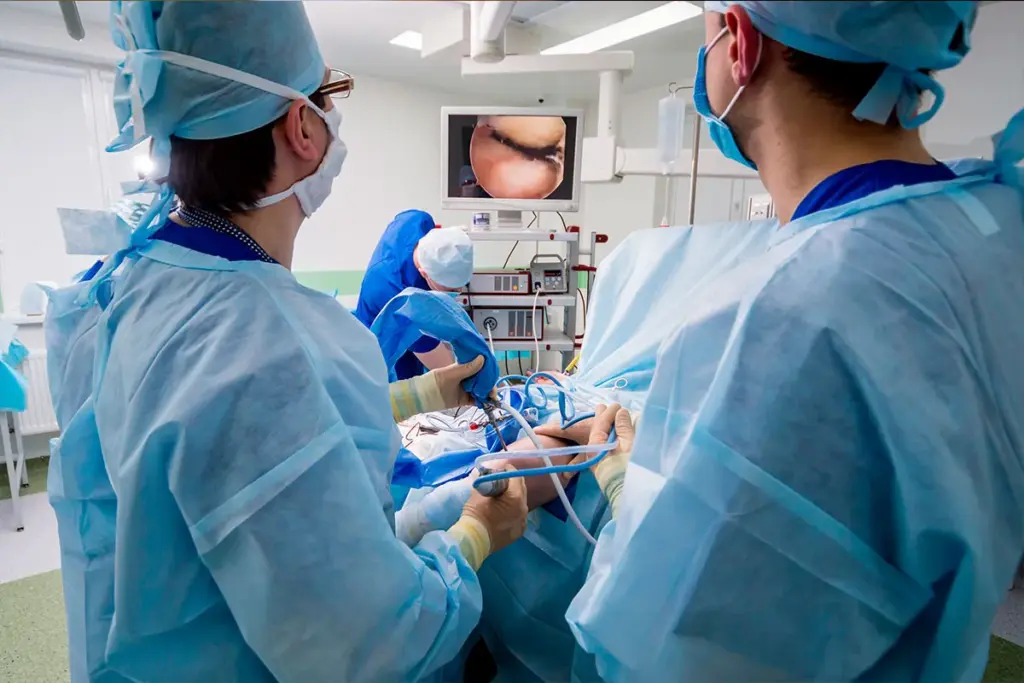
Arthroscopy is a new way to care for joints. It uses a special tool called an arthroscope to look inside joints. This tool is used through small cuts in the skin.
The word “arthroscopy” comes from Greek. It means “to look within the joint.” This shows its role in checking for problems.
At Liv Hospital, we use this technology to help you heal quickly. Arthroscopic surgery lets us find and fix joint issues with great accuracy. We use a thin camera and special tools.
This way, patients can get back to their active lives sooner than before.
Key Takeaways
- Arthroscopy is a minimally invasive surgical procedure.
- It uses a special instrument called an arthroscope to examine joints.
- The procedure involves tiny incisions, reducing recovery time.
- Arthroscopy can diagnose and treat various joint problems.
- It is used for joints such as the knee, shoulder, and ankle.
- Benefits include less trauma and faster return to active life.
What Is Arthroscopy: Definition and Background
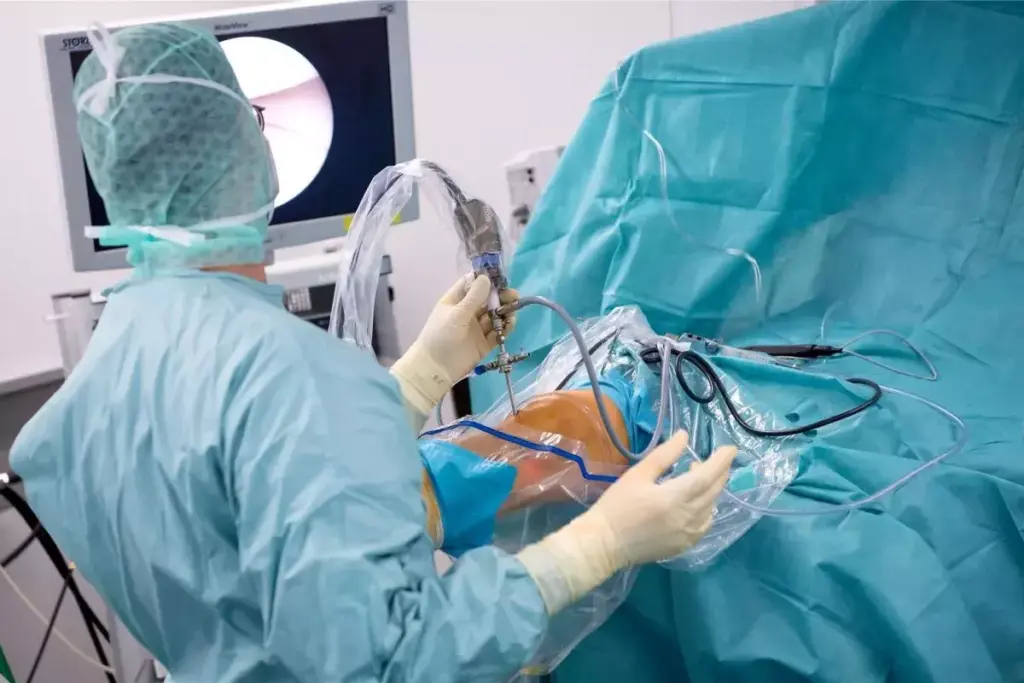
Arthroscopy comes from Greek words meaning ‘to look within the joint.’ It’s a key part of diagnosing and treating joint problems. This surgery is done with small cuts, making it precise and less invasive.
Etymology and Medical Definition
The word “arthroscopy” comes from “arthro” for joint and “scopy” for seeing. In medical terms, arthroscopy lets orthopedic surgeons see inside a joint with a special camera and light. This tool is used for both checking and fixing joint issues.
Arthroscopy is a surgery that uses small cuts to put in a camera and tools. It helps doctors diagnose and treat joint problems. The American Academy of Orthopaedic Surgeons says it’s a big help in orthopedic surgery, being less invasive than open surgery.
Historical Development of Arthroscopic Procedures
The first arthroscopic surgeries were done in the early 20th century. Over time, better technology has made arthroscopy more than just for looking inside joints. It has become a key way to treat many joint problems.
At first, arthroscopy was mostly for looking inside joints without open surgery. But now, thanks to better technology, it’s also used to fix many joint issues.
Prevalence in Modern Orthopedic Medicine
In today’s orthopedic medicine, arthroscopy is very common. It’s less invasive than open surgery, which means less damage to tissues, quicker recovery, less pain, and fewer complications. These benefits make it a top choice for both doctors and patients.
Arthroscopic surgery is used for many joint problems, like in the knee, shoulder, elbow, and ankle. Its ability to both diagnose and treat makes it a key tool in modern orthopedic care.
How Arthroscopy Works: Procedure and Technology

Arthroscopy is a key part of orthopedic surgery. It lets doctors see and fix joint problems without big cuts. This method is very precise and less invasive.
The Arthroscope: Design and Functionality
The arthroscope is like a thin pencil. It has a camera and light for clear views inside joints. This lets surgeons see and work on joints in real-time.
The arthroscope’s design is key to its success. Its camera shows detailed images, and the light helps see inside. This tech makes diagnoses and treatments more accurate.
Surgical Technique and Incision Process
Arthroscopy uses small cuts, just a few millimeters, for the arthroscope and tools. Making these cuts right is important to avoid damage and speed up healing.
We use the latest techniques to make these cuts as small as possible. This cuts down on recovery time. The arthroscope goes in one cut, and other tools through others.
| Aspect | Traditional Surgery | Arthroscopic Surgery |
| Incision Size | Large, often several centimeters | Small, a few millimeters |
| Recovery Time | Longer, often several weeks or months | Shorter, typically a few days to weeks |
| Tissue Damage | More extensive | Minimal |
From Diagnostic Tool to Therapeutic Instrument
Arthroscopy has grown from just a tool for looking inside joints to a way to fix them too. Now, it’s used for many surgeries, like fixing cartilage and ligaments.
New tech in arthroscopy lets for more complex surgeries. This means better results for patients, with less time recovering and fewer risks.
Conclusion: Advantages and Future of Arthroscopic Surgery
Arthroscopy has changed orthopedic medicine a lot. It offers a new way to fix problems without big cuts. This means patients heal faster, with less pain and quicker recovery.
The arthroscope is key in this new surgery. It gives doctors clear views of the inside of joints. This helps them fix problems more accurately. As technology gets better, so will the results of these surgeries.
Looking ahead, arthroscopy will keep being a big part of top-notch healthcare. We’ll see new ways to do these surgeries, making them even better for patients.
In short, arthroscopic surgery is a big win for patients. With new tech coming, it will only get better. This makes it a key part of modern orthopedic care.
FAQ
What is arthroscopy?
Arthroscopy is a surgery that looks at and fixes joint problems. It uses a special tool called an arthroscope. This tool lets surgeons see inside the joint.
What is the origin of the term “arthroscopy”?
The word “arthroscopy” comes from Greek. “Arthro” means joint, and “skopein” means to look. It shows the procedure’s goal of checking the joint’s inside.
How does arthroscopy work?
In arthroscopy, a small cut is made near the joint. Then, an arthroscope is put in. This lets surgeons see the joint on a screen and fix any problems.
What are the benefits of arthroscopic surgery?
Arthroscopic surgery has many benefits. It heals faster, hurts less after, and has smaller cuts than regular surgery.
What is the role of arthroscopy in modern orthopedic medicine?
Arthroscopy has grown from just looking to fixing joint problems. It’s now a key tool for treating issues like torn ligaments and damaged cartilage.
What is an arthroscope?
An arthroscope is a thin, flexible tube. It has a camera, light, and tools for surgery. It lets surgeons see inside the joint.
Is arthroscopy a painful procedure?
Arthroscopy might hurt a bit after, but it’s usually less painful than open surgery. There are ways to manage pain during recovery.
How has arthroscopy evolved over time?
Arthroscopy has improved a lot. Better tools, imaging, and techniques have made it more effective. It now treats more joint problems.
What is the future of arthroscopic surgery?
Arthroscopic surgery will keep getting better. New tech will improve imaging and tools. This will make it even better for treating joint issues.
References:
https://my.clevelandclinic.org/health/treatments/21801-arthroscopy