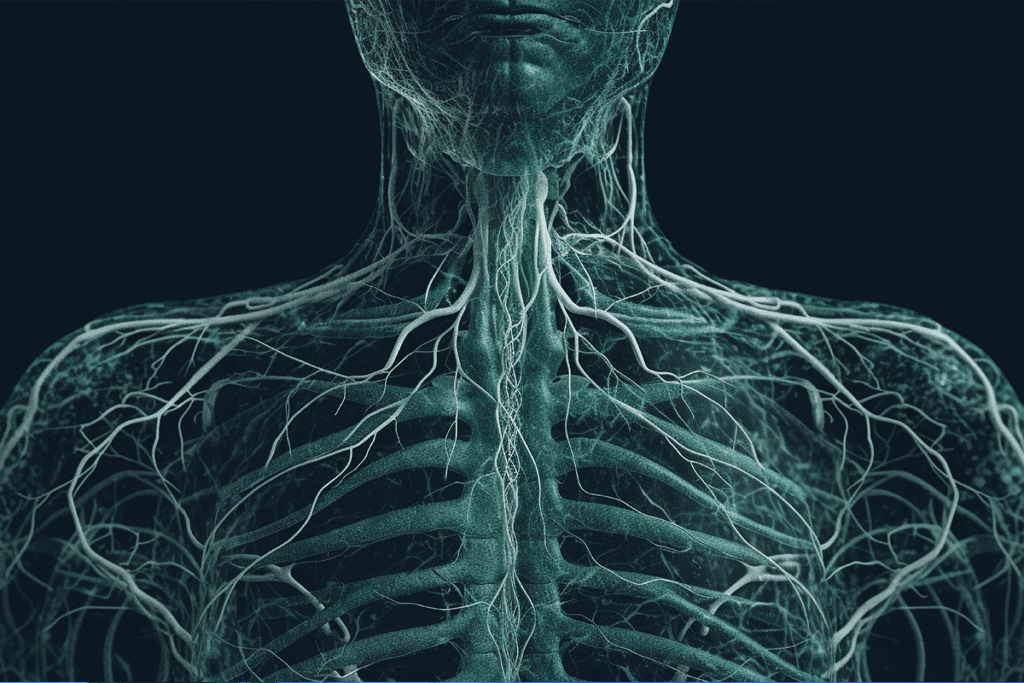
Cranial Nerve 6, also known as the Abducens Nerve or CN VI, is key for eye movement. It’s a motor nerve that controls the eye’s extraocular muscles. This nerve helps the eye move outward, making eye movements smooth.Wondering, “what is cranial nerve 6?” Our ultimate guide explains the abducens nerve, its critical function, and its location.
At Liv Hospital, we understand how important CN VI is for good vision. It’s one of the twelve cranial nerves and is vital for eye movement. Damage to it can lead to vision problems.
Key Takeaways
- The Abducens Nerve is responsible for controlling lateral eye movement.
- Damage to CN VI can cause vision problems, including double vision.
- Understanding CN VI is key for spotting vision issues early.
- The Abducens Nerve is a purely motor nerve, innervating the lateral rectus muscle.
- CN VI is one of the twelve cranial nerves and plays a vital role in maintaining healthy vision.
Overview of Cranial Nerve 6 (CN VI Abducens)
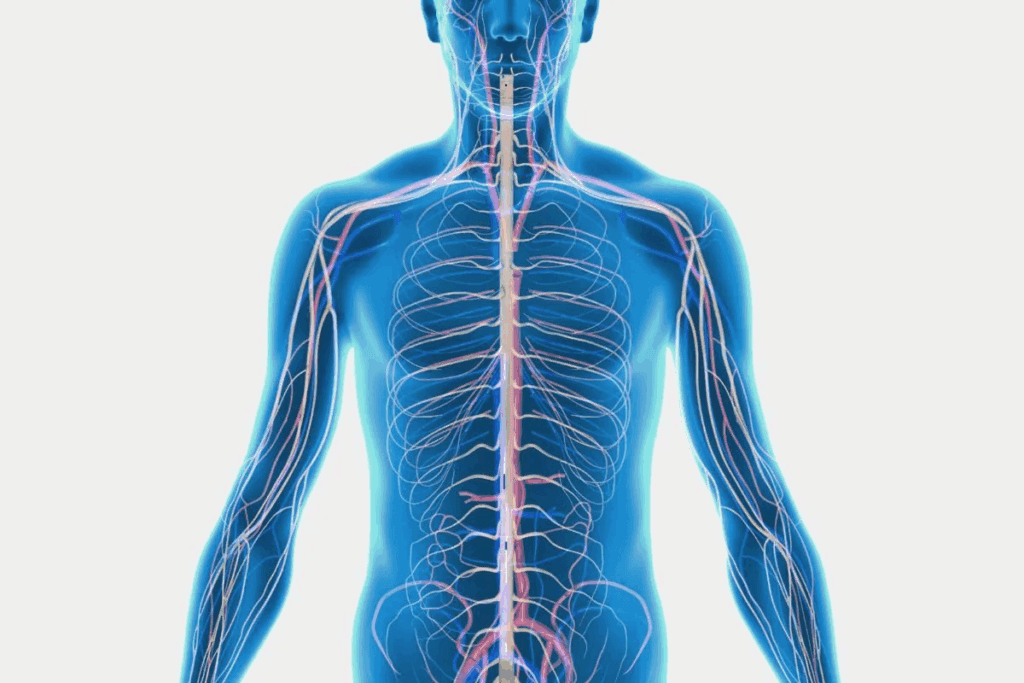
The abducens nerve, known as CN VI, controls the lateral rectus muscle. This muscle is key for moving the eye outward. CN VI is vital for eye movement control in the cranial nerve system.
Basic Definition and Classification
The abducens nerve is a pure motor nerve. It has only motor fibers. It is the sixth cranial nerve, or CN VI. We will look at its role in eye movement control.
Significance in the Cranial Nerve System
The abducens nerve starts in the abducens nucleus of the brainstem. It exits at the pons and medulla junction. Its long path makes it prone to damage, showing its importance in medical exams.
Understanding CN VI is key for diagnosing and treating related issues. We will explore its anatomy, function, and clinical importance. This will give a full view of this important cranial nerve.
What Is Cranial Nerve 6?
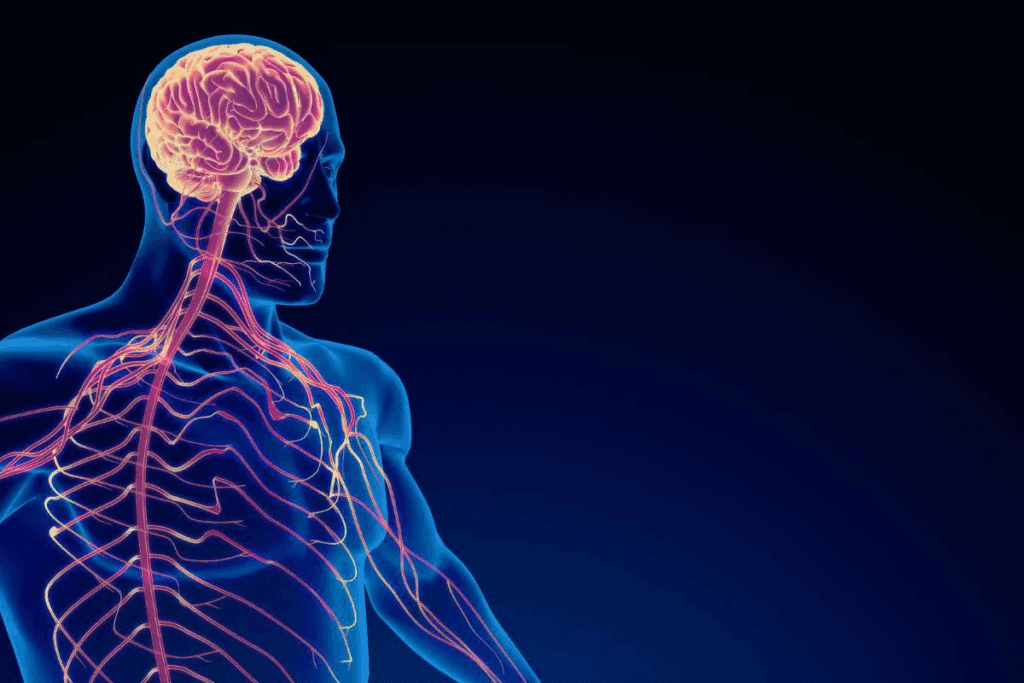
Cranial Nerve 6, also known as the abducens nerve, is key for eye movement control. We’ll look into its details, including its definition, name, and its place among the twelve cranial nerves.
Definition and Nomenclature
The abducens nerve, or CN VI, helps move the eye outward. It’s a pure motor nerve. This means it only has motor fibers for the lateral rectus muscle.
Position Among the Twelve Cranial Nerves
The abducens nerve is the sixth cranial nerve. It’s part of the three nerves that control eye movements. The others are the oculomotor (CN III) and trochlear (CN IV) nerves.
Pure Motor Nature of CN VI
The abducens nerve has a pure motor function. It doesn’t have sensory fibers. Its job is to control the lateral rectus muscle for eye abduction.
Knowing this about CN VI helps in diagnosing and treating neurological issues. We’ll see how this affects overall cranial nerve function.
Embryological Development of the Abducens Nerve
Learning about the abducens nerve‘s early growth helps us understand its role and possible problems. Its development is linked to the growth of cranial nerves and the brainstem.
Formation During Neural Development
The abducens nerve, or CN VI, starts from the basal plate of the early brainstem. This happens early in pregnancy, as the neural tube forms into different parts. These parts will become the various cranial nerves. The abducens nerve is a motor nerve, and its growth shows this, coming from motor neurons in the basal plate.
Developmental Milestones
There are important steps in the cranial nerve 6 pathway’s formation:
- The neural tube closes, and the brainstem starts to take shape.
- Motor neurons in the basal plate begin to become the neurons of the abducens nerve.
- The nerve fibers grow out from the brainstem. They move through the developing head structures to reach the lateral rectus muscle.
Knowing these milestones helps us understand the cn 6 pathway better. It shows how it can be affected by developmental problems or injuries.
By studying the early growth of the abducens nerve, we learn more about its role in eye movement. This knowledge is key for doctors and researchers to better treat related disorders.
Anatomical Origin and Nucleus
The abducens nerve starts from a specific nucleus in the dorsal pons. This part will explore the details of where the abducens nerve begins and its nucleus.
Location in the Dorsal Pons
The dorsal pons is a key part of the brainstem. It’s important for many cranial nerves. The abducens nucleus is found here, specifically near the midline. It’s surrounded by other vital neural structures.
Abducens Nucleus Structure
The abducens nucleus is more than just the start of the nerve. It’s a complex part with motor neurons. These neurons control the lateral rectus muscle. This muscle helps move the eye outward.
Relationship to the Fourth Ventricle
The abducens nucleus is also close to the fourth ventricle. This ventricle is filled with cerebrospinal fluid. Its closeness to the nucleus is important for understanding diseases that might affect the abducens nerve.
The Intracranial Course of the Abducens Nerve
Knowing how the abducens nerve travels inside the brain is key for treating problems. This nerve, or cranial nerve VI, has a long and complex path. It can get damaged in many ways.
Emergence at the Pontomedullary Junction
The abducens nerve starts at the pontomedullary junction. This spot is where the pons and medulla oblongata meet. The nerve’s start here is important for its journey.
Path Through the Subarachnoid Space
After starting, the nerve goes through the subarachnoid space. This space is filled with cerebrospinal fluid (CSF). The fluid helps protect the nerve as it moves.
Passage Through Dorello’s Canal
The nerve then goes through Dorello’s canal. This narrow canal is near the tip of the temporal bone. It’s a key spot for the nerve to reach the cavernous sinus. But, it can also be a place for problems.
Course Within the Cavernous Sinus
After Dorello’s canal, the nerve goes into the cavernous sinus. Here, it’s close to important structures like the internal carotid artery. The nerve’s path in the sinus is complex. It’s important to understand this for treating problems.
The abducens nerve’s path shows how it can be at risk for damage. Doctors need to know this path to treat related issues well.
Function of the Abducens Nerve
The abducens nerve, also known as CN VI, is key for eye movement. It controls a specific muscle to help us look sideways. This is vital for our vision.
Innervation of the Lateral Rectus Muscle
The abducens nerve mainly works with the lateral rectus muscle. This muscle helps move the eye. It’s the only muscle the abducens nerve controls.
“The abducens nerve is a somatic motor nerve that innervates the lateral rectus muscle, enabling the eye to abduct,” as noted in medical literature. This is essential for eye function.
Mechanism of Eye Abduction
Eye abduction means moving the eye away from the body’s midline. The abducens nerve does this by making the lateral rectus muscle contract. This contraction lets us look sideways.
Coordination of Horizontal Eye Movements
The abducens nerve is key for eye movement coordination. It works with the oculomotor nerve (CN III) to ensure both eyes move together. This is important for clear vision and avoiding double vision.
As Medical Expert, a neurologist, notes, “The coordination between the abducens nerve and other ocular motor nerves is a complex process that requires precise neural control.” This complex process helps us track objects and keep focus.
In summary, the abducens nerve is vital for eye movement. It controls the lateral rectus muscle, helps us look sideways, and coordinates eye movements. Problems with it can cause serious vision issues, like trouble moving the eye outward.
Neurological Connections and Pathways
The abducens nerve is key in the complex network of nerves that help our eyes move together. It’s not alone but a vital part of a bigger system.
Relationship with the Medial Longitudinal Fasciculus
The abducens nerve is closely tied to the medial longitudinal fasciculus (MLF). This pathway is essential for eye movement coordination. The MLF connects various nerve nuclei in the brainstem.
Through the MLF, the abducens nerve works with other nerves for eye movement. This ensures both eyes move together smoothly.
Integration with Oculomotor and Trochlear Nerves
The abducens nerve teams up with the oculomotor and trochlear nerves to control eye muscles. The oculomotor nerve controls muscles for adduction. The trochlear nerve controls the superior oblique muscle for rotation.
Together, these nerves help the eye move smoothly and precisely. This allows for smooth gaze shifts.
Neural Circuitry for Conjugate Gaze
The circuit for conjugate gaze involves complex connections. These connections link the abducens nucleus, the oculomotor nucleus, and other brainstem nuclei. This ensures both eyes move together for binocular vision.
The abducens nerve, being a motor nerve, is key in this circuit. It innervates the lateral rectus muscle for abduction.
Understanding the abducens nerve’s role in the cranial nerve system is important. It’s a motor nerve essential for eye movement coordination. By working with other nerves, it helps us move our eyes smoothly and accurately.
Clinical Significance of CN VI
The abducens nerve is at risk for many diseases because of its long journey inside the brain. It goes from the brainstem to the lateral rectus muscle. This makes it easy to hurt from different things.
Vulnerability Due to Long Intracranial Course
The abducens nerve travels the longest path inside the skull. It goes through many areas. This makes it more likely to get damaged by injuries, blood problems, and tumors.
Because of this, abducens nerve palsy can happen for many reasons. These include blood pressure on the nerve, injuries, and tumors.
Common Pathologies Affecting the Abducens Nerve
Many diseases can harm the abducens nerve. These include:
- Diabetes mellitus, which can hurt the nerve because of blood problems
- Trauma, from head injuries or surgery
- Tumors, like meningiomas or schwannomas, that press on the nerve
- Inflammatory diseases, like multiple sclerosis, that damage the nerve
These issues show why we need a detailed way to find out what’s wrong with cranial nerve 6 palsy.
Differential Diagnosis of Abducens Dysfunction
Figuring out why the abducens nerve isn’t working right involves looking at many possible causes. Doctors use tests and scans to find out what’s wrong with sixth nerve palsy.
Knowing how important CN VI is and how it can get sick is key for doctors. It helps them find and treat problems better.
Abducens Nerve Palsy
Abducens nerve palsy affects eye movement, causing discomfort and vision problems. It happens when the sixth cranial nerve is damaged. This nerve controls the lateral rectus muscle, which helps move the eye outward.
Etiologies: Vascular, Traumatic, and Neoplastic Causes
There are many reasons for abducens nerve palsy. Vascular causes include high blood pressure and diabetes. These can harm the nerve by cutting off blood supply. Traumatic causes include head injuries and surgical mistakes. Neoplastic causes are tumors that press on or damage the nerve.
Knowing the cause is key to treating abducens nerve palsy. We’ll look at each cause in depth to understand this condition better.
Clinical Presentation and Symptoms
People with abducens nerve palsy have trouble moving their eyes, mainly moving them outward. They often see double (diplopia) and feel eye strain.
Diplopia and Esotropia
Diplopia, or seeing double, is a common symptom. It happens because the eye can’t move outward right. This leads to images not lining up. Esotropia, or eyes turning inward, also occurs because of this imbalance.
These symptoms can really affect daily life. We’ll talk about how to manage them later.
Compensatory Head Positioning
Patients often tilt their head to fix symptoms like diplopia. Turning their head towards the affected side helps reduce double vision. This helps them see better, but it’s not a permanent fix.
This way of tilting the head can become a habit. But, it’s important to find and treat the root cause for lasting relief.
Diagnostic Testing for Abducens Nerve Function
Getting a correct diagnosis for abducens nerve issues is key for good treatment. We use different tests to check the nerve’s function and find any problems.
Neurological Examination Techniques
A detailed neurological check is the first step. We look at how well the patient’s eyes move, checking for weakness or paralysis. We also check the eye’s range of motion, how it moves quickly, and how it follows moving objects smoothly.
Ocular Motility Testing
Ocular motility testing is a big part of diagnosing. We see how well the patient can move their eyes in all directions, focusing on abduction. This test helps us spot any eye movement issues and figure out if the abducens nerve is affected.
The results of ocular motility testing can be summarized in a table:
Eye Movement | Normal Function | Abducens Nerve Palsy |
Abduction | Full range of motion | Limited or absent |
Adduction | Normal | Normal |
Saccadic Movements | Rapid and accurate | Slow or inaccurate |
Imaging Studies: MRI, CT, and Angiography
Imaging tests are very important for finding out what’s wrong with the abducens nerve. We use MRI, CT, and angiography to see the nerve and the area around it. These tests help us find things like tumors, blood vessel problems, or injuries that might be causing the nerve issue.
By using neurological checks, eye movement tests, and imaging, we can accurately find and treat abducens nerve problems.
Treatment Approaches for Abducens Nerve Disorders
Managing abducens nerve disorders needs a detailed plan. This plan depends on the cause and how severe it is. We will look at different treatments to help eyes work better and ease symptoms.
Conservative Management Strategies
First, doctors often try non-invasive methods. Observation is key, with regular check-ups to see if the condition gets better. Occlusion therapy might also be used to fix double vision by covering one eye.
Prism Therapy and Ocular Patching
Prism therapy uses special lenses to fix double vision. It’s a gentle way to help eyes see clearly together. Ocular patching is another method to block the affected eye and stop double vision.
Pharmacological Interventions
Sometimes, medicine is needed to help with symptoms. Botox injections can relax eye muscles, helping with alignment and vision. Medications might also be given to treat underlying health issues like high blood pressure or diabetes.
Surgical Options for Persistent Deficits
If other treatments don’t work, surgery might be needed. Strabismus surgery corrects eye alignment by adjusting muscles. This surgery aims to get rid of double vision.
In summary, treating abducens nerve disorders is very personal. It requires a detailed plan that meets each patient’s needs. Knowing all the treatment options helps doctors create better plans for their patients.
Conclusion
We’ve looked into the abducens nerve, also known as cranial nerve 6 (CN VI). It’s key for eye movement control. The nerve helps the lateral rectus muscle move the eye outward.
The abducens nerve is vital for eye movement coordination. It works with other nerves for smooth eye movement. Knowing its path is important for diagnosing and treating eye problems.
The nerve is at risk because of its long path inside the brain. It can face issues like blood vessel problems, injuries, and tumors. Quick diagnosis and treatment are key to avoid eye damage.
In short, the abducens nerve is essential for eye movement. Its problems can cause double vision and crossed eyes. Understanding CN VI helps doctors treat these issues better.
FAQ
What is the primary function of the abducens nerve (CN VI)?
The abducens nerve controls the lateral rectus muscle. This muscle helps move the eye outward and is key for smooth eye movements.
Is the abducens nerve sensory or motor?
The abducens nerve is a motor nerve. It has no role in sensing and only controls the lateral rectus muscle.
What is the anatomical origin of the abducens nerve?
The abducens nerve starts in the dorsal pons. It comes from the abducens nucleus, near the fourth ventricle.
What is the intracranial course of the abducens nerve?
It begins at the pontomedullary junction. Then, it goes through the subarachnoid space and Dorello’s canal. After that, it passes through the cavernous sinus before reaching its final destination.
What are the common pathologies affecting the abducens nerve?
Issues like vascular problems, injuries, and tumors can harm the abducens nerve. These problems can cause nerve palsy.
What are the symptoms of abducens nerve palsy?
Symptoms include double vision and eyes that turn inward. People may also tilt their head to see better.
How is abducens nerve function tested?
Doctors use eye tests and imaging like MRI and CT scans. These help check how well the nerve works.
What are the treatment approaches for abducens nerve disorders?
Treatment can include eye patches, glasses, and surgery. These help manage symptoms and improve vision.
Why is the abducens nerve vulnerable to damage?
Its long path inside the skull makes it prone to injury. This is why it’s at risk for damage.
What is the role of the abducens nerve in conjugate gaze?
The abducens nerve is key for coordinated eye movements. It works with other nerves to ensure eyes move together smoothly.
References
National Center for Biotechnology Information. Evidence-Based Medical Guidance. Retrieved from https://www.ncbi.nlm.nih.gov/books/NBK430711/



 Departments
 Related Videos
 Our Doctors
 News
News