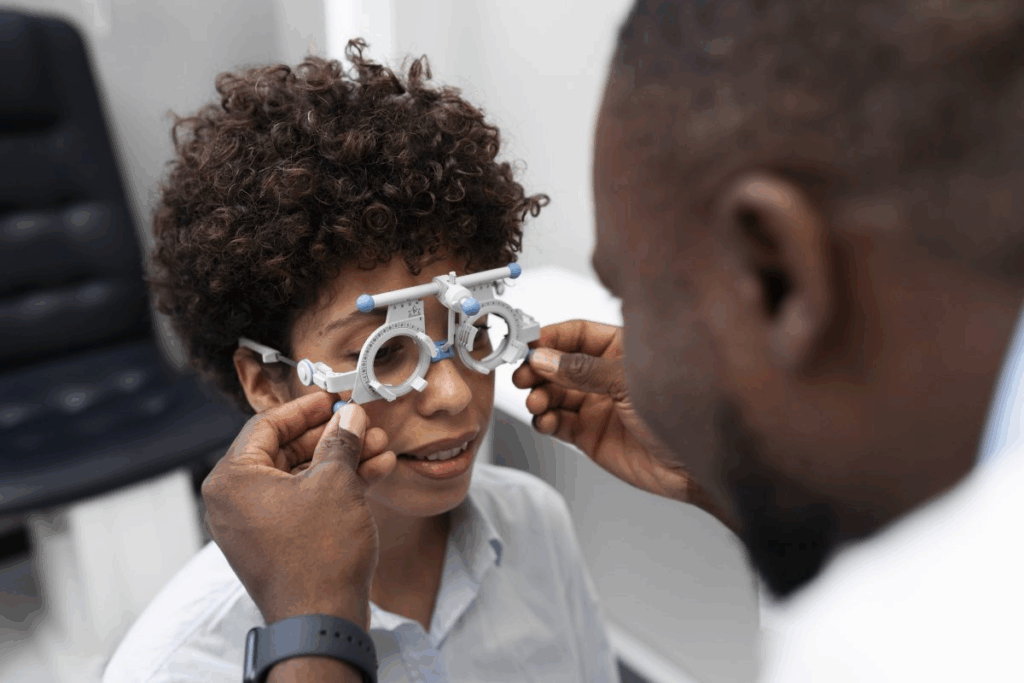
Diplopia, or double vision, is when you see two images of one thing. It can make everyday tasks hard, like reading, driving, and walking.
Seeing double can be confusing and scary, whether it happens suddenly or slowly. Knowing why you see double is key to fixing it.
At Liv Hospital, our eye doctors use the latest tools and methods. They find out why you see double and treat it right.
Key Takeaways
- Diplopia, or double vision, is a condition where a single object is seen as two.
- It can significantly impact daily life by affecting activities like reading and driving.
- Understanding the causes of diplopia is essential for effective treatment.
- Liv Hospital’s specialists use advanced diagnostic techniques for accurate diagnosis.
- Evidence-based protocols are employed to treat diplopia effectively.
Understanding Diplopia: Definition and Overview

Double vision, or diplopia, is more than just seeing double. It can deeply affect your daily life. It comes in different forms and can be caused by many things. So, it’s key to know what it is, why it happens, and how it impacts us.
Etymology and Medical Definition
The word diplopia comes from Greek. “Diploos” means ‘double’ and “ops” means ‘eye.’ In medicine, diplopia is seeing two images of one thing. This can happen in one eye or with both eyes.
Knowing what diplopia is helps doctors find and treat it. It’s not just seeing double. It’s how it affects your daily life and quality of life.
Prevalence and Impact on Daily Life
Diplopia is more common than you might think. It affects many adults. The cause of diplopia can change how common it is. But, it’s a condition that can make daily tasks hard, lower your confidence, and affect your well-being.
Diplopia can make everyday tasks tough. Reading, driving, or even walking can be hard. So, knowing how common and impactful diplopia is is important for both patients and doctors.
Aspect of Life | Impact of Diplopia |
Daily Activities | Difficulty in performing tasks like reading, driving, or cooking due to double vision. |
Mobility and Balance | Increased risk of falls and accidents due to impaired vision. |
Social Interactions | Avoidance of social situations due to embarrassment or difficulty in interacting. |
By understanding diplopia’s definition, causes, and effects, we can improve diagnosis and treatment. This can greatly enhance the lives of those affected.
Types of Diplopia: Monocular vs. Binocular

Double vision, or diplopia, comes in two types: monocular and binocular. Knowing the difference helps find the cause and the right treatment.
Monocular Diplopia: Double Vision in One Eye
Monocular diplopia means seeing double in one eye, even with the other eye closed. It’s often due to eye problems like corneal irregularities, cataracts, or lens abnormalities. For example, a misshapen cornea can make light bend unevenly, causing double vision.
“Monocular diplopia usually points to a problem with the eye’s structure,” we say. A detailed eye check is needed to find the cause.
Binocular Diplopia: Double Vision with Both Eyes
Binocular diplopia happens when you see double with both eyes open but goes away with one eye closed. It’s usually linked to eye alignment issues or nerve problems. Cranial nerve palsies, trauma, and certain neurological conditions can cause it by messing with eye movement nerves.
Looking into binocular diplopia shows it often needs a full neurological check to find the root cause.
To sum up, telling monocular from binocular diplopia is key for the right next steps. Monocular is often about eye structure problems. Binocular is about eye alignment or nerve issues.
How Diplopia Manifests: Patterns of Double Vision
Understanding diplopia is key to finding its causes. Diplopia, or double vision, shows up in different ways. These patterns help doctors diagnose and treat it.
Horizontal Image Separation
In some cases, diplopia shows as horizontal image separation. This means the two images are side by side. It can happen if the lateral rectus muscle or the abducens nerve is not working right.
Vertical Image Separation
Diplopia can also show as vertical image separation. Here, one image is above the other. This usually means there’s a problem with the superior or inferior rectus muscles or their nerves.
Oblique Image Separation
Some people see their images separated at an angle, known as oblique image separation. This complex issue can involve many muscles or nerves.
Pattern of Double Vision | Possible Causes |
Horizontal Image Separation | Issues with lateral rectus muscle or abducens nerve |
Vertical Image Separation | Problems with superior or inferior rectus muscles or their nerves |
Oblique Image Separation | Complex issues involving multiple extraocular muscles or nerves |
It’s important for doctors to recognize these patterns. This helps them find the cause of diplopia and treat it effectively. By understanding how double vision shows up, we can help patients get better faster.
Common Causes of Monocular Diplopia
Monocular diplopia is when you see double in one eye. It’s different from seeing double with both eyes open. Knowing what causes it helps find the right treatment.
Corneal Irregularities and Damage
The cornea helps focus light. Problems with it can cause double vision. For example, keratoconus makes the cornea bulge, leading to vision issues. Scars from injuries or infections can also cause double vision.
Cataracts and Lens Abnormalities
Cataracts cloud the lens, causing double vision. As they grow, they can make vision worse. Other issues, like a lens that’s not in place right, can also cause double vision.
- Cataracts scatter light, making vision blurry.
- Lens problems can mess up how light hits the retina.
Retinal Problems
Issues with the retina, like detachment or macular degeneration, can cause double vision. The retina turns light into signals for the brain. Damage here can lead to vision problems.
If you see double in one eye, see an eye doctor. They can help find the cause and treat it early.
What is Diplopia of the Binocular Type? Causes and Concerns
Binocular diplopia is when you see double when both eyes are open. It can signal serious health problems. We’ll look at the main reasons for this and the worries they bring.
Cranial Nerve Palsies
Cranial nerve palsies often cause binocular diplopia. These palsies happen when nerves controlling eye muscles get damaged. The third cranial nerve (oculomotor nerve), fourth cranial nerve (trochlear nerve), and sixth cranial nerve (abducens nerve) manage eye movements. Damage can come from diabetes, high blood pressure, and aneurysms.
Vasculopathy: The 28.66% Leading Cause
Vasculopathy, or diseases of blood vessels, is a big reason for binocular diplopia, making up about 28.66% of cases. High blood pressure and diabetes can harm blood vessels. This can lead to nerve damage and diplopia.
Trauma-Related Binocular Diplopia: 24.66% of Cases
Trauma is also a big cause of binocular diplopia, making up about 24.66% of cases. Head injuries can hurt nerves and muscles around the eyes, causing double vision. The effect of trauma on diplopia can vary a lot.
Knowing why binocular diplopia happens is key to finding the right treatment. If symptoms don’t get better or get worse, it’s important to see a doctor.
Neurological Conditions Associated with Diplopia
Diplopia can be a sign of many neurological issues that affect how we see. These problems can really change someone’s life. It’s key to know what causes them and how they affect us.
Multiple Sclerosis and Diplopia
Multiple sclerosis (MS) is a long-term disease that harms the central nervous system. Diplopia is a common symptom in MS patients, happening because of nerve damage. Studies show that about 20% of MS cases start with visual problems like diplopia.
Myasthenia Gravis
Myasthenia gravis is another condition that can cause diplopia. It’s an autoimmune disease that messes with nerve and muscle communication, causing weakness. Ocular myasthenia gravis affects eye muscles, leading to double vision. The symptoms can vary a lot, making it hard to diagnose.
Brain Tumors and Aneurysms
Brain tumors and aneurysms are serious issues that can also cause diplopia. Tumors can press on nerves that control eye movements. Aneurysms can damage or compress these nerves. Prompt diagnosis and treatment are critical to manage these conditions and reduce symptoms like diplopia.
It’s important to understand the neurological conditions linked to diplopia for effective treatment. By finding the root cause, doctors can create specific treatment plans. This helps address both the diplopia and the underlying condition.
Diagnosing Diplopia: Medical Evaluation Process
Healthcare professionals start by doing a detailed check to find out why someone has double vision. This step is key to figuring out what’s causing the problem and how to fix it.
Initial Eye Examination
The first step is a full eye check. This is important to see how well you can see and if your eyes are healthy. The doctor will do several tests, like:
- Visual acuity testing to check how sharp your vision is
- Cover testing to see how your eyes work together
- Ophthalmoscopy to look inside your eyes
The American Academy of Ophthalmology says, “A detailed eye check is key to finding out why you have double vision and to rule out other problems.”
Neurological Assessment
If the eye check shows a problem might be in the brain, a brain check is done next. This might include:
- Testing the nerves in your head to find any issues
- Checking how strong your muscles are and your reflexes
- Looking at how well you can move and balance
This brain check helps doctors figure out if the double vision is because of a brain or nerve problem.
Imaging Studies and Laboratory Tests
Sometimes, doctors will order MRI or CT scans to look closer at why you have double vision. These scans can spot things like tumors or aneurysms. Blood tests might also be done to check for things like diabetes or thyroid problems.
Diagnostic Test | Purpose |
Visual Acuity Testing | Checks how sharp your vision is |
MRI/CT Scan | Finds structural problems |
Blood Work | Looks for systemic issues |
Doctors usually use more than one test to find the cause of double vision. A thorough check helps them know exactly what’s wrong and how to treat it.
Treatment Options for Monocular Diplopia
Understanding the causes of monocular diplopia is key to treating it. This condition, or double vision in one eye, can stem from many optical issues. Finding and fixing these problems is essential for effective treatment.
There are several treatment paths to explore. These include corrective lenses, cataract surgery, and corneal treatments. Each option is designed to tackle different causes of monocular diplopia.
Corrective Lenses and Prisms
Corrective lenses and prisms are primary treatments for monocular diplopia. Lenses adjust how light enters the eye, potentially solving double vision. Prisms redirect light to align images seen by the eye, reducing or eliminating double vision.
- Corrective lenses can be customized to address specific optical issues causing monocular diplopia.
- Prisms are useful in cases where double vision is due to lens irregularities.
Cataract Surgery and Success Rates
Cataracts can cause monocular diplopia. Cataract surgery is often a highly effective treatment. It involves removing the cataract and replacing it with an artificial lens, improving or resolving double vision.
Cataract surgery has a high success rate. Studies show most patients see better after surgery. Success depends on factors like other eye conditions.
- Pre-surgical evaluation is key to determine if cataract surgery is right for the patient.
- Post-surgical care includes follow-up appointments to monitor healing and vision improvement.
Corneal Treatments
Corneal irregularities can cause monocular diplopia. Various treatments aim to reshape or address these irregularities. This can include corneal reshaping techniques or surgical interventions to correct the cornea’s shape.
The choice of treatment depends on the nature and severity of the corneal issue. Options include specialized contact lenses or surgical procedures.
- Corneal reshaping can be achieved through specialized contact lenses or surgical procedures.
- Surgical interventions may involve procedures like corneal cross-linking to strengthen the cornea.
Managing Binocular Diplopia
Managing binocular diplopia is complex. It involves medical treatment, lifestyle changes, and sometimes surgery. We’ll look at how to manage this condition. This includes medication, surgery, and eye exercises or vision therapy.
Medication Approaches and Efficacy
Medicine is key in treating binocular diplopia, mainly for neurological or muscular issues. We use corticosteroids and immunosuppressants for conditions like myasthenia gravis. These drugs can greatly help many patients.
Corticosteroids can lessen swelling that presses on nerves. This can help with double vision. But, we must watch for side effects when using these drugs.
Surgical Interventions: The 70% Success Rate
Surgery is an option for certain causes of binocular diplopia. It can fix eye muscle problems to align eyes and stop double vision. About 70% of surgeries are successful, greatly improving life quality.
For example, surgery can fix a third cranial nerve palsy. This realigns the eye and fixes double vision. Success depends on the cause and the patient’s health.
Eye Muscle Exercises and Vision Therapy
Eye exercises and vision therapy are non-invasive ways to manage binocular diplopia. They strengthen eye muscles and help the brain combine images. Vision therapy is great for convergence insufficiency.
We suggest a custom vision therapy program. It includes exercises for better eye movement and coordination. Patients do these exercises at home, with check-ups to adjust the therapy.
Managing binocular diplopia needs a detailed plan. By knowing the causes and treatments, we can improve patients’ lives. This includes medication, surgery, and vision therapy.
Living with Diplopia: Coping Strategies and Adaptations
Coping with diplopia means finding quick fixes and making lasting lifestyle changes. People with diplopia face many challenges, from everyday tasks to social interactions. It’s key to find good ways to cope.
Temporary Solutions for Double Vision
One quick way to deal with diplopia is using temporary fixes. Eye patches are a simple yet effective way to block one eye. This helps when you need clear vision, like reading or driving. Also, prism glasses can be prescribed to align images seen by both eyes, lessening double vision.
Adjusting your environment is another temporary fix. For example, better lighting or less glare can help. Taking breaks to rest your eyes is also good.
Long-term Lifestyle Adjustments
While quick fixes help, making long-term changes is key. This might mean changing your daily routine, like altering work habits to ease eye strain. Using assistive technology can also help with tasks hard because of double vision.
Vision therapy is another long-term strategy. It involves exercises and techniques to improve eye coordination and strengthen muscles. This can help lessen diplopia’s impact.
Adjustments also apply to social and fun activities. People with diplopia might need to find new ways to enjoy hobbies or sports. This way, they can participate despite their condition.
Conclusion: Prognosis and When to Seek Medical Attention
Knowing when to get medical help is key for those with diplopia. Almost 70% of cases get better with the right treatment. This includes medicines and surgeries, like cataract surgery.
The outcome for diplopia depends on its cause. If the cause is treatable, early medical help can greatly improve symptoms. Sometimes, it can even make them go away completely.
If symptoms don’t get better or get worse, it’s time to see a doctor. Waiting too long can make treatment harder and cause more pain.
Getting medical help quickly and following treatment can greatly improve life with diplopia. It also lowers the chance of serious problems.
FAQ
What is diplopia, and how does it affect daily life?
Diplopia, or double vision, means seeing two images of one thing. It makes everyday tasks hard, like reading and driving. Our team is ready to help you find out why and how to fix it.
What are the different types of diplopia?
There are two kinds of diplopia. Monocular happens in one eye, and binocular happens with both. Knowing the type helps find the cause and the right treatment.
What causes monocular diplopia?
Monocular diplopia can come from eye problems like cataracts or irregular corneas. These issues can cause double vision. We’ll find out why and suggest the best treatment.
What are the common causes of binocular diplopia?
Binocular diplopia can be from nerve problems, trauma, or diseases like multiple sclerosis. We’ll figure out why you have it and plan a treatment just for you.
How is diplopia diagnosed?
We use eye exams, nerve checks, and scans to find the cause of diplopia. Our team will work with you to find the best treatment.
What are the treatment options for monocular diplopia?
For monocular diplopia, treatments include glasses, surgery, or corneal treatments. We’ll choose the best option based on your case.
How is binocular diplopia managed?
Managing binocular diplopia might include medicine, surgery, or vision therapy. We’ll create a plan that fits your needs and improves your life.
Can diplopia be cured?
Cure chances for diplopia vary by cause. Some can be fixed, others need ongoing care. We aim to get you the best outcome.
What are some coping strategies for living with diplopia?
Dealing with diplopia can be tough, but there are ways to cope. We can help you find temporary fixes and long-term adjustments to live better with double vision.
When should I seek medical attention for diplopia?
If your diplopia gets worse or doesn’t go away, see a doctor. We’re here to help you understand and treat your double vision.
What is diploplia or dipoplia?
Diploplia or dipoplia are other names for diplopia. But diplopia is the correct term for seeing double.
Define diplopia.
Diplopia is seeing two images of one thing. It can be due to eye issues, nerve problems, or trauma.
What is the difference between diplopia and displopia or dilopia?
Diplopia is the right term for double vision. Displopia or dilopia are not real medical terms. We can help you find the cause and treat your diplopia.
References
National Health Service (NHS). Evidence-Based Medical Guidance. Retrieved from https://www.nhs.uk/conditions/double-vision/



 Departments
 Related Videos
 Our Doctors
 News
News