Estimated Fetal Weight (EFW) is a key part of ultrasound in pregnancy. It helps us see how the fetus is growing and developing. We use EFW to check on the fetus’s health and spot any issues early.What is EFW in ultrasound? This ultimate guide explains Estimated Fetal Weight and how this critical number is calculated.
At Liv Hospital, we use the latest ultrasound tech and proven methods for checking the fetus. This way, we make sure moms-to-be get the best care. We watch the fetus grow and handle any problems in a caring and supportive place.
Key Takeaways
- Understanding EFW is essential for monitoring fetal growth and development.
- EFW calculation involves combining multiple fetal biometric parameters.
- Accurate EFW assessments enable early detection of possible complications.
- Liv Hospital uses advanced ultrasound technology for precise fetal assessments.
- Our complete care approach supports expectant mothers throughout pregnancy.
Understanding EFW: Definition and Significance

For expectant parents and healthcare providers, knowing about EFW is key. EFW, or Estimated Fetal Weight, shows how the baby is growing. It’s a big part of prenatal care, helping doctors watch the baby’s growth and spot problems early.
What EFW Stands For in Obstetric Ultrasound
EFW means Estimated Fetal Weight. It’s a guess based on ultrasound measurements. These measurements are important for checking how the baby is growing.
The Hadlock method is often used to guess the baby’s weight. It looks at biparietal diameter (BPD), head circumference (HC), abdominal circumference (AC), and femur length (FL).
The Importance of Fetal Weight Estimation
EFW is very important in pregnancy. It helps doctors keep an eye on the baby’s growth. They can spot if the baby is growing too slow or too fast.
This is key for planning the baby’s birth. Doctors use EFW to decide when and how to deliver the baby. Knowing about EFW helps expectant parents understand its role in a healthy pregnancy.
What Is EFW in Ultrasound: Basic Principles and Measurement
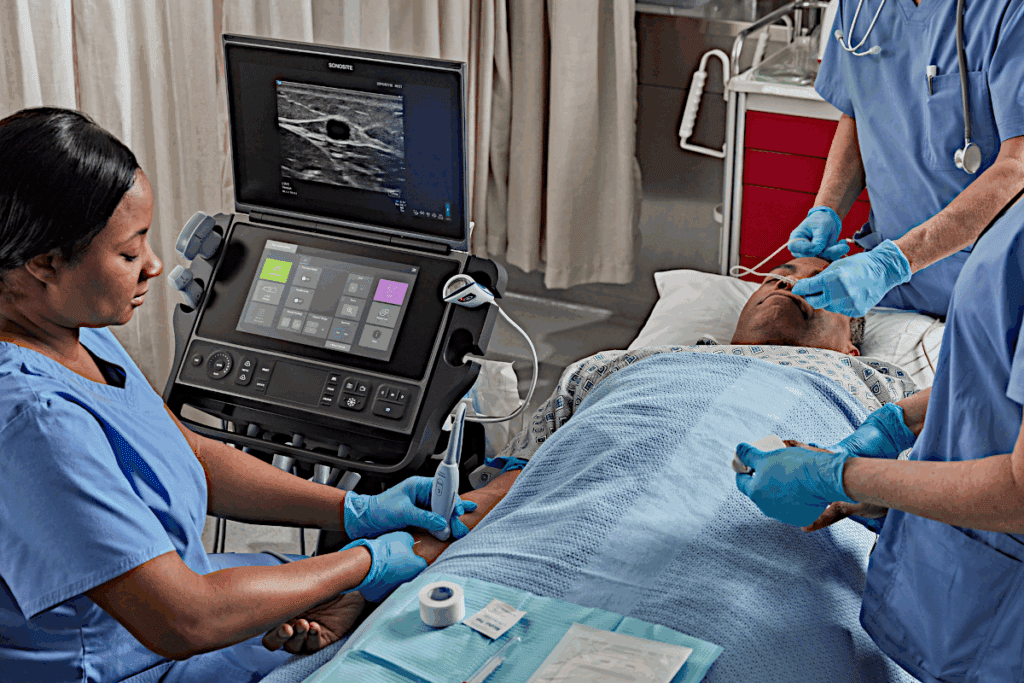
Estimating fetal weight (EFW) through ultrasound is key in prenatal care. It helps doctors track fetal growth and spot any problems early. This way, they can make better decisions about the pregnancy.
Ultrasound has changed how we check on babies before they’re born. It lets us see how they’re growing without needing to touch them. We use special machines to measure different parts of the baby to figure out its weight.
How Ultrasound Technology Measures Fetal Parameters
Ultrasound looks at things like Biparietal Diameter (BPD), Head Circumference (HC), Abdominal Circumference (AC), and Femur Length (FL) to guess the baby’s weight. These measurements come from scans done at different times during the pregnancy.
The steps are:
- Getting pictures of the baby from different angles
- Measuring key parts of the baby
- Using these numbers to guess the baby’s weight
Development of EFW Calculation Methods
Many formulas have been made to guess the baby’s weight based on these measurements. The Hadlock formula is one of the most used. It uses several measurements to get a close guess of the baby’s weight.
Formula | Description | Parameters Used |
Hadlock Formula | A widely used method for EFW calculation | BPD, HC, AC, FL |
Other Formulas | Alternative methods for EFW estimation | Varying combinations of BPD, HC, AC, FL |
These formulas have gotten better over time. Scientists keep working to make them more accurate. We keep using and improving these methods to give our patients the best care.
Key Fetal Biometric Parameters Used in EFW Calculation
Getting the right EFW calculation needs precise measurements of several key fetal biometric parameters. These are gathered through ultrasound technology. They are vital for checking how the fetus grows and develops during pregnancy.
Biparietal Diameter (BPD) Measurement
The Biparietal Diameter is the space between the two parietal bones of the fetal skull. It’s measured in a side view of the head. This measurement is key because it shows how the fetal head and brain are growing. Getting this measurement right is very important for EFW calculation.
Head Circumference (HC) Assessment
Head Circumference is measured around the outer edge of the fetal skull. It tells us about the growth of the fetal head. It’s used with other measurements to guess the fetal weight. This helps us see how well the fetus is developing.
Abdominal Circumference (AC) Measurement
Abdominal Circumference is measured around the fetal abdomen, at the level of the stomach and portal vein. It’s a key measurement because it shows the size of the fetal abdomen. It’s closely linked to the fetal weight. Getting this measurement right is essential for a reliable EFW calculation.
Femur Length (FL) Evaluation
Femur Length is the length of the longest bone in the fetus, the femur. It’s a key sign of how the fetus’s bones are growing. It’s used in EFW formulas to guess the fetal weight. FL is measured along the long axis of the femur.
These measurements – BPD, HC, AC, and FL – are mixed in different ways in EFW formulas. They help give a good guess of the fetal weight. How well these measurements are taken affects how good the EFW calculation is.
Biometric Parameter | Description | Significance in EFW |
Biparietal Diameter (BPD) | Distance between the two parietal bones of the fetal skull | Reflects fetal head and brain growth |
Head Circumference (HC) | Measurement around the outer edge of the fetal skull | Assesses overall fetal head growth |
Abdominal Circumference (AC) | Measurement around the fetal abdomen | Reflects fetal abdominal size and weight |
Femur Length (FL) | Length of the fetal femur | Indicator of fetal skeletal growth |
The Hadlock Formula and Other EFW Calculation Methods
There are many ways to estimate a baby’s weight before birth. The Hadlock method is one of the most used. It was created by Medical Expert 1980s. It uses different measurements to guess the baby’s weight.
Understanding the Hadlock Method
The Hadlock formula looks at several measurements. These include the baby’s head size, belly size, and leg length. It’s known for being pretty accurate at different stages of pregnancy.
Key Components of the Hadlock Formula:
- Biparietal Diameter (BPD)
- Head Circumference (HC)
- Abdominal Circumference (AC)
- Femur Length (FL)
Alternative Formulas for EFW Calculation
Other methods exist for estimating a baby’s weight. These include the Shepard and Campbell formulas. Each uses different measurements and ways to calculate.
Formula | Parameters Used | Notable Features |
Hadlock | BPD, HC, AC, FL | High accuracy across gestational ages |
Shepard | BPD, AC | Simpler, fewer parameters |
Campbell | AC | Focuses on abdominal circumference |
When Different Formulas Are Preferred
Choosing the right formula depends on several things. These include how far along the pregnancy is, the baby’s position, and if there are any birth defects. For example, the Hadlock formula is often chosen for its detailed approach. But simpler formulas might be used in certain situations or when some measurements are hard to get.
It’s important for doctors to know about different ways to estimate a baby’s weight. This helps them make better decisions about pregnancy care. By understanding each formula’s strengths and weaknesses, doctors can better interpret the results and give the best care.
Accuracy and Limitations of EFW Measurements
EFW measurements are key in prenatal care. But, their accuracy can be affected by many factors. It’s important for healthcare providers to know these limitations to make good decisions.
Expected Margin of Error in EFW Calculations
The accuracy of EFW measurements is shown as a percentage error. Studies say the error can be between 5% and 10%. This depends on the gestational age and the formula used.
A study in the Journal of Ultrasound in Medicine found the Hadlock formula’s error to be 6.4% on average. This shows how important it is to look at these numbers with other clinical factors in mind.
“The margin of error in EFW calculations highlights the importance of interpreting these measurements in the context of other clinical factors,” notes Medical Expert, a leading obstetrician. “It’s not just about the numbers; it’s about understanding the overall clinical picture.”
Factors Affecting Measurement Precision
Several factors can affect how precise EFW measurements are. These include:
- Fetal position: A fetus in a breech position can be harder to measure accurately.
- Maternal body habitus: Obesity can make ultrasound images less clear.
- Amniotic fluid volume: Too much or too little fluid can affect accuracy.
- Ultrasound operator skill: The experience of the person doing the ultrasound matters a lot.
Gestational Age and Measurement Accuracy
EFW measurements are more accurate in the second trimester than in the third. As the fetus grows, things like fetal positioning and maternal body habitus become more important. This can make measurements less accurate.
A study in the American Journal of Obstetrics and Gynecology found that EFW accuracy drops as gestational age increases. This is true, mainly after 36 weeks.
Knowing these limitations helps healthcare providers understand EFW measurements better. This way, they can make better decisions about pregnancy management.
Normal EFW Ranges Throughout Pregnancy
Knowing the normal Estimated Fetal Weight (EFW) ranges is key to tracking fetal growth during pregnancy. EFW is a vital part of ultrasound checks, giving insights into how the fetus is growing. It helps doctors spot any issues early on.
First Trimester EFW Expectations
In the first trimester, EFW is not as often used because the fetus is small. But, measurements like crown-rump length (CRL) help estimate the gestational age. As the pregnancy goes on, other measurements become more important for EFW.
“The first trimester is a time of fast growth and development,” says a top obstetrician. “Even though EFW is not the main focus, it’s a key part of checking the fetus’s health.”
Second Trimester Growth Patterns
In the second trimester, EFW is more important as the fetus grows bigger. Doctors use measurements like biparietal diameter (BPD), head circumference (HC), abdominal circumference (AC), and femur length (FL) to guess the fetal weight. Normal EFW ranges are usually between the 10th and 90th percentiles during this time.
- BPD and HC help check how the fetal head is growing.
- AC is key for looking at fetal abdominal growth.
- FL measurements check the growth of fetal long bones.
Third Trimester Weight Development
The third trimester sees a lot of fetal growth. EFW is a key tool for tracking growth and planning for birth. Normal EFW ranges stay between the 10th and 90th percentiles, with variations based on individual factors.
As one study points out, “Accurate EFW in the third trimester is key for spotting growth issues and planning the right actions.”
Term Pregnancy EFW Considerations
At term, EFW is used to check fetal weight before birth. Normal EFW ranges at term are usually between 2,500 grams and 4,000 grams. Doctors look at EFW and other factors when deciding the best time for delivery.
Key considerations at term include:
- EFW in relation to gestational age.
- Fetal growth patterns throughout pregnancy.
- Maternal health factors influencing delivery decisions.
Interpreting EFW Percentiles and Growth Charts
Healthcare providers use EFW percentiles and growth charts to guide pregnancy care. These tools help spot if a fetus is growing right or if there are concerns.
Understanding Fetal Growth Percentiles
Fetal growth percentiles compare a fetus’s size to the average for its age. The EFW percentile shows where the fetus is compared to others at the same age.
For example, an EFW at the 50th percentile is average in size. A fetus at the 90th percentile is larger than 90% of others. One at the 10th percentile is smaller than 90%.
Standard Deviation (SD) in EFW Measurements
Standard deviation measures how much EFW varies from the average. In EFW, standard deviation shows how much the fetus’s weight deviates from the average for its age.
A fetus within one standard deviation of the mean grows normally. Big deviations might mean growth issues.
Using Growth Charts for Assessment
Growth charts show EFW against gestational age. They help healthcare providers see how a fetus is growing over time. By tracking EFW percentiles, they can spot growth problems or too much growth.
EFW Percentile | Interpretation |
Below 10th Percentile | Potential growth restriction; close monitoring recommended |
10th to 90th Percentile | Normal growth pattern |
Above 90th Percentile | Potential macrosomia; monitoring for gestational diabetes and other complications |
What Your EFW Results Mean for Your Pregnancy
EFW results are key to understanding fetal growth and development. While one measurement is helpful, tracking changes over time is more telling.
Knowing your EFW results helps you and your healthcare provider make better decisions. This ensures the best care for you and your baby.
Clinical Applications of EFW in Pregnancy Management
EFW, or Estimated Fetal Weight, is key in today’s obstetrics. It helps doctors track fetal growth and spot possible problems. This information guides them in planning for the baby’s arrival.
Routine Growth Monitoring
EFW is mainly used for tracking fetal growth. Ultrasound checks help doctors see how the baby is doing. They can spot any growth issues early and act quickly.
Doctors use biparietal diameter (BPD), head circumference (HC), abdominal circumference (AC), and femur length (FL) to calculate EFW. These measurements give a full picture of the baby’s growth.
High-Risk Pregnancy Assessment
In high-risk pregnancies, EFW is very important. It helps doctors keep an eye on the baby’s health. This is true for pregnancies complicated by diabetes or high blood pressure.
For example, if a baby is too big due to diabetes, an elevated EFW is a warning sign. This helps doctors plan the delivery to avoid problems.
Delivery Planning Based on EFW
EFW is also key in planning for delivery. It helps doctors decide the best way to deliver the baby. A big baby might need a cesarean section to avoid risks.
On the other hand, a small baby might need early delivery. This is because of growth issues. EFW helps doctors plan for the best delivery for both mom and baby.
When to Be Concerned About EFW Measurements
While EFW is helpful, it’s important to know when it shows a problem. Big changes in growth patterns need attention. Doctors look at these changes with the whole pregnancy in mind.
If EFW shows a concern, doctors might suggest more tests. This could mean more ultrasounds or other tests. They want to make sure the baby is okay and plan the best course of action.
Detecting Growth Abnormalities Through EFW
Checking for growth problems in fetuses is key in prenatal care. Estimated Fetal Weight (EFW) is a big help in this area. It helps track how a fetus is growing and spots issues like Intrauterine Growth Restriction (IUGR) and macrosomia. This way, doctors can keep a closer eye on pregnancies that might need extra care.
Intrauterine Growth Restriction (IUGR) Identification
IUGR happens when a fetus doesn’t grow as it should in the womb. EFW is important for spotting IUGR by comparing the fetus’s weight to growth charts. If a fetus’s EFW is below the 10th percentile, it might have IUGR.
Key indicators for IUGR include:
- EFW below the 10th percentile
- Abnormal umbilical artery Doppler readings
- Oligohydramnios (low amniotic fluid levels)
Macrosomia Detection and Management
Macrosomia is when a fetus is much bigger than usual. EFW helps find macrosomia, which can make delivery riskier. If a fetus’s EFW is above the 90th percentile, it might be too big.
Management strategies for macrosomia include:
- Close monitoring of fetal growth
- Planning for possible delivery complications
- Thinking about when and how to deliver
Multiple Gestation EFW Considerations
In pregnancies with more than one fetus (like twins or triplets), EFW gets tricky. It’s hard to measure each fetus right. But, it’s very important for watching how each fetus grows and spotting any differences.
Gestation Type | EFW Challenges | Monitoring Importance |
Twins | Measuring each fetus accurately | High |
Triplets | Increased complexity in measurement | Very High |
The Ultrasound Procedure for EFW Measurement
The ultrasound procedure for estimating fetal weight (EFW) is key in prenatal care. It’s a non-invasive tool that lets healthcare providers check on fetal growth and spot issues early. This helps them make better decisions about the pregnancy.
What to Expect During the Examination
During an EFW ultrasound, a sonographer will take several measurements to guess the baby’s weight. They look at different parts of the fetus, like the head and abdomen. This helps them use a formula, like the Hadlock formula, to estimate the weight.
The whole process takes about 20-30 minutes. It depends on how clear the ultrasound images are and how detailed the examination is.
Frequency of EFW Assessments
How often EFW assessments are done changes based on the pregnancy stage and the patient’s needs. Usually, they happen in the second and third trimesters. For most pregnancies, one check between 28 and 32 weeks is enough.
But, if there are concerns about the baby’s growth, more checks might be needed. This is true for high-risk pregnancies.
Trimester | Typical EFW Assessment Frequency | Indications |
Second Trimester | Once between 18-24 weeks | Initial assessment of fetal growth |
Third Trimester | Once between 28-32 weeks, or more frequently as needed | Monitoring fetal growth, specially in high-risk pregnancies |
Preparing for an EFW Ultrasound
To get ready for an EFW ultrasound, you might need a full bladder. This helps get better images. But, this might not always be the case, depending on the ultrasound method and your pregnancy stage.
Wear something comfy that lets you easily access your belly. Also, be ready to share your medical history, including past pregnancies and health conditions.
Technological Advancements in EFW Assessment
Medical technology has changed how we check fetal weight during pregnancy. New technologies have made EFW measurements more accurate and reliable.
3D and 4D Ultrasound Applications
3D and 4D ultrasound technology has been a big step forward in fetal imaging. These methods give a detailed look at the fetus. This helps doctors make more accurate EFW assessments.
- Enhanced Visualization: 3D and 4D ultrasounds show fetal anatomy clearly, making measurements more precise.
- Improved Accuracy: The detailed images cut down on errors from traditional 2D ultrasound measurements.
- Better Detection of Abnormalities: Advanced imaging can spot issues early in pregnancy.
Artificial Intelligence in Fetal Measurements
Artificial Intelligence (AI) is being used more in fetal measurement tech. AI algorithms can quickly and accurately analyze ultrasound images. This could change how we assess EFW.
- AI can handle lots of data fast, giving quick insights into fetal growth.
- Machine learning algorithms get better with time, becoming more accurate.
- AI-assisted measurements can lower human error and variability in EFW assessments.
Future Directions in EFW Technology
As tech keeps getting better, we’ll see more improvements in EFW assessment. Some possible future developments include:
- Integration of AI with Real-Time Ultrasound: Making EFW measurements during live scans more accurate.
- Advanced Data Analytics: Using big data for more personalized fetal growth assessments.
- Non-Invasive Monitoring: Creating tech to track fetal weight without traditional ultrasound.
These advancements promise better pregnancy outcomes. They will give more accurate and timely info on fetal development.
Conclusion: The Vital Role of EFW in Modern Obstetrics
Estimated Fetal Weight (EFW) is key in modern obstetrics. It helps doctors track fetal growth and spot any issues early. Knowing what efw meaning in ultrasound means is vital for making good choices during pregnancy.
Getting EFW right is important for top-notch care. It lets doctors see how the baby is growing. This way, they can catch problems early and help the baby and mom better.
EFW is a big deal in today’s obstetrics. As we get better at measuring fetuses, knowing about efw in pregnancy meaning will stay important. By focusing on accurate EFW, we can help ensure the best health for moms and babies everywhere.
FAQ
What does EFW mean on an ultrasound?
EFW stands for Estimated Fetal Weight. It’s a key measure to track fetal growth and spot any issues during pregnancy.
What is EFW in pregnancy?
EFW in pregnancy is the estimated weight of the fetus. It’s calculated from measurements taken during an ultrasound.
How is EFW calculated?
To calculate EFW, formulas use several fetal measurements. These include Biparietal Diameter (BPD), Head Circumference (HC), Abdominal Circumference (AC), and Femur Length (FL).
What is the Hadlock formula used for?
The Hadlock formula is a common method for estimating EFW. It uses multiple fetal measurements for an accurate weight estimate.
What is a normal EFW range during pregnancy?
Normal EFW ranges change throughout pregnancy. Generally, it’s considered normal if it’s between the 10th and 90th percentile for the gestational age.
How accurate are EFW measurements?
EFW measurements have some error margin. This can be due to gestational age, fetal position, and the sonographer’s skill. They are usually accurate within 10-15% of the actual birth weight.
What does it mean if my EFW is above or below the normal range?
An EFW outside the normal range might show growth issues. This could be macrosomia or Intrauterine Growth Restriction (IUGR). Your healthcare provider will guide you based on these results.
How often are EFW assessments performed during pregnancy?
EFW assessments vary by individual. They are usually done in the second and third trimesters. High-risk pregnancies may need more frequent checks.
Can EFW measurements predict the exact birth weight of my baby?
EFW measurements give a good estimate of fetal weight. But, they’re not always exact. Factors like fetal position and gestational age can affect accuracy.
What is the role of EFW in detecting growth abnormalities?
EFW is key in spotting growth issues like IUGR and macrosomia. It helps in managing the pregnancy and planning interventions.
Are there any new technologies being used for EFW assessment?
Yes, new ultrasound tech like 3D and 4D, and artificial intelligence are being explored. They aim to improve EFW measurement accuracy and reliability.
What should I expect during an EFW ultrasound examination?
During an EFW ultrasound, a sonographer will measure various fetal parameters. These measurements help calculate your baby’s EFW. The process is non-invasive and painless.
References
World Health Organization. Evidence-Based Medical Guidance. Retrieved from https://www.who.int/publications/i/item/9789241549322