
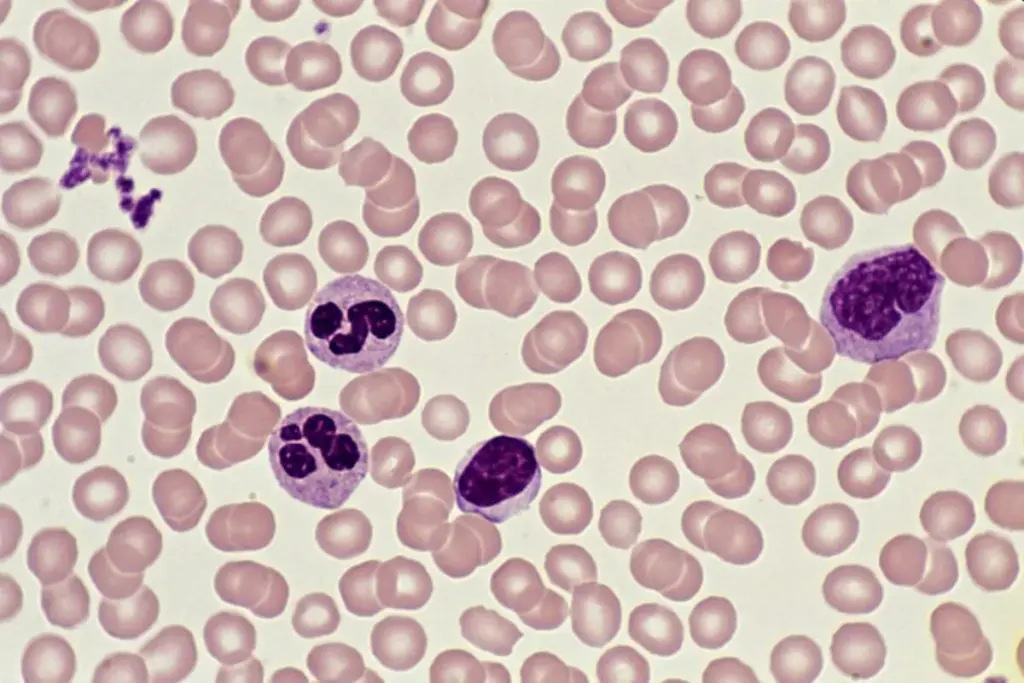
Seeing high numbers on your blood test can worry you. You might think of serious diseases like cancer. But, a high count usually means your immune system is working hard to fight off health issues.
A healthy lymphocyte count is between 20% to 40% of your white blood cells. This normal lymphocyte range helps your T cells and B cells fight infections. For most adults, these standards are the same, no matter your age.
Understanding your lymphocyte normal range is key to knowing your health and immune strength. At Liv Hospital, we focus on clear communication to help you manage your health. Our team is here to support you in understanding your medical results.
Key Takeaways
- Lymphocytes are vital white blood cells that protect the body from infections and disease.
- A normal range for adults is generally between 20% and 40% of the total white blood cell count.
- High levels often indicate a normal immune response, not a chronic malignancy.
- The three main types of these cells include T cells, B cells, and natural killer cells.
- Context and specific values are essential for a physician to provide an accurate diagnosis.
- Liv Hospital offers advanced diagnostic services and empathetic support for international patients.
Understanding Normal Lymphocyte Ranges

The normal lymphocyte range is a key indicator of immune health. Deviations from this range can signal various health issues. Lymphocytes are a type of white blood cell important for the immune system. They help fight infections and diseases.
Normal Lymphocyte Percentage in Adults
In adults, the normal percentage of lymphocytes is between 20% to 40% of the total white blood cell count. This range shows the proportion of lymphocytes to other white blood cells. A lymphocyte percentage within this range typically suggests a healthy immune response.
For example, a differential count showing lymphocytes within this percentage range, along with other normal white blood cell counts, is a good sign of immune health.
Absolute Lymphocyte Count Standards
The absolute lymphocyte count (ALC) is another critical measure. It represents the actual number of lymphocytes per microliter of blood. For adults, a normal ALC is typically between 1,000 to 4,800 cells per microliter. This count is vital for assessing the body’s ability to respond to infections and diseases.
An absolute count within this range usually indicates a robust immune system. It shows the body can mount appropriate responses to pathogens.
Understanding both the percentage and absolute count of lymphocytes provides a complete view of immune health. Healthcare providers use these measures to diagnose and monitor various conditions. This includes infections and immune disorders.
What Specific Lymphocyte Values Mean for Your Health
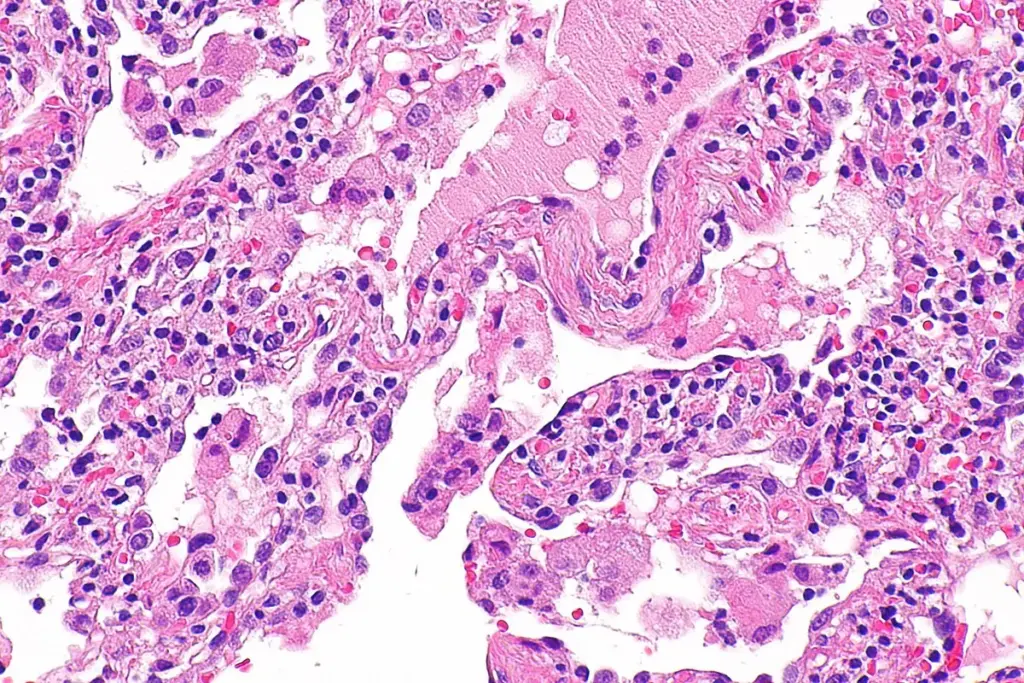
Lymphocyte counts show how well our immune system is working. Certain values can tell us a lot about our health. When we get our blood test results, knowing what these numbers mean can help us understand our health better.
Borderline Elevated Values: Lymphocytes at 47% and 48%
Having lymphocytes at 47% or 48% might mean they’re a bit higher than usual. This could be because of a mild infection or an early sign of fighting off a virus. It’s important to look at these numbers along with other health signs and symptoms.
Key considerations for borderline elevated lymphocyte values include:
- Recent exposure to infections or viruses
- Presence of symptoms such as fever or fatigue
- Other blood test results, such as white blood cell count
Understanding Absolute Counts: 3.2 and 5.0 Lymphocytes
Absolute lymphocyte counts give us a clearer view of our immune health. A count of 3.2 (3,200 cells/microliter) is usually in the healthy range. But a count of 5.0 (5,000 cells/microliter) is higher and might show our body is fighting off something.
It’s important to remember that absolute counts tell us more than just percentages. For example, a count of 3.2 is usually okay, but a count of 5.0 means we need to check further, even if it doesn’t mean cancer right away.
Moderately Elevated Levels: 41% and 51% Lymphocytes
Moderately high lymphocyte levels, like 41% or 51%, show our body is fighting something. A level of 41% might be a bit below the high mark in some cases, while 51% is definitely higher.
Factors to consider with moderately elevated lymphocyte levels:
- The presence of infections or inflammatory conditions
- Recent vaccinations or exposure to pathogens
- Underlying health conditions that may affect immune response
Knowing what these numbers mean can help us understand our health better. It can also tell us if we need to see a doctor or get more tests.
Does Reactive Lymphocytes Mean Cancer
Reactive lymphocytes can be scary, but knowing what they mean is key. Many worry if they signal cancer. Let’s explore what reactive lymphocytes are and how they’re different from cancerous ones.
What Are Reactive Lymphocytes
Reactive lymphocytes are immune cells that react to infections or inflammation. They grow bigger and change shape. These cells are a normal part of fighting off infections and are not cancerous.
Key characteristics of reactive lymphocytes include:
- Enlarged size
- Changes in morphology, such as an increased nucleus-to-cytoplasm ratio
- Presence in response to infections or inflammatory conditions
Reactive vs. Malignant Lymphocytes: The Critical Difference
It’s important to tell reactive lymphocytes from cancerous ones. Reactive lymphocytes are a normal response to immune challenges. But malignant lymphocytes are cancerous and can cause diseases like lymphoma or leukemia.
The main differences between reactive and malignant lymphocytes are:
- Clonality: Malignant lymphocytes come from a single cell, while reactive ones come from many.
- Morphology: Both can look different, but cancerous ones have more uniform and specific changes.
What Level of Lymphocytes Is Dangerous
Knowing when lymphocyte levels are too high or low is important. For adults, a normal count is between 1,000 and 4,800 per microliter of blood.
Dangerously high or low levels may be associated with:
- Infections
- Autoimmune diseases
- Cancer, including lymphoma or leukemia
Always talk to a doctor to understand your lymphocyte counts and what they mean for you.
Conclusion
We’ve looked into how lymphocytes are key to our health. We’ve talked about what’s normal and what’s not. Knowing the right range for lymphocytes helps spot health problems early.
Counts that are not normal can mean different health issues. If your lymphocyte count is off, see a doctor right away.
Knowing your lymphocyte numbers helps you stay healthy. It’s important to get checked if your counts are not right. This way, you can get help fast and start treatment.
FAQ
What is the normal percentage of lymphocytes in a standard blood test?
The normal lymphocyte percentage in adults is typically around 20% to 40% of total white blood cells, though this can vary slightly depending on the laboratory reference range.
Does having lymphocytes 47 or lymphocytes is 48 mean I have cancer?
A lymphocyte percentage of 47–48% is mildly elevated, but it does not by itself indicate cancer. It can occur due to infections, recovery phases, or normal variation, and must be interpreted with the absolute lymphocyte count and clinical context.
What is the healthy lymphocyte count for an absolute measurement?
The normal absolute lymphocyte count in adults is generally about 1.0 to 3.0 × 10⁹/L (or 1000–3000 cells/µL), depending on the lab.
What does it mean if my results show lymphocytes 5.0 or 51 lymphocytes?
A value like 5.0 (in absolute count units) or 51% (percentage) suggests elevated lymphocytes, but the significance depends on whether it refers to absolute or percentage values and should be evaluated alongside other blood parameters and symptoms.
How should I interpret a result of lymphs 41 or lymphs 27?
A lymphocyte percentage of 41 is slightly above the typical range, while 27% falls within normal limits. Mild variations are common and often not concerning if other blood values are normal.
What level of lymphocytes is dangerous for a patient?
There is no single “dangerous” percentage alone; concern arises when lymphocyte levels are persistently very high (especially with abnormal absolute counts), associated symptoms, or other abnormal blood findings.
What is the lymphocytes differential count normal range?
The differential lymphocyte range is usually about 20% to 40% of total white blood cells, depending on the laboratory reference standards.
Are reactive lymphocytes a sign of leukemia?
Reactive lymphocytes are typically a normal response to infections, especially viral illnesses, and are not by themselves a sign of leukemia, which involves abnormal and uncontrolled cell growth with other diagnostic features.
References
National Center for Biotechnology Information. Evidence-Based Medical Insight. Retrieved from https://pubmed.ncbi.nlm.nih.gov/24661720/



 Departments
 Related Videos
 Our Doctors
 News
News