
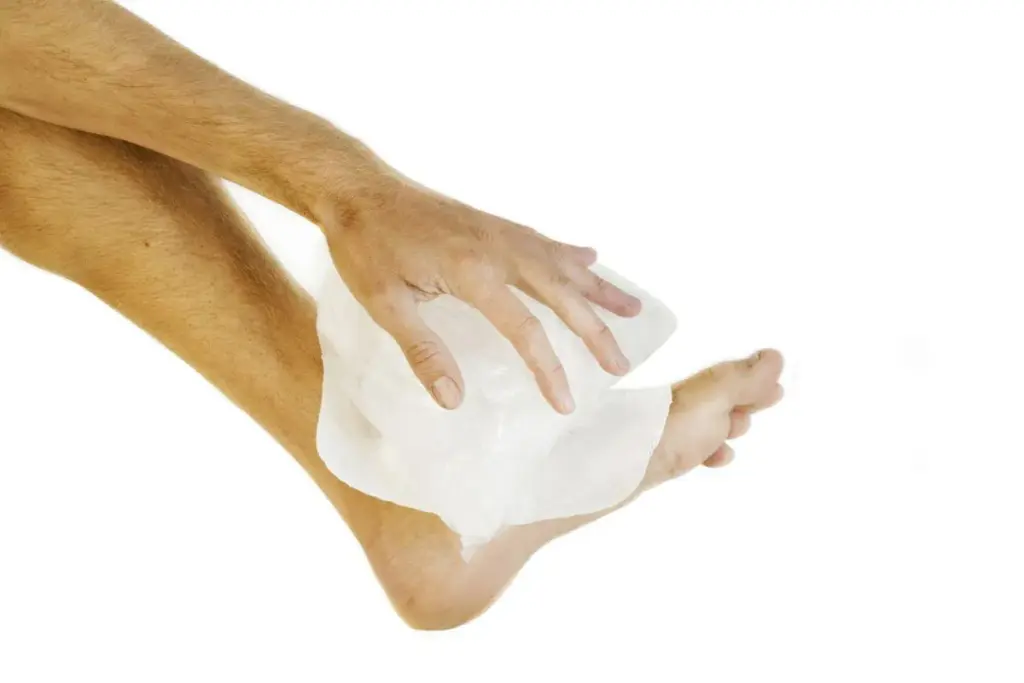
Ever wondered what the top of your foot is actually called? Knowing the right terms is key to spotting foot issues early. The word dorsum refers to the top of your foot. It’s filled with tendons, nerves, and blood vessels that help with movement and feeling.
Understanding this part of your body is not just interesting. It also helps you talk better with doctors. For more details, check out resources on foot anatomy. They explain how the foot has 26 bones, 33 joints, and over a hundred muscles, tendons, and ligaments. The dorsum of the foot is where these important structures are found. They let you move your foot and feel different sensations.
Key Takeaways
- The top of the foot is medically referred to as the dorsum or dorsal region.
- Understanding foot anatomy is essential for recognizing injuries and maintaining optimal foot health.
- The dorsum contains important structures such as extensor muscles, tendons, and nerves.
- Knowledge of foot anatomy empowers effective communication with healthcare professionals.
- The human foot is a complex structure comprising 26 bones, 33 joints, and numerous muscles, tendons, and ligaments.
What Is the Top of Foot Called: Understanding the Dorsum

The dorsum, or the top of the foot, is a complex part of our body. It helps us move in many ways. Knowing the medical terms for this area helps us understand its role and why it’s so important.
Medical Terminology for the Dorsal Region
The term “dorsum” refers to the top of the foot. It covers the tarsus, metatarsus, and digit areas. Important tendons like the tibialis anterior, extensor hallucis longus, and extensor digitorum longus muscles run through here. These muscles help us move our ankle and toes.
The Dorsum’s Location and Basic Structure
The dorsum is at the top of the foot, covering several areas. It includes:
- The tarsus, with seven bones forming the hindfoot and midfoot.
- The metatarsus, with five long bones linking the tarsus to the toes.
- The digits, or toes, made of phalanges.
This setup allows for many movements, like lifting the foot and extending the toes.
Skin Characteristics of the Dorsal Foot
The skin on the dorsum is thinner and less sensitive than the soles. It’s more prone to injury. We need to be careful to protect this area.
Understanding the dorsum is key to grasping foot anatomy and the need for proper care. Knowing its unique features helps us diagnose and treat injuries or conditions better.
Anatomical Structures and Functions of the Dorsal Foot

The dorsal foot, or top part of the foot, is key to our movement. It has many parts working together for movement and stability. We’ll look at the bones, joints, muscles, tendons, nerves, and blood vessels in this area.
Bones and Joints: Tarsus, Metatarsus, and Digits
The foot is split into three parts: hindfoot, midfoot, and forefoot. The tarsal bones are in the hindfoot and midfoot. The metatarsal bones and phalanges are in the midfoot and forefoot. The top part has muscles and tendons for toe movement.
The foot’s bones are linked by joints like the talocrural joint and the metatarsophalangeal joints. These joints let us move our toes and feet in different ways. Knowing about these bones and joints helps us understand how the foot works.
Key Muscles and Tendons
The dorsal foot has important muscles and tendons for movement. The extensor digitorum longus and extensor hallucis longus muscles help us extend our toes. The peroneal muscles help with foot eversion. These tendons and muscles work together to move our feet.
Nerves and Blood Vessels of the Dorsum
The nerves in the dorsal foot include the superficial peroneal nerve and the deep peroneal nerve. They give us feeling in the top of the foot and toes, and help the muscles move. The dorsalis pedis artery supplies blood to the top part of the foot.
Knowing about the dorsal foot’s parts is important for foot health. It helps us understand and treat foot problems better. By knowing how bones, joints, muscles, tendons, nerves, and blood vessels work together, we can keep our feet healthy.
Conclusion
The top of the foot, known as the dorsum or dorsal region, is full of important parts. These parts help us move our feet and feel sensations. Knowing about the top of the foot medical term and its parts is key to spotting injuries and keeping our feet healthy.
The dorsum of the foot has bones, joints, muscles, tendons, nerves, and blood vessels. These help us move our feet and feel things. By learning about the name for top of foot and its parts, we can take better care of our feet.
It’s important to keep our feet healthy for our overall well-being. Knowing about the top of foot name and its parts helps us prevent injuries and keep our feet in good shape. This knowledge lets us get medical help when we need it, which helps avoid long-term problems.
FAQ:
What is the top of the foot called?
The top of the foot is called the dorsum or dorsal region. It’s the part that faces up when you stand.
What is the medical term for the top of the foot?
The medical term for the top of the foot is the dorsum or dorsal region.
What are the key structures found on the top of the foot?
The top of the foot has important parts like extensor muscles, tendons, and nerves. These help with foot movements and feeling.
What tendons are responsible for toe extension and ankle dorsiflexion?
The tibialis anterior, extensor hallucis longus, and extensor digitorum longus muscles are key. They help extend toes and flex the ankle.
Why is the skin on the top of the foot more prone to injury?
The skin on the dorsum is thinner and less sensitive than the sole. This makes it more likely to get hurt.
What are the three main regions of the foot?
The foot is split into three main areas: the hindfoot, midfoot, and forefoot.
What bones make up the foot?
The foot’s bones include the tarsals, metatarsals, and phalanges. They help with stability and movement.
What is the significance of understanding the anatomy of the top of the foot?
Knowing the anatomy of the top of the foot is key for spotting injuries and keeping the foot healthy. It helps with overall well-being.
References:
National Center for Biotechnology Information. Evidence-Based Medical Insight. Retrieved from https://www.ncbi.nlm.nih.gov/books/NBK546698/