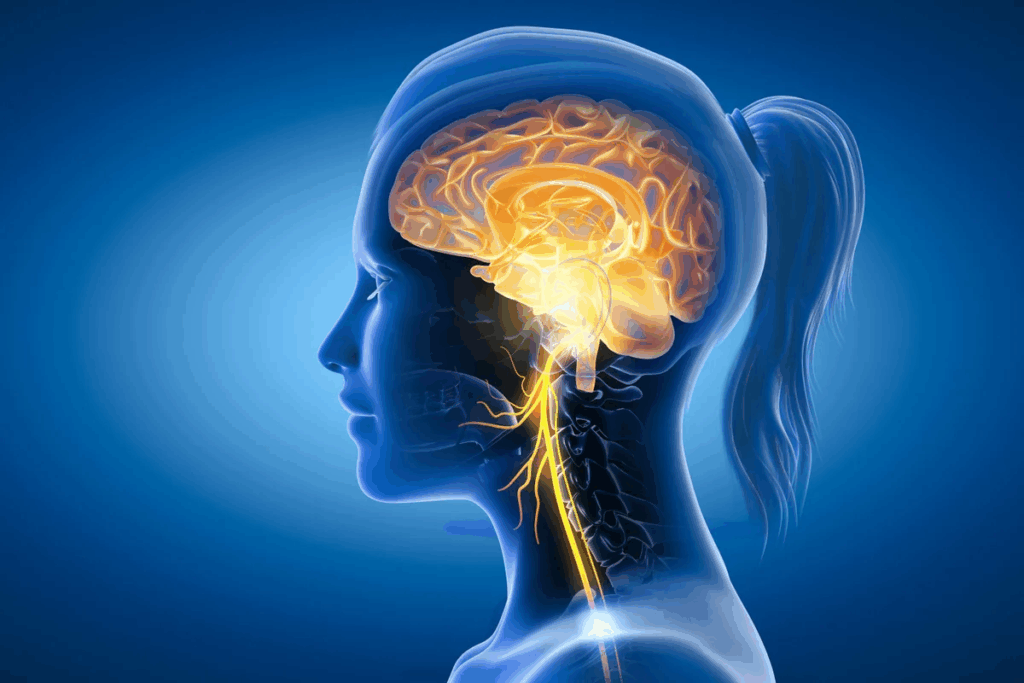
The hypoglossal nerve, also known as cranial nerve XII, is key for tongue movements. It helps us speak, swallow, and chew. We can’t do these things without it. We answer: what nerve controls the tongue? Learn about the hypoglossal nerve’s (CN XII) vital role in motor control and movement.
When the hypoglossal nerve gets damaged, it can cause tongue deviation. This is a sign of nerve harm. Doctors need to know about this nerve to help patients with related problems.
The hypoglossal nerve is vital for moving our tongue and preventing it from deviating. It’s essential for talking and eating right.
Key Takeaways
- The hypoglossal nerve controls tongue movement through motor innervation.
- Damage to the hypoglossal nerve can cause tongue deviation.
- Understanding hypoglossal nerve anatomy is key for diagnosis and treatment.
- The hypoglossal nerve is responsible for essential functions like speech and swallowing.
- Cranial nerve XII plays a vital role in tongue muscle innervation.
The Hypoglossal Nerve: Overview and Significance
The hypoglossal nerve is key for tongue movements. It helps with speech and swallowing. Known as cranial nerve XII or the 12th cranial nerve, it’s a vital part of the cranial nerve system.
Definition and Basic Function
The hypoglossal nerve controls tongue movements. It’s a motor nerve that works with the tongue muscles. This nerve is essential for tongue functions.
Here’s what the hypoglossal nerve does:
- Controls tongue movements
- Innervates extrinsic and intrinsic tongue muscles (except palatoglossus)
- Facilitates speech articulation
- Assists in swallowing and chewing processes
Historical Context and Discovery
The hypoglossal nerve has long been studied in medical history. Its role in tongue movements is significant. The exact discovery date is not mentioned here, but it’s important for understanding neurological sciences.
Over time, we’ve learned more about the hypoglossal nerve. Its discovery has helped us understand cranial nerves better.
What Nerve Controls the Tongue: Anatomy of the Hypoglossal Nerve

The hypoglossal nerve, or cranial nerve XII, is key in controlling tongue muscles. It helps with speech and swallowing. Knowing its anatomy is important for doctors and patients with tongue issues.
Origin in the Medulla Oblongata
The hypoglossal nerve starts in the hypoglossal nucleus of the brainstem. This nucleus controls the tongue muscles. The nerve fibers from this nucleus form the hypoglossal nerve. It then goes out of the skull through the hypoglossal canal.
A neurosurgeon said, “The hypoglossal nerve’s start in the medulla oblongata shows its big role in tongue movement control.”
“The precise coordination between the hypoglossal nerve and other cranial nerves is essential for functions such as speech and swallowing.”
Course Through the Hypoglossal Canal
After starting in the medulla oblongata, the hypoglossal nerve goes through the hypoglossal canal. This canal is in the occipital bone. It’s a key path for the nerve to leave the skull and get to the tongue muscles.
Path Through the Neck and Terminal Branches
After leaving the hypoglossal canal, the nerve goes down the neck to the tongue. It splits into branches that connect to the tongue’s muscles. The only exception is the palatoglossus muscle, which the vagus nerve controls.
Characteristics | Description |
Origin | Medulla oblongata |
Course | Through the hypoglossal canal and down the neck |
Function | Motor innervation of tongue muscles |
The hypoglossal nerve’s path is complex. It starts in the brainstem, goes through the hypoglossal canal, and then down the neck. This detailed knowledge is key for diagnosing and treating tongue-related conditions.
Embryological Development of the Hypoglossal Nerve
The hypoglossal nerve is key for tongue movement. It starts early in neural development. It comes from the brainstem’s somatic efferent column, like spinal nerves.
Formation During Neural Development
The hypoglossal nerve grows from the brainstem’s basal plate. This plate is where motor neurons develop. The nerve fibers then reach the tongue muscles.
This journey is vital for tongue functions like speech and swallowing.
Key stages in the formation of the hypoglossal nerve include:
- The specification of neural progenitor cells
- The differentiation of these cells into motor neurons
- The axonal growth and navigation to target muscles
Developmental Anomalies and Variations
While the hypoglossal nerve usually develops as expected, it can vary. These changes might come from genes, environment, or developmental disruptions. Knowing about these variations helps in diagnosing and treating related conditions.
Some common developmental anomalies include:
- Hypoplasia or aplasia of the hypoglossal nerve
- Abnormal connections or branching patterns
Spotting these variations is key for doctors to offer the right care for patients with neurological issues.
Functional Classification of the Hypoglossal Nerve
The hypoglossal nerve is special because of its unique function. It plays a key role in controlling tongue movements. This makes it different from other nerves.
Motor Component Analysis
The hypoglossal nerve mainly sends motor signals to the tongue muscles. It helps with tongue movements like sticking out, pulling back, and moving sideways. It controls all tongue muscles, except for one.
This nerve is vital for actions like speaking, swallowing, and chewing. It helps us do these things well by controlling the tongue.
Absence of Sensory and Autonomic Functions
The hypoglossal nerve is only a motor nerve. It doesn’t have sensory or autonomic parts. This makes it different from other nerves that do more than just move muscles.
It doesn’t send feelings from the tongue to the brain. Other nerves, like the lingual nerve, handle that job.
Unique Characteristics Among Cranial Nerves
The hypoglossal nerve is special because it only controls tongue muscles. Other nerves do different things, like send feelings or control other parts of the body.
This shows how important the hypoglossal nerve is for our tongue and mouth. Knowing about its function helps us understand how it keeps our tongue working right.
Muscles Innervated by the Hypoglossal Nerve
Knowing which muscles the hypoglossal nerve controls is key to understanding its role. It affects both the extrinsic and intrinsic muscles of the tongue. These muscles are vital for many oral functions.
Extrinsic Tongue Muscles
The hypoglossal nerve controls three out of four extrinsic tongue muscles. These are the genioglossus, hyoglossus, and styloglossus. They help change the tongue’s position in the mouth.
- The genioglossus muscle protrudes the tongue.
- The hyoglossus muscle depresses and retracts the tongue.
- The styloglossus muscle retracts and elevates the tongue.
An anatomy expert says, “The hypoglossal nerve’s control over these muscles allows for essential tongue movements. These are vital for speech and swallowing.“
Intrinsic Tongue Muscles
The hypoglossal nerve also controls the intrinsic muscles of the tongue. These include the superior longitudinal, inferior longitudinal, transverse, and vertical muscles. These muscles shape the tongue, enabling precise movements during speech and food manipulation.
Exception: The Palatoglossus Muscle
Not all tongue muscles are controlled by the hypoglossal nerve. The palatoglossus muscle, which helps in swallowing, is controlled by the vagus nerve (cranial nerve X). This shows the tongue’s complex nerve connections.
As we learn more about the hypoglossal nerve, knowing its role in tongue muscles is essential. It helps in diagnosing and treating neurological conditions.
“The detailed control of tongue movements by the hypoglossal nerve shows its critical role in oral functions and neurological health.”
— Medical Expert, Neurologist
Physiological Role in Tongue Movement
The hypoglossal nerve controls tongue movements during speech and swallowing. It is key for many oral activities, making it essential for our daily lives.
Speech Articulation
The hypoglossal nerve is vital for speech articulation. It helps us speak clearly by controlling the tongue’s movements. The tongue works with other parts of the mouth for clear speech. The hypoglossal nerve’s motor fibers help the tongue muscles move precisely for articulation.
“The hypoglossal nerve is responsible for the motor innervation of the tongue, playing a critical role in speech production.”
Swallowing Mechanism
The hypoglossal nerve also aids in swallowing. It moves food to the pharynx for swallowing. The nerve’s control ensures food is in the right position, preventing choking.
Chewing Process
The hypoglossal nerve is also involved in chewing. It works with the trigeminal nerve to move food for chewing. This coordination helps food get chewed properly before swallowing.
Tongue Protrusion and Lateral Movement
The hypoglossal nerve allows for tongue protrusion and lateral movement. These movements are important for many oral functions. Tongue protrusion helps with licking and food manipulation. Lateral movement aids in food movement during chewing. These actions are possible thanks to the nerve’s connection to tongue muscles.
Tongue Deviation: Clinical Significance
Checking how the tongue moves is key to finding out if the hypoglossal nerve is hurt. This nerve helps the tongue move around. If it’s damaged, the tongue might not move right.
Normal vs. Abnormal Tongue Movement
A healthy tongue can stick out straight and move side to side easily. But, if the tongue only moves to one side, it might be a sign of nerve damage. This is called tongue deviation.
Doctors say that where the tongue deviates can show where the nerve is hurt.
This sign is very important for finding and fixing nerve problems.
Direction of Deviation in Hypoglossal Nerve Damage
When the hypoglossal nerve gets damaged, the tongue usually points towards the hurt side. This happens because the muscles on the other side push the tongue over.
- The hypoglossal nerve controls the tongue’s muscles.
- Damage to this nerve weakens or paralyzes these muscles on the hurt side.
- This imbalance makes the tongue point towards the hurt side when it’s pushed out.
Diagnostic Value in Neurological Examination
Looking at how the tongue moves is a big help in checking the brain and nerves. It shows if the hypoglossal nerve is damaged. By seeing where the tongue deviates, doctors can figure out where the problem is.
We use a detailed check-up, including looking at tongue movement, to find and treat nerve problems. Getting the diagnosis right is key to making a good treatment plan.
Clinical Testing of the Hypoglossal Nerve
Checking the hypoglossal nerve’s function is key for diagnosing many neurological issues. This nerve, or cranial nerve XII, controls the tongue’s movements. Its examination gives us important insights into the nervous system’s health.
Standard Examination Procedures
Testing the hypoglossal nerve includes several simple yet informative tasks. First, we look at the tongue at rest for signs of atrophy or fasciculations. Then, we ask the patient to stick out their tongue and move it from side to side.
These actions help us see how well the nerve works and how strong and agile the tongue is. We also check if the patient can do tasks that need precise tongue movements, like speaking certain words or pushing against the cheek with the tongue. These tests give us a full picture of the nerve’s function.
Interpretation of Findings
Understanding the results of the hypoglossal nerve examination is important. For example, if the tongue deviates when protruded, it might mean there’s a problem with the nerve. The direction of deviation tells us which side of the nerve is affected.
Other signs, like tongue atrophy or fasciculations, also give clues. Atrophy suggests a problem with the nerve’s lower part, while fasciculations mean the nerve is not working right. By looking at these signs closely, doctors can find where the problem is and what condition it might be.
Documentation and Reporting
It’s vital to document the hypoglossal nerve examination findings accurately. We record how well the patient can stick out their tongue, any deviation, atrophy, or fasciculations, and the tongue’s strength and coordination.
A detailed report of the examination results is important for tracking how a condition changes over time and how well treatments work. It also helps in planning future assessments and treatments.
Examination Component | Normal Findings | Abnormal Findings |
Tongue Protrusion | Midline protrusion without deviation | Deviation to one side |
Tongue Atrophy | No atrophy observed | Visible atrophy on one or both sides |
Fasciculations | No fasciculations present | Fasciculations visible on the tongue surface |
Tongue Strength | Strong, equal bilateral movement | Weakness on one or both sides |
Hypoglossal Nerve Lesions and Pathology
Understanding hypoglossal nerve lesions is key to diagnosing and treating related neurological disorders. The hypoglossal nerve, or cranial nerve XII, controls tongue movements. These movements are vital for speech, swallowing, and more.
Central vs. Peripheral Lesions
Lesions on the hypoglossal nerve can be central or peripheral. Central lesions damage the nerve’s origin in the brainstem. Peripheral lesions affect the nerve after it leaves the brainstem.
Central Lesions: These can come from stroke, multiple sclerosis, or brainstem tumors. Central lesions often cause other neurological problems, depending on the damage.
Peripheral Lesions: Causes include trauma, tumors, or inflammation along the nerve’s path. Peripheral lesions mainly affect the hypoglossal nerve.
Common Causes of Hypoglossal Nerve Damage
Many factors can damage the hypoglossal nerve, including:
- Trauma to the head or neck
- Tumors (benign or malignant) compressing or invading the nerve
- Stroke or cerebral vasculature disorders
- Infections or inflammatory conditions
- Iatrogenic causes (e.g., surgical complications)
Finding the cause is vital for proper treatment.
Case Studies and Clinical Examples
Clinical cases show the varied effects of hypoglossal nerve lesions. For example, a patient with head trauma might have tongue deviation due to nerve damage.
Cause | Presentation | Management |
Trauma | Tongue deviation, dysarthria | Rehabilitation, speech therapy |
Tumor | Progressive tongue weakness, dysphagia | Surgery, radiation therapy |
Stroke | Acute tongue deviation, other neurological deficits | Acute stroke management, rehabilitation |
These examples stress the need for a detailed diagnostic approach and personalized treatment plans.
Diagnostic Approaches and Management
Diagnosing and managing hypoglossal nerve lesions requires a detailed plan. This plan includes different tests and treatments. We will explain how to diagnose and manage these lesions, including clinical exams, imaging, and treatment options.
Clinical Examination Techniques
Clinical exams are key in finding hypoglossal nerve damage. We check how well the tongue moves and its strength. Patients might be asked to stick out their tongue or move it sideways to test the nerve.
These exams give us clues about the nerve’s health. They help us find any problems and decide on further tests and treatments.
Imaging Studies and Electrophysiological Testing
Imaging like MRI or CT scans is vital for finding the cause of nerve damage. They can spot tumors or other issues that might be pressing on the nerve.
Electrophysiological tests, like EMG, also help. They show how well the nerve and muscles work. EMG can tell us how bad the damage is and if it’s getting better or worse.
Treatment Strategies
Treatment for hypoglossal nerve lesions depends on the cause and how bad it is. Sometimes, just talking therapy or physical therapy can help. These methods aim to improve tongue function and reduce symptoms.
In more serious cases, surgery might be needed. Surgery can help by removing pressure on the nerve or fixing structural problems. The main goal is to fix the nerve, ease symptoms, and improve the patient’s life.
Treatment Approach | Description | Indications |
Conservative Management | Speech therapy, physical therapy | Mild nerve damage, functional impairment |
Surgical Intervention | Relief of compression, repair of structural abnormalities | Severe nerve compression, structural lesions |
Rehabilitation | Multidisciplinary rehabilitation program | Significant functional impairment, prolonged recovery |
Conclusion
The hypoglossal nerve, or cranial nerve XII, is key in controlling tongue movements. It’s vital for clinical practice to grasp its function and any issues that might arise. This nerve helps the tongue muscles work right, and problems can lead to tongue issues.
Understanding the hypoglossal nerve’s role is critical for healthcare workers. It’s important for diagnosing and treating neurological problems. This nerve is essential for speaking, swallowing, and chewing.
Having a clear understanding of cranial nerve XII is key for doctors. It helps them diagnose and treat nerve-related issues better. Knowing how the hypoglossal nerve works lets healthcare providers give better care to those with related conditions.
FAQ
What is the hypoglossal nerve responsible for?
The hypoglossal nerve controls the tongue muscles. It helps with speech, swallowing, and other tongue movements.
What happens when the hypoglossal nerve is damaged?
Damage can cause the tongue to deviate. This affects speech, swallowing, and chewing.
What is tongue deviation, and what does it indicate?
Tongue deviation means the tongue moves or sits abnormally. It often shows hypoglossal nerve damage. This is a key sign in neurological exams.
Is the hypoglossal nerve sensory or motor?
The hypoglossal nerve is a motor nerve. It controls tongue muscles but has no sensory or autonomic functions.
What are the muscles innervated by the hypoglossal nerve?
The hypoglossal nerve controls both extrinsic and intrinsic tongue muscles. It manages a wide range of tongue movements. The only exception is the palatoglossus muscle.
How is the hypoglossal nerve tested clinically?
The hypoglossal nerve is tested through standard exams. These include checking tongue movement, strength, and deviation. The results help diagnose and manage neurological conditions.
What are the common causes of hypoglossal nerve damage?
Damage often comes from central and peripheral lesions. Causes include stroke, tumors, and trauma. These can lead to tongue deviation and other oral issues.
What is the role of imaging studies in diagnosing hypoglossal nerve lesions?
Imaging studies like MRI and CT scans are key in diagnosing nerve lesions. They help see the nerve and surrounding areas. This aids in finding the cause of the problem.
What is the significance of the hypoglossal nerve in clinical neurology?
Knowing about the hypoglossal nerve’s function and anatomy is vital. It helps healthcare professionals diagnose and treat neurological disorders. These disorders often affect speech and swallowing.
What cranial nerve controls tongue movement?
The hypoglossal nerve, or the 12th cranial nerve, controls tongue movement. It innervates most of the tongue muscles.
What is the 12th cranial nerve’s name?
The 12th cranial nerve is called the hypoglossal nerve.
References
National Center for Biotechnology Information. Evidence-Based Medical Guidance. Retrieved from https://pubmed.ncbi.nlm.nih.gov/33153594/



 Departments
 Related Videos
 Our Doctors
 News
News