
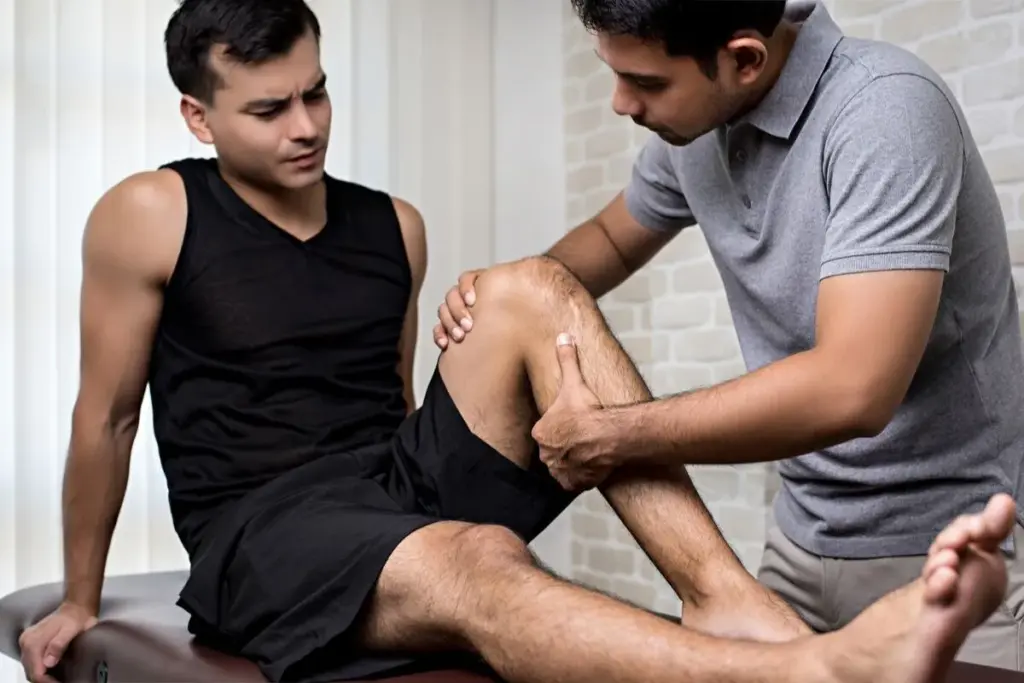
Knee injuries are a big worry for athletes and anyone who’s active. The ACL and MCL are often hurt. Knowing how they differ helps find the right treatment and recovery time.
The ACL is in the knee’s center. It stops the tibia from sliding forward. The MCL is on the knee’s inner side. It stops the knee from moving too far inwards. Both injuries can cause pain and make the knee feel unstable. But, how they’re treated is different.
We’ll look at what each ligament does and how they get hurt. This knowledge is key to keeping your knee healthy and recovering right.
Key Takeaways
- ACL and MCL are two distinct knee ligaments with different functions and injury mechanisms.
- Understanding the differences between ACL and MCL injuries is key to finding the best treatment.
- The ACL is in the knee’s center, while the MCL is on the inner side.
- Injuries to these ligaments can cause pain and instability, but treatment approaches vary.
- Proper diagnosis and treatment are essential for maintaining knee health and ensuring recovery.
Understanding ACL vs MCL: Anatomy and Function
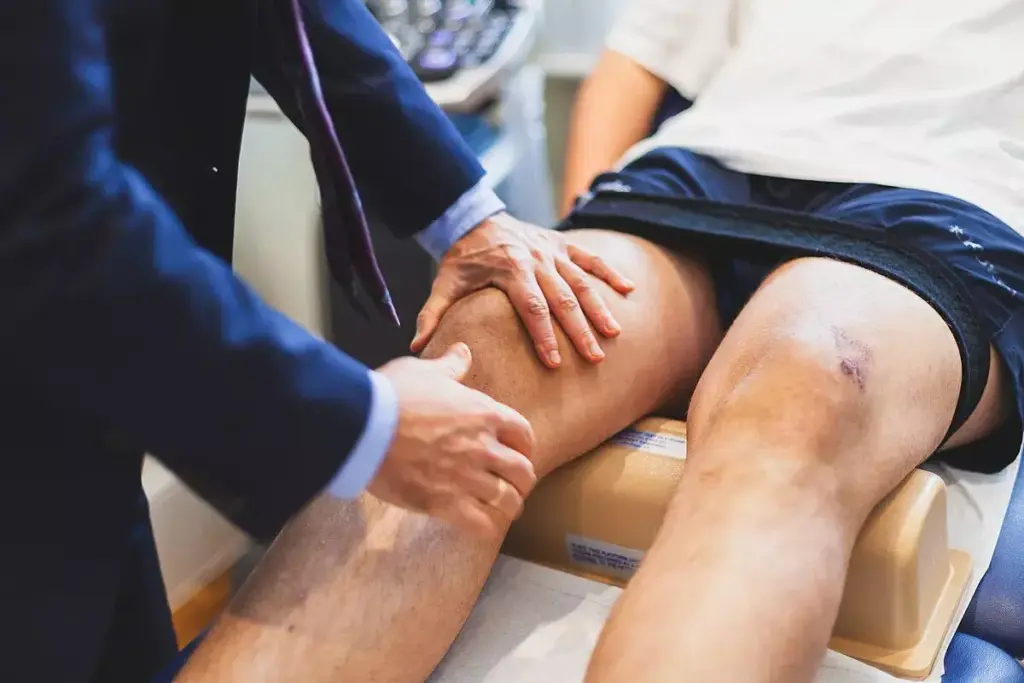
The ACL and MCL are key to knee stability. They have different roles. Let’s look at their locations, functions, and how they work together.
Anatomical Location and Structure
The ACL is in the knee’s center, crossing the front. It’s an intra-articular ligament, inside the knee joint. The MCL, on the other hand, is on the knee’s inner side. It’s extra-articular, outside the joint.
Primary Functions in Knee Stability
The ACL helps keep the knee stable against rotation. It stops the tibia from moving too far forward. The MCL keeps the knee stable against side-to-side movement.
For more on ACL and MCL injuries, check out Hospital for Special Surgery.
Biomechanical Differences
The ACL and MCL work differently because of where they are and what they do. The ACL is tight when the knee bends and turns inward. The MCL is tight when the knee is pushed inward.
| Ligament | Location | Primary Function | Biomechanical Properties |
| ACL | Center of the knee, intra-articular | Rotational stability | Taut in flexion and internal rotation |
| MCL | Inner aspect of the knee, extra-articular | Medial stability | Taut in valgus stress |
Knowing how ACL and MCL injuries differ is key to treating them right. Each injury needs a specific treatment plan.
Injury Mechanisms, Symptoms, and Diagnosis

Understanding ACL and MCL injuries is key to knee health. Knowing how they happen, what symptoms to look for, and how to diagnose them is important. This knowledge helps in preventing and treating these injuries.
Common Causes of ACL Injuries
ACL injuries often happen in sports without direct contact. Sudden stops, changes in direction, or direct hits can cause ACL tears. These movements lead to rotational instability.
- Sudden changes in direction
- Jumping and landing incorrectly
- Direct contact or collision
Sports that involve pivoting, like skiing or soccer, raise the risk of ACL injuries. Knowing these risks helps in prevention.
Common Causes of MCL Injuries
MCL injuries usually come from direct hits to the outside of the knee. This is common in sports like football or hockey, where collisions are frequent.
- A direct hit to the knee
- Twisting or bending movements
- Valgus stress (force applied to the outside of the knee)
Immediate pain on the medial aspect of the knee is a common symptom, indicating a possible MCL injury.
Recognizing Symptoms and Warning Signs
It’s important to recognize the symptoms of ACL and MCL injuries early. This is for timely diagnosis and treatment. Common symptoms include:
- Instability or feeling of the knee giving way
- Pain, mostly during movement
- Swelling and bruising around the knee
For ACL injuries, immediate instability and swelling are common. MCL injuries may show pain on the medial aspect of the knee.
Diagnostic Approaches
Diagnosing ACL and MCL injuries involves physical exams, patient history, and imaging tests. The Lachman test and pivot shift test are used for ACL injuries. Valgus stress testing is used for MCL injuries.
Imaging tests like MRI are key for confirming the diagnosis and assessing injury severity.
Knowing the differences between ACL and MCL injuries is vital for effective treatment and recovery. Recognizing the signs and getting the right medical care helps individuals get back to their activities with confidence.
Conclusion: Treatment Approaches and Recovery Differences
Treating MCL and ACL injuries is different. MCL injuries often heal with rest and physical therapy. But ACL injuries usually need surgery to fix knee stability.
Knowing the difference between mcl vs acl tear and acl versus mcl tear helps in treatment. Each injury has its own recovery path. This knowledge lets us tailor care for better knee health.
When comparing acl versus mcl injuries, getting the right diagnosis is key. We stress the need for medical help to choose the best treatment. With proper care, patients can heal and get back to normal, no matter the injury.
FAQ:
What is the main difference between ACL and MCL injuries?
ACL injuries happen when the knee twists or turns too much. MCL injuries usually come from a direct hit to the outside of the knee. This affects the knee’s stability in different ways.
How do ACL and MCL injuries occur?
ACL injuries often happen in sports without direct contact, like soccer or basketball. They can occur when stopping suddenly or landing wrong. MCL injuries, though, are more common from a direct hit to the knee’s outside.
What are the common symptoms of ACL and MCL injuries?
ACL injuries might feel like a loud snap and make walking hard. You might feel unstable. MCL injuries cause pain, swelling, and bruising on the knee’s inside.
How are ACL and MCL injuries diagnosed?
Doctors use physical exams, medical history, and tests like X-rays or MRI to diagnose. They check the knee’s stability, pain, and how well it moves.
What are the treatment approaches for ACL and MCL injuries?
ACL injuries often need surgery and then rehab. MCL injuries are usually treated with physical therapy, bracing, and pain relief. But, very bad cases might need surgery.
How do recovery timelines differ between ACL and MCL injuries?
ACL injuries take longer to heal, often 6-9 months. MCL injuries, treated without surgery, can heal in 2-6 weeks.
Can ACL and MCL injuries occur together?
Yes, it’s possible to have both ACL and MCL injuries at the same time. This happens with more severe injuries or complex mechanisms.
How can I prevent ACL and MCL injuries?
To prevent injuries, keep your knees strong and flexible. Use the right sports techniques and wear protective gear like knee pads or braces.
Is it possible to return to sports after ACL or MCL injury?
Yes, with the right treatment and rehab, many people can get back to sports. But, it’s key to follow a rehab plan and listen to your doctor’s advice.
What are the long-term consequences of ACL and MCL injuries?
Untreated or severe injuries can lead to problems like osteoarthritis or limited knee function. Getting proper treatment can help avoid these issues.
References
National Center for Biotechnology Information. Evidence-Based Medical Insight. Retrieved from https://pubmed.ncbi.nlm.nih.gov/25808818/