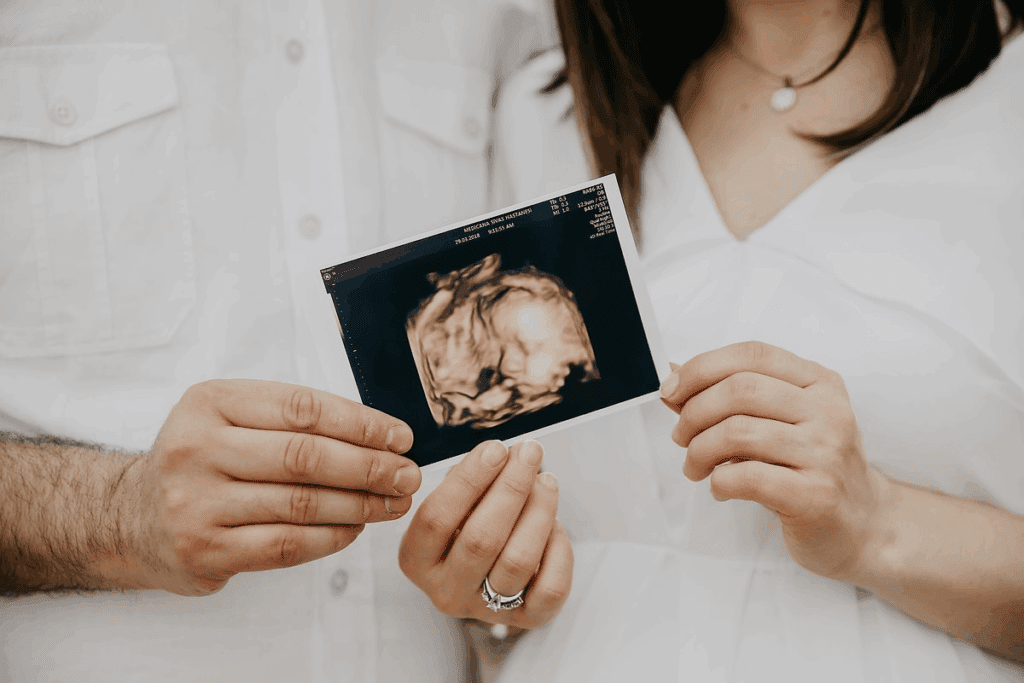
Understand the precise timing for when does baby get heartbeat physiologically. This event is a major milestone for when does baby get heartbeat. The start of a fetal heartbeat is a key moment in pregnancy. It marks the beginning of a new life. We will look into when this happens and why it’s important for the baby’s growth.
The heart is one of the first organs to form. It starts beating about 21 to 22 days after conception. This is around the fifth week of pregnancy. It’s vital because it helps bring oxygen and nutrients to the growing embryo.
Thanks to advanced ultrasound technology, doctors can spot this heartbeat early. They can do this as early as the fifth to sixth week of pregnancy. This gives parents a glimpse into the amazing things happening inside the womb.
Key Takeaways
- The fetal heart begins to beat approximately 21 to 22 days after conception.
- This development occurs around the fifth week of pregnancy.
- The fetal heartbeat is essential for providing oxygen and nutrients to the growing embryo.
- Advanced ultrasound technology can detect the fetal heartbeat as early as the fifth to sixth week.
- Monitoring the fetal heartbeat is a key part of prenatal care.
Early Embryonic Development: The First Weeks

In the first weeks of pregnancy, many complex processes start. These processes are key for a baby’s heart to develop. They also lay the groundwork for the entire cardiovascular system.
Fertilization and Implantation
The journey starts with fertilization, where a sperm meets an egg. This creates a zygote. The zygote then divides many times as it moves down the fallopian tube to the uterus.
When it reaches the uterus, the blastocyst implants itself into the uterine lining. This is called implantation. It’s a critical step because it connects the mother’s bloodstream with the embryo. This allows for the exchange of nutrients and waste.
Formation of the Primitive Streak
After implantation, the embryo goes through gastrulation. During this time, the primitive streak forms. The primitive streak is a band of cells on the embryo’s surface. It’s vital for organizing the embryo’s body plan.
The primitive streak acts as a primer for the embryo’s development. It guides the migration and differentiation of cells.
Development of the Three Germ Layers
As gastrulation continues, the embryo’s cells differentiate into three main germ layers: ectoderm, mesoderm, and endoderm. These layers are the foundation for all tissues and organs in the body.
- The ectoderm develops into the nervous system and the outer skin layer.
- The mesoderm forms the heart, muscles, bones, and blood vessels.
- The endoderm creates the lining of the digestive tract, liver, pancreas, and other internal organs.
The heart starts to form from the mesoderm layer. The heart tube begins to beat around 21-22 days after conception. This is a major milestone in development, as it’s one of the first signs of life.
As the embryo grows, the heart rate increases quickly during early pregnancy. We will look at this in more detail later.
When Does Baby Get Heartbeat: Timeline of Early Cardiac Development

The early stages of heart development in a fetus are truly amazing. They start right after the baby is conceived. Learning about these early steps helps us understand how a baby grows and develops.
Heart Tube Formation (Days 15-21)
At about days 15-21 after conception, the heart starts to form. It begins as a simple tube. This is the first step towards the complex organ that will pump blood to the whole body.
The heart tube starts to pump blood. This is the start of the heart’s development. It’s a key moment for the baby’s growth.
First Cardiac Contractions (Days 21-22)
By days 21-22, the heart tube starts to contract. This marks the first heartbeat. These early contractions are important, even if they’re not yet coordinated.
By 4 weeks after conception, or 6 weeks after the last period, the heart’s fast beats can be seen on ultrasound. At 6 weeks, the heart beats about 110 times per minute.
The Significance of the First Heartbeat
The first heartbeat is a big moment in fetal development. It starts a complex process that lasts through pregnancy. The heartbeat is key for delivering oxygen and nutrients to the growing embryo.
As the heart develops, it becomes more complex. It eventually turns into the four-chambered organ that supports life outside the womb.
Knowing when a fetus starts to have a heartbeat is important. It helps us understand the heart’s development. Monitoring the heartbeat during pregnancy is a key part of prenatal care. It helps doctors check the baby’s health and spot any problems early.
Fetal Heart Development at 6 Weeks
At 6 weeks pregnant, the fetal heart is growing fast. It’s not fully formed yet but starts pumping blood. This is a key time for the heart’s structure and function to develop.
Heart Structure at 6 Weeks
The heart at 6 weeks is complex. The heart tube starts to fold and divide into sections. The American College of Obstetrics and Gynecology calls this “cardiac activity,” not a heartbeat.
The heart tube is splitting into parts that will make up the four-chambered heart. This is vital for the heart’s proper function later.
Heart Rate and Rhythm
The fetal heart rate at 6 weeks is about 110 beats per minute. This is much faster than an adult’s heart rate. It’s needed to support the growing embryo.
The heartbeat rhythm is getting more coordinated as the heart grows. You can hear the fetal heartbeat through transvaginal ultrasound as early as 6 to 7 weeks.
Gestational Age | Average Fetal Heart Rate |
6 weeks | 110 BPM |
7 weeks | 120-160 BPM |
8 weeks | 140-170 BPM |
What’s Happening in the Mother’s Body
At 6 weeks pregnant, the mother’s body changes a lot. Hormones shift, and blood volume increases. These changes help the growing embryo and prepare the mother’s body.
The mother may start feeling pregnancy symptoms like morning sickness and fatigue. These are common in the first trimester and show the pregnancy is healthy.
Heart Development from Weeks 7-10
Between weeks 7 and 10, the baby’s heart grows fast. This time is key for the heart’s structure. It sets the stage for its work during pregnancy and after.
Rapid Heart Rate Increase
The baby’s heart beats faster, reaching 150-170 beats per minute by week 7 or 8. This fast heart rate shows the heart is healthy and growing well. By week 8, the heart pumps blood, even though it’s not fully formed yet.
Formation of Heart Chambers
By week 8, the heart starts to form its four chambers. These are the left and right atria, and the left and right ventricles. The septum, a wall, begins to divide the heart into left and right sides. This is vital for pumping blood well.
Development of Heart Valves
As the chambers form, so do the heart valves. By 8 weeks, the valves between the atria and ventricles start to develop. By 9 weeks, the valves between the ventricles and major arteries (the aorta and pulmonary artery) begin to shape up. These valves are key for blood to flow the right way through the heart, ensuring it circulates efficiently.
Looking at the heart’s growth from weeks 7 to 10, we see a lot of development. The heart’s fast rate, chamber formation, and valve development all help it function well. This growth will continue as the pregnancy goes on.
Detecting Your Baby’s Heartbeat
Finding out when you can hear your baby’s heartbeat is a big deal in pregnancy. There are many ways to do this. As your pregnancy goes on, you’ll get to use more precise methods to listen to your baby’s heartbeat.
Transvaginal Ultrasound
Transvaginal ultrasound is one of the first ways to find a baby’s heartbeat. By 6 to 7 weeks, you can see the embryo and its heartbeat clearly. Early detection is key for tracking how your baby is growing. Doctors say,
“Transvaginal ultrasound gives a closer look at the embryo early on.”
Abdominal Ultrasound
Later in pregnancy, doctors prefer using abdominal ultrasound to find the heartbeat. Around 8 weeks or later, this method works well. It’s safe and gives important info about your baby’s growth. The images get clearer as you get closer to your due date.
Doppler Devices and When They Work
Doppler devices help find the fetal heartbeat too. They can be used at home or in the doctor’s office. They work best between 10 to 16 weeks. A study found,
“Fetal Doppler devices make it easy to check on the heartbeat, giving parents peace of mind.”
If you don’t get an early ultrasound, you’ll likely hear your baby’s heartbeat first at a doctor’s visit. This is between 10 and 16 weeks with a fetal Doppler.
Changes in Fetal Heart Rate Throughout Pregnancy
As pregnancy advances, the fetal heart rate changes a lot. These changes are key for the baby’s growth. Knowing about these changes helps us see how the baby is doing.
The fetal heart rate pattern changes over the three trimesters. We’ll look at these changes and what affects them.
First Trimester Patterns
In the first trimester, the fetal heart rate grows fast. By week 7 to 8, it’s between 150 and 170 beats per minute (bpm). This fast growth is normal for the baby.
“The normal range for fetal heart rate during weeks 8 to 10 is 150 to 170 bpm.” This time is very important. Watching the heart rate can tell us a lot about the baby’s health early on.
Second Trimester Patterns
In the second trimester, the heart rate slows down a bit. It goes from 110 to 160 bpm. This slowdown is because the baby’s nervous system and heart are getting better.
The second trimester is also when the heart’s parts and valves grow. This helps the heart beat more steadily.
Third Trimester Patterns
In the third trimester, the heart rate is very important for checking the baby’s health. It stays between 110 and 160 bpm. Watching the heart rate here can spot any problems.
What Causes Heart Rate Variations
Many things can change the fetal heart rate. These include the baby’s movements, the mother’s health, and how developed the fetus is.
As one study notes,
“Fetal heart rate variability is influenced by the autonomic nervous system and can be affected by factors such as fetal movement and maternal health conditions.”
It’s key for doctors to understand these changes. By watching the fetal heart rate and seeing patterns, we can better understand the baby’s health. This helps us make good choices for the pregnancy.
Common Concerns About Fetal Heartbeat
Expectant parents often worry about their baby’s heartbeat during pregnancy. It’s normal to have questions and fears about the fetal heartbeat. We’ll talk about common worries and what to do if you have any issues.
When the Heartbeat Can’t Be Detected
Sometimes, the fetal heartbeat isn’t seen on an early ultrasound. This can happen for a few reasons:
- It might be too early to see the heartbeat.
- A retroverted uterus can make it harder to find the heartbeat.
- Being overweight can block the ultrasound waves.
If you can’t see the heartbeat, don’t worry right away. Your doctor might suggest another ultrasound to check again.
Understanding Fetal Bradycardia and Tachycardia
Fetal bradycardia means the heart beats slower than usual, below 110 BPM. Fetal tachycardia is when it beats too fast, over 160 BPM. These can happen for many reasons, like:
- Fetal distress or lack of oxygen.
- Maternal fever or infection.
- Certain medications.
Finding the cause is key to help your baby. Your doctor will watch the heart rate closely and might do more tests.
When to Contact Your Healthcare Provider
If you’re worried about your baby’s heartbeat or notice anything odd, call your doctor right away. Look out for signs like:
- A big change in fetal movement.
- Vaginal bleeding or discharge.
- Severe abdominal pain or cramping.
Your healthcare provider is there to help you. Don’t be afraid to ask about your baby’s heartbeat or health.
The Science Behind Fetal Heart Monitoring
Fetal heart monitoring is a way to check on a baby’s health during pregnancy. It looks at the baby’s heart rate and rhythm. Doctors use Doppler ultrasound and cardiotocography (CTG) to do this.
Types of Fetal Heart Monitoring
There are two main ways to monitor a baby’s heart: intermittent and continuous. Intermittent checks are done during prenatal visits. Continuous monitoring is used during labor to watch the heart rate all the time.
- Intermittent Monitoring: Used during prenatal check-ups to assess fetal heart rate at specific intervals.
- Continuous Monitoring: Typically used during labor to continuously monitor the fetal heart rate.
What Doctors Look For
Doctors check for several important signs during fetal heart monitoring. They look at the baseline heart rate, how much it varies, and for any changes in heart rate.
- Baseline Heart Rate: The average fetal heart rate over a period, typically between 110-160 beats per minute (BPM).
- Variability: The fluctuations in the fetal heart rate, indicating a healthy response to fetal movement.
- Accelerations: Increases in fetal heart rate in response to movement, signifying good fetal health.
- Decelerations: Decreases in fetal heart rate, which can be a normal response to fetal head compression during labor or potentially indicative of fetal distress.
Interpreting Heart Rate Patterns
Understanding fetal heart rate patterns is key. Doctors look at the heart rate tracings to find normal patterns and any signs of trouble.
Normal patterns show a stable heart rate with good variability and accelerations. But, abnormal patterns like slow or fast heart rates or repeated decelerations might mean the baby needs extra care.
Conclusion: The Journey of Your Baby’s Developing Heart
The development of a baby’s heart is complex and vital for their health. It starts early in pregnancy and continues until birth. This journey is both remarkable and detailed.
Learning about the early stages of heart development is key. It helps us understand the baby’s overall health. Ultrasounds and Doppler devices let doctors check the baby’s heart health early.
In summary, the heart’s growth is a critical part of a baby’s development. It shows how much a baby grows and changes in the womb. Knowing this helps parents and doctors care for the baby better.
FAQ
When does a baby’s heart start beating?
A baby’s heart starts beating about 21 to 22 days after conception. This is around the fifth week of pregnancy.
What is the significance of the first heartbeat?
The first heartbeat is very important. It starts to give oxygen and nutrients to the growing embryo.
When can you first hear a baby’s heartbeat?
You can first hear a baby’s heartbeat by transvaginal ultrasound around 6-7 weeks. Abdominal ultrasound can detect it around 8 weeks or later.
What is the normal heart rate for a fetus?
A fetus’s heart rate is usually around 110 beats per minute at 6 weeks. It can go up to 150-170 BPM between weeks 7-10.
What causes variations in fetal heart rate?
Several things can change a fetus’s heart rate. These include the fetus’s movement, the mother’s position, and any health issues.
What is fetal bradycardia and tachycardia?
Fetal bradycardia is when the heart rate is slower than normal. Tachycardia is when it’s faster. Both can be a worry and need a doctor’s check.
When should I contact my healthcare provider about concerns with my baby’s heartbeat?
If you’re worried about your baby’s heartbeat, contact your healthcare provider. This includes if you can’t hear the heartbeat or notice any unusual patterns.
What are the different types of fetal heart monitoring?
There are many ways to check a baby’s heart rate. These include intermittent auscultation, electronic fetal monitoring, and non-stress tests. They help check the baby’s heart rate and overall health.
How do healthcare providers interpret heart rate patterns?
Doctors look at heart rate patterns to check the baby’s health. They look for things like accelerations and decelerations. This helps them decide if any action is needed.
What week does the heart start beating?
The heart starts beating around the fifth week of pregnancy. This is about 21 to 22 days after conception.
When does the fetus start having a heartbeat?
The fetus starts having a heartbeat about 21 to 22 days after conception.
References
https://pubmed.ncbi.nlm.nih.gov/7658510