
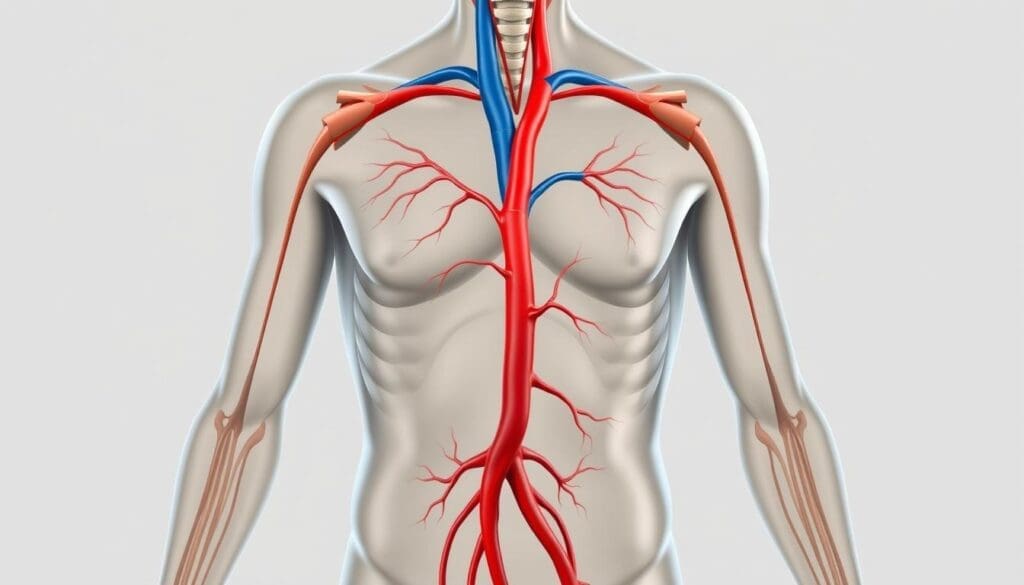
Discover where are arteries located in your body and their key roles in circulation.
At Liv Hospital, we know how vital major artery locations are. They ensure surgeries are safe and diagnoses are accurate. Our bodies have a complex network of arteries. They are key in delivering oxygen-rich blood to our organs and limbs.
The aorta is the largest artery and a major focus. Other important artery locations include the common carotid, subclavian, and femoral arteries. Knowing these spots is essential for doctors to give the right care and treatment.
At Liv Hospital, we aim to provide top-notch healthcare. Our team uses arterial mapping knowledge. This ensures patients get the best care possible.
Key Takeaways
- Understanding major artery locations is key for safe surgeries and accurate diagnoses.
- The aorta is the largest artery and a major focus.
- Other critical artery locations include the common carotid, subclavian, and femoral arteries.
- Liv Hospital is committed to delivering world-class healthcare through precise medical practices.
- Our team of experts uses their knowledge of arterial mapping to provide the best possible care.
The Vital Role of Arteries: Where Are Arteries Located in the Human Body
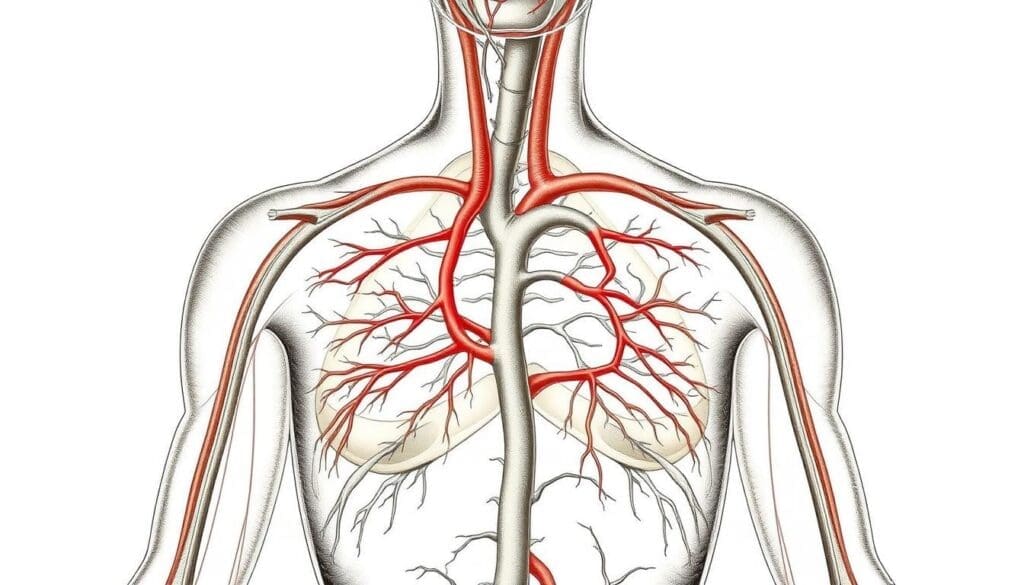
Arteries carry oxygen-rich blood from the heart to the rest of the body. They are key to keeping tissues healthy.
The Function of Arteries in Blood Circulation
Arteries send oxygenated blood to different parts of the body. Their muscular walls help control blood pressure and flow. This is vital for tissues and organs to work well.
The heart pumps blood into arteries, which spread it across the body. This keeps tissues and organs healthy.
Arterial Structure and Characteristics
Arteries have three layers: the tunica intima, tunica media, and tunica adventitia. The tunica media, with smooth muscle and elastic fibers, lets arteries adjust size. This is key for managing blood pressure and flow.
Arteries are built to handle the heart’s high pressure. Their thick, muscular walls keep blood pressure steady as it moves through the body.
Clinical Significance of Arterial Anatomy
Knowing how arteries work is vital for treating vascular diseases. Understanding their structure and function helps doctors find and fix problems.
Arterial diseases can harm heart health. Knowing about arterial anatomy helps doctors give better care and treatments.
The Aorta: The Body’s Largest Artery
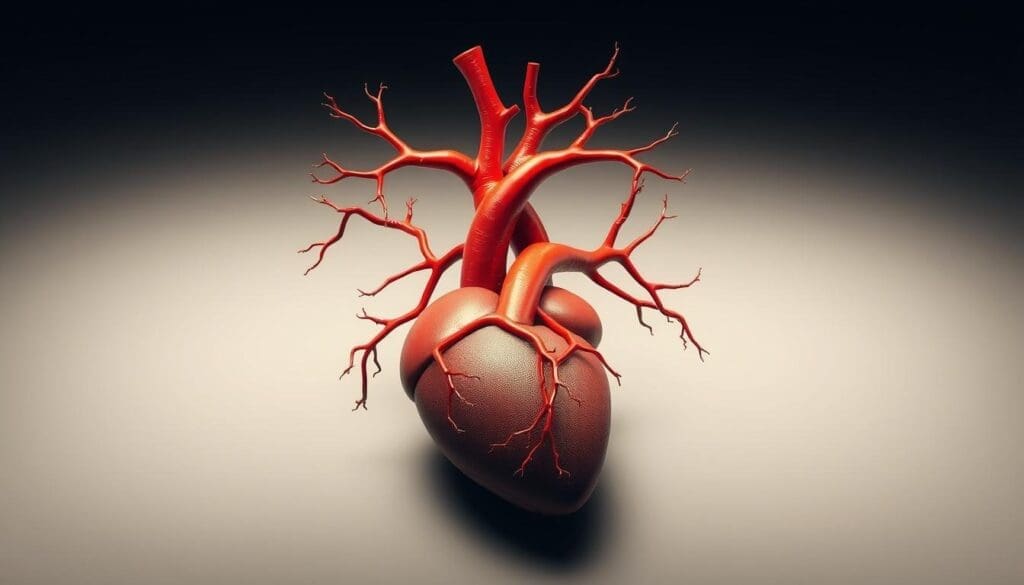
The aorta is the main artery that carries oxygenated blood from the heart to the rest of the body. It is the largest artery and is key to the circulatory system.
Ascending Aorta and Aortic Arch
The ascending aorta starts from the left ventricle of the heart. It curves backward and to the left, forming the aortic arch. This part of the aorta gives off branches to the heart. The aortic arch then becomes the descending aorta, splitting into the thoracic and abdominal aorta.
| Section | Description | Branches |
| Ascending Aorta | Arises from the left ventricle | Coronary arteries |
| Aortic Arch | Curves backward and to the left | Brachiocephalic trunk, left common carotid artery, left subclavian artery |
Thoracic Aorta and Its Branches
The thoracic aorta goes through the thoracic cavity, giving off branches to the thoracic wall and organs. It includes the posterior intercostal arteries and the superior phrenic arteries. It continues until it goes through the diaphragm, becoming the abdominal aorta.
- Posterior intercostal arteries
- Superior phrenic arteries
- Bronchial arteries
- Esophageal arteries
Abdominal Aorta and Major Distributions
The abdominal aorta starts from the thoracic aorta and goes through the abdominal cavity. It has several important branches for the abdominal organs, like the celiac trunk and the superior mesenteric artery. It eventually splits into the common iliac arteries, which supply the lower limbs.
The aorta is essential for the circulatory system, ensuring oxygenated blood reaches all parts of the body. Knowing about the aorta’s structure and function is vital for diagnosing and treating heart diseases.
Common Carotid Arteries: Blood Supply to the Head and Neck
The common carotid arteries are key in the vascular system. They carry oxygen-rich blood to the head and neck. These arteries are essential for keeping the brain and other head and neck structures well-circulated.
Anatomy and Path of the Common Carotid Arteries
The common carotid arteries start from the brachiocephalic trunk on the right and the aortic arch on the left. They move up the neck, in front of the prevertebral fascia. They are wrapped in the carotid sheath with the internal jugular vein and vagus nerve.
These arteries go up the neck and split into the internal and external carotid arteries at the top of the thyroid cartilage. This split is important, marking the change from the common carotid to its two branches.
Branches of the Common Carotid Arteries
The common carotid arteries split into the internal and external carotid arteries. The internal carotid artery mainly feeds the brain. The external carotid artery supplies blood to the face and neck.
- The internal carotid artery has no branches in the neck and mainly feeds the brain.
- The external carotid artery has several branches. These include the superior thyroid, lingual, facial, occipital, and posterior auricular arteries. They supply various structures in the head and neck.
| Artery | Supply Region |
| Internal Carotid Artery | Brain |
| External Carotid Artery | Face and Neck |
Clinical Relevance of the Carotid Arteries
Carotid artery disease is a big risk for stroke. It happens when the carotid arteries narrow or block due to atherosclerosis. Knowing about the carotid arteries is key for diagnosing and treating this disease.
“The carotid arteries are a critical component of the vascular system, and their disease can have severe consequences, including stroke and cognitive impairment.”
Doctors use imaging like ultrasound, CT angiography, and MRI angiography to check the carotid arteries. They look for stenosis or occlusion.
Subclavian Arteries and Their Branches: Supplying the Upper Limbs
The subclavian arteries start from the brachiocephalic trunk. They are key for blood flow to the arms. This is vital for many body functions.
Origin and Course of the Subclavian Arteries
The subclavian arteries begin on the right from the brachiocephalic trunk and on the left from the aortic arch. They go through the thoracic outlet. They pass between the scalene muscles before reaching the arm.
These arteries are important for the upper limbs, neck, and thoracic wall. Their path is close to the brachial plexus and subclavian vein.
Major Branches of the Subclavian Arteries
The subclavian arteries have several key branches. These include:
- The vertebral artery, which supplies the brain’s back circulation.
- The internal thoracic artery, which goes to the chest’s front.
- The thyrocervical trunk, which supplies the thyroid gland and neck.
- The costocervical trunk, which goes to the neck and thoracic wall.
| Branch | Supply Region |
| Vertebral Artery | Posterior circulation of the brain |
| Internal Thoracic Artery | Anterior chest wall |
| Thyrocervical Trunk | Thyroid gland and neck |
| Costocervical Trunk | Neck and thoracic wall |
Clinical Significance of the Subclavian Arteries
The subclavian arteries are very important. They supply blood to the upper limbs. Problems like stenosis or occlusion can cause serious issues.
CT angiography (CTA) and magnetic resonance angiography (MRA) are key for checking these arteries.
Knowing about the subclavian arteries is vital for doctors in vascular surgery and interventional radiology. Their complex anatomy and role in arm circulation make them very important in medical practice.
Brachial Arteries: Blood Supply to the Arms
The brachial artery is key for blood flow to our arms. Knowing its path is important for medical procedures.
Anatomical Course Through the Upper Arm
The brachial artery starts from the axillary artery and goes down the arm. It supplies blood to the forearm and hand. It begins at the lower border of the teres minor muscle and runs down the medial aspect of the arm. Near the elbow, it splits into the radial and ulnar arteries.
This artery is vital for blood flow to the upper limb. Damage to it can cause serious problems.
Clinical Applications in Blood Pressure Monitoring
The brachial artery is often used for blood pressure checks. This is because it’s easy to reach and not too deep.
- It’s great for measuring systolic and diastolic blood pressure.
- Its location makes it perfect for non-invasive blood pressure tests.
Getting blood pressure right is key for diagnosing and treating heart issues.
Branches of the Brachial Artery
The brachial artery has several branches. These supply blood to nearby muscles and structures.
- The profunda brachii artery is a major branch. It supplies blood to the humerus and muscles around it.
- Other branches include the superior and inferior ulnar collateral arteries. They help supply blood to the elbow and forearm.
Knowing the brachial artery’s branches helps us understand its role in blood flow to the upper limb.
Radial and Ulnar Arteries: The Forearm’s Arterial Network
The radial and ulnar arteries are key for blood flow to the forearm and hand. They start from the brachial artery, splitting near the elbow.
The Radial Artery: Path and Pulse Point
The radial artery follows the radius bone, giving blood to the forearm’s side. It’s a prime spot for pulse checks, being near the wrist.
The Ulnar Artery: Course and Distribution
The ulnar artery goes along the ulna bone, supplying blood to the forearm and hand’s side. It’s bigger than the radial artery and is vital for the superficial palmar arch.
The Palmar Arches: Hand Circulation
The radial and ulnar arteries create the palmar arches, essential for hand blood flow. The superficial arch, mainly from the ulnar artery, and the deep arch, from the radial artery, ensure the hand gets plenty of blood.
Femoral Arteries: Major Blood Supply to the Lower Limbs
The femoral arteries are vital for the blood flow to the lower body. They start from the external iliac arteries and carry oxygen-rich blood to the thighs and legs.
Anatomical Location and Course Through the Thigh
The femoral arteries are in the thighs and connect to the external iliac arteries. They start at the inguinal ligament and go through the femoral triangle. They are surrounded by the femoral sheath, along with the femoral vein and other structures.
They then move through the adductor canal in the thigh. After that, they become the popliteal arteries behind the knee. This path is key to understanding blood flow to the lower limbs.
Major Branches of the Femoral Artery
The femoral artery has several important branches. These branches supply different parts of the thigh.
- The superficial circumflex iliac artery supplies the superficial tissues around the hip.
- The superficial epigastric artery runs to the abdominal wall.
- The superficial external pudendal artery supplies the external genitalia.
- The deep external pudendal artery also supplies the external genitalia.
- The profunda femoris artery (deep artery of the thigh) supplies the deeper thigh structures.
These branches are vital for the blood supply to the thigh and surrounding areas.
Clinical Importance in Vascular Surgery
The femoral arteries are very important in vascular surgery. They are easily accessed for procedures like angiography and angioplasty.
In cases of peripheral arterial disease, the femoral arteries can be affected. This can lead to reduced blood flow to the lower limbs. To fix this, surgeries like femoral-popliteal bypass grafting may be needed.
It’s essential for vascular surgeons and healthcare professionals to know about the femoral arteries. This knowledge helps in diagnosing and treating vascular conditions in the lower limbs.
Lower Limb Arterial Network: From Knee to Foot
The arterial network of the lower limb is complex. It ensures blood flows from the knee to the foot. This network is key for the health and function of the lower extremities.
The Popliteal Artery: Behind the Knee
The popliteal artery comes from the femoral artery. It’s vital for blood supply to the knee and lower leg. It’s found behind the knee, in the popliteal fossa, and is a critical artery for the lower limb’s arterial network.
As it goes down, it splits into two main branches: the posterior tibial artery and the anterior tibial artery. This split is important because it starts the blood supply to the foot and toes.
Posterior Tibial Artery: Inner Ankle and Foot
The posterior tibial artery is a branch of the popliteal artery. It runs down the back of the leg. It supplies blood to the back of the leg and then splits into the medial and lateral plantar arteries, which supply the foot.
This artery is important because it’s used to check foot circulation. A pulse here means good blood flow to the lower limb.
Dorsalis Pedis Artery: Blood Supply to the Foot
The dorsalis pedis artery comes from the anterior tibial artery. It supplies blood to the foot. It’s on the top of the foot and is another pulse point for checking lower limb circulation.
The dorsalis pedis artery, along with the posterior tibial artery, makes sure the foot gets enough blood. This is vital for the foot’s health and for keeping it mobile.
Conclusion: Advances in Arterial Mapping and Its Clinical Applications
Understanding the complexities of arterial anatomy is key for diagnosing and treating vascular diseases. Recent advances in arterial mapping have greatly improved our knowledge of the body’s arterial network. These improvements, along with better medical imaging, have made diagnosis and surgery safer.
The uses of precise arterial mapping are wide-ranging. They help in planning surgeries better and improve patient results in vascular surgery. By mapping arteries accurately, doctors can tailor treatments to fit each patient’s needs, lowering the chance of complications.
There has been a lot of progress in this field, with medical imaging playing a big role. Tools like angiography and ultrasound are now essential in healthcare. They let doctors see arteries in real-time. This has boosted both diagnosis and patient care.
As we keep learning more about arterial anatomy and its uses, patient care will only get better. The mix of new medical imaging tech and detailed anatomy knowledge will be key in giving top-notch care.
FAQ:
What is the significance of understanding major artery locations in the body?
Knowing where major arteries are is key for safer surgeries and better diagnosis. It helps doctors spot risks and plan treatments.
What is the role of the aorta in the circulatory system?
The aorta is the biggest artery, sending oxygen-rich blood to organs and tissues. It’s essential for blood flow and heart health.
How do the common carotid arteries supply blood to the head and neck?
The common carotid arteries start from the aortic arch and go up the neck. They split into the internal and external carotid arteries. These supply blood to the brain, face, and neck.
What is the clinical significance of the subclavian arteries?
The subclavian arteries feed blood to the upper limbs. They have branches for the shoulders, chest, and neck. Knowing their anatomy is vital for vascular surgery and diagnosing conditions.
How is the brachial artery used in medical practice?
The brachial artery is used for blood pressure checks and in medical procedures. It branches out to the upper arm and forearm.
What is the importance of the radial and ulnar arteries in the forearm?
The radial and ulnar arteries form the forearm’s blood network. They supply blood to the hand and fingers. Understanding them is key for vascular condition diagnosis and treatment.
What is the role of the femoral arteries in the lower limbs?
The femoral arteries are the main blood suppliers to the lower limbs. They run through the thigh and branch out to surrounding tissues.
How do the popliteal, posterior tibial, and dorsalis pedis arteries supply blood to the lower limb?
The popliteal artery continues from the femoral artery, reaching the knee and lower leg. The posterior tibial and dorsalis pedis arteries branch off, supplying the foot and toes.
What is the significance of precise arterial mapping in medical practice?
Accurate arterial mapping is vital for diagnosing and treating vascular issues. It helps in planning surgeries. Advances in imaging have greatly improved our understanding of artery anatomy.
How do advances in medical imaging impact the diagnosis and treatment of arterial-related conditions?
Medical imaging advancements, like CT scans, have greatly improved diagnosis and treatment of arterial conditions. They allow doctors to see artery details better, leading to more effective treatments.
Reference:
Bergersen, A., & Shalabi, A. (2021). Advances in Aortic Pathology Imaging and Management. Radiologic Clinics of North America, 59(5), 729-746. https://www.sciencedirect.com/science/article/abs/pii/S0033838921000518



 Departments
 Related Videos
 Our Doctors
 News
News