
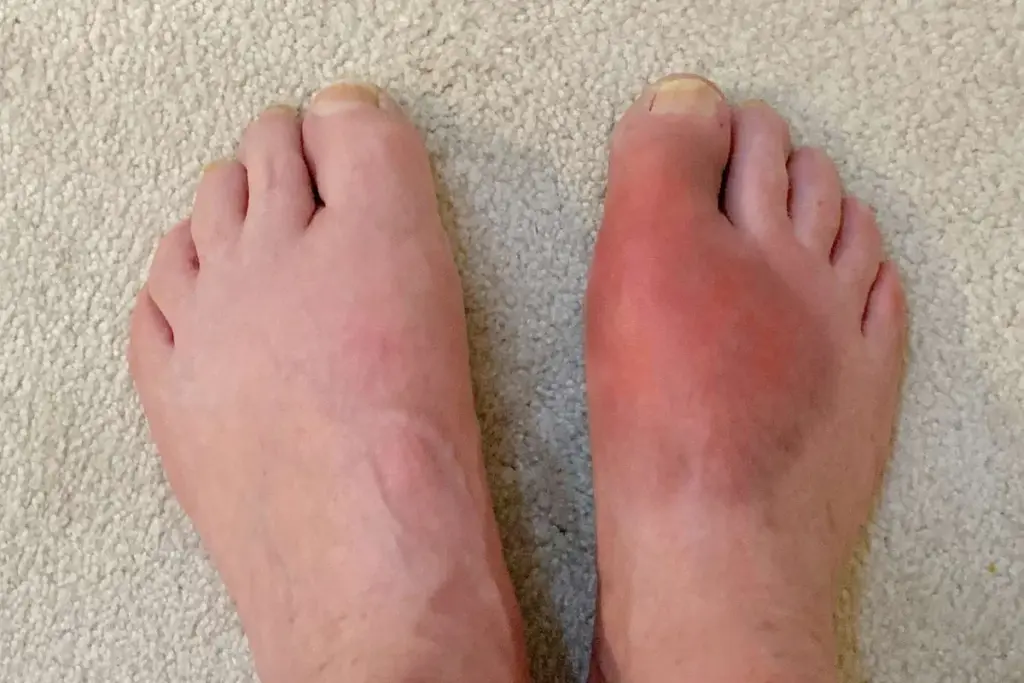
Gout is a type of arthritis that causes sudden and severe pain. It often starts at night and gets worse quickly. It usually hits the big toe but can also affect other parts of the foot.
The pain comes from uric acid crystals building up in the joints. This makes the pain and discomfort very bad. Knowing where gout hurts in your foot is key to managing it and finding relief.
Key Takeaways
- Gout is a type of inflammatory arthritis that commonly affects the foot.
- The big toe is the most commonly affected area, but gout can occur in other parts of the foot.
- Gout attacks can happen suddenly, often overnight, and peak within hours.
- Understanding the symptoms and causes is critical for effective management.
- Relief from gout pain is possible with the right treatment and lifestyle changes.
Understanding Gout in the Foot: Common Locations
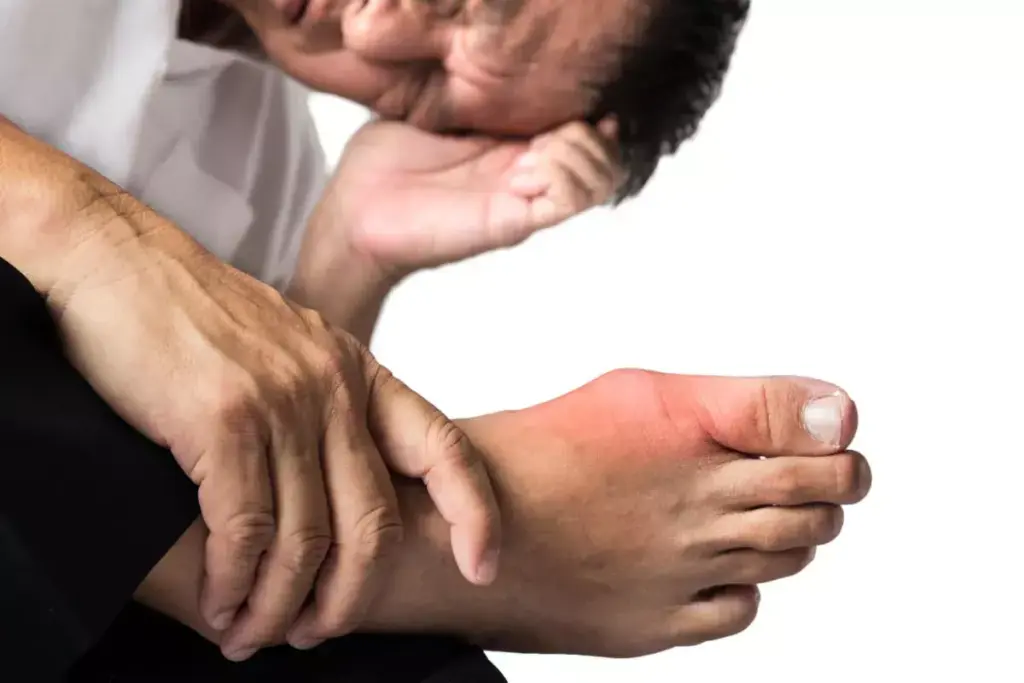
Knowing where gout hits in the foot is key to managing it well. Gout, a type of arthritis, often strikes the foot, leading to sharp pain and discomfort. It’s marked by sudden, severe pain, swelling, redness, and tenderness.
The Big Toe: Primary Target for Gout
The big toe is the most common spot for gout, hitting about 50% of first-time gout attacks. The bunion joint at the big toe’s base is extra vulnerable. This is because of its shape and the stress it faces.
Gout loves the big toe because it’s cooler. This cooler spot helps uric acid crystals form, a key part of gout.
Other Foot Areas Affected by Gout
While the big toe is the main target, gout can hit other foot spots too. Studies show that about 18% of gout cases affect other foot and ankle areas. Gout can pop up on the side of the foot, the top, and even the bottom. This leads to different symptoms and levels of pain.
| Foot Area | Prevalence of Gout | Common Symptoms |
| Big Toe | 50% of first gout attacks | Severe pain, swelling, redness |
| Other Foot and Ankle Areas | 18% of gout episodes | Pain, swelling, limited mobility |
Can Gout Occur in Both Feet Simultaneously?
Yes, gout can hit both feet, though not always at the same time. It might start in one foot and then spread to the other. Research finds that people with gout often face foot pain. About 22.3% report foot pain in the last month, and 14.5% say it’s disabling.
It’s important to know where gout usually hits and how it might affect both feet. This knowledge helps in managing gout better. By understanding the common spots and the chance of both feet being affected, people can better handle their condition and get the right medical help.
Gout on Outside of Foot: Why It Happens

Gout can cause pain on the outside of the foot. It leads to sudden, severe pain, swelling, redness, and tenderness. Knowing why it happens is key to managing and treating it.
Causes of Lateral Foot Gout
Gout is caused by too much uric acid in the body. This can happen if the body makes too much uric acid or can’t get rid of it. Uric acid crystals form in the joints, causing gout. The outside of the foot is a common spot for this.
Many things can trigger uric acid buildup, like diet, genetics, and medical conditions. Keeping a healthy lifestyle and managing health issues can help prevent gout attacks.
Symptoms Specific to Outer Foot Gout
The symptoms of gout on the outside of the foot are unique. They include intense pain, swelling, and redness. The skin may feel warm, and moving can be hard because of the pain and swelling.
It’s important to spot these symptoms early to start the right treatment and avoid more problems. Gout pain can be very bad and can happen without warning, often at night.
Distinguishing Gout from Other Foot Conditions
Telling gout apart from other foot problems is important for the right treatment. Conditions like arthritis, tendonitis, or bursitis can look similar. A detailed medical check-up and sometimes imaging tests are needed to confirm gout.
Knowing the signs of gout and how it differs from other conditions helps in better management and symptom relief. Seeing a healthcare professional is key for a correct diagnosis and treatment plan.
Recognizing and Diagnosing Foot Gout
Spotting gout in the foot means knowing its signs and how it shows up in different spots. Gout brings sudden, intense pain that starts at night and gets worse in 24 hours. It also brings redness, swelling, and warmth to the joint.
Characteristic Signs of a Gout Attack
During a gout flare, you might feel pain, redness, and swelling in the joints. These attacks can last a week or two. Sometimes, they can last longer and be more severe. The pain feels sharp or burning.
What Gout Pain Feels Like in Different Foot Areas
Gout pain varies by foot area. In the big toe, the pain is intense with swelling and redness. In other spots, like the outside of the foot, the pain is less intense but just as bad.
Medical Diagnosis and Testing
Diagnosing gout needs a doctor’s evaluation, medical history, and tests. A doctor might do a physical check, ask about symptoms, and run tests like:
| Diagnostic Test | Purpose |
| Joint Fluid Analysis | To identify urate crystals in the joint fluid |
| Blood Tests | To measure uric acid levels |
| Imaging Tests (X-rays, Ultrasound) | To assess joint damage and detect urate crystals |
Getting a correct diagnosis is key for treating gout. Knowing the signs helps doctors create a treatment plan. This plan aims to ease pain and stop future attacks.
Finding Relief: Treatment Options for Foot Gout
Managing foot gout needs a mix of quick pain relief and long-term prevention. Good treatment plans can ease pain and stop future attacks.
Immediate Pain Management Strategies
When gout hits, quick pain relief is key. Applying ice to the area can cut pain and swelling. Elevating the foot also helps reduce swelling.
Resting the foot is vital during an attack. It lets the body heal and avoids more irritation.
Over-the-counter pain meds like ibuprofen can help with gout pain. But, always check with a doctor first to make sure it’s safe for you.
Medications for Gout Relief
For serious gout attacks, doctors might prescribe stronger meds. Colchicine can lessen pain and swelling. Corticosteroids might also be used for pain and swelling.
Urate-lowering therapy (ULT) is key for managing gout. Drugs like allopurinol and febuxostat lower blood uric acid, stopping future attacks.
Lifestyle Changes to Prevent Future Attacks
Changing your diet is vital to prevent gout. Cutting down on purine-rich foods like red meat and seafood helps. Drinking lots of water is also important.
Keeping a healthy weight and drinking less alcohol can also help. “A balanced lifestyle is essential for managing gout,” as it controls uric acid and prevents attacks.
By using these strategies, people can manage foot gout well and live better.
Conclusion
Gout is a type of arthritis that causes pain and discomfort. It often affects the toes, ankles, and knees. Knowing where gout hurts in your foot is key to managing it effectively.
Gout can hurt in different places, like the big toe or the outside of the foot. It’s important to understand this to get the right treatment.
Some people wonder if they can get gout in both feet. Yes, it’s possible. Getting care for both feet is important to manage gout well.
Gout on the side of the foot can be very painful. Knowing what it feels like is important for diagnosis and treatment.
Even though there’s no cure for gout, there are ways to manage it. Understanding the causes, symptoms, and treatments can help find relief. A mix of medical treatment and lifestyle changes is best for managing gout.
By being proactive in managing gout, you can reduce attacks. This improves your foot health and quality of life.
FAQ
Where does gout typically hurt in the foot?
Gout most commonly affects the big toe, especially the joint at its base.
Can gout occur in both feet simultaneously?
Yes, though it usually starts in one foot, it can affect both over time.
What does gout feel like in the foot?
Gout causes sudden, intense pain, swelling, warmth, and redness in the affected joint.
Can you have gout on the side or outside of your foot?
Yes, gout can affect any joint in the foot, including the side, ankle, or heel.
What are the signs and symptoms of gout in the feet?
Signs include severe pain, swelling, redness, warmth, tenderness, and limited mobility.
How is gout diagnosed in the foot?
Diagnosis is based on joint examination, uric acid tests, and sometimes joint fluid analysis or imaging.
What treatment options are available for foot gout?
Treatment includes anti-inflammatory medications, uric acid-lowering therapy, and pain management.
Can gout be managed through lifestyle changes alone?
Mild cases may improve with diet, hydration, and weight management, but medication is often needed.
How can I prevent future gout attacks in my foot?
Maintain healthy uric acid levels, avoid trigger foods, stay hydrated, and follow medical guidance.
References
National Center for Biotechnology Information. Evidence-Based Medical Insight. Retrieved from https://pmc.ncbi.nlm.nih.gov/articles/PMC6347747/



 Departments
 Related Videos
 Our Doctors
 News
News