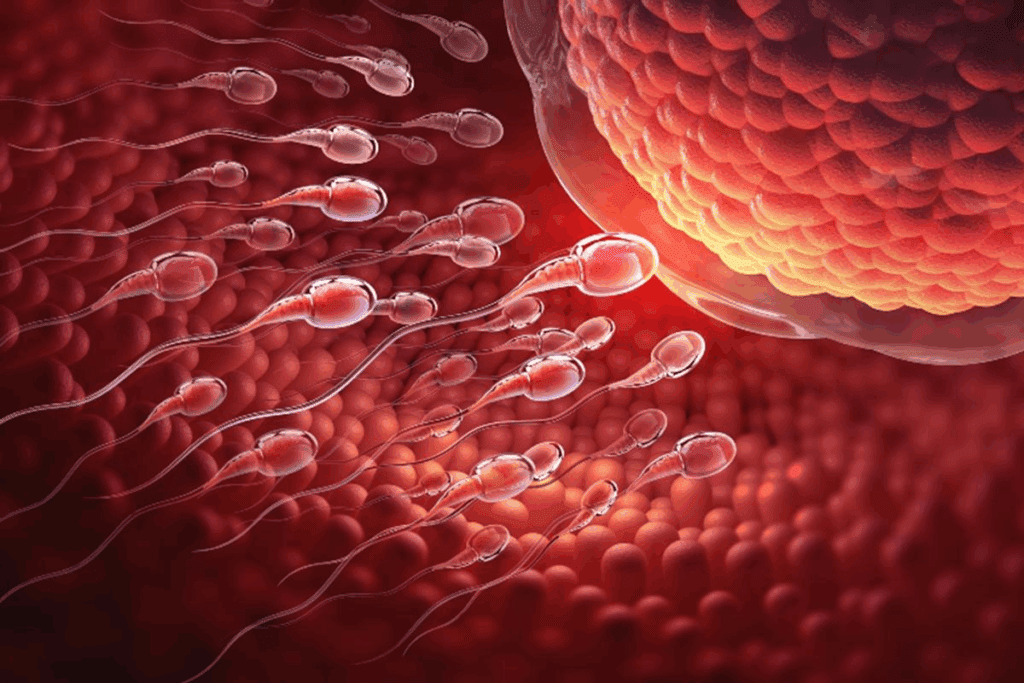
The birth of Louise Brown on July 25, 1978, was a big deal in reproductive medicine. She was the world’s first baby made through in vitro fertilization (IVF). This was thanks to the hard work of British scientists Patrick Steptoe, Robert Edwards, and Jean Purdy. Detailing the history and who created in vitro fertilization and started the procedure.
IVF has changed the game for people dealing with infertility. It has helped millions of people around the world. Today, medical teams keep improving IVF, focusing on the needs of each patient.
We’re looking into the history and growth of IVF. We’ll talk about the important moments and the people who made it happen.
Key Takeaways
- The first IVF baby, Louise Brown, was born on July 25, 1978.
- Patrick Steptoe, Robert Edwards, and Jean Purdy pioneered IVF.
- IVF has revolutionized the treatment of infertility.
- Trusted medical institutions continue to advance IVF technology.
- Patient-centered reproductive healthcare is a priority in modern IVF practices.
The Birth of a Revolutionary Fertility Treatment

The birth of Louise Brown on July 25, 1978, was a major breakthrough. It was the result of years of hard work by IVF pioneers. This event brought hope to many families worldwide.
The Significance of July 25, 1978
July 25, 1978, is a key date in medical history. On this day, Louise Brown, the first baby conceived through In Vitro Fertilization (IVF), was born. She was born at Oldham’s General Hospital via a planned C-section by John Webster.
This event was a huge success for many reasons:
- It was the first time IVF worked in humans.
- It showed IVF could help people with infertility.
- It opened doors for more research and better fertility treatments.
Louise Brown: The World’s First “Test Tube Baby”
Louise Brown’s birth was a big deal. It was a sign of hope for many. She was the first “test tube baby,” conceived outside the body in a lab.
The journey to Louise’s birth was tough. Medical Expert, Medical Expert, and Jean Purdy worked hard to make IVF work. Their efforts helped millions of people conceive today.
The story of Louise Brown and the IVF pioneers shows the power of medical innovation. We celebrate their hard work and dedication.
Who Created In Vitro Fertilization: The Pioneering Team
[Add image here]
A team of pioneers worked together to create IVF. They included a gynecologist, a physiologist, and a laboratory technician. Their collaboration was key to making IVF a reality.
Medical Expert: The Gynecologist
Medical Expert’s development. He used laparoscopy to look inside the abdomen. This allowed the team to get eggs from women, a vital step in IVF.
Medical Expert: The Physiologist
Medical Expert. He was the main force behind IVF’s science. His work on fertilization and human embryology was groundbreaking. He won the 2010 Nobel Prize in Physiology or Medicine for his IVF work.
Jean Purdy: The Overlooked Laboratory Technician
Jean Purdy worked with Edwards and Steptoe. She was the first to see a human egg fertilize in a lab. Her work was essential, though often forgotten.
Pioneer | Role | Contribution |
Medical Expert | Gynecologist | Developed laparoscopy technique for egg retrieval |
Medical Expert | Physiologist | Led the scientific development of IVF, understanding of human embryology |
Jean Purdy | Laboratory Technician | First observed human egg fertilization in the laboratory |
The team of Steptoe, Edwards, and Purdy overcame many challenges in IVF. Their work led to the birth of Louise Brown, the first “test tube baby,” on July 25, 1978.
Early Research and Foundations of IVF
The journey to IVF started with animal studies in the early 20th century. It eventually led to using it on humans. We often forget the hard work that made this fertility treatment possible.
Embryo Research in the 1890s
IVF research began in the 1890s with embryo studies. Scientists were curious about how fertilization and early growth happen. This curiosity started a long journey of research that led to IVF.
Animal Studies in the 1950s
In the 1950s, animal studies were key to IVF research. Scientists tested fertilization and embryo growth on different animals. These studies were important for moving the field forward.
Medical Expert’s Breakthrough with Rabbits
Medical Expert 1950s. He fertilized rabbit eggs outside the body and then transferred them to surrogate mothers. This led to the birth of baby rabbits. His success showed IVF could work for humans too.
Medical Expert’s work was a big step for IVF. His success with rabbits proved IVF could help people get pregnant. Here are some key moments in early IVF research:
Year | Research Milestone | Significance |
1890s | Embryo research begins | Understanding of fertilization and early embryonic development |
1950s | Animal studies, including Medical Expert’s work with rabbits | Demonstrated feasibility of IVF |
The early work on IVF was vital. It started with embryo studies and grew with animal research. This journey took decades of hard work and curiosity.
The First Human Egg Fertilization
In 1944, Miriam Menkin and John Rock made a big leap in fertility treatment. They fertilized a human egg in a lab for the first time. This breakthrough helped start modern IVF methods.
Miriam Menkin and John Rock’s 1944 Achievement
Miriam Menkin and John Rock’s success in fertilizing an egg in vitro was a big deal. They worked at Harvard University, trying new ways to fertilize eggs outside the body. Their work was a big step in understanding how humans reproduce.
“Their work demonstrated that human eggs could be fertilized outside the body, paving the way for future research in assisted reproduction.”
Menkin and Rock got eggs from women in surgery and fertilized them in a lab. This was basic by today’s standards but was a huge leap back then. It showed IVF was possible.
Establishing the Proof of Concept
Miriam and John’s success proved IVF was doable. This had big implications:
- It showed eggs could be fertilized outside the body.
- It opened up new research areas in human reproduction and fertility.
- It helped start the development of more advanced IVF methods.
The table below summarizes key aspects of Menkin and Rock’s achievement:
Year | Researchers | Achievement |
1944 | Miriam Menkin and John Rock | First successful human egg fertilization in vitro |
1978 | Steptoe and Edwards | First IVF birth (Louise Brown) |
Miriam Menkin and John Rock’s work in 1944 was a big step towards the first “test tube baby” in 1978. Their work was key to later advances in assisted reproduction.
The Long Road to Success: Challenges and Setbacks
The journey to successful IVF was filled with many hurdles. These included scientific, ethical, and financial obstacles. The pioneers in this field had to overcome these challenges with determination and creativity.
Scientific Obstacles
One big challenge was figuring out how to replicate human fertilization. Early IVF attempts struggled because they didn’t know the best conditions for fertilization and embryo growth.
There were also technical issues, like timing and coordinating egg retrieval with fertilization. Creating the right culture media for embryos was another big challenge.
Challenge | Description | Solution |
Understanding Human Fertilization | Lack of knowledge about optimal conditions for fertilization | Extensive research on human reproduction and embryo development |
Technical Difficulties | Precise timing and coordination needed | Development of advanced laboratory techniques and equipment |
Culture Media Development | Need for appropriate conditions for embryo growth | Research into and formulation of specialized culture media |
Ethical Controversies and Opposition
IVF wasn’t just a scientific hurdle but also faced ethical and societal opposition. Many questioned the morality of creating life outside the human body.
Concerns about embryo status, genetic manipulation, and societal impact were raised. We had to engage in open dialogue and education to address these concerns.
Funding Struggles
Finding funding was a big challenge. The research was costly, and many were hesitant to support it. It was seen as controversial and unproven.
We looked for funding from various sources, including private donors and research institutions. The team’s persistence and ability to find funding were key to IVF’s success.
By understanding these challenges, we can see the complexity and innovation behind IVF’s development.
The Breakthrough: How the First Successful IVF Procedure Worked
The first successful IVF procedure was a major breakthrough in medical history. It was the result of years of hard work by scientists and doctors. We’ll look at the key steps that made this achievement possible.
The Technical Process
The first successful IVF procedure was a complex process. Laparoscopy was key, allowing Medical Expert’s ovaries. This was for Louise Brown, the first IVF baby.
Laparoscopy let doctors see the ovaries and take out follicles to get eggs. This was a big step forward at the time. The eggs were then fertilized in the lab using Medical Expert’ methods.
The Role of Laparoscopy
Laparoscopy was vital in the first IVF procedure. It let doctors get eggs without big surgery, making it safer for the patient. This showed the creativity of the IVF pioneers in solving technical problems.
The success of laparoscopy in IVF also made it a common tool in gynecology. It showed the value of using old tech in new ways, a key idea in medical innovation today.
Embryo Transfer Techniques
After fertilization, the embryo grew in the lab for days. Then, it was carefully put into the uterus for implantation. This step needed a lot of skill to increase the chances of success.
The embryo transfer method was developed through lots of research and testing. It was a critical step that needed a deep understanding of biology and the technical side of things.
In conclusion, the first successful IVF procedure was a result of new techniques like laparoscopy and embryo transfer. These advances, along with the hard work of the medical team, made the impossible possible.
When Did IVF Start in the United States?
The early 1980s saw the start of IVF in the US. Key players were driving its adoption. As IVF success grew worldwide, American doctors and researchers were eager to bring it here.
America’s First IVF Baby in 1981
1981 was a big year for IVF in America. It was the year the country’s first IVF baby, Elizabeth Carr, was born. Medical Expert. Georgeanna Seegar Jones worked hard to make this happen.
Their work at the Eastern Virginia Medical School was key. It made IVF a reality for American patients.
“The birth of Elizabeth Carr was a momentous occasion,” it marked a big step for reproductive medicine in the US. It paved the way for IVF to become more common.
Key American Pioneers
Medical Expert. Georgeanna Seegar Jones were leaders in IVF in the US. They worked on the technical and ethical sides of IVF. The Jones Institute became a center for IVF research and treatment.
Differences in US Development
While IVF’s basics were the same as in the UK, the US had its own path. The US faced different rules and ethics. The private healthcare system also shaped how IVF was offered.
But the goal of helping infertile couples remained the same. The start of IVF in the US was a big step in reproductive healthcare. It opened new doors for families facing infertility.
Recognition and Accolades for IVF Pioneers
After years of hard work, IVF pioneers got the recognition they deserved. Their research and techniques helped millions worldwide to have children.
The Nobel Prize was a big honor for them. Robert Edwards won the Nobel Prize in Physiology or Medicine in 2010 for IVF. This prize showed how important IVF is in medicine.
The 2010 Nobel Prize for Robert Edwards
The Nobel Committee honored Edwards for IVF. This technique changed how we treat infertility. They said Edwards’ work was key, thanks to him and Patrick Steptoe.
“The development of IVF has been a major breakthrough in the treatment of infertility, and it has given hope to millions of couples worldwide.”
Patrick Steptoe and Jean Purdy also played big roles in IVF. But Edwards got the Nobel Prize alone. This is because the Nobel Committee doesn’t give prizes to people who have died.
Posthumous Recognition for Steptoe and Purdy
Steptoe and Purdy got recognition after they passed away. Their work with Edwards helped start modern fertility treatments.
Pioneer | Contribution | Recognition |
Robert Edwards | Developed the IVF technique | Nobel Prize in Physiology or Medicine (2010) |
Patrick Steptoe | Contributed to the development of laparoscopy and IVF | Posthumous recognition |
Jean Purdy | First to culture human embryos | Posthumous recognition |
The recognition of these pioneers shows how much their work has changed lives. IVF is now a key part of fertility treatment. It’s a great example of medical progress.
Evolution of IVF Success Rates
IVF success rates have seen a big change over the years. From the first IVF procedures to now, we’ve made huge steps forward. This is thanks to better technology, techniques, and our growing knowledge of how humans reproduce.
Early Challenges
In the early days, IVF success was very low, often just a few percent. The first successful IVF birth, Louise Brown in 1978, was a major breakthrough. But back then, our technology was basic, and we didn’t fully understand how embryos grow and implant.
Modern Success Rates
Now, IVF success rates are much higher. For women under 35, success rates are near 50%. This big jump is thanks to better technology, lab work, and how clinics operate today.
Factors Influencing Success
Many things can affect how well IVF works. These include the woman’s age, the quality of eggs and sperm, why someone can’t get pregnant, and the clinic’s skill. Knowing these factors helps set realistic hopes and make better choices about IVF.
The table below shows important factors that affect IVF success:
Factor | Impact on IVF Success |
Age of Woman | Success rates drop as age goes up, more so after 35. |
Egg Quality | Top-notch eggs really boost success chances. |
Sperm Quality | Good sperm quality is key for fertilization success. |
Cause of Infertility | Some reasons might lower success, but IVF can often help. |
Clinic Expertise | Clincs with the latest tech and experience usually see better results. |
As IVF tech keeps getting better, we’ll see even better success rates. This brings hope to those facing fertility issues.
Modern IVF Technologies and Advancements
Modern IVF treatments have seen big changes, thanks to new technologies. These advancements have made fertility treatments more effective. They have changed how we approach helping people have babies.
Intracytoplasmic Sperm Injection (ICSI)
Intracytoplasmic Sperm Injection (ICSI) is a big step forward in IVF. It involves putting a single sperm directly into an egg. This method has helped many couples who faced challenges before.
Preimplantation Genetic Testing
Preimplantation Genetic Testing (PGT) is another key improvement. It lets doctors check embryos for genetic issues before they’re implanted. This way, only healthy embryos are chosen, raising the chances of a successful pregnancy.
Vitrification and Egg Freezing
The creation of vitrification has made egg freezing much better. Vitrification quickly freezes eggs without damaging them. This has given women more freedom to plan their pregnancies without losing their chances of success.
Artificial Intelligence in Embryo Selection
The use of Artificial Intelligence (AI) in IVF is becoming more common. AI helps pick the best embryos for transfer by analyzing lots of data. This could lead to even better success rates in IVF.
As IVF technologies keep getting better, the future looks bright. These new tools and methods give hope to those trying to start a family. They make it possible for more people to have the babies they dream of.
Conclusion: The Legacy of IVF Invention
The invention of IVF has changed how we treat infertility, giving hope to millions. Looking back, we see how IVF has grown from its early days to a key part of reproductive medicine. This shows the lasting impact of IVF.
IVF has helped millions start families, changing lives. From the first success in 1978, technology and techniques have improved. This has made IVF more effective and available to more people.
Now, IVF shows our creativity and the hard work of doctors. Looking ahead, we see IVF’s ongoing role in helping families. It’s a key part of reproductive healthcare today and tomorrow.
FAQ
Who invented IVF treatment?
IVF was pioneered by British scientists Patrick Steptoe, Robert Edwards, and Jean Purdy. They worked together to develop this groundbreaking fertility treatment.
When was IVF created?
The first successful IVF birth happened on July 25, 1978. This was with the birth of Louise Brown, the world’s first “test tube baby.”
What was the significance of the first human egg fertilization in vitro?
The successful fertilization of a human egg in vitro by Miriam Menkin and John Rock in 1944 was a key step. It showed the concept could work, paving the way for future advancements.
Who were the key pioneers behind IVF in the US?
The first US IVF baby was born in 1981. This marked the start of IVF in America. American pioneers played a big role in adapting and advancing IVF technology here.
How has IVF success rates evolved over time?
IVF success rates have greatly improved over the years. Now, success rates are close to 50%. This is thanks to better technology, techniques, and patient selection.
What are some of the modern IVF technologies?
Modern IVF uses advanced technologies like Intracytoplasmic Sperm Injection (ICSI) and preimplantation genetic testing. It also includes vitrification and egg freezing, boosting the chances of successful pregnancies.
What recognition did the IVF pioneers receive?
Robert Edwards was awarded the Nobel Prize in Physiology or Medicine in 2010 for his work on IVF. Steptoe and Purdy received posthumous recognition for their contributions, even though they passed away before the Nobel Prize.
How did the development of IVF start?
The development of IVF involved a lot of research and experimentation. This included early embryo studies and animal studies, laying the groundwork for human IVF over decades.
What were some of the challenges faced by IVF pioneers?
The journey to successful IVF was tough. Pioneers faced technical difficulties, ethical debates, and funding issues. But they overcame these through hard work and teamwork.
When did IVF start in the US?
The first US IVF baby was born in 1981, starting IVF in America.
Who discovered IVF?
It’s hard to say who discovered IVF alone. But the work of Patrick Steptoe, Robert Edwards, and Jean Purdy was key. They developed IVF as we know it today.
What is the history of IVF?
IVF’s history is a story of teamwork and innovation. It began with early embryo studies and reached a milestone with the first human egg fertilization in vitro. The first successful IVF birth in 1978 was a major achievement.
References
National Health Service (NHS). In Vitro Fertilization: History and Origins. Retrieved from https://www.nhs.uk/conditions/ivf/