Seeing double vision, or diplopia, can be scary and mess up your day. It happens when your eyes don’t work together right. This makes your brain see two different pictures.
At Liv Hospital, we know how diplopia can affect your life. Every year, over 800,000 Americans see eye doctors because of it. Our team works fast to find out why you’re seeing double vision.
Key Takeaways
- Diplopia is the medical term for double vision.
- Over 800,000 Americans visit eye care specialists annually due to diplopia.
- Diplopia can result from various factors, including refractive errors and neurological conditions.
- Accurate diagnosis is key for good treatment.
- Liv Hospital offers full care for those with double vision.
What Is Diplopia? Understanding Double Vision

Double vision, or diplopia, is a visual disorder that can affect daily life. It comes in two main types: monocular and binocular diplopia. Knowing these types is key for finding the right treatment.
Definition and Medical Terminology
Diplopia means seeing double, which happens when the eyes can’t align images right. It can be caused by eye problems or nerve issues. Monocular diplopia happens when you see double with one eye closed, often due to eye structure issues. Binocular diplopia goes away when you cover one eye, usually because of eye misalignment.
Impact on Daily Functioning and Quality of Life
Diplopia can make everyday tasks hard. Reading, driving, or walking can be tough with double vision. It can also make job tasks, social activities, and life in general more stressful.
Knowing the type of diplopia and its cause is important. It helps people get the right medical help. Whether it’s monocular or binocular, the aim is to fix the problem and improve life quality.
Types of Diplopia: Monocular vs. Binocular

Knowing if you have monocular or binocular diplopia is key to finding out why you see double.
Diplopia, or double vision, can happen in different ways. It depends on whether one or both eyes are affected. Knowing the difference is important for diagnosing and treating it right.
Monocular Diplopia: Double Vision in One Eye
Monocular diplopia means seeing double with one eye. It’s often caused by problems inside the eye, like corneal scars or cataracts.
Monocular diplopia can be caused by many things, including:
- Corneal irregularities or scarring
- Cataracts or lens abnormalities
- Retinal problems or macular disease
- Dry eye syndrome
Binocular Diplopia: When Both Eyes Are Affected
Binocular diplopia happens when you see double with both eyes open. It goes away when you close one eye. This usually means there’s a problem with how the eyes line up.
Binocular diplopia can be caused by:
- Strabismus or eye misalignment
- Cranial nerve palsies
- Trauma or injury affecting eye alignment
- Neurological conditions
How to Determine Which Type You Have
To figure out if you have monocular or binocular diplopia, try this: cover one eye and then the other. If you see double with one eye covered, you have monocular diplopia in that eye. If covering one eye makes the double vision go away, you likely have binocular diplopia.
Characteristics | Monocular Diplopia | Binocular Diplopia |
Causes | Corneal irregularities, cataracts, lens distortions | Strabismus, eye misalignment, cranial nerve palsies |
Effect of Covering One Eye | Double vision persists in the affected eye | Double vision resolves when one eye is covered |
Typical Symptoms | Double vision in one eye, often with distortion | Double vision with both eyes open, often with eye strain |
Common Causes of Monocular Diplopia
Monocular diplopia can be caused by many things, like cataracts, keratoconus, and dry eyes. It happens when one eye has a problem that leads to double vision. This is different from double vision caused by how the eyes are aligned. We’ll look at what usually causes this problem and how it leads to seeing double.
Corneal Irregularities and Refractive Errors
Issues like astigmatism or keratoconus can cause monocular diplopia. Astigmatism makes vision blurry because the cornea or lens isn’t round. Keratoconus makes the cornea thin and bulge, affecting vision. Myopia and hyperopia can also cause double vision in one eye. Wearing glasses or contact lenses can often fix these problems.
Cataracts and Lens Abnormalities
Cataracts cloud the lens in the eye, leading to monocular diplopia. As cataracts grow, they can make vision worse, including double vision. Lens problems, like a lens that’s not in the right place, can also cause double vision. Surgery is often needed to fix cataracts and improve vision.
Retinal Problems and Macular Disease
Problems with the retina, like macular degeneration, can cause monocular diplopia. Macular degeneration affects the center of the retina, causing vision problems. Other retina issues, like tears or detachment, can also affect vision. Seeing a doctor quickly is important to treat these problems and prevent more vision loss.
Dry Eye Syndrome
Dry eye syndrome, where the eye doesn’t get enough moisture, can cause or make monocular diplopia worse. This condition can make the cornea irregular, affecting vision. Using lubricating drops or other treatments can help with double vision symptoms.
Monocular diplopia has many causes, from mild to severe. Knowing what causes it helps find the right treatment. If you see double in one eye, seeing an eye doctor is important. They can find the cause and suggest the best treatment.
“Accurate diagnosis is key to treating monocular diplopia effectively. By understanding the underlying cause, healthcare providers can recommend the most appropriate treatment, whether it involves corrective lenses, medication, or surgery.” — Ophthalmology Expert
Why Am I Seeing Double? Understanding Binocular Diplopia Causes
Binocular diplopia, or double vision, happens when both eyes are affected. It’s often due to serious conditions. Unlike monocular diplopia, which affects one eye, binocular diplopia is related to issues that affect the alignment of both eyes.
We will explore the primary causes of binocular diplopia. These include vasculopathy, trauma-related double vision, cranial nerve palsies, and strabismus. Knowing these causes is key to finding the right treatment.
Vasculopathy: The Leading Cause (28.66%)
Vasculopathy, often linked with diabetes and hypertension, is the main cause of binocular diplopia. It accounts for about 28.66% of cases. Vascular diseases can damage the nerves that control eye movements. It’s important to manage diabetes and hypertension to prevent this.
Trauma-Related Double Vision (24.66%)
Trauma to the head or eyes is another big cause of binocular diplopia, making up about 24.66% of cases. Trauma can damage the nerves and muscles around the eyes, leading to misalignment and double vision. The severity of trauma-related diplopia can vary, and treatment often involves addressing the underlying injuries.
Cranial Nerve Palsies
Cranial nerve palsies, which affect the nerves controlling eye movements, are another common cause of binocular diplopia. The third, fourth, and sixth cranial nerves are often damaged, leading to issues with eye alignment and movement.
Strabismus and Eye Misalignment
Strabismus, or eye misalignment, is a condition where the eyes do not properly align with each other. This misalignment can cause binocular diplopia, as the brain struggles to merge the images from both eyes. Treatment for strabismus often involves corrective lenses, vision therapy, or surgery.
The following table summarizes the main causes of binocular diplopia and their prevalence:
Cause | Prevalence (%) |
Vasculopathy | 28.66 |
Trauma-Related | 24.66 |
Cranial Nerve Palsies | Variable |
Strabismus | Variable |
Understanding the causes of binocular diplopia is essential for effective treatment. By identifying the underlying cause, healthcare professionals can develop a targeted treatment plan to address the root issue and alleviate symptoms.
Medical Conditions Associated with Diplopia
Diplopia, or double vision, can be a symptom of various underlying medical conditions that affect the eyes and the brain. Understanding these conditions is key for proper diagnosis and treatment.
Diabetes and Hypertension
Diabetes and hypertension are common conditions that can cause diplopia. Diabetes can damage nerves and affect muscles controlling eye movements, leading to double vision. Hypertension can also harm blood vessels in the eyes and brain, causing visual disturbances.
A study in the Journal of Diabetes and its Complications found that diabetic patients with neuropathy were more likely to have diplopia. Hypertension is also linked to eye conditions like diabetic retinopathy, which can cause vision problems.
Myasthenia Gravis and Muscle Weakness
Myasthenia gravis is an autoimmune disorder that causes muscle weakness. This weakness can affect muscles controlling eye movements, leading to diplopia and ptosis (drooping eyelids). The weakness can get worse throughout the day.
Treatment for myasthenia gravis includes medications to improve neuromuscular transmission. Sometimes, surgery to remove the thymus gland is needed to alleviate symptoms.
Multiple Sclerosis and Other Neurological Disorders
Multiple sclerosis is a chronic neurological condition that can affect the optic nerves and brain’s visual processing. Diplopia is a common symptom in patients with multiple sclerosis, caused by damage to nerves controlling eye movements.
Other neurological disorders like stroke and brain tumors can also cause diplopia. The extent of visual disturbance depends on the condition’s location and severity.
Thyroid Eye Disease
Thyroid eye disease, also known as Graves’ ophthalmopathy, is an autoimmune condition linked to thyroid disorders. It causes inflammation and swelling around the eyes, leading to proptosis (bulging eyes) and diplopia.
Treatment for thyroid eye disease involves managing the thyroid condition and therapies to reduce eye inflammation and swelling.
The following table summarizes the medical conditions associated with diplopia and their characteristic effects on vision:
Medical Condition | Effect on Vision | Common Symptoms |
Diabetes | Nerve damage affecting eye movements | Diplopia, blurred vision |
Myasthenia Gravis | Muscle weakness affecting eye movements | Diplopia, ptosis |
Multiple Sclerosis | Damage to optic nerves and brain processing | Diplopia, vision loss |
Thyroid Eye Disease | Inflammation and swelling around the eyes | Proptosis, diplopia |
“Understanding the underlying causes of diplopia is key for effective management and treatment. A thorough medical evaluation can help identify the root cause and guide appropriate interventions.” Medical Expert, Ophthalmologist
Age-Related Factors in Double Vision
As we get older, the chance of seeing double vision, or diplopia, goes up. This condition makes it hard to see things clearly. It’s important to know why it happens as we age.
Why Diplopia Is More Common in Adults Over 60
People over 60 often see double. Studies show that eye changes like cataracts and macular degeneration play a big role. Older adults also face more health issues that can cause double vision.
Age-related eye changes are a big reason for diplopia. The lens in our eyes gets less flexible, and eye muscles weaken. This makes it hard to move our eyes together, leading to double vision.
Age-Related Eye Changes
Several eye changes happen as we age, leading to double vision:
- Presbyopia: Age-related decline in near vision
- Cataracts: Clouding of the lens in the eye
- Age-related macular degeneration: Damage to the macula, the part of the retina responsible for central vision
- Dry eye syndrome: Reduced tear production or poor tear quality
These changes can mess with how our eyes see things, causing double vision. Regular eye checks are key to catching these issues early.
Increased Risk of Underlying Conditions
Older adults face more health problems that can cause double vision. Conditions like diabetes, high blood pressure, and neurological disorders are common. Myasthenia gravis, a muscle weakness condition, is another cause.
“The aging population is more prone to conditions that can lead to diplopia, making it essential to monitor eye health closely as we age.”
By knowing these age-related factors, older adults can take steps to prevent double vision. This helps keep their vision sharp as they age.
Diagnosing Double Vision
Figuring out why you see double is key to fixing it. We start with a detailed check-up. This process helps doctors find out what’s causing your double vision.
Initial Eye Examination Process
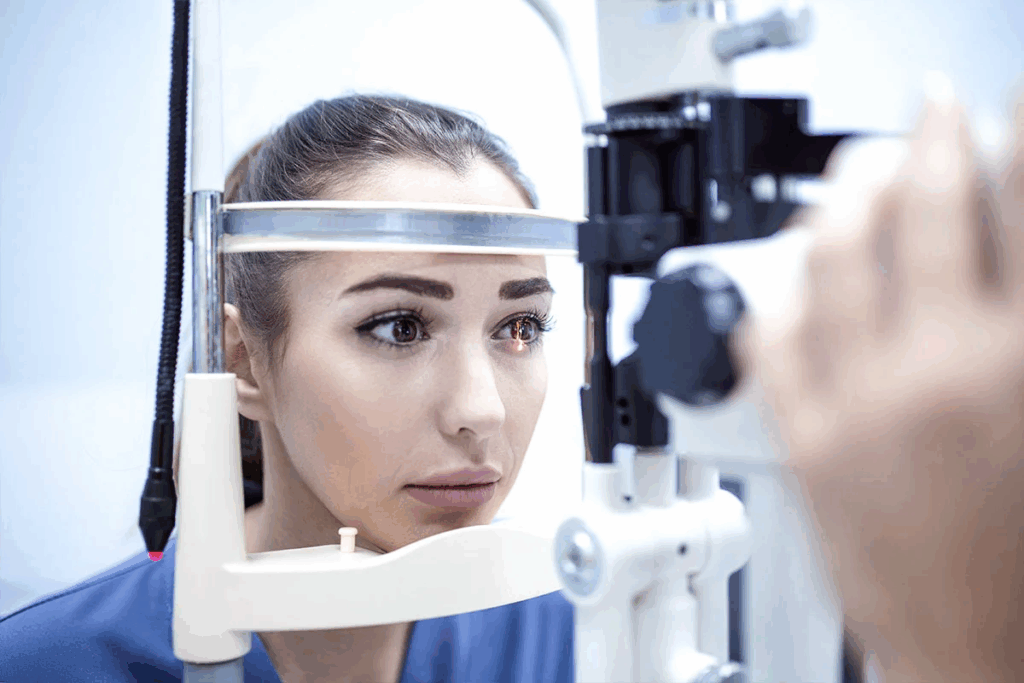
The first step is a full eye check. We look at how well you see, how your eyes line up, and how they move. This tells us if the double vision is in one eye or both.
We also check for any problems in the cornea, lens, or retina. These could be causing your double vision.
Specialized Tests for Diplopia
After the first check, we might do more tests. These can include:
- Cover test to check eye alignment
- Prism cover test to measure how much your eyes are off
- Hess screen test to look at eye movements
Neurological Assessment
If we think your double vision might be from a brain issue, we do a brain check. This looks at how your brain nerves are working and if there are any brain problems.
“A thorough neurological examination is key in finding out why you see double, like with multiple sclerosis or myasthenia gravis.”
Imaging Studies: MRI, CT Scans, and More
Sometimes, we need to use MRI or CT scans. They help us find things like tumors, aneurysms, or injuries that might be causing your double vision.
Imaging Study | Use in Diagnosing Diplopia |
MRI | Shows soft tissues well, great for finding brain causes |
CT Scan | Fast and good for finding bleeding or breaks |
By using all these steps, we can find out why you see double. Then, we can make a plan to fix it.
Treatment Options for Diplopia
The treatment for diplopia depends on its cause. Knowing the cause is key to managing it well. We’ll look at different treatments, from simple methods to surgery.
Corrective Lenses and Prisms
Corrective lenses and prisms are often used to treat diplopia. They help align images seen by each eye, reducing double vision. Corrective lenses fix refractive errors that cause monocular diplopia. Prisms align images for binocular diplopia.
Eye Exercises and Vision Therapy
Eye exercises and vision therapy can help some patients. These exercises improve eye movement and coordination. Vision therapy is great for those with convergence insufficiency or binocular vision disorders.
Medications for Underlying Conditions
Medications are key when diplopia is caused by a medical condition. Conditions like myasthenia gravis or thyroid eye disease can be treated. This often reduces or eliminates double vision.
Surgical Interventions
For severe cases or when other treatments fail, surgical interventions might be needed. Surgery can fix eye alignment issues, remove cataracts, or address other problems.
Dealing with diplopia can be tough, but the right treatment can help a lot. Working with healthcare professionals helps find the best treatment plan for each person.
When to Seek Immediate Medical Attention
Double vision can be a sign of a serious problem that needs quick medical help. It can come from many causes, but some need fast care to avoid harm or serious conditions.
Warning Signs of Serious Conditions
Some symptoms with double vision mean you should see a doctor right away. These include:
- Severe eye pain
- Headache
- Weakness or numbness in the face or limbs
- Difficulty speaking or swallowing
- Sudden loss of vision in one or both eyes
If you have these symptoms with double vision, get medical help fast. These could be signs of serious issues like a stroke, aneurysm, or multiple sclerosis.
Emergency Symptoms Accompanying Double Vision
Other emergency symptoms that need quick attention include:
- Trauma or injury to the head or eyes
- Sudden onset of double vision
- Diplopia with fever, nausea, or vomiting
What to Expect in the Emergency Room
When you go to the emergency room with double vision symptoms, the team will do a full check. This includes:
- Talking about your medical history to find possible causes
- An eye exam to check your vision and how your eyes line up
- A check of your nerves to see if there’s damage or other issues
- Scans like CT or MRI to see the brain and orbits
The goal is to find out why you have double vision and start the right treatment quickly.
Follow-up Care After Emergency Treatment
After emergency care for double vision, follow-up care is key. This might include:
- More tests to confirm the diagnosis
- Visits to specialists like neurology or ophthalmology
- Treatment for the cause of double vision
- Rehab or vision therapy to help with double vision
Following the recommended care plan is important for the best recovery and to avoid future double vision.
Conclusion: Taking Control of Your Vision Health
Understanding diplopia and its causes helps people take charge of their vision health. Many cases of diplopia can be managed or solved with the right treatment. Recognizing symptoms and getting medical help early can prevent complications and improve life quality.
Managing diplopia needs a full approach to tackle the root causes. Treatments include corrective lenses, prisms, eye exercises, vision therapy, and sometimes medications or surgery. Working with healthcare experts helps create a treatment plan that fits each person’s needs.
Being proactive about eye care is key to managing vision health. Regular eye exams and timely medical care can greatly improve treatment outcomes. We urge everyone to prioritize their vision health and seek help if they notice double vision symptoms.
FAQ
What is diplopia?
Diplopia, or double vision, is when you see two images of one thing. It can happen in one eye or both.
What causes double vision?
Double vision can come from many things. This includes eye problems, misalignment, and even health issues like diabetes.
What is the difference between monocular and binocular diplopia?
Monocular diplopia is when you see double in one eye. It’s often due to eye issues. Binocular diplopia is when you see double with both eyes open. It’s usually because of how the eyes are aligned.
How is diplopia diagnosed?
Doctors use eye exams and tests to find the cause of double vision. They might also use scans like MRI or CT.
Can diplopia be treated?
Yes, there are treatments for double vision. These include glasses, prisms, exercises, and sometimes surgery.
What are the warning signs that require immediate medical attention for diplopia?
If you have sudden double vision, headaches, or eye pain, get help right away. These are signs of a serious problem.
Is diplopia more common in older adults?
Yes, older adults are more likely to have double vision. This is because of age-related eye changes and health issues.
Can underlying medical conditions cause diplopia?
Yes, conditions like diabetes and multiple sclerosis can cause double vision. So can thyroid eye disease.
How can I manage my vision health if I have diplopia?
To manage double vision, get medical help quickly. Follow your treatment plan and make lifestyle changes to help.
What can I expect during an emergency room visit for diplopia?
At the emergency room, you’ll get a full check-up and tests. They might also find and treat serious conditions.
References
National Center for Biotechnology Information. Evidence-Based Medical Guidance. Retrieved from https://pmc.ncbi.nlm.nih.gov/articles/PMC8312586/