

Bone scans are a key tool for doctors to check on bone pain, fractures, or cancer worries. This imaging method spots unusual bone metabolism signs. These signs might point to arthritis or bone tumors.
If you’re wondering why do doctors order bone scans, it’s usually to find the cause of unexplained bone pain, detect hidden fractures, or check for bone infections or cancer spread. The test starts with a radioactive isotope injection into the blood. This isotope is taken up by bone tissue and seen by a gamma camera.
Through bone scintigraphy, or radionuclide bone scanning, doctors can spot and track bone diseases like cancer, infections, and fractures.
Key Takeaways
- Bone scans help diagnose and monitor bone diseases.
- They can detect subtle fractures and differentiate between types of arthritis.
- The procedure involves an intravenous injection of a radiotracer.
- Bone scans expose patients to a relatively low dose of radiation.
- They are useful for identifying the cause of unexplained bone pain.
Understanding Bone Scans: The Basics
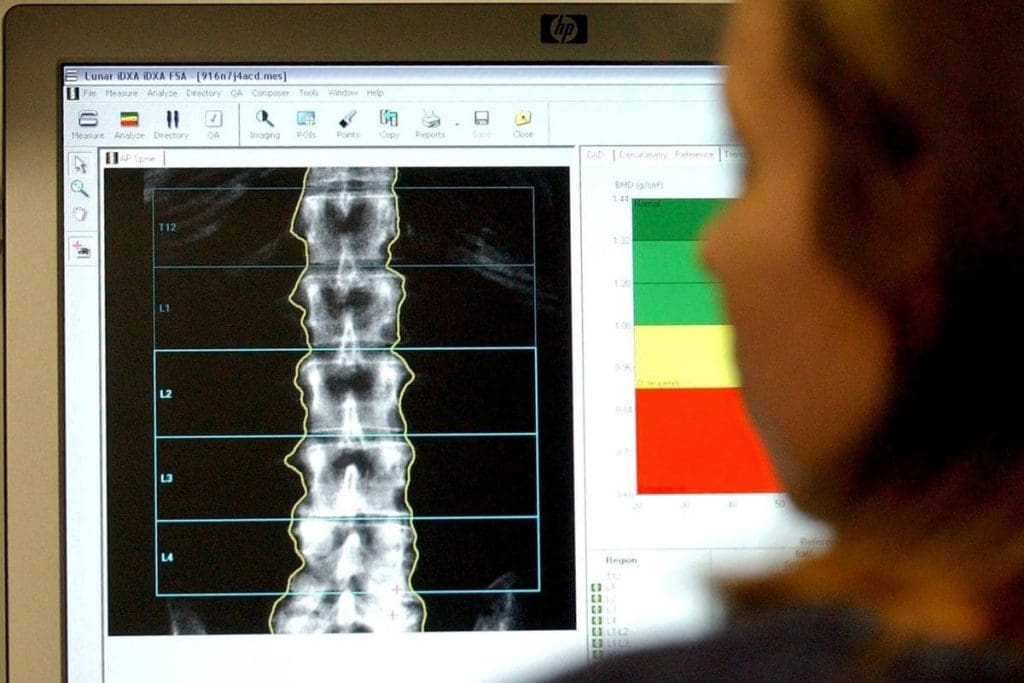
To understand bone scans, we need to know the basics. They are used to check bone health. This helps doctors find and track bone problems.
What Is a Bone Scan or Bone Scintigraphy?
A bone scan, or bone scintigraphy, is a special imaging test. It uses a tiny amount of radioactive tracer. This tracer is injected into your blood to see how bones work.
The test is done in a hospital’s nuclear medicine unit. The tracer is safe and goes away in a few days. The scan itself is painless. It shows both good and bad bone diseases, helping doctors plan treatment.
How Bone Scans Differ from Other Imaging Tests
Bone scans are different from X-rays, CT scans, and MRI scans. These tests show what bones look like. But bone scans show how bones work.
Unlike X-rays, bone scans find changes in bone activity. This makes them key for diagnosing and tracking bone diseases. Doctors get important info to make treatment plans.
Why Do Doctors Order Bone Scans? Common Clinical Indications
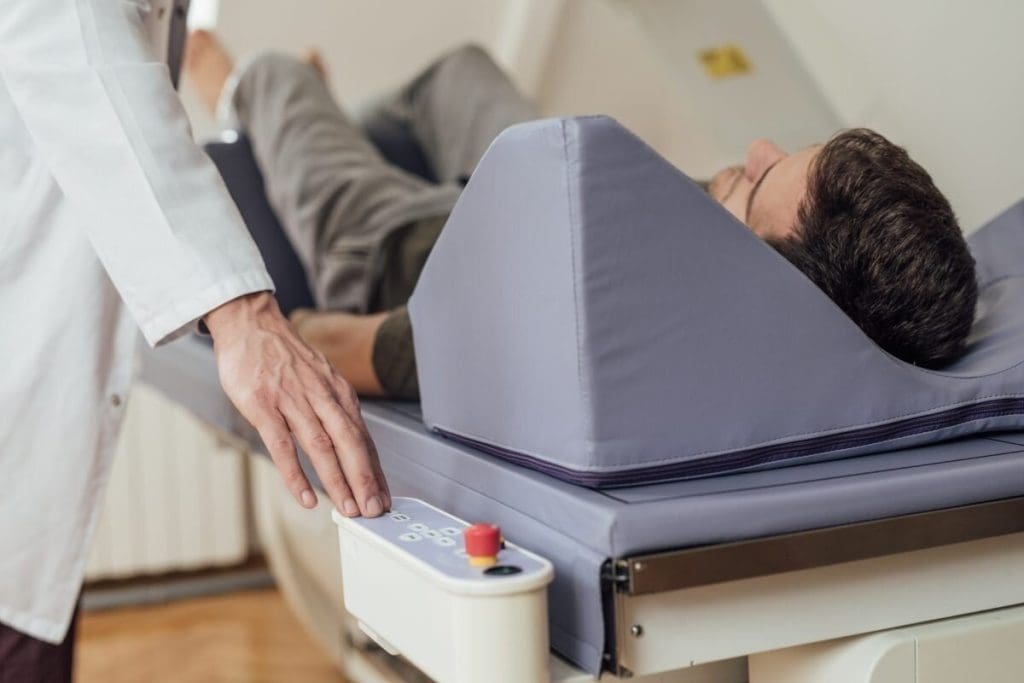
Doctors often order bone scans to check on bone health. This test helps spot and track bone problems. It can find fractures, infections, cancer, and arthritis.
Unexplained Bone Pain and Inflammation
Doctors use bone scans to find the cause of unexplained bone pain and inflammation. If you have bone pain without a clear reason, a scan can help. It’s great for finding infections or bone metastases from cancer.
Suspected Fractures Not Visible on X-rays
Bone scans are also for finding suspected fractures not seen on X-rays. This is true for trauma or stress injuries. The scan helps doctors find these fractures and plan treatment.
Monitoring Known Bone Diseases
Bone scans also help keep an eye on known bone diseases like Paget’s disease or bone cancer. Regular scans let doctors see how the disease is progressing. This helps them adjust treatment plans for better care.
The Science Behind Bone Scintigraphy
Bone scintigraphy, or bone scanning, uses small amounts of radioactive materials. It helps diagnose and monitor bone diseases. This method is key in finding bone metabolism issues, like arthritis or cancer.
Radioactive Isotopes and Bone Metabolism
The process starts with injecting a radioactive isotope, like Technetium-99m methylene diphosphonate (Tc-99m MDP), into the blood. This tracer goes to bone tissue, showing where bone metabolism is high. This is due to disease or injury.
Radioactive isotopes are vital in bone scintigraphy. They help see bone metabolism. Tc-99m MDP, with its short half-life, keeps radiation low while giving clear images.
The Role of the Gamma Camera in Bone Scintigraphy
A gamma camera detects the gamma radiation from the tracer in bones. It turns this radiation into a two-dimensional image, called a scintigram or bone scan. The gamma camera’s skill in spotting small changes in bone metabolism is key for diagnosing and monitoring bone diseases.
How Abnormal Bone Metabolism Is Detected
Abnormal bone metabolism shows up as uneven tracer uptake. “Hot spots” mean high metabolic activity, which could be fractures, infections, or tumors. “Cold spots” suggest poor blood supply or certain bone lesions.
Spotting these issues helps doctors diagnose and track bone-related conditions. This includes metastatic cancer and various arthritis types. It guides treatment choices and checks if treatments work.
The Bone Scan Procedure: What to Expect
A bone scan is a simple, non-invasive test that checks bone health. It helps find and track bone problems like arthritis and cancer.
Preparation Before the Scan
Before the scan, you’ll need to remove jewelry and metal items. This step is important for getting accurate results, says Dr. John Smith, a seasoned radiologist.
You might also be told not to eat or drink for a few hours beforehand. The exact time can vary based on the facility’s instructions.
The Injection of Radioactive Tracers
A small amount of radioactive tracer is injected into a vein in your arm. This tracer, called technetium-99m, shows up in bones, highlighting any issues.
The use of radioactive tracers is safe and common in nuclear medicine. The radiation dose is low, and the tracer leaves your body in a few hours.
The Scanning Process with the Bone Scintigraphy Machine
After the tracer spreads through your body (1-3 hours), you’ll go through the scanning. You’ll lie on a table while a gamma camera takes pictures of the tracer in your bones.
The scan itself lasts about 30 to 60 minutes. The whole visit, including getting ready and waiting, can take several hours.
Post-Procedure Care and Safety
After the scan, you can go back to your usual activities right away. Just drink plenty of water to help get rid of the tracer.
“The bone scan is a painless and non-invasive procedure. Most people can go about their day as usual after the scan,” notes A specialist in nuclear medicine.
While the procedure is safe, some might feel minor side effects like a rash or a metallic taste. But these are rare and don’t last long.
Interpreting Bone Scan Results: What Do the Images Show?
Understanding bone scan images is key. They show how bones work and help find problems like arthritis or cancer. Doctors use them to see what’s going on inside the bones.
Normal vs. Abnormal Findings
A normal scan looks even, with some changes due to bone activity. But, abnormal scans show spots that are too bright or too dark.
Abnormal findings can mean many things, like broken bones, infections, or tumors. It’s important to look at the whole picture, not just the scan.
Hot Spots and Cold Spots: What They Mean
“Hot spots” mean the bone is very active, which can be from many causes. “Cold spots” might show less blood flow or cancer.
Here’s a quick guide to what these spots might mean:
| Finding | Possible Causes |
| Hot Spots | Fractures, Infections, Cancer, Arthritis |
| Cold Spots | Reduced Blood Flow, Certain Cancers |
The Importance of Clinical Correlation
When looking at bone scan results, it’s all about the big picture. A medical expert says, “Bone scans are very good at finding problems but not always clear. They need to be seen with the patient’s history and other tests.”
“The bone scan is a valuable diagnostic tool, but it is not a standalone test. It must be used in conjunction with other diagnostic modalities and clinical evaluation to arrive at an accurate diagnosis.”
– Medical Expert
The scan can spot active arthritis and tell it apart from cancer. But, more tests are usually needed to be sure.
In short, understanding bone scans takes a lot of knowledge. Knowing what’s normal and what’s not, and what hot and cold spots mean, is key. But, it’s also important to look at the whole picture. This way, doctors can give the right treatment to their patients.
Bone Scans for Arthritis Detection and Monitoring
Bone scans have made detecting and tracking arthritis more precise. They show detailed images of bone activity. This is key for diagnosing and managing osteoarthritis and rheumatoid arthritis.
How Different Types of Arthritis Appear on Bone Scans
Arthritis types show unique patterns on bone scans. For example, osteoarthritis shows increased activity in affected joints. This is because of bone remodeling.
Rheumatoid arthritis, on the other hand, shows a more spread-out activity. This is due to inflammation.
Osteoarthritis shows up as increased activity in joints and bone spurs on scans. Rheumatoid arthritis shows symmetrical joint involvement and widespread activity.
| Type of Arthritis | Bone Scan Characteristics |
| Osteoarthritis | Increased uptake in affected joints, bone spurs |
| Rheumatoid Arthritis | Diffuse uptake pattern, symmetrical joint involvement |
Using Bone Scans to Assess Arthritis Progression
Bone scans help not just in diagnosing but also in tracking arthritis. They let doctors see how the disease is progressing. This helps in adjusting treatment plans.
“Bone scintigraphy provides a sensitive means of detecting early changes in bone metabolism associated with arthritis, allowing for timely intervention.”
” ARheumatologist
Limitations of Bone Scans in Arthritis Diagnosis
Despite their value, bone scans have their limits. They can’t always tell the difference between various bone issues. So, doctors often need to use other tests to confirm a diagnosis.
In summary, bone scans are essential for arthritis detection and tracking. They provide insights into disease progression and treatment success. Understanding their strengths and weaknesses helps doctors use them better in managing arthritis.
What Cancers Can a Bone Scan Detect?
Bone scans are key in finding both primary bone cancers and cancers that have spread to the bones. They help doctors see different cancers that harm bone health. This tool is important for making treatment plans and tracking how the disease changes.
Primary Bone Cancers and Their Appearance
Primary bone cancers start in the bones. They can be either benign or malignant. Bone scans spot malignant cancers like osteosarcoma, Ewing’s sarcoma, and chondrosarcoma. These cancers show up as “hot spots” on scans because they have high bone activity.
Osteosarcoma is a common bone tumor that shows strong tracer uptake. Ewing’s sarcoma is another aggressive cancer that also shows high uptake, making it easy to spot on scans.
Metastatic Cancers to Bone
Bone scans are mainly used to find cancers that have spread to the bones from other places. Cancers from the breast, prostate, and lung often go to the bones. Bone scans help find these metastases.
Certain cancers, like breast cancer and prostate cancer, often spread to the bones. This can be seen on bone scans as multiple hot spots all over the skeleton.
| Cancer Type | Frequency of Bone Metastasis | Typical Appearance on Bone Scan |
| Breast Cancer | Common | Multiple hot spots |
| Prostate Cancer | Common | Multiple hot spots, often symmetric |
| Lung Cancer | Less Common than Breast/Prostate | Variable, can be hot or cold spots |
Bone scans are very important in managing cancer. They show how far the disease has spread to the bones. This helps doctors plan the best treatment and check if it’s working.
Bone Scan Arthritis vs Cancer: Distinguishing Features
It’s hard to tell arthritis from cancer on bone scans. We need to understand the patterns in these scans well. Bone scans show where bones are active, but we must look at many things to get it right.
Pattern Recognition in Imaging
Recognizing patterns is key to telling arthritis from cancer on bone scans. Arthritis usually shows up all over, in a symmetrical way, near joints. Cancer, on the other hand, has a focused spot, not always near joints, and can be uneven.
Distribution and Intensity Differences
The way and how much the tracer spreads out is important. Arthritis spreads out evenly on both sides, while cancer spreads out randomly. Cancer also tends to show up more brightly because it’s more active.
| Characteristics | Arthritis | Cancer |
| Distribution | Bilateral, symmetrical | Random, asymmetric |
| Intensity | Variable, often less intense | Often more intense |
| Pattern | Diffuse, related to joints | Focal, not necessarily related to joints |
When Additional Testing Is Needed for Definitive Diagnosis
Even though bone scans are helpful, we often need more tests to be sure. CT scans, MRIs, or biopsies can give us more details. They help us confirm what’s going on and plan the best treatment.
In short, figuring out arthritis from cancer on bone scans takes a close look at the patterns, how it spreads, and how bright it is. Knowing when to use more tests helps doctors make better diagnoses and treatments.
Advantages and Limitations of Radionuclide Bone Scanning
Radionuclide bone scanning is a useful tool for doctors. It can spot many bone problems, like fractures or cancer. But, it’s not always clear what’s causing these problems.
High Sensitivity vs. Limited Specificity
This scanning method is very good at finding bone issues early. It can show where the bone is working too hard, which might mean cancer, infection, or inflammation. But, it’s not always sure what’s causing these signs.
Key aspects of sensitivity and specificity include:
- High sensitivity for detecting bone abnormalities
- Limited specificity requiring further diagnostic testing
- The need for clinical correlation to interpret scan results accurately
Radiation Exposure Considerations
Radionuclide bone scanning uses tiny amounts of radioactive tracers. The amount of radiation is low, and the tracer leaves the body in 24 to 48 hours. Even though there’s some radiation, the scan’s benefits usually outweigh the risks.
| Radiation Exposure Aspect | Details |
| Level of Exposure | Relatively low |
| Excretion Time | Within 24 to 48 hours |
| Risk vs. Benefit | Benefits often outweigh the risks |
Cost-Effectiveness in Diagnostic Pathways
Radionuclide bone scanning is a cost-effective way to check how far cancer has spread to the bones. It’s also good for seeing how well treatments are working. It can spot disease in parts of the body that weren’t expected.
The cost-effectiveness is attributed to its:
- Whole-body imaging capability
- Early detection of disease spread
- Monitoring treatment response
In conclusion, radionuclide bone scanning is a valuable tool for doctors. It has its good points and not-so-good points. Knowing these helps doctors use it best in their work.
Complementary Diagnostic Tests
Bone scans give important info, but they’re often used with other tests for a full picture. This way, doctors get a clear view of a patient’s bone health. This helps in making accurate diagnoses and treatment plans.
When X-rays, CT Scans, or MRIs Are Preferred
Different imaging tests have their own strengths. X-rays are first used to check bone health because they’re easy to get and show bone structures well. CT scans give detailed images of bones, which is key for complex conditions. MRIs are great for soft tissue and marrow, giving insights bone scans can’t.
The choice of imaging depends on the situation. For example:
- X-rays are good for first checks of bone fractures or wear.
- CT scans are needed for detailed bone images, like in complex fractures or tumors.
- MRIs help with soft tissue injuries, infections, or tumors in the bone marrow.
The Role of Biopsies in Confirming Diagnoses
Imaging tests are key, but biopsies are needed to confirm some diagnoses. A biopsy takes a bone tissue sample for detailed examination. This can confirm cancer or infection.
Biopsies are key when imaging isn’t clear or when a specific diagnosis is needed. They help guide treatment, like surgery or chemotherapy.
Integrated Diagnostic Approaches
Using bone scans with other tests and biopsies improves diagnosis and care. This approach helps doctors:
- Match findings from different tests for a solid diagnosis.
- Track disease changes or treatment success better.
- Plan treatments based on detailed info.
By using various tests, doctors can offer more precise and effective care for bone-related issues.
Recent Advances in Bone Scanning Technology
In recent years, bone scanning technology has made big strides. These changes have made bone scans more accurate and detailed. This helps doctors diagnose and treat bone diseases better.
SPECT and SPECT/CT Imaging Enhancements
Single Photon Emission Computed Tomography (SPECT) and SPECT/Computed Tomography (SPECT/CT) have seen major improvements. SPECT gives detailed 3D views of bone activity. This helps find problems more easily.
When SPECT is paired with CT, it gets even better. SPECT/CT combines detailed images of bone activity with clear pictures of the bone’s structure. For more on this, check outhttps://www.insideradiology.com.au/nuclear-medicine-bone-scan/.
This combo is great for spotting complex issues like bone metastases and arthritis. It helps doctors see how far the disease has spread. This makes planning treatment easier.
| Technology | Description | Benefits |
| SPECT | Provides 3D information on bone metabolism | Precise localization of abnormalities |
| SPECT/CT | Combines functional and anatomical imaging | Enhanced diagnostic accuracy, better treatment planning |
PET Scans for Bone Metastases Detection
Positron Emission Tomography (PET) scans are key for finding bone metastases in cancer patients. They use tracers to spot areas of high activity. This shows where the disease might be spreading.
PET scans work best when used with other imaging like CT or MRI. This combo gives a full picture of the disease. It helps doctors create better treatment plans for each patient.
Artificial Intelligence in Bone Scan Interpretation
Artificial intelligence (AI) is changing how we read bone scans. AI looks at lots of images to find patterns and problems. This makes diagnosis more accurate and quicker.
AI is just starting to help with bone scan readings. But it’s already showing great promise. As AI gets better, it will likely play a bigger role in diagnosing diseases.
Conclusion: The Vital Role of Bone Scans in Modern Medicine
Bone scans are key in modern medicine. They help us understand bone health and diseases. They spot problems in bone metabolism early, helping with conditions like arthritis and cancer.
Bone scans show things other tests can’t. They help doctors make better treatment plans. This leads to better care for patients.
For arthritis, bone scans check how active the disease is. They also see if treatments are working. For cancer, they find where the disease has spread and check if treatments are working.
Bone scans are more important than ever as medicine gets better. They are very sensitive and show the whole body. This makes them a top choice for doctors. Bone scans help doctors give accurate diagnoses and create specific treatment plans. This shows how important they are in today’s medicine.
FAQ
What is a bone scan, and how does it work?
A bone scan, also known as bone scintigraphy, is a test that uses tiny amounts of radioactive material. It helps diagnose and monitor bone conditions like arthritis and cancer. The test works by injecting a radioactive tracer into the blood. This tracer builds up in areas of high bone activity, helping to spot problems.
Does a bone scan show arthritis?
Yes, a bone scan can show signs of arthritis, like increased activity around joints. But, it might not tell the difference between various types of arthritis. More tests might be needed to confirm a diagnosis.
What cancers can a bone scan detect?
A bone scan can find cancers that have spread to the bone, like breast, prostate, and lung cancers. It can also find primary bone cancers, such as osteosarcoma.
How does a bone scan differ from other imaging tests?
A bone scan is different from X-rays, CT scans, and MRIs. It shows bone metabolism and activity, not just structure. This makes it great for finding conditions like arthritis and cancer that affect bones.
What is the role of radioactive isotopes in bone scintigraphy?
Radioactive isotopes, like technetium-99m, are key in bone scintigraphy. They help show bone metabolism and activity. This lets doctors spot abnormalities.
How is abnormal bone metabolism detected during a bone scan?
Abnormal bone metabolism is found by the buildup of radioactive tracer in active areas. This can mean conditions like arthritis, cancer, or fractures.
What is the significance of hot and cold spots on a bone scan?
Hot spots on a bone scan mean high activity, possibly arthritis or cancer. Cold spots show low activity, like avascular necrosis.
Can a bone scan detect bone cancer?
Yes, a bone scan can find bone cancer, including primary and metastatic cancers.
What are the advantages and limitations of radionuclide bone scanning?
The benefits of radionuclide bone scanning include its sensitivity for bone issues and ability to scan the whole skeleton. But, it has limitations like limited specificity, radiation risks, and the need for more tests to confirm findings.
When are complementary diagnostic tests, such as X-rays or MRIs, used in conjunction with bone scans?
Tests like X-rays or MRIs are often used with bone scans for more info and to confirm diagnoses. For example, an X-ray might confirm a fracture seen on a bone scan. An MRI can check soft tissue damage.
How have recent advances in bone scanning technology improved diagnostic capabilities?
New tech in bone scanning, like SPECT and SPECT/CT imaging, PET scans, and AI, has made diagnoses better. They offer clearer and more accurate images and help doctors interpret them better.
What is the role of artificial intelligence in bone scan interpretation?
AI is being used more in bone scan interpretation to boost accuracy and speed. AI algorithms can spot patterns and abnormalities in images, leading to quicker and more accurate diagnoses.
References
- Van den Wyngaert, T., et al. (2016). The EANM practice guidelines for bone scintigraphy. European Journal of Nuclear Medicine and Molecular Imaging.https://www.ncbi.nlm.nih.gov/pmc/articles/PMC4932135/
- Kim, J.Y., et al. (2016). Bone scintigraphy in the diagnosis of rheumatoid arthritis. Scientific Reports.https://www.ncbi.nlm.nih.gov/pmc/articles/PMC4810331/
- Agrawal, A. (2016). Metastatic mimics on bone scan: “All that glitters is not metastasis. World Journal of Nuclear Medicine.https://www.ncbi.nlm.nih.gov/pmc/articles/PMC4918480/
- Santos, J.C., et al. (2023). Bone metastases detection in patients with breast cancer: PET/CT vs bone scintigraphy. Cancer Medicine.https://pmc.ncbi.nlm.nih.gov/articles/PMC10400135/