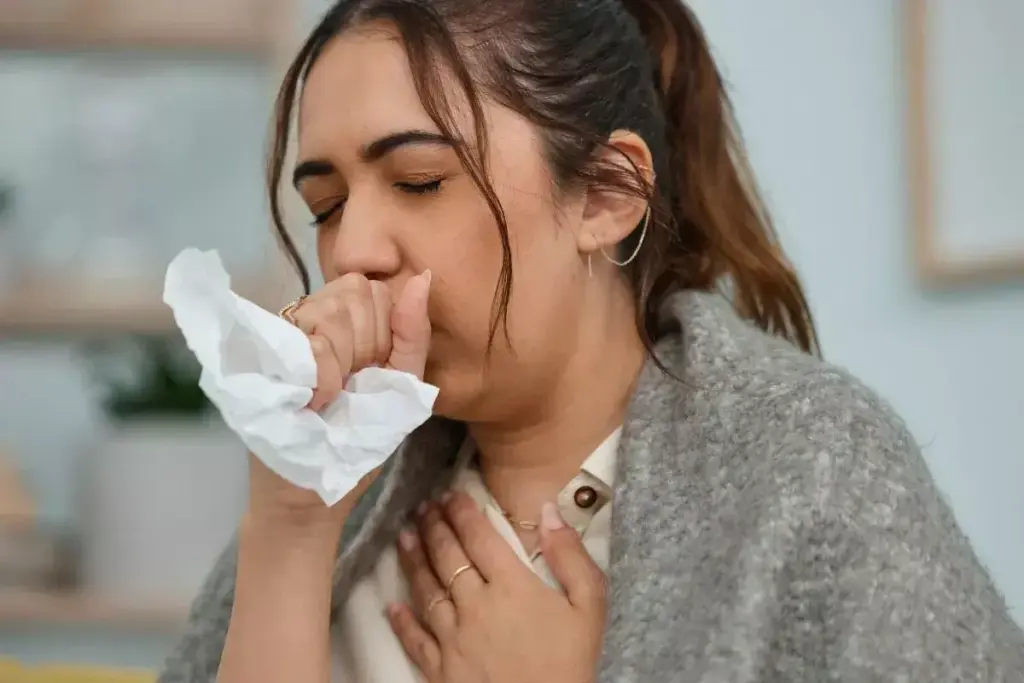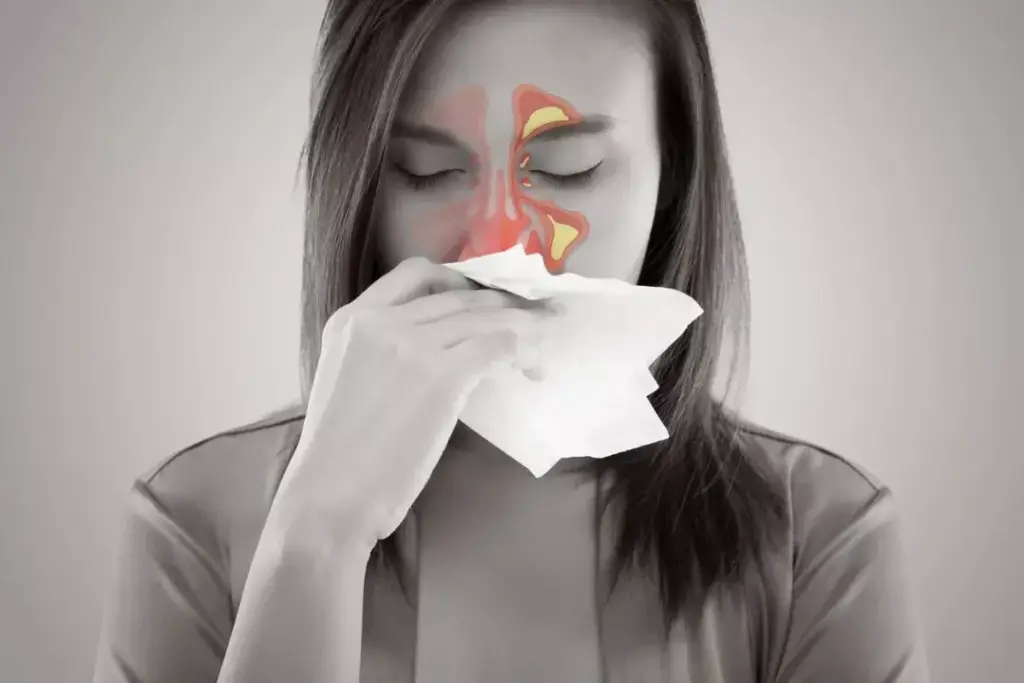
Sneezing is a vital reflex that helps protect us from irritants and pathogens. It’s our body’s first defense when we’re sick.
Sneeze When Sick is a vital involuntary reflex that serves as the body’s first line of defense against irritants, pathogens, and foreign substances when sick.
Molekule says sneezing is our body’s way to react to dirt, pollen, or dust. When we have a cold or flu, our immune system fights hard. It tries to get rid of harmful stuff from our airways.
Learning about sneezing helps us see how our body keeps us safe. Sneezing is more than just a sudden burst of air; it’s a sophisticated defense mechanism refined over millions of years of evolution.
Key Takeaways
- Sneezing is a natural defense mechanism that helps remove infectious particles and irritants from the body.
- The immune system actively works to protect the body by expelling harmful pathogens.
- Sneezing is a vital involuntary reflex that serves as the body’s first line of defense.
- Foreign bodies like dirt, pollen, or dust can irritate the nose and mucous membranes, triggering a sneeze.
- Understanding sneezing can help appreciate the body’s complex mechanisms to stay healthy.
The Science Behind Sneezing
Sneezing is a cool way our body fights off irritants. When dust, pollen, or viruses get into our noses, they upset the mucus membranes. This makes our body want to get rid of them.
What Happens in Your Body During a Sneeze
Many parts of our body work together when we sneeze. The irritation in our noses sends signals to our brain. The brain then tells our muscles to act, like those in our chest and throat.
This action makes us suddenly blow out air, saliva, and mucus. Histamines play a big role too. They are released when viruses attack our nasal cells. This irritates our membranes and makes us sneeze, helping to get rid of the invaders.
The Powerful Mechanics of a Sneeze
A sneeze is a strong event that quickly pushes air and mucus out of our lungs. This air can move at speeds of up to 100 miles per hour. It’s our body’s way of kicking out irritants from our noses.
| Aspect of Sneeze | Description | Significance |
| Nerve Stimulation | Nerve endings in the nasal mucosa are stimulated by irritants. | Triggers the sneeze reflex by sending signals to the brain stem. |
| Muscle Coordination | The brain stem coordinates various muscles to facilitate sneezing. | Results in the sudden release of air, saliva, and mucus. |
| Histamine Release | The immune system releases histamines in response to pathogens. | Irritates mucous membranes, making the sneeze reflex stronger. |
Learning about sneezing helps us understand how our body fights off sickness and irritants. It shows how different parts of our body work together to protect us.
Why Do We Sneeze When Sick?
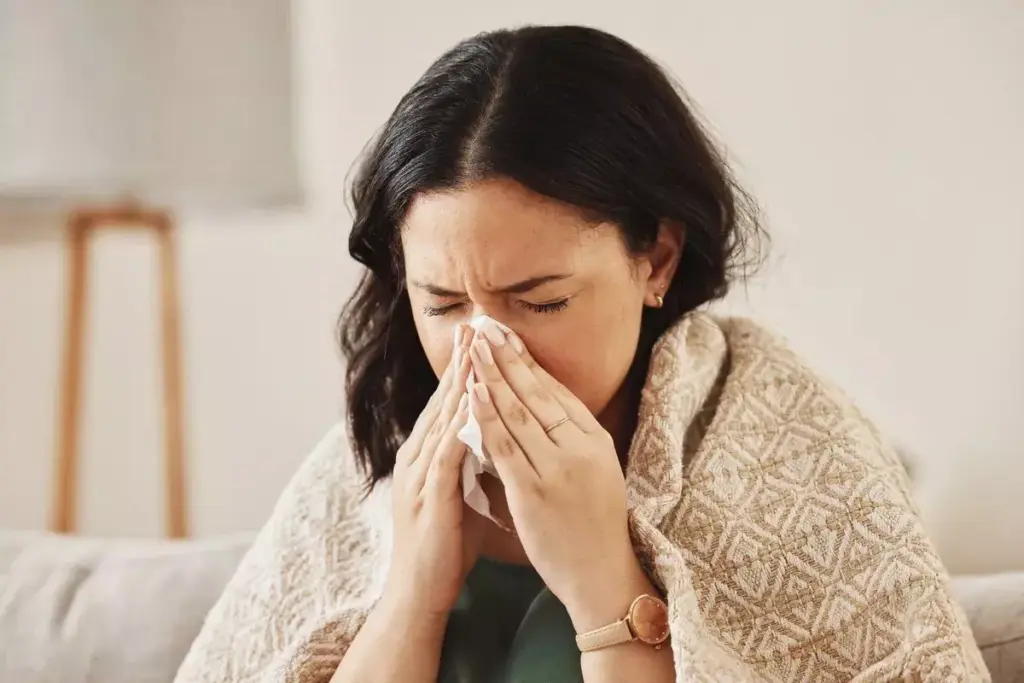
When we’re sick, sneezing happens a lot. But why does it? Sneezing helps get rid of viruses and lowers the amount of bad stuff in our body. Recent studies show that sneezing is key in getting rid of germs. It’s also why keeping clean is so important when we’re not feeling well.
Viral Invasion and Immune Response
When a virus gets into our body, our immune system kicks in. It releases chemicals to fight off the virus. Histamines are among these chemicals and start the sneeze reflex.
Sneezing is how our body gets rid of the virus. It’s a way to keep us healthy.
Histamines and the Sneeze Reflex
Histamines are chemicals that help our body react to invaders. They cause sneezing by making our nasal passages react. This shows how our immune system and sneezing are connected.
Increased Frequency During Illness
When we’re sick, we sneeze more often. Our body is trying to get rid of the virus. Sneezing is a way to push out the bad stuff and help us feel better.
| Mechanism | Description | Role in Illness |
| Viral Invasion | Viruses enter the body and trigger an immune response | Initiates sneezing as a defense mechanism |
| Histamine Release | Histamines are released in response to viral particles | Triggers the sneeze reflex |
| Sneeze Reflex | A sudden, forceful expulsion of air from the lungs | Expels pathogens and irritants from the nasal passages |
Understanding sneezing when we’re sick helps us see how our body fights off illness. It shows how important histamines and sneezing are in our recovery.
Conclusion: The Evolutionary Purpose of Sneezing
Sneezing is a vital defense mechanism that has evolved over 600 million years. It protects the body from pathogens and irritants. When we ask “why does the body sneeze,” we see a complex process to expel invaders from our nasal passages.
The purpose of sneezing is clear when we understand it’s a key part of our immune response. It’s triggered by viruses like rhinovirus. Research from the University of Pennsylvania shows sneezing resets cilia cells in the nose. This restores their protective function.
This highlights sneezing’s role in maintaining respiratory health. By expelling pathogens at high speeds, sneezing reduces viral load in the nasal passages and environment. It serves as a first-line defense against infection.
Understanding sneezing’s importance can guide our hygiene practices. Covering our mouth and nose when we sneeze and maintaining good hand hygiene are key. For more on sneezing’s science, visit AirDog USA’s article on why we sneeze when we have a cold. By respecting this natural defense, we can protect ourselves and others from respiratory infections.
FAQ
What is the purpose of a sneeze?
A sneeze is a powerful, involuntary respiratory reflex designed to protect the body by clearing the upper airway of potential threats. Its primary purpose is to forcefully expel irritants, such as dust, pollen, smoke, or microscopic pathogens, from the nasal cavity. By moving air out at high speeds, the body ensures that these particles do not travel deeper into the lungs where they could cause more significant irritation or infection.
Why do we sneeze when we’re sick?
When you are sick with a cold or the flu, viruses target and infect the mucous membranes lining your nasal passages. This infection causes the tissues to become inflamed and produce an excess of mucus as part of the immune response. The combination of viral particles, inflammatory chemicals, and thick mucus creates a constant state of irritation, which the brain attempts to resolve by triggering frequent sneezes.
What happens in the body during a sneeze?
A sneeze is a highly coordinated event involving several muscle groups and the nervous system. It begins when the trigeminal nerve detects an irritant and signals the sneeze center in the brainstem. In response, you take a deep breath, the vocal cords close, and the chest muscles contract to build up immense pressure. Finally, the vocal cords snap open, and the air is blasted out through the nose and mouth at high velocity.
How does sneezing help when we’re sick?
During an illness, sneezing acts as a mechanical cleaning service for the respiratory tract. It helps move infected mucus and viral loads out of the body, which can reduce the concentration of the pathogen within the nasal cavity. While it may feel like a nuisance, this process helps clear the area where your immune system is fighting the virus, potentially aiding in a recovery by preventing the buildup of stagnant, infected fluid.
Why does sneezing increase when we’re sick?
Sneezing increases during illness because the nasal lining becomes hypersensitive due to inflammation. The presence of a virus triggers the release of inflammatory mediators that lower the threshold of the nerves in the nose. This means that even a tiny amount of mucus or a slight change in air temperature, which normally would not be an issue, is perceived as a major irritant, leading to the rapid-fire sneezing fits associated with the common cold.
What is the role of histamines in sneezing?
Histamines are chemicals released by mast cells in the immune system when they detect an invader like a virus or an allergen. Once released, histamines bind to receptors in the nose, causing the blood vessels to leak fluid and the tissues to swell. This chemical reaction directly stimulates the sensory nerve endings in the nasal passage, sending the specific signal to the brain that initiates the sneezing reflex.
How can we prevent the spread of infection when sneezing?
Because a single sneeze can propel thousands of microscopic, virus-laden droplets into the air, prevention is key to stopping the spread of illness. The most effective method is to sneeze into a disposable tissue and immediately dispose of it, followed by washing your hands. If a tissue is not available, sneezing into the crook of your elbow is much safer than sneezing into your hands, as it prevents the virus from being transferred to surfaces like doorknobs or shared equipment.
Where do sneezes come from?
While the physical action happens in the nose and mouth, the command center for a sneeze is located in the medulla oblongata, a part of the brainstem. This area receives sensory input from the nose and orchestrates the complex sequence of muscle contractions required for the reflex. Therefore, a sneeze is not just a local reaction in the nose; it is a full-body response managed by the central nervous system to ensure the airway remains clear.
References
National Center for Biotechnology Information. Evidence-Based Medical Insight. Retrieved from https://www.ncbi.nlm.nih.gov/pmc/articles/PMC10291507/