


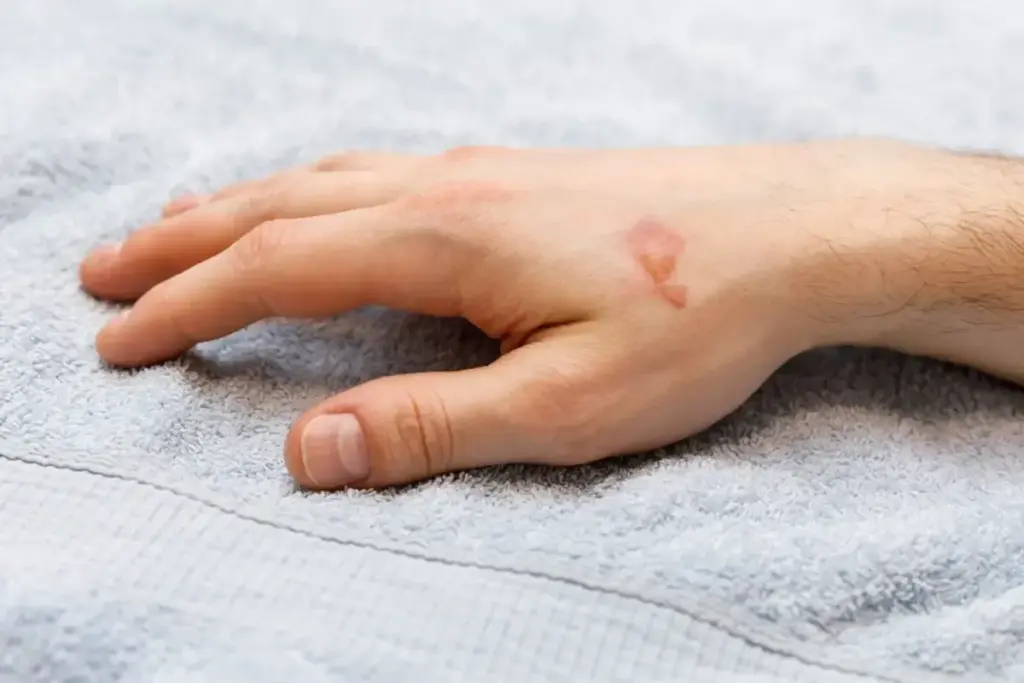
Seeing a blister on scar tissue can be scary, thinking you’re all healed. When a scar starts bubbling up weeks later, it’s a big worry. But, this is a normal part of skin healing.
After a wound heals, the new skin is very thin. The layer that connects the top skin to the deeper skin is not fully grown. This makes the skin very leaky, leading to blisters on scars.
At Liv Hospital, we use top medical skills and care to help you. Knowing why scar blistering happens helps protect your skin. This way, you can get the best healing results.
Key Takeaways
- New skin remains thin and fragile for several weeks after initial closure.
- Fluid accumulation occurs because the basal layer is not yet fully mature.
- It is common for these spots to break and reform during the remodeling phase.
- Proper protection and monitoring help prevent secondary infections.
- Professional medical guidance ensures your recovery stays on the right track.
Understanding Why Is My Healed Scar Blistering
Seeing blisters on healed scars can be puzzling and worrying. We must explore the reasons behind this. It’s important to look at common causes and biological factors to fully understand it.
Common Triggers for Blistering on Scar Tissue
Several things can cause blisters on scar tissue. Friction is a big one, as new skin is easily irritated. Extreme temperatures and allergic reactions can also lead to blisters.
New skin is more open to damage because it’s not fully healed. Research shows it’s 3-5 times more permeable than normal skin. This makes it easier for fluids to build up and cause blisters.
Biological Factors Behind Scar Bubbling Up
The buildup of fluid between skin layers is a main reason for blisters. New skin has a lot of water but is not very protective. This makes it more likely to get damaged.
| Biological Factor | Description | Impact on Scar Tissue |
| High Permeability | Skin’s increased permeability during healing | Increased risk of exudate accumulation |
| Weak Barrier Function | Compromised skin barrier during recovery | Higher susceptibility to irritation and damage |
| Exudate Accumulation | Fluid buildup between skin layers | Blister formation |
Knowing these biological factors helps us understand why scars blister. By identifying the causes, we can take steps to prevent and manage blisters on scars.
Managing and Treating a Blister on Scar Tissue
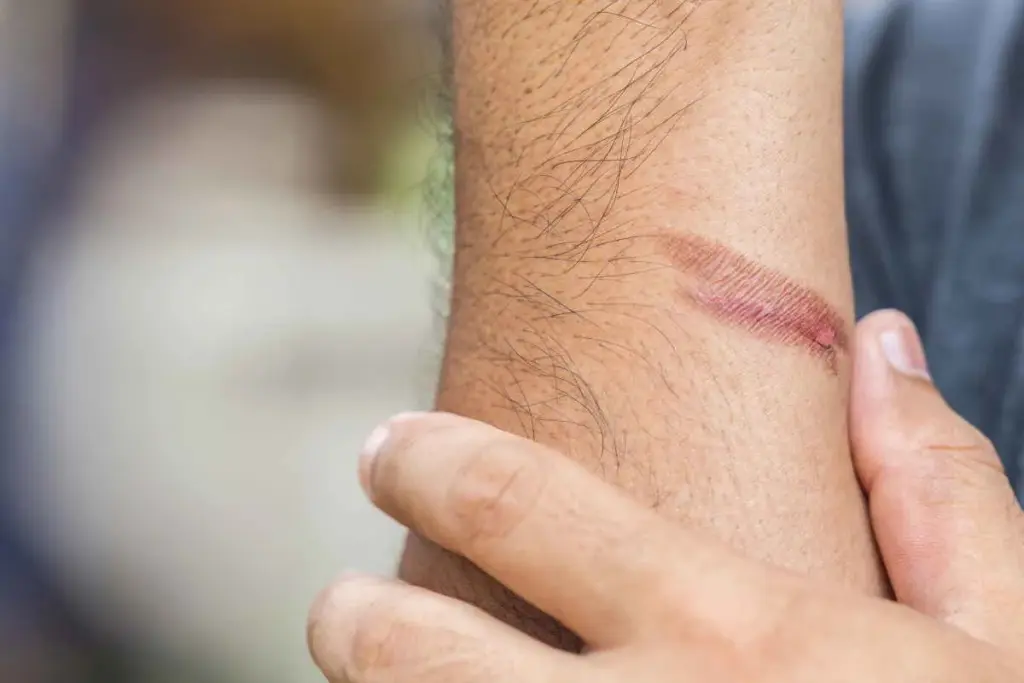
Dealing with blisters on scar tissue needs a careful plan to heal and ease pain. It’s about quick action, right wound care, and knowing when to see a doctor.
Immediate Care for Blistering Scars
Quick action is key to stop infection and help healing. Keeping the new skin clean is vital to avoid blisters. Wash the area with warm water and a mild soap.
Doctors say, “Maintaining cleanliness and moisturizing the skin are key steps in preventing blister formation and promoting a healthy recovery.”
Moisturizing helps keep the skin hydrated and strong. Using moist dressings helps wounds heal faster. Also, avoid tight clothes to prevent irritation.
When to Seek Professional Medical Advice
While you can handle many blisters on your own, some need a doctor’s help. Look for signs of infection like more redness, swelling, or pus. If the blister is big, hurts a lot, or doesn’t get better, see a doctor.
Experts say, “The key to effective scar management is early intervention and proper wound care.” Watch your scar and get medical help for unusual symptoms or a lasting blister.
Knowing why blisters form on scars and acting fast can help manage them. This way, you can keep your skin healthy and avoid more problems.
Conclusion
Blistering on healed scars, like those from stab wounds, can be a worry. Knowing the causes and taking good care can help. Keeping the skin clean and using moisturizers are key steps.
It’s also important to use moist dressings to stop blisters. This helps in healing scars well.
If you have blistering scars, it’s vital to know when to see a doctor. Good scar care can greatly improve healing and scar look. Options like removing stab wound scars might be available too.
By following these care tips and watching the healing closely, we can help scars heal better. This reduces the chance of more blistering problems.
FAQ
Why is my healed scar blistering even after several months?
Blistering on an old scar can occur from friction, irritation, sun exposure, or delayed hypersensitivity reactions, even long after the wound has healed.
What should I do if I notice a blood blister on scar tissue?
Keep it clean, avoid popping it, and monitor for signs of infection; consult a doctor if it’s large, painful, or repeatedly recurs.
Why does my scar look like it is bubbling up?
A “bubbling” appearance may result from fluid accumulation, small cysts, or localized inflammation under the scar.
Can blisters scar or leave permanent marks on the existing scar tissue?
Yes, trauma to scar tissue, including blisters, can cause thickening, pigmentation changes, or minor additional scarring.
How to get rid of blister scars that have already formed?
Treatment options include silicone sheets, laser therapy, microneedling, and topical scar-reducing creams; deep scars may require minor surgical revision.
Is it normal to see bleeding under scar tissue?
Occasional minor bleeding can occur from fragile scar vessels, but repeated or heavy bleeding should be evaluated by a healthcare professional.
What are the best options for stab wound scar removal?
Options include surgical revision, laser resurfacing, microneedling, and silicone therapy, with the choice depending on scar type, size, and location.
Reference
National Center for Biotechnology Information. Evidence-Based Medical Insight. Retrieved from https://pmc.ncbi.nlm.nih.gov/articles/PMC4458976/[1



 Departments
 Related Videos
 Our Doctors
 News
News






















