

Many people notice slight differences in their bodies. Testicular asymmetry is when testicles are not the same. This is normal and often seen during self-exams.
Experts at Medical News Today say these differences are usually okay. Finding variations in male biology is common. Learning about these helps us make better health choices.
Our team offers support and answers for those who are concerned. Verywell Health says small size or height differences are common. Having asymmetry is perfectly normal.
We help men keep their reproductive health in check. Most men have slightly uneven organs naturally. This helps prevent discomfort and keeps things moving smoothly.
It also helps with keeping the right temperature. Knowing this can boost confidence. Every body is unique.
We give clear anatomical insights to ease worries.
Key Takeaways
- Anatomical gaps are mostly harmless.
- Position changes represent normal function.
- High-quality care starts with knowledge.
- Regular checks ensure safety.
- Experts validate these physical traits.
- Professional advice maintains wellness.
Testicular Asymmetry Is Completely Normal
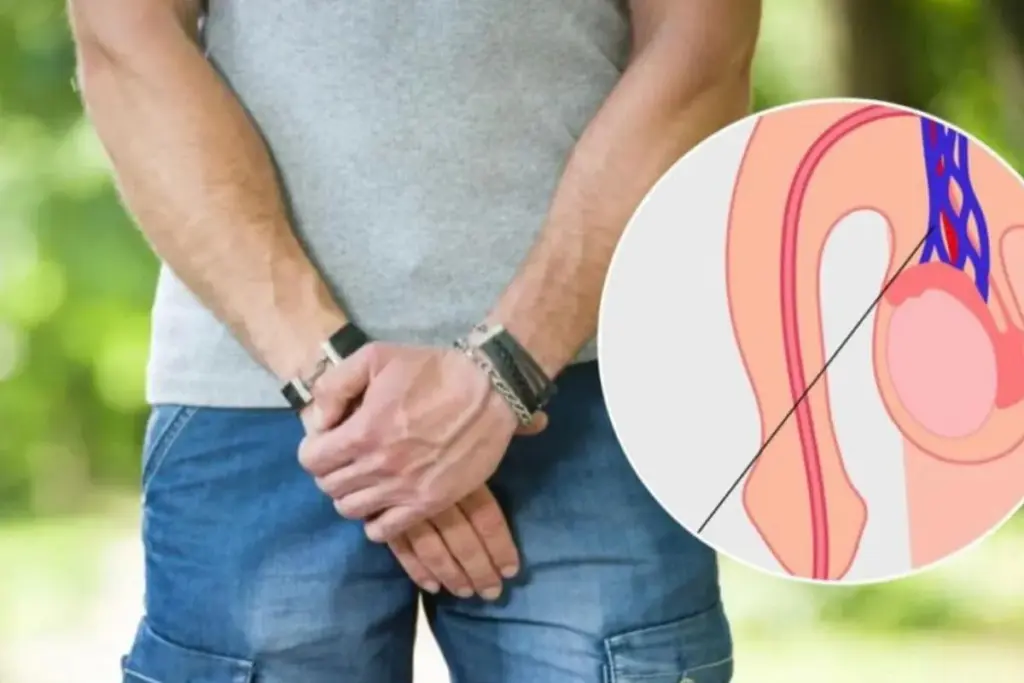
The human body is full of differences, and testicles are no different. They can vary in size and height, which is common. This variation might worry some men, but knowing what’s normal can ease their concerns.
How Common Is Uneven Testicle Position?
Research shows that uneven testicle position is common. Many men have some degree of testicular asymmetry. This can show up as size or height differences.
It’s reassuring to know that such variations are generally not a cause for concern. Most of the time, these differences are just part of being human.
Normal Size and Height Differences in Adult Males
Medical studies say the size difference between testicles is usually small. The right testicle is often a bit bigger than the left. Adult testicles are about 2 to 3 inches long and 1 inch wide, and they can be slightly different in size.
These size and height differences are common and functionally insignificant for most men. The reasons for these differences include anatomy and development.
Knowing that testicular asymmetry is normal can make men feel better about their bodies. It’s important to understand that what’s normal includes a range of variations. Being informed can help reduce worry.
Why Is One Testicle Higher Than the Other?

Understanding why one testicle is higher than the other involves looking at male anatomy closely. The position of testicles is shaped by several factors. These include vascular anatomy and how they develop in the womb.
We will dive into these factors to fully understand why testicles are not always symmetrical.
The Role of Vascular Anatomy
The way blood vessels are arranged affects where testicles sit. Medical News Today explains that the left spermatic vein goes to the renal vein. The right spermatic vein goes to the inferior vena cava. This difference in blood flow can influence testicle position.
The way veins drain blood is a major reason for testicle asymmetry. The left testicle tends to be lower because of its unique drainage path.
Which Testicle Hangs Lower?
Studies show that the left testicle usually hangs lower than the right. This is mainly due to the differences in blood flow, as we’ve discussed.
| Testicle | Typical Position | Venous Drainage |
| Left Testicle | Often lower | Drains into renal vein |
| Right Testicle | Often higher | Drains into inferior vena cava |
Embryological Development and Testicular Descent
How testicles develop in the womb also affects their final position. As they move down into the scrotum, various factors influence their placement. These include the attachment of the gubernaculum and hormonal effects.
The Functional Benefits of Asymmetrical Testicle Positioning
Testicles don’t always sit the same way. This is not just random. It helps keep them safe and healthy. We’ll look at how this helps with injury prevention, keeping cool, and making testosterone.
Protection Against Compression and Injury
One testicle being higher than the other helps prevent injury. It makes it less likely for both to get hurt at the same time.
This is key when you’re active or playing sports. It keeps one testicle from getting hit or squished too hard. This helps keep your reproductive health strong.
Heat Dissipation for Optimal Sperm Production
How testicles sit also helps with cooling down. This is important for making sperm. Sperm needs a cooler temperature than the rest of your body.
Studies from Verywell Health and Medical News Today show this cooling is key. It helps create the best environment for sperm to grow.
Impact on Testosterone Synthesis
Testosterone levels can also be affected by how testicles sit. While it’s not a direct link, healthy testicles help make testosterone.
| Aspect | Benefit of Asymmetry |
| Protection Against Injury | Reduces the risk of both testicles being injured simultaneously. |
| Heat Dissipation | Facilitates optimal temperature for sperm production. |
| Testosterone Synthesis | Supports overall testicular health, potentially influencing testosterone levels. |
We’ve talked about the good things about asymmetrical testicles. These include protection, keeping cool for sperm, and possibly helping with testosterone. This shows how special and important testicles are.
Understanding why testicles sit differently helps men take care of their bodies. It shows how vital reproductive health is.
Conclusion
We’ve looked into why one testicle might be higher than the other. It’s a common and normal part of being a man. Many adult males have one testicle that’s slightly higher than the other.
The way blood vessels are arranged and how testicles develop in the womb affect their position. Knowing this can help ease worries about testicular asymmetry.
Having one testicle higher than the other has its perks. It can protect against injury and help keep sperm healthy. It might even help with making testosterone.
So, is one testicle higher than the other? Yes, and it’s a natural part of being male. This variation is not only normal but also has benefits. By understanding our bodies, we can feel more at ease and appreciate our unique design.
In short, testicular asymmetry is a normal and beneficial condition. Knowing this can help us better understand our health and bodies.
FAQ
I noticed one testicle higher than other, is this normal?
Yes, it’s normal to see one testicle higher than the other. This is a common variation in how the body develops. It means your body is working just right.
Hy is one testicle higher than the other?
The reason for this difference is the body’s structure. The left spermatic vein is longer, draining into the renal vein. The right drains into the vena cava. This makes the left side hang lower, making the right appear higher.
D, o both testicles have the same size?
No, they don’t have to be the same size. Most men have testicles of different sizes. A slight difference is normal, as long as there are no lumps.
Hy is one ball higher than the other?
The staggered height of testicles is a natural design. It prevents them from colliding or getting compressed. This protects them from injury.
W, hich testicle is more important?
Both testicles are equally important. They both help with testosterone and sperm production. Whether one is higher, they work together for your health.
Hy is one of my testicles higher than the other?
The reason is often how they develop in the womb. Each testicle descends at its own pace. This results in one being higher, which helps with heat and sperm health.
Hich testical is bigger?
The right testicle is often slightly larger. But, having the left one larger is also normal. It varies from person to person.
I, s one testicle higher than the other for everyone?
Most adult males have some asymmetry. If you notice a difference, you’re in the majority. Regular self-exams help you notice any changes.
Hy is one of my balls higher than the other?
The cremaster muscle is usually to blame. It pulls the testicles closer for warmth or protection. This can make one appear higher at times.
Is it a problem if I have an estis different size?
Having different-sized testicles is usually not a problem. As long as it’s been this way and there’s no pain or swelling, it’s just part of your body. If you’re worried, we can check it out for you.
References
National Center for Biotechnology Information. Evidence-Based Medical Insight. Retrieved from https://pubmed.ncbi.nlm.nih.gov/29461677/



 Departments
 Related Videos
 Our Doctors
 News
News