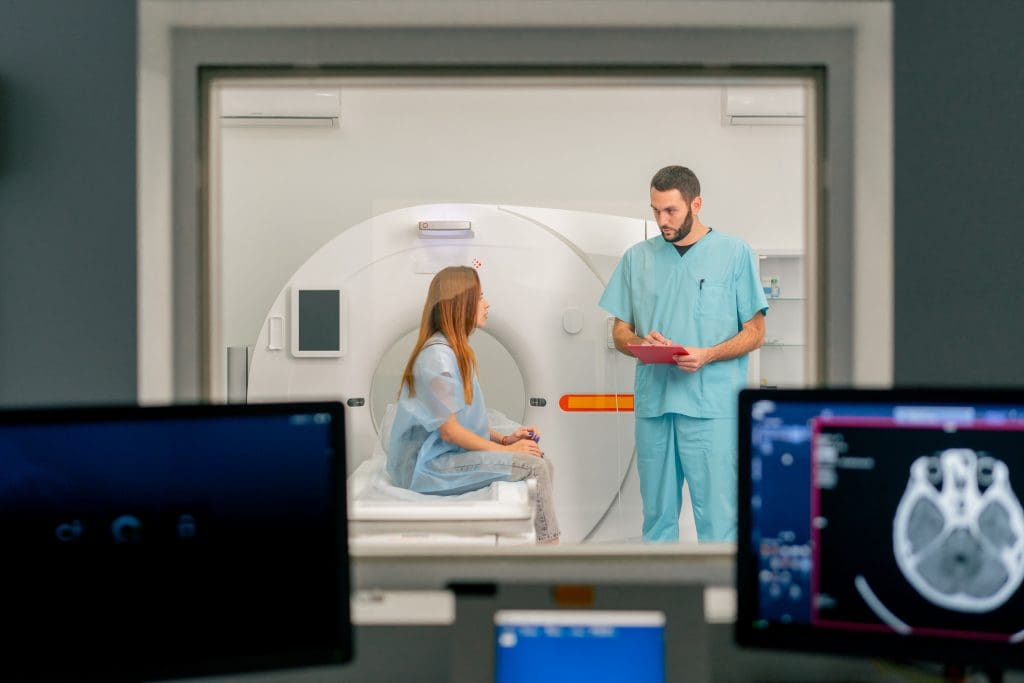
PET scans help us see how well the heart’s blood flows and if it’s working right. They show us where the heart might not be getting enough blood or has scars. This helps us figure out the best treatment for heart issues. Many patients wonder, “Why would a cardiologist order a PET scan? since it’s often recommended when detailed imaging of blood flow and heart function is needed.
Heart disease is a big problem worldwide. It’s important to diagnose it well for good treatment. A cardiologist may order a PET scan to check the heart’s function and find problems.
A cardiac stress test or nuclear stress test is often used with a PET scan. Together, they help find coronary artery disease and other heart problems. This way, we get a full picture of a patient’s heart health.
Key Takeaways
- A PET scan helps cardiologists assess heart function and blood flow.
- Cardiologists use PET scans to diagnose and manage heart conditions.
- A cardiac stress test or nuclear stress test is often used with a PET scan.
- PET scans provide valuable information about the heart’s viability and function.
- Combining diagnostic tools helps us understand a patient’s heart health better.
Understanding PET Scans in Cardiac Diagnostics
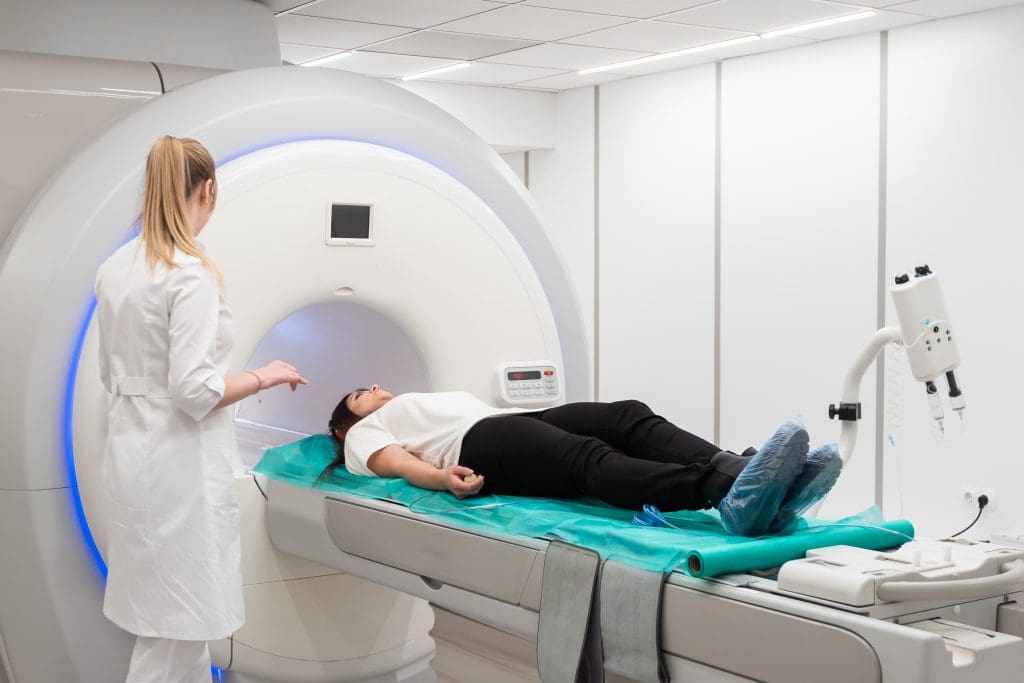
PET imaging is key in checking the heart’s health. It helps see how well the heart works and how blood flows. This method is vital in today’s cardiology.
What is a Cardiac PET Scan?
A cardiac PET scan is a test that looks at the heart without surgery. It uses a special kind of imaging called positron emission tomography (PET). A tiny amount of radioactive tracer is given, which the heart muscle takes in.
The PET scanner then picks up these signals. It makes clear pictures of the heart. This scan shows how the heart’s blood flows, works, and its health.
How PET Differs from Other Cardiac Imaging Tests
PET scans are different from tests like echocardiography, CT angiography, or MRI. These tests show the heart’s structure. But PET scans look at the heart’s activity and blood flow.
PET scans are great because they give exact numbers on blood flow and how well the heart works. This is very important for finding and treating heart disease.
| Imaging Test | Primary Use | Key Benefits |
| Cardiac PET Scan | Assessing myocardial blood flow and viability | Quantitative data on blood flow, high sensitivity for detecting CAD |
| Echocardiography | Evaluating heart structure and function | Non-invasive, real-time imaging, widely available |
| CT Angiography | Visualizing coronary arteries and detecting blockages | High-resolution images of coronary anatomy |
Knowing the good and bad of each test helps doctors pick the best one for each patient.
Common Cardiac Conditions Diagnosed with PET Scans
PET scans are key in cardiology, helping spot and manage heart issues. They check the heart’s structure and function. This gives us insights into heart disease.
PET scans can find many heart problems, from common ones like coronary artery disease to rare ones like cardiac sarcoidosis. Knowing what PET scans can do helps us see their importance in heart care today.
Coronary Artery Disease Assessment
Coronary artery disease (CAD) is a big problem that PET scans help find. CAD happens when heart arteries get narrow or blocked. PET scans show how well blood flows to the heart muscle.
For CAD scans, a tiny amount of radioactive tracer is given. It shows where blood flow is low, showing CAD. This helps us decide the best treatment, like medicine or surgery.
| Condition | PET Scan Findings | Clinical Implication |
| Coronary Artery Disease | Reduced myocardial perfusion | Indicates possible ischemia or infarction |
| Myocardial Viability | Presence of viable myocardium | Shows possible benefit from revascularization |
| Cardiac Sarcoidosis | Inflammation and scarring in the heart | Helps guide immunosuppressive therapy |
Myocardial Viability Evaluation
Myocardial viability means living heart muscle cells are present. This is key for patients with CAD or heart failure. PET scans find living heart muscle even when it’s not working well.
By finding living heart muscle, we know who might benefit from heart surgeries. This helps us make better treatment plans, improving patient results.
Cardiac Sarcoidosis and Inflammation
Cardiac sarcoidosis is rare, with inflammation and scarring in the heart. PET scans help find these problems.
PET scans are key in managing cardiac sarcoidosis. They show how much disease is present. This helps us choose the right treatment, like medicines, for each patient.
In summary, PET scans are essential in diagnosing and treating heart conditions. They give detailed info on blood flow, muscle viability, and inflammation. This makes them a vital tool in cardiology today.
Nuclear Stress Tests: A Detailed Look
A nuclear stress test is a high-tech way to check how well the heart works when it’s under stress. It’s key for spotting and treating heart problems. It shows how the heart performs when it’s under strain.
What is a Nuclear Stress Test?
A nuclear stress test, or myocardial perfusion imaging, uses a tiny bit of radioactive tracer to see the heart’s blood flow. We put this tracer into the blood, and it shows up in the heart muscle based on blood flow. Then, a special camera takes pictures of the heart at rest and when it’s stressed, usually through exercise or medicine.
This test is very important. It tells us about the heart’s health, like where blood flow is low, scar tissue is, or if there are blockages in the heart’s arteries. This info is key for finding heart disease and knowing the risk of future heart problems.
Types of Nuclear Cardiac Stress Tests
There are many kinds of nuclear cardiac stress tests, each with its own use and benefits. Here are a few:
- Nuclear Stress Test with Exercise: This test makes you exercise, like on a treadmill, to stress your heart.
- Pharmacological Nuclear Stress Test: If you can’t exercise, we use medicine to make your heart work hard like it would during exercise.
- Stress Test with Dye: This test uses a radioactive tracer (dye) to see the heart’s blood flow when it’s stressed.
We pick the best test for you based on your health, medical history, and what we need to check. Knowing about these tests helps us choose the right one for you.
The Nuclear Stress Test Procedure Explained
The nuclear stress test procedure has several steps. It helps doctors check your heart health. This test is key for spotting heart disease and other heart issues.
Pre-Test Preparations
Before the test, you need to prepare. We recommend not drinking caffeine or taking certain meds for a while. This is to avoid messing up the test results. Wear comfy clothes and shoes ready for exercise.
Also, tell your doctor about any health issues, allergies, or worries. This keeps you safe during the test.
During the Test: What to Expect
During the test, you’ll walk on a treadmill or bike. Our medical team will watch your heart rate, blood pressure, and ECG. This is to see how your heart reacts.
A special dye is given to see your heart’s images. These are taken when you’re resting and after exercising. This lets doctors compare your heart’s health.
Post-Test Care and Precautions
After the test, you might be told to drink lots of water. This helps get rid of the dye. You can usually go back to normal activities unless your doctor says not to.
Some people might feel a bit dizzy or tired. If you’re worried or feel odd, call your doctor right away.
As a medical expert says, “Taking good care after the test is key to avoid risks.” We stress following your doctor’s advice. This ensures your safety and the test’s accuracy.
Exercise vs. Pharmacological Stress Testing
Patients have two main choices for stress testing: exercise stress testing and pharmacological stress testing. The right choice depends on the patient’s health, how mobile they are, and their heart condition.
Treadmill Exercise Protocols
Exercise stress testing is often done on a treadmill. It checks how well the heart works when stressed physically. The treadmill stress test starts slowly but gets harder to increase heart rate and blood pressure.
- The Bruce Protocol is a common treadmill exercise plan. It increases the workout’s intensity in a set way.
- For a gentler start, the Modified Bruce Protocol might be used.
Medication-Induced Stress Testing
Pharmacological stress testing is great for those who can’t exercise. It uses medicines to mimic exercise’s heart effects.
This test is good for:
- People with mobility problems or orthopedic issues.
- Those who can’t get their heart rate up enough with exercise.
- Individuals with certain neurological conditions that make exercising hard.
Knowing the differences between exercise and medication stress tests helps doctors pick the best test for each patient. This ensures a thorough and accurate heart check-up.
The Nuclear Test Ban: Safety Regulations in Cardiac Imaging
After the nuclear test ban, the medical world set up strict safety rules for nuclear medicine. The main goal is to keep radiation levels low during tests.
Radiation Safety Protocols in Nuclear Medicine
Keeping patients safe from radiation is our top priority in nuclear medicine. We follow strict rules to limit radiation exposure. This means using the latest technology and making sure all equipment is just right.
The rules include:
- Regular maintenance and calibration of imaging equipment
- Using the least amount of radiopharmaceuticals needed
- Training staff on how to stay safe from radiation
Minimizing Exposure in Diagnostic Testing
It’s vital to keep radiation exposure low for patient safety. We use smart imaging settings and choose other tests when we can.
Handling radiopharmaceuticals right is key. Our team is trained to use these substances safely and effectively.
Here’s some data on how we keep radiation exposure low in cardiac imaging:
| Imaging Test | Average Radiation Dose (mSv) | Minimized Dose Protocol |
| Standard PET Scan | 5-10 | Low-dose PET |
| Nuclear Stress Test | 10-20 | Optimized stress protocol |
Thanks to these safety steps, we greatly reduce the risks of radiation in cardiac imaging.
Interpreting Cardiac PET Scan Results
Cardiac PET scan results are key to patient care and treatment. It’s important to know what these results mean. We look at many factors to understand them.
Normal vs. Abnormal Findings
First, we check if the scan shows normal or abnormal results. Normal scans mean the heart gets enough blood flow at rest and under stress. Abnormal scans might show reduced blood flow, hinting at heart problems.
Key signs of abnormal findings include:
- Reduced blood flow in heart areas
- Scar tissue presence
- Heart function issues
Understanding Perfusion Defects
Perfusion defects mean some heart muscle doesn’t get enough blood. These can be reversible or fixed. Reversible defects point to ischemia, where the heart muscle lacks oxygen and nutrients, usually under stress. Fixed defects show scar tissue from a heart attack.
Quantitative Analysis in Modern PET Imaging
Modern PET imaging uses quantitative analysis for precise heart function and perfusion measurements. It looks at things like myocardial blood flow and coronary flow reserve. These details help understand the heart’s health.
| Metric | Description | Normal Value |
| Myocardial Blood Flow (MBF) | Measures blood flow to the heart muscle | > 2.5 mL/min/g |
| Coronary Flow Reserve (CFR) | Assesses the heart’s ability to increase blood flow during stress | > 2.0 |
By using both qualitative and quantitative analysis, we get a full picture of cardiac PET scan results. This helps us make accurate diagnoses and effective treatment plans.
Benefits of PET Scans Over Traditional Nuclear Tests
PET scans are becoming more popular in heart health checks. They give detailed heart assessments with less radiation. This makes PET scans a better choice than old nuclear tests.
Superior Diagnostic Accuracy
PET scans are known for their superior diagnostic accuracy. They show the heart clearly, helping doctors spot problems that other tests miss. This is key for making good treatment plans.
With PET scans, doctors can see coronary artery disease and heart health better. This means patients get better care that’s right for them.
Reduced Radiation Exposure
PET scans use less radiation than old nuclear tests. This is great for patients who need many tests or are worried about radiation. It makes PET scans a safer choice.
We focus on keeping patients safe. PET scans fit our goal of top-notch healthcare with less risk.
Comprehensive Cardiac Assessment Capabilities
PET scans do a comprehensive cardiac assessment. They check the heart’s structure and function. This includes looking at blood flow, heart health, and metabolism.
Using PET scans, we can understand our patients’ heart health better. This helps us tailor treatments for better health results.
Risks and Side Effects of Nuclear Cardiac Testing
Nuclear cardiac testing is important for diagnosing heart issues. But, it also has risks and side effects. It’s key for patients and doctors to know about these.
Radiation Exposure Concerns
Radiation is a big worry with these tests. They use radioactive tracers to see the heart. Even though the dose is small, there’s a risk, mainly for young people and those tested often.
The dose from a stress test can be 9 to 21 millisieverts. This is more than a chest X-ray, which is about 0.1 millisievert.
| Test Type | Effective Dose (mSv) |
| Nuclear Stress Test | 9-21 |
| Chest X-ray | 0.1 |
| Annual Background Radiation | 2.4 |
Potential Allergic Reactions to Tracers
Allergic reactions to the tracers are another risk. These can be mild or severe. Symptoms include hives, itching, and swelling.
We check for allergies before using the tracer. We also watch patients closely during and after the test for any bad reactions.
Cardiovascular Risks During Stress Testing
Stress testing, part of some tests, has its own risks. These include chest pain, heart attack, and arrhythmias. These are rare but can happen more often in those with severe heart disease.
We check patients before stress testing to find those at higher risk. We make sure the test is done in a safe place with the right equipment ready.
Knowing these risks helps us take steps to reduce side effects. This way, we can get the most from these tests while keeping patients safe.
Patient Experience: What to Expect
Knowing what to expect during a nuclear stress test can help ease your anxiety. We’re here to guide you through it all. We want you to feel informed and comfortable every step of the way.
How Long Does a Nuclear Stress Test Take?
A nuclear stress test usually takes 3 to 4 hours. But the actual test time is shorter. The process includes preparation, the test itself, and imaging.
- Preparation: You’ll get a radioactive tracer about 30 minutes to 1 hour before the test.
- Stress Test: The stress test itself lasts around 7-10 minutes.
- Imaging: After the test, you’ll wait 30-60 minutes for imaging.
How Long Are You Radioactive After Testing?
After the test, your body will emit small amounts of radiation for a short time. The tracer used is generally safe and decays quickly.
Here are some key points to consider:
- The tracer is usually gone from your body within a few hours.
- You might be told to drink lots of fluids to help get rid of the tracer.
- While the radiation is minimal, you might be advised to avoid close contact with pregnant women and young children for a short time.
Managing Anxiety During the Procedure
It’s normal to feel anxious before a nuclear stress test. Here are some tips to help manage your anxiety:
- Breathing Exercises: Try deep breathing exercises to calm your nerves.
- Ask Questions: Don’t hesitate to ask your healthcare provider about any concerns you have.
- Support System: Bring a friend or family member with you for support.
By understanding the process and what to expect, you can reduce your anxiety. Our team is dedicated to providing you with the care and support you need throughout the entire process.
Who Should Consider a Cardiac PET Scan?
A cardiac PET scan is great for people with certain risk factors or conditions. It gives important info that helps doctors decide on treatment.
High-Risk Patient Profiles
Those at high risk for heart disease can really benefit from a cardiac PET scan. We look at people with heart disease, high blood pressure, diabetes, or other risk factors. This scan helps figure out how bad the heart disease is and what to do next.
Key characteristics of high-risk patients include:
- A family history of heart disease
- Previous heart attacks or coronary interventions
- High levels of bad cholesterol (LDL)
- Low levels of good cholesterol (HDL)
- Smoking history
When Other Tests Are Inconclusive
Other tests might not give clear answers sometimes. That’s when a cardiac PET scan can help. We suggest it when other tests, like stress echocardiography, don’t work or aren’t clear.
The advantages of cardiac PET scans in these situations include:
- Higher sensitivity in detecting coronary artery disease
- Better image quality in obese patients
- The ability to assess myocardial viability
Special Populations
Some groups really benefit from cardiac PET scans. These include obese, elderly, and diabetic patients. For them, this scan gives more accurate info than other tests.
For obese patients, the scan works better because it can see through fatty tissue better than other tests.
Elderly patients get clear images, even if they can’t move much.
Diabetic patients are at higher heart disease risk. The scan gives detailed info on heart function and disease.
Advances in Cardiac PET Technology
Cardiac PET technology is getting better at diagnosing heart issues. New innovations are making heart scans more accurate and efficient. These changes are improving how doctors care for patients.
Hybrid PET/CT and PET/MRI Systems
PET technology is now combined with CT and MRI. This creates hybrid systems that show both the heart’s function and its structure. This gives doctors a clearer picture of heart problems.
Hybrid PET/CT systems are great for spotting coronary artery disease. They show both the heart’s shape and how it works. PET/MRI systems are better at showing soft tissues. This helps doctors see if the heart is working right and if there’s inflammation.
| Feature | PET/CT | PET/MRI |
| Anatomical Information | High-resolution CT images | Excellent soft tissue characterization with MRI |
| Functional Information | PET provides metabolic and functional data | |
| Radiation Exposure | Lower dose compared to traditional PET/CT | No radiation from MRI component |
New Radiotracer Developments
New radiotracers are making cardiac PET even better. Fluorodeoxyglucose (FDG) is used to check if the heart is working. But, new tracers are being made to spot specific heart problems.
“The future of cardiac PET lies in the development of novel radiotracers that can provide more specific and detailed information about cardiac diseases.”
A Cardiologist
Artificial Intelligence in Image Interpretation
Artificial intelligence (AI) is helping with cardiac PET image analysis. AI can analyze PET data, find patterns, and improve accuracy. This makes diagnosing heart diseases easier.
- AI-assisted image analysis can reduce reading time and improve consistency.
- Machine learning algorithms can help in predicting patient outcomes based on PET data.
- AI can aid in the early detection of cardiac diseases by identifying subtle changes in PET images.
As we keep using these new technologies, we’ll see even better heart disease diagnosis and treatment. The future of cardiac PET technology looks bright, with ongoing research and development.
Conclusion: The Evolving Role of PET Scans in Cardiology
PET scans have become key in cardiology, changing how we diagnose and manage heart issues. They give detailed insights into heart function and health. This makes them vital for cardiac care.
Cardiac PET scans are more accurate and safer than older tests. They also offer a full view of the heart. When used with CT and MRI, they become even more powerful tools for doctors.
The future of PET scans in cardiology is bright. New technologies and tracers are being developed. As we learn more about heart disease, PET scans will keep being a key part of our diagnostic tools. They help us give the best care to those with heart problems.
FAQ
What is a nuclear stress test?
A nuclear stress test is a test that uses a small amount of radioactive material. It checks how well the heart works when it’s stressed. This stress is usually caused by exercise or medicine.
How long does a nuclear stress test take?
Getting ready and recovering can take 3-4 hours. The actual test itself lasts about 1-2 hours.
What is the difference between a nuclear stress test and a treadmill stress test?
A nuclear stress test uses radioactive material to see the heart. A treadmill stress test just watches heart activity and blood pressure while exercising. The nuclear test gives more detailed heart function and blood flow info.
How long are you radioactive after a nuclear stress test?
The radioactive material leaves your body in a few hours to days, depending on the tracer. We take steps to keep your exposure low.
What are the risks associated with nuclear cardiac testing?
Risks include radiation exposure and allergic reactions to the tracer. There’s also a small chance of heart problems during the test.
Can a nuclear stress test cause a heart attack?
It’s rare, but there’s a small chance of heart problems, like a heart attack, during or after the test. We check patients carefully before the test to lower this risk.
What is a cardiac PET scan?
A cardiac PET scan is a test that uses a small amount of radioactive material. It checks the heart’s function, blood flow, and if it’s working well.
How does a cardiac PET scan differ from other cardiac imaging tests?
PET scans give detailed images of the heart’s function and blood flow. This helps doctors diagnose and assess heart conditions better, like coronary artery disease and how well the heart is working.
What are the benefits of PET scans over traditional nuclear tests?
PET scans are more accurate, use less radiation, and give a full view of the heart. They’re a key tool in cardiology.
Who should consider a cardiac PET scan?
People with high-risk profiles, unclear test results, or specific heart conditions like coronary artery disease or heart viability issues might benefit from a PET scan.
How do I prepare for a nuclear stress test?
We give detailed instructions on how to prepare. This includes avoiding certain medicines, fasting, and wearing comfy clothes. Following our advice is key for a safe and effective test.
Can I undergo a nuclear stress test if I have a pacemaker or other implanted devices?
Usually, having a pacemaker or other devices isn’t a problem for the test. But we need to know about them to make sure you’re safe.