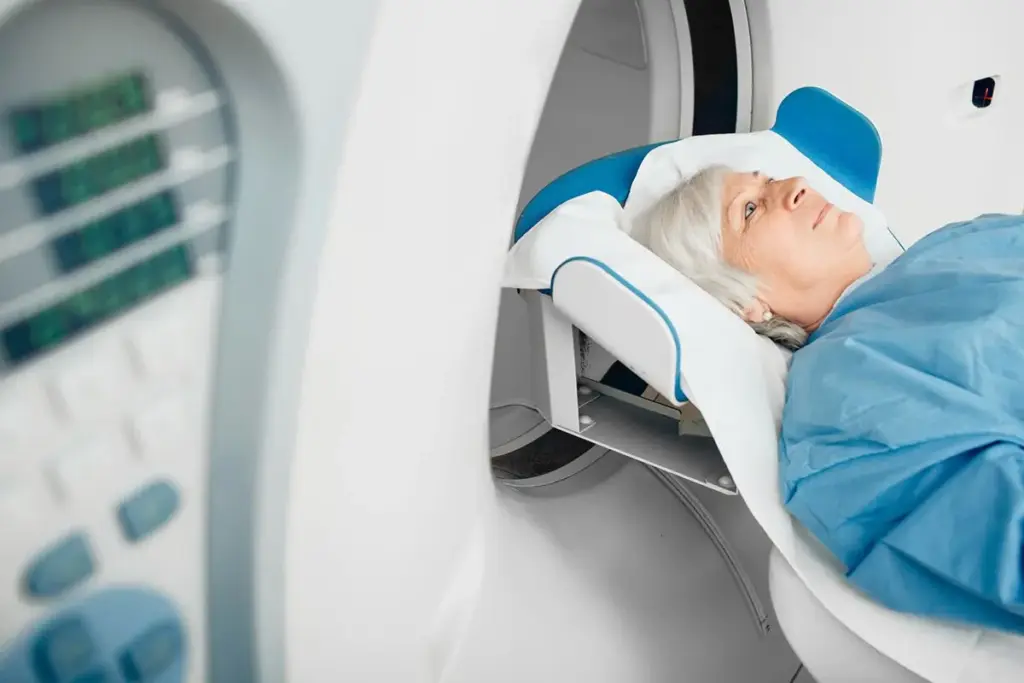
When doctors suggest an MRI, it’s usually to check for serious health issues. This includes things like neurological problems, tumors, or heart disease. It can be a worrying time for those affected.
MRIs are a key tool for doctors to find and track health problems. With 1.9 million new cancer cases in the U.S. in 2023, they’re more important than ever. They help doctors spot issues early and plan treatments effectively.
At our place, we make sure you understand your tests. Talking to an MRI doctor can help you understand your health better. Plus, MRIs are often safer than CT scans because they don’t use harmful radiation.
Key Takeaways
- MRIs are used to diagnose serious health conditions like tumors and neurological disorders.
- The precision of MRI scans is vital for early detection and treatment planning.
- Consulting with an MRI specialist can provide clarity on your diagnosis and treatment options.
- MRIs are generally considered safe and do not use ionizing radiation.
- Understanding your diagnostic process is key to making informed decisions about your care.
Understanding MRI: What It Is and How It Works
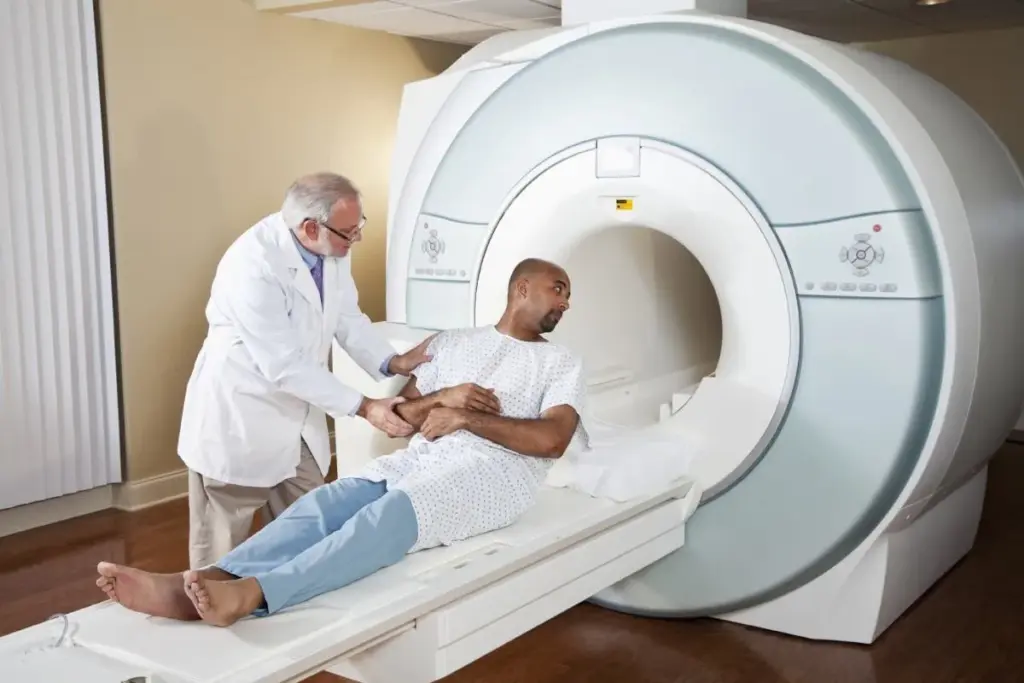
The MRI scan is a powerful tool in medicine. It uses magnetic fields and radio waves to show the body’s inside. It’s known for its clear images and ability to see soft tissues well.
The Science Behind Magnetic Resonance Imaging
MRI technology works on nuclear magnetic resonance. When you get an MRI, you sit in a strong magnetic field. This field lines up hydrogen nuclei in your body.
Then, radio waves disturb these nuclei. This creates signals that make detailed images.
The steps are:
- The patient sits in the MRI machine, a big cylinder.
- A strong magnetic field aligns the hydrogen nuclei.
- Radio waves are sent through the body, disturbing the nuclei and making signals.
- These signals are caught by the MRI machine and turned into detailed images.
Types of MRI Machines and Their Capabilities
There are many MRI machines, each with its own uses. The closed MRI machine gives clear images but can feel tight. Open MRI machines have more space but might not be as detailed.
What Makes MRI Different from Other Imaging Tests
MRI stands out because it shows soft tissues clearly without X-rays. This is great for looking at the brain, spine, and joints.
MRI and CT scans are different. CT scans use X-rays, while MRI uses magnetic fields and radio waves. MRI often gives better images of certain tissues.
Knowing the difference between MRI and CT scans is important. For soft tissue injuries, an MRI might be better than a CT scan because of its better contrast.
The Diagnostic Power of MRI Technology
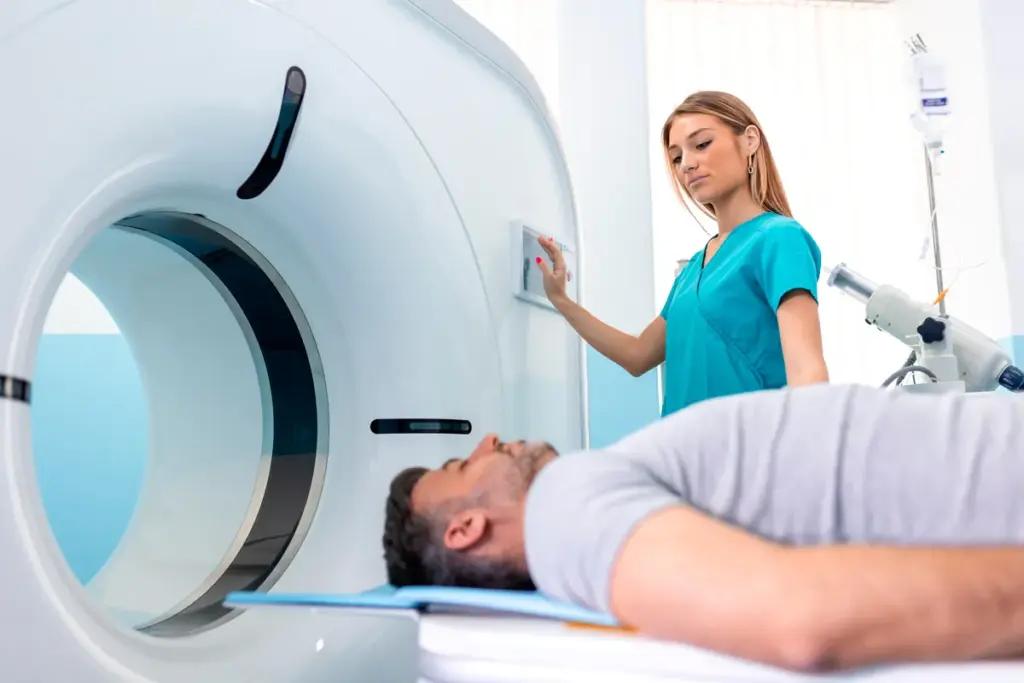
MRI is great at showing soft tissues, making it key in medical diagnosis. It’s essential for spotting soft tissue issues that other scans can’t see.
Detailed Soft Tissue Visualization
MRI shows exceptional detail of soft tissues. This is vital for diagnosing muscle, tendon, and organ problems. A study on NCBI shows MRI’s value in complex cases, like separating conjoined twins.
This detail helps doctors make precise diagnoses and plan treatments. For example, MRI can spot ligament tears or tendon injuries common in sports.
|
Soft Tissue |
MRI Capability |
Diagnostic Benefit |
|---|---|---|
|
Muscles |
Detailed visualization of muscle structure |
Accurate diagnosis of muscle tears |
|
Tendons |
Clear imaging of tendon integrity |
Identification of tendonitis or tears |
|
Organs |
High-resolution imaging of organ structure |
Detection of abnormalities or diseases |
3D Imaging Capabilities
MRI’s 3D imaging gives a full view of complex body parts. This is great for planning surgeries and understanding injuries or diseases.
“The use of 3D MRI reconstructions has significantly improved the planning and execution of surgical procedures, allowing for more precise interventions.” –
Medical Imaging Expert
With 3D imaging, doctors can see how different parts of the body relate. This is key for complex surgeries.
Functional MRI and Brain Activity Mapping
Functional MRI (fMRI) tracks brain activity by looking at blood flow changes. It’s very useful for brain diagnostics and research.
fMRI lets doctors map brain functions and find areas hit by conditions like stroke or tumors. This info is key for making treatment plans.
For instance, fMRI helps surgeons plan brain surgeries by pinpointing important brain areas. This reduces the chance of problems after surgery.
Common Medical Reasons for Ordering an MRI
Doctors often choose MRI scans to diagnose complex health issues. MRI technology gives detailed images of the body’s internal parts. This helps doctors understand and treat various health problems.
Suspected Tissue or Organ Damage
Doctors order MRIs to check for tissue or organ damage. This damage can come from injury, infection, or disease. For example, after a sports injury, an MRI can show how bad the damage is.
It’s also used to check for organ damage from medical conditions. An MRI can give insights into the condition of the affected organ.
MRI is very helpful in seeing soft tissue injuries. These injuries are hard to spot on X-rays or CT scans. MRI’s clear images help doctors plan the best treatment.
Monitoring Known Medical Conditions
Another reason for an MRI is to keep an eye on known medical conditions. For people with conditions like multiple sclerosis, MRI scans track the disease’s progress. This is key for adjusting treatment plans.
Regular MRI scans also check how well treatments for cancer are working. Doctors can then decide if they should keep or change the treatment.
Screening for Specific Diseases
MRI is used to screen for specific diseases, too. It’s great for finding certain cancers, like breast cancer in high-risk patients. It also spots vascular diseases by showing detailed images of blood vessels.
Using MRI for screening can catch diseases early. This makes them easier to treat. It can greatly improve patient outcomes and save lives.
Why Would a Doctor Order an MRI of the Brain?
When you start feeling strange in your head, a doctor might suggest an MRI. This test shows the brain’s details. It helps doctors find and track many health issues.
Neurological Symptoms Requiring Investigation
Feeling dizzy, having headaches, or numb limbs can lead to an MRI. These signs might mean something serious is going on. An MRI can spot problems in the brain.
An MRI can find issues like lesions or swelling. Knowing this helps doctors create a good treatment plan.
Brain Tumor Detection and Monitoring
Another big reason for an MRI is to find and watch brain tumors. Tumors can harm brain function. An MRI gives clear images for diagnosis and planning.
An MRI shows the tumor’s size, where it is, and what type it is. This info is key for treatment choices. Regular scans also check how well the treatment is working.
Stroke Assessment and Management
An MRI is also key for stroke diagnosis. It shows how much damage there is and where. This helps doctors understand the stroke better.
Doctors can tell if it’s an ischemic or hemorrhagic stroke with an MRI. Knowing this is important for the right treatment. Quick and accurate diagnosis is critical for stroke care.
Getting an MRI can be scary, but it’s a powerful tool. It helps doctors diagnose and manage brain issues. It’s often a key step in getting the right care.
MRI for Cardiovascular Diagnosis
Magnetic Resonance Imaging (MRI) is key in heart health. It shows us the heart’s inside and how it works. This helps doctors find and treat heart problems.
Heart Structure and Function Assessment
MRI is great for checking the heart’s shape and how it works. MRI shows the heart’s chambers, valves, and walls in detail. This helps spot heart issues like heart failure.
With MRI, we can measure the heart’s size, how well it pumps, and the thickness of its walls. These numbers tell us if the heart is working right.
Blood Vessel Examination
MRI is also good for looking at blood vessels. Magnetic Resonance Angiography (MRA) gives clear pictures of blood vessels. It finds blockages, aneurysms, and other problems.
- Identifying stenosis or blockages in coronary arteries
- Detecting aneurysms or malformations in blood vessels
- Assessing blood flow and vascular function
Cardiac MRI vs. Other Heart Tests
Cardiac MRI is different from other heart tests like CT scans. MRI doesn’t use harmful radiation, making it safer for more tests. It also shows more detail than CT scans.
“MRI has become an essential tool in cardiovascular diagnosis, providing non-invasive and radiation-free alternatives to traditional imaging methods.”
A Cardiologist
In summary, MRI is very important for heart health. It gives detailed views of the heart and blood vessels. Its benefits over CT scans make it a top choice for heart disease diagnosis.
Musculoskeletal MRI: Joint and Spine Imaging
Magnetic Resonance Imaging (MRI) has changed how we diagnose musculoskeletal disorders. It gives us detailed views of joints and spines. This is key for diagnosing and treating many conditions.
Sports Injuries and Soft Tissue Damage
Sports injuries often hurt soft tissues like muscles, tendons, and ligaments. MRI is great for spotting even small tears and inflammation. For example, an MRI can show how bad a ligament sprain or muscle strain is.
It’s also good for seeing how severe sports injuries are and how they’re healing. MRI helps doctors know when it’s safe for athletes to play again.
Spinal Cord and Disc Problems
The spine is another area where MRI shines. It can spot problems like herniated discs and spinal stenosis. We use MRI to see the spinal cord and nerves, finding any compression or damage.
It also finds degenerative changes in the spine, like disc drying out and osteoarthritis in the facet joints. This helps doctors plan treatments that fix the symptoms and the underlying problems.
Arthritis and Joint Deterioration
Arthritis and other joint diseases often need MRI scans. MRI shows the joint, cartilage, and soft tissues in detail. For instance, MRI can find early signs of rheumatoid arthritis, like inflammation and bone changes.
It also helps track how joints get worse and if treatments work. MRI gives doctors a clear view of the joint’s health. This helps them create treatment plans that fit each patient’s needs.
Can an MRI Detect Inflammation?
MRI is great at finding inflammation. It’s a key symptom of many health issues. Finding it early helps doctors plan the right treatment.
Identifying Inflammatory Conditions
MRI is top-notch at spotting inflammation because it shows soft tissues clearly. It can find arthritis, tendonitis, and more. The detailed images let doctors see how bad the inflammation is and if treatments are working.
MRI’s skill in finding inflammation is super useful for long-term conditions. For example, it tracks rheumatoid arthritis’s progress and how treatments affect it.
Limitations in Inflammation Detection
Even though MRI is great, it has its limits. Some inflammation might not show up, like if it’s just starting or not big enough. Also, metal implants or foreign bodies can stop MRI from being used.
|
Condition |
MRI Capability |
Limitations |
|---|---|---|
|
Rheumatoid Arthritis |
High-resolution imaging of joints and soft tissues |
May not detect early-stage inflammation |
|
Tendonitis |
Detailed visualization of tendon inflammation |
May not distinguish between different types of tendonitis |
When Other Tests Might Be Preferred
Other tests like CT scans or ultrasound might be better for some cases. CT scans are quick and useful in emergencies to check internal organs.
Ultrasound is good for guiding injections or biopsies in inflamed areas. It’s also cheaper and more accessible than MRI.
Choosing the right imaging test depends on the situation, the patient, and what the doctor thinks might be wrong.
Is MRI the Same as CT Scan? Key Differences
MRI and CT scans are both used for medical imaging. But they work in different ways and are used for different things.
Technology and Imaging Methods Compared
MRI uses a strong magnetic field and radio waves to see inside the body. CT scans, on the other hand, use X-rays to make detailed images.
Because of this, MRI is better at showing soft tissues. It’s great for looking at the brain, spinal cord, and joints.
Radiation Exposure: MRI vs. CT
One big difference is radiation. CT scans use X-rays, which means they expose patients to radiation. MRI doesn’t use radiation, making it safer for some people like pregnant women and kids.
|
Characteristics |
MRI |
CT Scan |
|---|---|---|
|
Imaging Technology |
Magnetic field and radio waves |
X-rays |
|
Radiation Exposure |
No |
Yes |
|
Best for Imaging |
Soft tissues (brain, spinal cord, joints) |
Bony structures, internal injuries |
What Does MRI Show That CT Scan Doesn’t?
MRI is better at showing soft tissues than CT scans. It’s great for looking at the brain, spinal cord, and muscles. MRI can also show how well blood flows and tissues work, something CT scans can’t do.
Benefits of MRI Over CT and Other Imaging
MRI scans have many advantages over CT scans and other imaging methods. They improve diagnosis and keep patients safe. MRI technology gives detailed images of the body’s inside without harmful radiation.
Superior Soft Tissue Contrast
MRI stands out for its clear images of soft tissues. This is key for spotting problems in the brain, spinal cord, and muscles.
It can spot injuries to ligaments and tendons. It also finds tumors and other soft tissue issues.
No Ionizing Radiation Exposure
MRI scans don’t use harmful radiation. This is great for people who need many scans or are worried about radiation, like pregnant women and kids.
Multiplanar Imaging Capabilities
MRI scans can take pictures from different angles. This means images can be seen in various planes without moving the patient.
This helps doctors see more clearly. It gives a better view of the body’s structure and any problems.
|
Imaging Modality |
Soft Tissue Contrast |
Radiation Exposure |
Multiplanar Imaging |
|---|---|---|---|
|
MRI |
Excellent |
No |
Yes |
|
CT Scan |
Good |
Yes |
Limited |
|
X-ray |
Poor |
Yes |
No |
In summary, MRI scans have big advantages over other imaging methods. They offer better soft tissue images, no radiation, and can view the body from different angles. These benefits make MRI a key tool in medicine, improving patient care and results.
Is MRI Safer Than CT? Understanding Risks
Medical imaging keeps getting better, but safety is always a big concern. When choosing between MRI and CT scans, patients and doctors think about the risks. They often wonder if MRI is safer than CT.
Safety Considerations for Different Patient Groups
Each patient group has its own safety worries with MRI and CT scans. For example, people with metal implants or pacemakers might face risks with MRI’s strong magnetic fields. CT scans, on the other hand, use radiation, which is a big deal for pregnant women and kids.
It’s important to think about these differences when picking between MRI and CT. A study in the Journal of the American College of Radiology shows that imaging choices should match the patient’s needs. This includes looking at age, pregnancy status, and metal implants.
|
Patient Group |
Considerations for MRI |
Considerations for CT |
|---|---|---|
|
Pregnant Women |
Generally considered safe, but contrast agents should be used cautiously |
Ionizing radiation poses a risk to the fetus |
|
Children |
May require sedation; no radiation exposure |
Ionizing radiation; careful consideration needed |
|
Patients with Metal Implants |
Potential risks due to magnetic fields; implant compatibility is key |
No issues related to metal implants |
MRI Contraindications and Precautions
Even though MRI is mostly safe, there are some things to watch out for. People with pacemakers, metal implants, or other metal objects might not be able to have an MRI. Claustrophobia is also a problem for some, which might need sedation or open MRI machines.
“The safety profile of MRI makes it a valuable diagnostic tool, but it’s not without risks. Careful patient screening is essential to minimize these risks.”
A Radiologist
Long-term Safety Profile of MRI
MRI’s long-term safety is a big plus. Unlike CT scans, MRI doesn’t use radiation, making it safer for long-term or repeated use. This is really important for patients who need to be checked often for chronic conditions.
In conclusion, MRI is generally safer than CT scans because it doesn’t use radiation. But, the right choice between MRI and CT depends on the patient’s specific needs and situation.
The MRI Procedure: What to Expect
If you’re getting an MRI, knowing what to expect can help. We get that medical tests can be scary. So, we’re here to walk you through every step.
Before Your MRI Appointment
Getting ready for your MRI is important. Follow the instructions from your doctor or the imaging center. This means removing metal items like jewelry and clothes with metal parts. Some medical implants might not work with the MRI’s strong field.
You might need to arrive early to fill out papers and change into a gown. Using the restroom before the scan is a good idea because you’ll need to stay very quiet and not move.
During the MRI Scan
During the MRI, you’ll lie on a table that moves into the machine. The technologist will make sure you’re comfy and give you a way to talk if you need to. The machine is loud, so you might get earplugs or headphones.
It’s important to stay very quiet and not move during the scan. The technologist will help you and tell you when to hold your breath. The scan can last from 15 to 90 minutes, depending on what’s needed.
After the Procedure
After the scan, you can go back to your usual activities unless your doctor says not to. The images will be checked by a radiologist, and your doctor will talk to you about them.
Some people might feel scared or uncomfortable during the scan. Tell the technologist if you’re feeling this way, as they can help or change things for you.
Who Reads an MRI? The Role of Specialists
The accuracy of an MRI diagnosis depends on the doctor’s expertise. MRI scans produce complex images that need specialized interpretation.
Radiologists and Their Training
Radiologists are doctors who use medical imaging to diagnose and treat diseases. They go through medical school and a long radiology residency. This training helps them understand MRI scans well.
We count on radiologists to give detailed reports. These reports help doctors diagnose and treat patients. Their skill is key in spotting abnormalities and understanding MRI images.
Subspecialty Interpretation
In radiology, there are subspecialties focusing on specific body areas or imaging types. For example, neuroradiologists focus on brain and nervous system imaging. Their deep knowledge leads to more accurate diagnoses.
The table below shows different radiology subspecialties and their focus:
|
Subspecialty |
Area of Focus |
|---|---|
|
Neuroradiology |
Brain and nervous system imaging |
|
Musculoskeletal Radiology |
Imaging of muscles, bones, and joints |
|
Cardiovascular Radiology |
Imaging of the heart and blood vessels |
Collaboration with Your Referring Physician
Radiologists work with referring doctors to ensure MRI findings are part of the patient’s care plan. This teamwork is vital for accurate diagnosis and treatment.
After interpreting the MRI, radiologists give a detailed report to the referring doctor. This report outlines findings, impressions, and suggested actions. The doctor then talks to the patient about the next steps in their care.
MRI Accessibility and Availability
The need for MRI scans is growing worldwide. This is because more people are getting chronic diseases. Market forecasts show this trend, pointing to a rise in demand for advanced MRI technology.
Comparing Facilities
Patients have choices when it comes to MRI scans. They can go to hospital-based facilities or outpatient imaging centers. Each has its own benefits.
Hospital-based MRI facilities can handle emergencies. They also have a team ready for complex cases.
Outpatient imaging centers offer easier scheduling and a more relaxed setting. They are better for routine scans.
|
Facility Type |
Advantages |
Disadvantages |
|---|---|---|
|
Hospital-Based |
Emergency handling, multidisciplinary team |
Potentially longer wait times, less comfortable environment |
|
Outpatient Centers |
Convenient scheduling, comfortable environment |
Limited emergency handling capabilities |
Urban Availability
In cities, MRI facilities are more common. Both hospital-based and outpatient centers are available. This makes advanced MRI technologies more accessible, often called an MRI city scan.
Rural Challenges
Rural areas struggle to get MRI scans. There are fewer facilities and longer travel times. This shows the need for better healthcare access in rural areas.
It’s important to know the differences between MRI and CT scans. Both are used for diagnosis, but they are not the same.
Insurance Coverage and Cost Considerations
When a doctor orders an MRI, patients often wonder about the costs and insurance coverage. It’s important to understand these financial aspects. This helps manage expectations and plan ahead.
When Insurance Typically Covers MRI
Insurance coverage for MRI scans depends on medical necessity. Most providers, including Medicare and private insurers, cover MRI scans for diagnosing or monitoring conditions. But, coverage can differ a lot between plans.
Insurance usually covers a lot of the MRI cost if it’s done in a network facility and authorized in advance. Patients should check their insurance details, including any pre-authorization needs.
Out-of-Pocket Expenses
Even with insurance, patients might face out-of-pocket costs for MRI scans. These can include deductibles, copays, and coinsurance. The amount depends on the insurance plan and the MRI procedure.
For example, those with high-deductible plans might pay more before insurance kicks in. Knowing these costs helps plan financially.
Navigating Pre-authorization Requirements
Pre-authorization is often needed for MRI scans. This means the healthcare provider gets approval from the insurance company.
To deal with pre-authorization, patients should work with their healthcare provider’s office. They can help with the process and guide what’s needed. It’s also key to follow up with the insurance company to make sure everything is done right.
Understanding insurance, out-of-pocket costs, and pre-authorization helps patients manage MRI scan finances. This knowledge lets them focus on their health and recovery.
Advanced MRI Technologies and Future Developments
Recent years have seen big steps in MRI technology. These changes are making medical imaging better. They give us more detail and insight into the human body.
High-Field and Ultra-High-Field MRI
High-field and ultra-high-field MRI machines are key advancements. They work at higher magnetic field strengths, above 3 Tesla. This allows for:
- Improved image resolution: We can see smaller structures and lesions better.
- Enhanced sensitivity to certain pathologies: High-field MRI spots subtle tissue changes that lower field strength images miss.
- Better functional imaging capabilities: Techniques like functional MRI (fMRI) get a boost from the higher signal-to-noise ratio.
Open MRI and Patient Comfort Innovations
There’s also a focus on making MRI scans more comfortable for patients. Traditional MRI machines can be scary for some. So, there’s now:
- Open MRI systems: These offer a bigger space, making scans less scary for those with claustrophobia.
- Wide-bore MRI machines: These are not fully open but are wider, improving comfort without losing image quality.
- Comfort-enhancing features: Modern MRI systems have better lighting, air, and even entertainment to make scans more comfortable.
Artificial Intelligence in MRI Interpretation
Artificial Intelligence (AI) is changing how we read MRI scans. AI helps by:
- Automating image analysis: AI quickly goes through lots of data, pointing out important areas and making reading easier.
- Enhancing diagnostic accuracy: AI finds subtle issues that might be missed by humans.
- Supporting personalized medicine: AI helps tailor treatments to each patient based on their unique needs.
As MRI tech keeps getting better, we’ll see even more advanced ways to diagnose and treat. The future of MRI looks bright for better patient care and outcomes.
Conclusion: Should You Be Concerned About an MRI Referral?
Getting an MRI can make you feel worried. But knowing why your doctor wants you to have one can help. They might be checking for neurological problems, heart health, or muscle issues.
MRI technology is top-notch for seeing inside your body. It helps doctors find problems and plan treatments. Plus, MRI doesn’t use harmful radiation like CT scans do.
If you’re worried about your MRI, talk to your doctor or radiologist. They can answer your questions and ease your concerns. Knowing how MRI helps in diagnosis and treatment can make you feel more in control of your health.
FAQ
Why would a doctor order an MRI?
Doctors use MRIs to find and track many health issues. This includes injuries, cancers, and brain problems. It’s great for seeing soft tissues clearly.
Is MRI the same as CT scan?
No, MRI and CT scans are not the same. MRI uses magnetic fields and radio waves. CT scans use X-rays to see inside the body.
Can an MRI detect inflammation?
Yes, MRI can spot inflammation in the body. This includes joints and soft tissues. It’s very useful for diagnosing arthritis.
What does MRI show that CT scan doesn’t?
MRI is better at showing soft tissues like tendons and organs. CT scans are better for bones and denser tissues.
Is MRI safer than CT?
MRI is safer than CT scans. It doesn’t use harmful radiation. This makes it safer for pregnant women and others.
Who reads an MRI?
Radiologists, who are doctors for imaging, read MRI scans. They know how to understand the images and help doctors.
What are the benefits of MRI over CT?
MRI offers clear images of soft tissues and doesn’t use harmful radiation. It also allows for detailed views from different angles. This makes it a versatile tool.
What should I expect during an MRI procedure?
During an MRI, you’ll lie on a table that moves into the machine. You must stay very quiet while the images are taken. The time needed can vary.
Are there any contraindications for MRI?
Yes, some conditions and implants, like pacemakers, can’t be in an MRI. Claustrophobia also requires special care.
How do I prepare for an MRI?
To prepare, remove metal items and wear loose clothes. You might need to fast or avoid certain medicines. Your doctor will give you specific instructions.
Is MRI available everywhere?
MRI access varies, with cities often having more options than rural areas. Both hospitals and imaging centers offer MRI services, but availability can differ.
Will my insurance cover the cost of an MRI?
Insurance for MRI depends on your policy and if the scan is needed. You might need approval first. Costs can vary based on your insurance.
What advancements are being made in MRI technology?
New MRI tech includes high-field and ultra-high-field machines for clearer images. There are also open MRI machines for comfort. Artificial intelligence is being used to help read images.
REFRENCES
National Center for Biotechnology Information. Evidence-Based Medical Insight. Retrieved from https://www.ncbi.nlm.nih.gov/books/NBK551669/