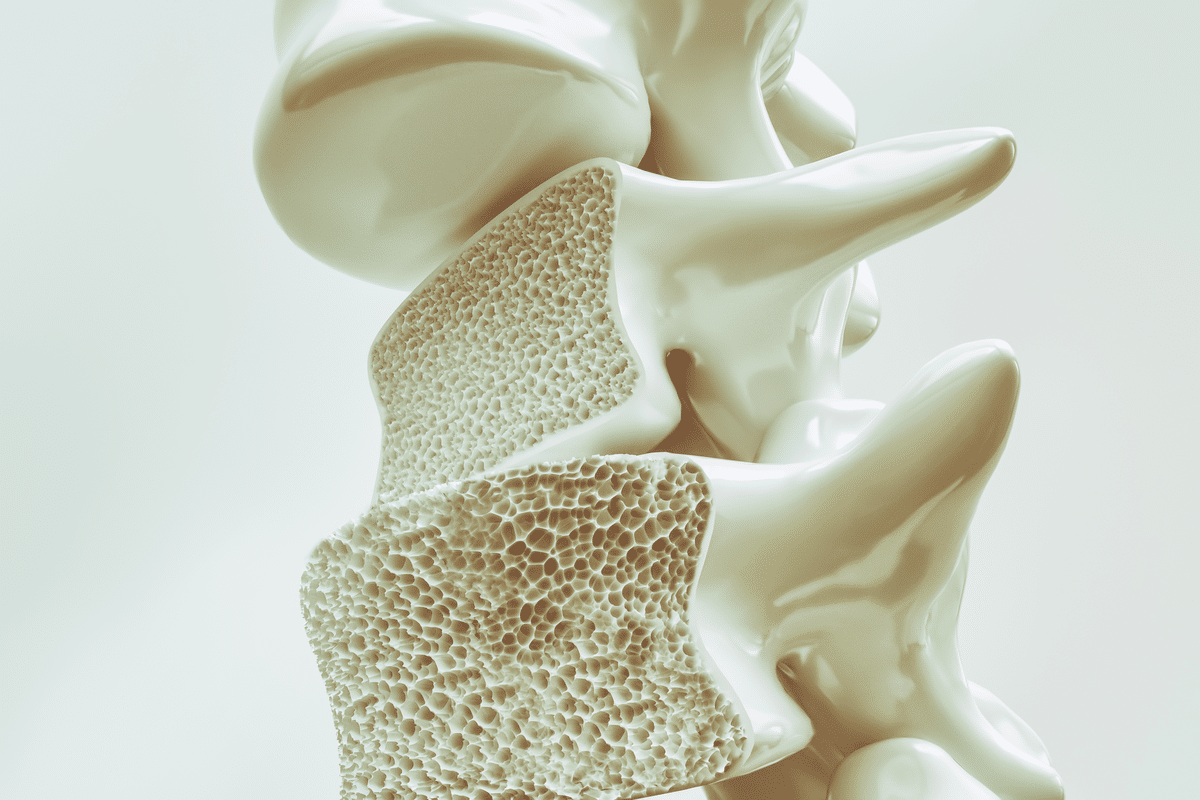
Explaining the difference between z score vs t score dexa measurements and when each score is used for diagnosis. It’s important to know the difference between Z scores and T scores on DEXA scans. These scores help us understand bone health and osteoporosis diagnosis. DEXA scans check bone mineral density to see if you might get osteoporosis or fractures.
Liv Hospital uses international knowledge to help with bone health. They make a plan based on your DEXA scan results. Knowing the difference between Z scores and T scores helps you understand your bone health better.
Key Takeaways
- DEXA scans are key for checking bone mineral density.
- Z scores and T scores give different views on bone health.
- Knowing these scores is key for correct osteoporosis diagnosis.
- Liv Hospital offers expert help in reading DEXA scan results.
- They create a plan for you based on your DEXA scan results.
Understanding DEXA Scan Technology
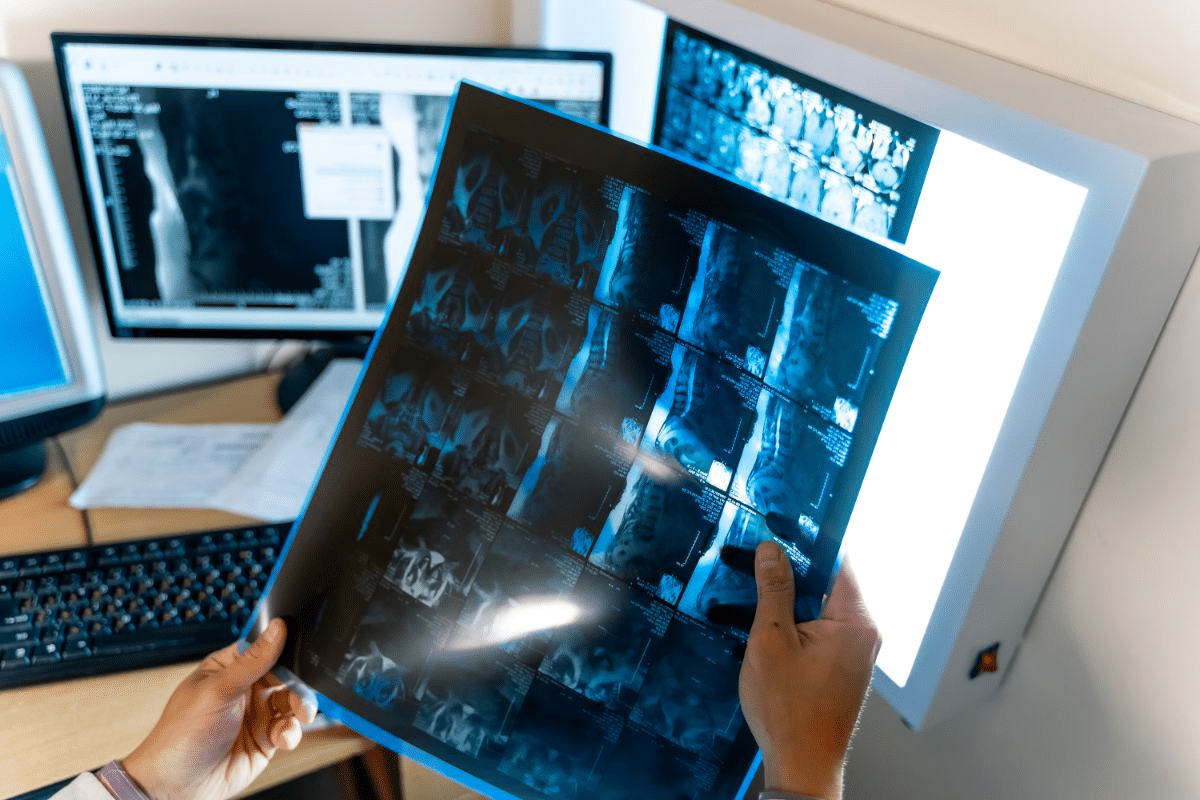
It’s important to know how DEXA scans work to understand their results. DEXA scan technology is key in diagnosing and managing bone disorders like osteoporosis.
What is a DEXA Scan?
A DEXA (Dual-Energy X-ray Absorptiometry) scan is a safe test that checks bone mineral density (BMD). It uses low-dose X-rays to measure bone density in places like the hips and spine.
How DEXA Scans Measure Bone Mineral Density
DEXA scans use two X-ray beams to measure BMD. The difference in how these beams are absorbed lets doctors calculate BMD. This is important for spotting osteoporosis and predicting fracture risk.
Common Sites for DEXA Measurements
The lumbar spine and hip are the most common spots for DEXA scans. These areas are at high risk for osteoporotic fractures and show how well bones are doing.
|
Measurement Site |
Significance |
|---|---|
|
Lumbar Spine |
Early detection of osteoporosis; vertebral fractures |
|
Hip |
Predicts hip fracture risk; significant for overall bone health |
|
Forearm |
Used in cases of hyperparathyroidism or when other sites cannot be measured |
Knowing about DEXA scan technology is essential for doctors and patients. It helps in making accurate diagnoses and tracking bone health, which guides treatment choices.
The Fundamentals of T Scores in Bone Density Testing
The T score is a key measure in bone density tests to spot osteoporosis. It compares a person’s bone density to a healthy young adult of the same sex. This gives a clear view of bone health.
Definition and Calculation of T Scores
A T score compares a person’s bone density to a young adult’s average. It’s found by subtracting the young adult’s average bone density from the person’s. Then, it’s divided by the standard deviation of the young adult’s bone density.
Key aspects of T score calculation include:
- Reference population: Healthy young adults of the same sex
- Standard deviation: Used to normalize the difference between the patient’s BMD and the reference mean
- Comparison: Patient’s BMD is compared to the reference population’s mean BMD
Reference Population for T Scores
The reference group for T scores are healthy young adults, aged 20 to 30, of the same sex. This age is chosen because it’s when bone mass is at its highest. The World Health Organization (WHO) suggests using a database that matches the tested population.
Clinical Significance of T Scores
T scores are important because they help diagnose osteoporosis and osteopenia. A T score of -2.5 or lower means osteoporosis. Scores between -1 and -2.5 show osteopenia. Doctors use T scores to predict fracture risk and decide on treatments.
T score categories and their clinical implications:
- T score > -1: Normal bone density
- -1 ≥ T score > -2.5: Osteopenia (low bone mass)
- T score ≤ -2.5: Osteoporosis
Z Score Fundamentals in DEXA Interpretation
The Z score is a key metric in DEXA interpretation. It compares bone density to that of people of the same age. This score helps assess bone health, beyond what T scores show.
Definition and Calculation of Z Scores
A Z score compares your bone mineral density to an age-matched reference population. It considers your age, gender, and ethnicity. It shows how many standard deviations your bone density is from the average.
To calculate a Z score, find out how many standard deviations your bone density is from the average of your age group. A Z score of 0 means your bone density is average. A positive score means it’s above average, and a negative score means it’s below average.
Age-Matched Reference Populations
Using age-matched reference populations is key in Z score calculation. This method gives a detailed look at bone health, mainly in the young or those with bone density issues.
By comparing your bone density to your peers, doctors can spot those at risk for bone problems. This is true even if your bone density isn’t very low compared to younger adults.
When Z Scores Are Most Relevant
Z scores are most useful in specific situations. They’re best for checking bone health in kids, premenopausal women, and young men. They’re also useful for those with secondary osteoporosis.
In these cases, a low Z score (usually ≤ -2.0) means your bone density is lower than expected for your age. This could suggest an underlying bone health issue.
Z Score vs T Score on DEXA Scans: Key Differences
Understanding the differences between Z scores and T scores is key to diagnosing bone density. Both are used in DEXA scans but serve different purposes. They offer unique insights into bone health.
Reference Population Distinctions
The main difference is in the reference population. T scores compare a patient’s bone density to a young, healthy adult of the same sex, usually around 30 years old. This helps see if the patient’s bone density is lower than normal for a young adult.
Z scores compare a patient’s bone density to age-matched and sex-matched individuals. This means Z scores consider age-related changes in bone density. They give a more detailed view of bone health compared to peers.
Age Considerations in Score Interpretation
Age is a big factor in interpreting Z and T scores. T scores use a young, healthy adult as a reference, making them good for assessing osteoporosis risk in older adults. But for younger people, Z scores are better as they compare to age-matched peers.
Healthcare providers must think about the patient’s age when choosing which score to focus on. For example, a low Z score in a young adult might mean something different than the same score in an older adult.
Diagnostic Applications of Each Score
T scores are mainly for diagnosing osteoporosis in postmenopausal women and older men. A T score of -2.5 or lower means osteoporosis. Z scores are key for spotting unusual bone loss or density in those not at typical risk, like children and premenopausal women.
- T scores are used mainly for diagnosing osteoporosis.
- Z scores help identify unusual bone loss patterns or conditions.
- Both scores are essential for a complete bone health assessment.
Knowing the differences between Z scores and T scores is vital for accurate diagnosis and treatment. By looking at both scores and their reference populations, healthcare providers can fully understand a patient’s bone health.
Normal Bone Density Values and Ranges
Knowing normal bone density values is key for understanding DEXA scan results. Bone density tests help check bone health, which is important for diagnosing osteoporosis and osteopenia.
Average Bone Density by Age and Sex
Bone density changes with age and sex. It usually peaks in early adulthood and then drops. Men generally have denser bones than women, more so as they get older.
Table: Average Bone Density by Age and Sex
|
Age Group |
Average Bone Density (g/cm²) – Male |
Average Bone Density (g/cm²) – Female |
|---|---|---|
|
20-29 |
1.05 |
1.00 |
|
30-39 |
1.03 |
0.98 |
|
40-49 |
1.00 |
0.95 |
|
50-59 |
0.95 |
0.88 |
|
60-69 |
0.90 |
0.80 |
|
70+ |
0.85 |
0.75 |
DEXA Scan Female Bone Density Chart by Age
A DEXA scan chart for women by age helps compare bone density to averages. These charts are vital for doctors to understand DEXA scan results.
Normal Bone Mass Measurements
Normal bone mass is usually a T-score of -1.0 or higher. The T-score compares your bone density to a young, healthy group. Knowing these values is key for managing bone health.
Variations in Normal Values Across Different Populations
Normal bone density can differ among different groups due to genetics, ethnicity, and lifestyle. It’s important to consider these differences when looking at DEXA scan results. This ensures accurate diagnoses and treatment plans.
For example, people of African descent often have denser bones than those of Caucasian or Asian descent. Doctors need to know this to give the right care.
WHO Guidelines for Interpreting DEXA Scan Results
The World Health Organization (WHO) has set guidelines for DEXA scan results. These guidelines help doctors understand bone health. They are key for making the right decisions for patients.
Normal Bone Density Classifications (T-score > -1.0)
A T-score over -1.0 means bone density is normal. This shows the bone density is close to that of a young adult. A T-score above -1.0 means a lower risk of osteoporotic fractures.
Osteopenia Diagnosis Criteria (T-score between -1.0 and -2.5)
Osteopenia is when the T-score is between -1.0 and -2.5. This means bone density is lower than normal but not too low. Early detection of osteopenia is critical for implementing preventive measures to avoid progression to osteoporosis.
Osteoporosis Diagnosis Thresholds (T-score ≤ -2.5)
A T-score of -2.5 or lower means osteoporosis. This shows a big drop in bone density, raising the risk of fractures. Osteoporosis diagnosis based on WHO criteria enables targeted therapeutic interventions to reduce fracture risk and improve quality of life.
Special Considerations for Different Demographics
The WHO guidelines also consider demographic factors. For example, Z-scores are used for children, adolescents, and young adults. This gives a better age-based assessment.
“The use of Z-scores is very important in younger populations where bone density is developing.”
Also, ethnicity and sex-specific reference ranges are used. This makes bone density assessments more accurate.
How to Read and Interpret Your DEXA Scan Results
DEXA scan results give you insights into your bone health. It’s important to understand these results to make good health choices.
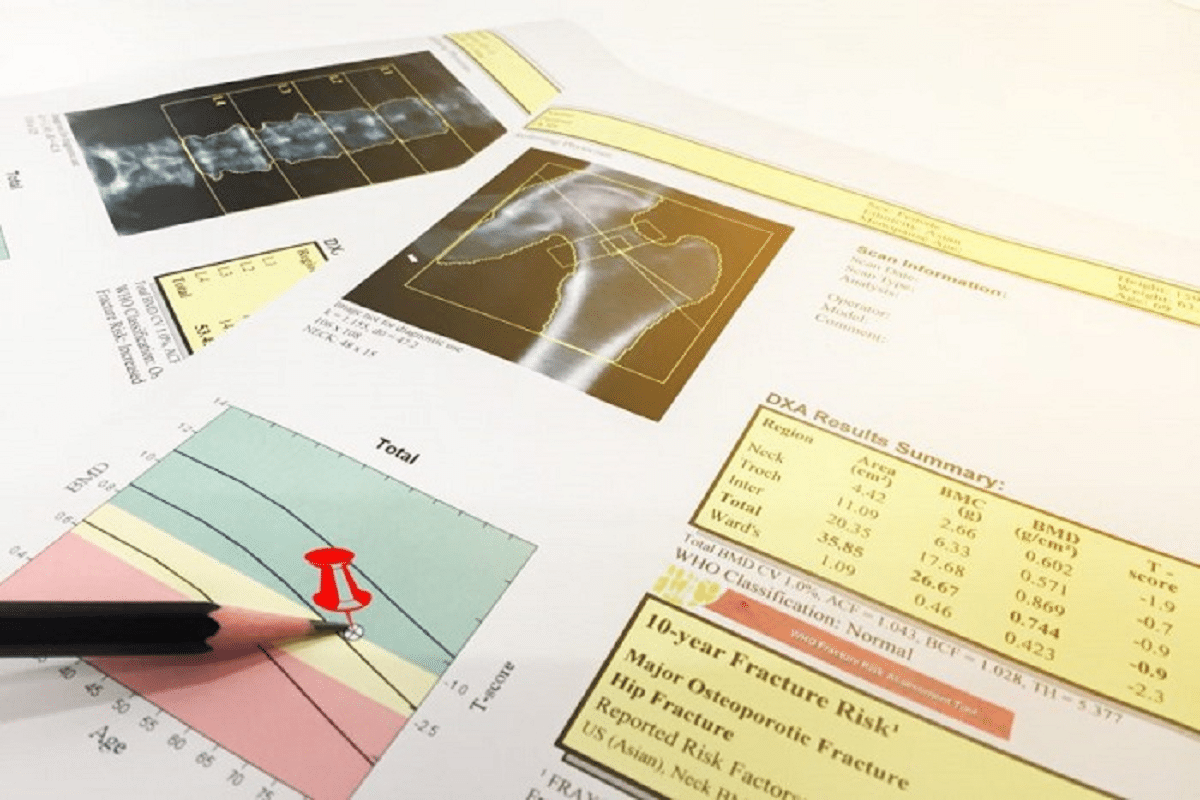
Understanding the DEXA Report Format
A DEXA report has patient info, scan results, and interpretive data. The layout might change based on the DEXA machine maker. But, most reports follow a similar pattern.
The scan results part shows images of the scanned areas, like the lumbar spine and hip. These images help check bone density and spot any problems.
Interpreting Numerical Values
DEXA scan results show numbers like T scores and Z scores. The T score compares your bone density to a healthy young adult of the same sex. The Z score compares it to an average person of your age.
T scores help diagnose osteoporosis and osteopenia. A T score of -1.0 or above is normal. Scores between -1.0 and -2.5 mean osteopenia. Scores -2.5 or below show osteoporosis.
For example, a T score of -2.0 means you have osteopenia. This shows your bone density is lower than normal but not as low as osteoporosis.
Comparing Current Results with Previous Scans
It’s key to compare your current DEXA scan with past ones. This shows if your bone density is getting better, worse, or staying the same.
|
Scan Date |
T Score |
Z Score |
BMD (g/cm²) |
|---|---|---|---|
|
2022-01-01 |
-1.5 |
-0.8 |
0.8 |
|
2023-01-01 |
-1.3 |
-0.7 |
0.82 |
DEXA Scan Results: Normal vs. Osteoporosis
Knowing the difference between normal and osteoporotic DEXA scan results is important. Normal results have a T score above -1.0. Osteoporotic results have a T score of -2.5 or below.
By understanding your DEXA scan results, you can work with your healthcare provider. Together, you can make a plan to keep or improve your bone health.
Limitations and Considerations of DEXA Scoring
It’s important to know the limits of DEXA scoring for accurate diagnosis and treatment. DEXA scans are useful for checking bone health. But, their results can be affected by several factors.
Factors Affecting DEXA Scan Reliability
Several things can change how accurate DEXA scans are. These include:
- Machine calibration: It’s key to make sure the DEXA machine is set right for good results.
- Patient positioning: How a patient is placed during the scan can impact the results.
- Bone size and shape: DEXA scans might not work well for people with unusual bone shapes.
- Presence of certain medical conditions: Some health issues, like degenerative disc disease, can affect DEXA readings.
Healthcare providers need to know these factors to understand DEXA results correctly. This helps them make better decisions for patient care.
Common Misinterpretations of Scores
DEXA scores can be misunderstood if not seen in the right context. For example:
- Not considering age and sex when looking at T-scores and Z-scores.
- Ignoring the patient’s medical history and current health.
- Only using DEXA scores for diagnosis without other tools.
Accurate interpretation needs a full view, looking at more than just DEXA scores.
When Additional Testing May Be Necessary
In some cases, more tests are needed for a clear picture of bone health. This might include:
- More imaging tests, like CT or MRI scans, to see bone structure and density better.
- Bone turnover marker tests to check how fast bones are being broken down and built up.
- Other tests to find out if there are other reasons for bone loss or osteoporosis.
Understanding DEXA scoring limits and knowing when to use more tests helps healthcare providers make better choices for patient care.
Conclusion: Making Informed Decisions About Bone Health
Understanding Z scores and T scores on DEXA scans helps people manage their bone health. DEXA scans give important info on bone density and fracture risk. This info helps doctors make plans to prevent or treat bone issues.
Knowing the difference between Z scores and T scores helps people understand their bone density test results better. This knowledge lets them make smart choices about their bone health. They can change their lifestyle or try treatments to lower the risk of osteoporosis and fractures.
Getting regular DEXA scans and understanding the results is key to keeping bones strong. People should talk to their doctors to get their scan results explained. This way, they can create a plan that fits their needs, improving their bone health.
FAQ
What is a DEXA scan, and how does it measure bone mineral density?
A DEXA scan is a test that checks bone health. It uses low-level X-rays to measure bone mineral density. This test is key in diagnosing osteoporosis and osteopenia.
What are T scores, and how are they used in bone density testing?
T scores compare your bone density to a healthy young adult of the same sex. They help doctors diagnose osteoporosis and osteopenia. A T score of -1.0 or higher is normal. Scores between -1.0 and -2.5 show osteopenia, and below -2.5 indicate osteoporosis.
What are Z scores, and when are they most relevant?
Z scores compare your bone density to others of the same age. They are key for younger people or those experiencing unexpected bone loss. They help spot abnormal bone density for a given age.
How do Z scores and T scores differ, and which is more important?
Z scores and T scores compare to different reference groups. T scores compare to young adults, while Z scores compare to age-matched groups. Both are important. T scores help diagnose osteoporosis, while Z scores identify abnormal bone density for a given age.
What are normal bone density values and ranges, and how do they vary by age and sex?
Normal bone density values change with age and sex. A T score of -1.0 or higher is considered normal. Bone density decreases with age, and women generally have lower density than men.
How do I read and interpret my DEXA scan results?
To understand your DEXA scan results, look at the report. It will have T scores and Z scores. Compare your results to previous scans. Talk to a healthcare professional to see if you have osteoporosis or osteopenia.
What are the limitations and considerations of DEXA scoring?
DEXA scoring has some limits. Body size and positioning can affect results. Misinterpretations can happen. Sometimes, more tests are needed.
Are DEXA scans reliable for diagnosing osteoporosis?
Yes, DEXA scans are reliable for diagnosing osteoporosis. But, they should be used with a doctor’s evaluation and medical history.
How often should I have a DEXA scan?
The frequency of DEXA scans varies. It depends on your risk factors, medical history, and your doctor’s advice.
What is the average bone density for a given age and sex?
Average bone density changes with age and sex. Check a DEXA scan female bone density chart by age. Or, talk to a healthcare professional for more details.
How is bone densitometry used in clinical practice?
Bone densitometry, often done with DEXA scans, checks bone health. It helps diagnose osteoporosis and see if treatments are working.
References
https://pubmed.ncbi.nlm.nih.gov/17662630



 Departments
 Related Videos
 Our Doctors
 News
News