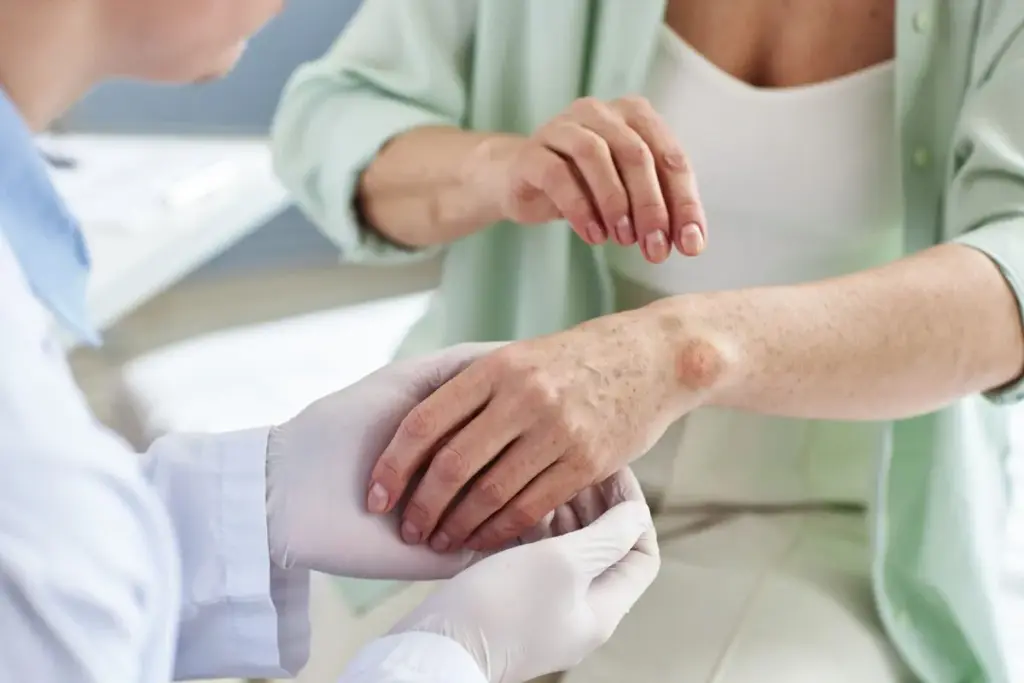
Autoimmune skin conditions happen when the body’s immune system attacks healthy skin cells and tissues. This leads to various skin problems. Symptoms can include inflammation, blisters, and red, scaly patches. These issues can really affect someone’s life quality.
At Liv Hospital, our team of experts in dermatology and immunology work together. We use the latest medical technology and focus on the patient. We know how important it is to give full care and support to those with autoimmune skin disorders.
Key Takeaways
- Autoimmune skin disorders are conditions where the immune system attacks healthy skin cells.
- Common symptoms include skin inflammation, blisters, and red, scaly patches.
- Liv Hospital offers complete care for autoimmune skin conditions.
- Our team combines dermatology and immunology expertise for accurate diagnosis and treatment.
- Patient-centered care is our main focus in managing autoimmune skin disorders.
Understanding Autoimmune Disorders of Skin

Autoimmune skin diseases happen when the immune system attacks healthy skin by mistake. This leads to inflammation and damage. It’s a complex issue where the body’s defense system attacks its own skin, causing various skin problems.
How the Immune System Affects Skin Health
The immune system protects us from harmful invaders. But in autoimmune diseases, it fails. The immune system makes autoantibodies that attack the body’s own cells, including skin cells. This causes inflammation, blisters, and scarring.
Recent studies show that autoimmune skin disorders happen when the immune system can’t tell self-antigens apart. This leads to ongoing inflammation and damage. It shows how closely immune function and skin health are linked.
“The immune system’s role in skin health is multifaceted, involving the protection against pathogens and the maintenance of tissue homeostasis.” — Expert in Dermatology
Common Symptoms and Diagnostic Approaches
Autoimmune skin disorders show up in different ways, like skin inflammation, blisters, scaly patches, and hair loss. Doctors use a mix of clinical checks, medical history, and lab tests to diagnose these conditions.
- Clinical examination to identify skin lesions and their characteristics
- Biopsy to examine skin tissue under a microscope
- Blood tests to detect autoantibodies associated with specific autoimmune diseases
For example, autoimmune disease and skin conditions need a detailed diagnosis to manage well.
Knowing the symptoms and how doctors diagnose them is key for early treatment. Spotting the signs early can help lessen the condition’s impact.
Common Autoimmune Skin Conditions

Autoimmune skin disorders come in many forms. Psoriasis, vitiligo, alopecia areata, and dermatomyositis are some of the most common. These conditions range from common to less common but significant diseases.
Psoriasis
Psoriasis is a chronic autoimmune disorder. It happens when the immune system overacts, causing skin cells to grow too fast. This leads to thick, red, scaly patches on the skin, often on elbows, knees, and scalp.
Symptoms and Treatment: Psoriasis symptoms can be mild or severe. Treatments include topical creams, light therapy, and systemic medications. These help manage the condition and reduce flare-ups.
Vitiligo
Vitiligo causes white or lighter patches on the skin, usually on both sides of the body. It happens when the immune system attacks the cells that produce skin pigment.
Characteristics and Management: Vitiligo can affect any part of the body and may also affect hair, causing it to turn white. Management options include medications to restore pigment, light therapy, and surgical treatments.
Alopecia Areata
Alopecia areata is a condition that causes hair loss in patches. It occurs when the immune system attacks the hair follicles. This leads to hair loss on the scalp or other areas of the body.
Treatment Approaches: Treatment for alopecia areata may include medications to stimulate hair growth, corticosteroid injections, and light therapy.
Dermatomyositis
Dermatomyositis is an autoimmune disorder that affects muscles and skin. It causes a distinctive rash and can lead to muscle weakness and skin symptoms.
Symptoms and Management: The skin symptoms of dermatomyositis include a purple or red rash on the face, eyelids, and knuckles. Management involves treating the underlying muscle inflammation and skin symptoms with medications and physical therapy.
| Condition | Primary Symptoms | Common Treatment Options |
| Psoriasis | Thick, red, scaly skin patches | Topical creams, light therapy, systemic medications |
| Vitiligo | White or lighter skin patches | Medications, light therapy, surgical treatments |
| Alopecia Areata | Hair loss in patches | Corticosteroid injections, medications, light therapy |
| Dermatomyositis | Rash, muscle weakness | Medications, physical therapy |
Rare Autoimmune Skin Diseases
There are many rare autoimmune skin diseases that need our attention. These conditions affect people’s lives in big ways, even if they’re not as common.
We’ll look at four rare conditions: pemphigus vulgaris, bullous pemphigoid, dermatitis herpetiformis, and linear IgA bullous dermatosis. For more info, check out Duke Health’s Dermatology page.
Pemphigus Vulgaris
Pemphigus vulgaris is a rare disease that causes blisters on the skin and inside the mouth. These blisters are very fragile and can easily break open, leading to painful sores.
Symptoms include blisters on the skin and inside the mouth. Diagnosis involves a skin biopsy and tests to find specific antibodies.
Bullous Pemphigoid
Bullous pemphigoid is a rare condition that causes large blisters on the skin. It mostly affects older adults and can really lower their quality of life.
The symptoms include big blisters that don’t usually break open. Diagnosis involves a skin biopsy and tests to find specific antibodies.
Dermatitis Herpetiformis
Dermatitis herpetiformis is a chronic condition that causes itchy blisters. It’s linked to celiac disease and gluten sensitivity.
Symptoms include itchy blisters and papules, mainly on the elbows, knees, and buttocks. Treatment includes a gluten-free diet and sometimes medication.
Linear IgA Bullous Dermatosis
Linear IgA bullous dermatosis is a rare autoimmune disorder that causes blisters on the skin. It can happen to both kids and adults.
The symptoms include blisters in a “cluster of jewels” pattern. Diagnosis is through a skin biopsy and tests to find IgA deposits.
It’s important to understand these rare autoimmune skin diseases to help those affected. While they’re challenging, new research and treatments offer hope for better management and quality of life.
Conclusion: Managing and Living with Autoimmune Skin Disorders
Managing autoimmune skin disorders needs a full plan. This includes medical care, lifestyle changes, and managing stress. We’ve looked at diseases like psoriasis, vitiligo, and alopecia areata. We’ve talked about their symptoms, how to diagnose them, and how to treat them.
To manage autoimmune skin disease well, you need to slow down your immune system. This helps prevent serious problems. Treatments like corticosteroids, immunosuppressive drugs, and biologics can help. Also, eating right, exercising, and reducing stress can ease symptoms.
Understanding and treating autoimmune skin diseases holistically can greatly improve life. We urge those with these conditions to work with their doctors. Together, they can create a care plan that works best for each person.
FAQ
What are autoimmune skin disorders?
Autoimmune skin disorders happen when the immune system attacks healthy skin cells. This leads to inflammation, blisters, and scaly patches.
What are the common symptoms of autoimmune skin conditions?
Symptoms include skin inflammation, blisters, scaly patches, and hair loss. These vary based on the condition, like psoriasis or vitiligo.
How are autoimmune skin disorders diagnosed?
Doctors use a physical exam, medical history, and tests like skin biopsies and blood tests. Immunofluorescence studies are also used.
What is the difference between common and rare autoimmune skin diseases?
Common diseases like psoriasis and vitiligo are well-known. Rare diseases, such as pemphigus vulgaris, need special diagnosis and treatment.
Can autoimmune skin disorders be treated?
Yes, treatments include topical and systemic medications, light therapy, and lifestyle changes. These help manage symptoms and improve life quality.
How can I manage stress related to autoimmune skin disorders?
Stress management techniques like meditation, yoga, or counseling can help. They help cope with the emotional impact of these disorders.
Are there any lifestyle changes that can help manage autoimmune skin disorders?
Yes, a healthy lifestyle is key. This includes a balanced diet, regular exercise, and avoiding triggers. It helps alleviate symptoms and improves well-being.
Can autoimmune skin disorders be cured?
While some can be managed well, a cure is not always possible. But, with proper treatment, individuals can live active and fulfilling lives.
What is the role of the immune system in autoimmune skin disorders?
The immune system is key in these disorders. It mistakenly attacks healthy skin cells, causing inflammation and other symptoms.
Are autoimmune skin disorders contagious?
No, they are not contagious. They are caused by an abnormal immune response and cannot be passed from person to person.
References
National Center for Biotechnology Information. Evidence-Based Medical Guidance. Retrieved from https://www.ncbi.nlm.nih.gov/books/NBK459479/[5