Autoimmune conditions that affect the nervous system are a big worry, affecting millions globally. At Liv Hospital, we get how complex these disorders are. We know how much they impact our patients’ lives.
About 30 different autoimmune disorders harm the nervous system, affecting 20 million Americans. These happen when the immune system attacks the nervous system by mistake. This leads to serious symptoms.
Our team of neurological specialists is here to help. We offer detailed care and support to manage these conditions well.
Key Takeaways
- Autoimmune nerve disorders affect an estimated 20 million Americans.
- There are approximately 30 distinct autoimmune disorders that impact the nervous system.
- Effective management requires specialized expertise and compassionate care.
- Liv Hospital is committed to delivering world-class healthcare for international patients.
- Understanding symptoms, causes, and treatments is key to managing these conditions.
Understanding Autoimmune Neurological Disorders

Autoimmune neurological disorders happen when the immune system goes wrong. This leads to serious health problems. These diseases occur when the immune system attacks the body’s own tissues.
The immune system is a complex defense system. It fights off invaders.
How the Immune System Attacks Neural Tissues
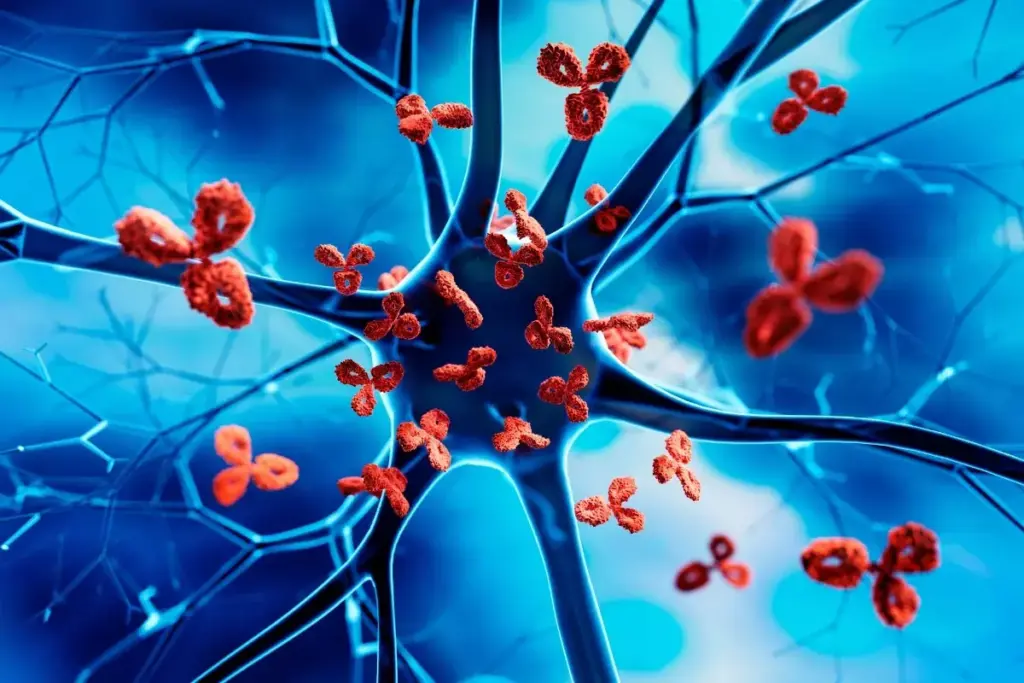
In these disorders, the immune system sees neural tissues as enemies. It attacks them, causing inflammation and damage. This results in various neurological symptoms.
The process involves several key steps:
- Activation of immune cells: T cells and B cells are activated to target neural antigens.
- Production of autoantibodies: The immune system produces antibodies against the body’s own neural tissues.
- Inflammation and tissue damage: The immune response leads to inflammation, causing damage to neural tissues.
Rising Incidence and Impact on Public Health
Autoimmune neurological disorders are becoming more common. This is a big problem for public health. These conditions can severely disable people and lower their quality of life.
The impact includes:
| Condition | Prevalence | Impact |
| Multiple Sclerosis | Approximately 2.8 million people worldwide | Significant disability, affecting mobility and vision |
| Guillain-Barré Syndrome | 1-2 cases per 100,000 people annually | Can cause severe muscle weakness and paralysis |
It’s important to understand these disorders’ rising numbers and effects. This knowledge helps in creating better public health plans and improving care for patients.
7 Most Common Autoimmune Nerve Disorders
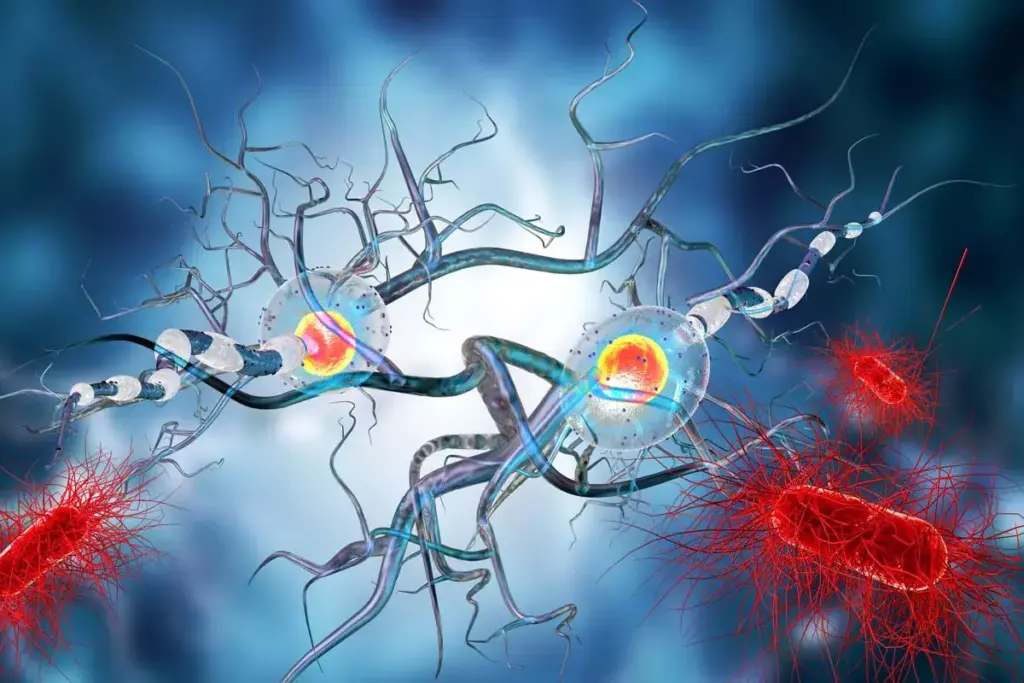
We will look at the most common autoimmune nerve disorders. We’ll cover their symptoms, how they work, and how to treat them. These disorders happen when the immune system attacks the nervous system by mistake. This can cause many neurological symptoms and greatly affect a person’s life.
1. Multiple Sclerosis (MS)
Multiple sclerosis (MS) is a chronic disease that affects the central nervous system (CNS). The immune system attacks the myelin, the protective covering of nerves. This leads to problems with communication between the brain and the rest of the body.
Symptoms include fatigue, trouble walking, numbness or weakness in limbs, vision problems, and cognitive difficulties. The exact cause of MS is not known, but it’s thought to be a mix of genetics and environment.
MS treatment focuses on immunomodulatory therapies to lessen relapse severity. This includes drugs like interferons and glatiramer acetate. For severe cases, immunosuppressive drugs might be used.
2. Guillain-Barré Syndrome (GBS)
Guillain-Barré Syndrome is an autoimmune disorder where the immune system attacks the peripheral nervous system. This can cause muscle weakness, numbness, and tingling, which can lead to paralysis in severe cases. It often starts after a recent infection.
Treatment involves plasmapheresis or IVIG to lessen the immune attack.
- Symptoms of GBS include muscle weakness, tingling sensations, and in severe cases, paralysis.
- Treatment aims to reduce the immune system’s attack on the nervous system.
3. Myasthenia Gravis (MG)
Myasthenia Gravis is an autoimmune disease that causes muscle weakness and rapid fatigue. It happens when the immune system makes antibodies that block or destroy receptors at the nerve-muscle junction. Symptoms include drooping eyelids, double vision, difficulty swallowing, and muscle weakness.
Treatment includes anticholinesterase medications and immunosuppressive drugs to reduce antibody production.
4. Neuromyelitis Optica (NMO)
Neuromyelitis Optica, also known as Devic’s disease, is an autoimmune inflammatory condition. It mainly affects the optic nerve and spinal cord. Symptoms include vision loss, spinal cord inflammation, and sometimes brain lesions.
NMO is different from multiple sclerosis, though they share some symptoms. Treatment involves immunosuppressive therapy to reduce relapse frequency.
- NMO mainly affects the optic nerve and spinal cord.
- Symptoms include vision loss and spinal cord inflammation.
- Treatment involves immunosuppressive therapy.
These autoimmune nerve disorders show how complex the immune system and nervous system interactions are. Understanding them is key to finding effective treatments and improving patient outcomes.
Diagnosis and Treatment of Autoimmune Nerve Disease
Autoimmune nerve diseases are becoming more common. This makes finding the right diagnosis and treatment more urgent. Doctors use a detailed approach to diagnose these conditions. This includes looking at the patient’s history, doing a neurologic exam, and using other tests.
Modern Diagnostic Techniques
Today’s diagnostic tools are key in spotting autoimmune nerve diseases. Doctors use MRI scans, EMG tests, and lab tests to find autoantibodies. For example, advanced lab tests help pinpoint specific conditions. This allows for more focused treatments.
Immunosuppressive and Immunomodulatory Therapies
Treating autoimmune nerve diseases often means using immunosuppressive and immunomodulatory therapies. These treatments aim to calm down the immune system. This helps ease symptoms and slow the disease’s progress. Doctors might use corticosteroids, IVIG, or plasma exchange. In some cases, immunosuppressive medications are used for severe cases.
Emerging Treatment Approaches
The field of autoimmune neurology is growing fast. New treatments are being developed. These include immunomodulatory therapies and targeted biologic agents. These new options are promising. Ongoing research and trials are working to offer better treatments for these diseases.
Conclusion
Understanding and managing autoimmune nerve diseases can greatly improve lives. Advances in immunology have helped us better understand these complex conditions. This has led to more effective management and treatment options for those with autoimmune brain disorders and rare neurological autoimmune diseases.
By staying informed and working closely with healthcare professionals, patients can actively participate in their treatment. For more information on autoimmune conditions and their management, visit our resource page at Achilles Neurology.
We believe that continued research and awareness are key to improving lives affected by autoimmune nerve diseases. By working together with healthcare teams and staying informed, we can make a big difference. This helps patients maintain a good quality of life.
FAQ
What are autoimmune nerve diseases?
Autoimmune nerve diseases happen when the immune system attacks the nervous system by mistake. This leads to different symptoms. Examples include multiple sclerosis, Guillain-Barré Syndrome, and myasthenia gravis.
How common are autoimmune neurological disorders?
There are about 30 different autoimmune disorders that affect the nervous system. It’s estimated that 20 million Americans have one of these conditions.
What is the most common neurological autoimmune disease?
Multiple sclerosis is a common neurological autoimmune disease. It happens when the immune system attacks the protective covering of nerves in the brain and spinal cord.
What are the symptoms of autoimmune nerve diseases?
Symptoms can vary but often include numbness, weakness, vision problems, and trouble with coordination and balance.
How are autoimmune nerve diseases diagnosed?
Doctors use lab tests, imaging studies, and clinical evaluation to find and measure nerve damage caused by the immune system.
What are the current treatment options for autoimmune nerve diseases?
Treatments include medicines that control the immune system’s attack on nerves. New treatments and strategies are also being explored.
Are there any rare neurological autoimmune diseases?
Yes, there are rare diseases like neuromyelitis optica and certain autoimmune encephalitis. They need special care and management.
Can autoimmune nerve diseases be cured?
While some diseases can be managed well, a cure is not always possible. Researchers are working to find better treatments and improve outcomes.
How do autoimmune nerve diseases impact public health?
These diseases have a big impact on public health. They are common, complex to manage, and require a lot of support services for those affected.
References:
National Center for Biotechnology Information. Evidence-Based Medical Guidance. Retrieved from https://pmc.ncbi.nlm.nih.gov/articles/PMC9918670/[1