Welcoming a new family member means paying close attention to their skin. Seeing a red spot on an infant’s cheek can worry any parent. Our team at Liv Hospital aims to ease your worries with clear, expert advice on pediatric skin health.
Irritation can come from natural triggers, allergies, or mild infections common in early life. Finding a baby rash on the face and neck helps you pick the right care path fast. We believe sharing medical knowledge helps keep your little one comfortable and healthy.
Sometimes, an ash on infants face neck and chest needs an expert to tell if it’s a heat spot or a medical issue. Our aim is to offer a guide on the seven most common skin issues seen in clinics. Trust our patient-centered care to help you face these common challenges with confidence.
Key Takeaways
- Identify common skin irritations in early childhood quickly.
- Understand the primary causes like allergies and environmental triggers.
- Distinguish between mild spots and more serious medical concerns.
- Learn about gentle, evidence-based care for delicate skin surfaces.
- Empower yourself with knowledge for confident parental decision-making.
- Benefit from our compassionate, patient-centered pediatric guidance.
Understanding Baby Rash: What Every Parent Should Know
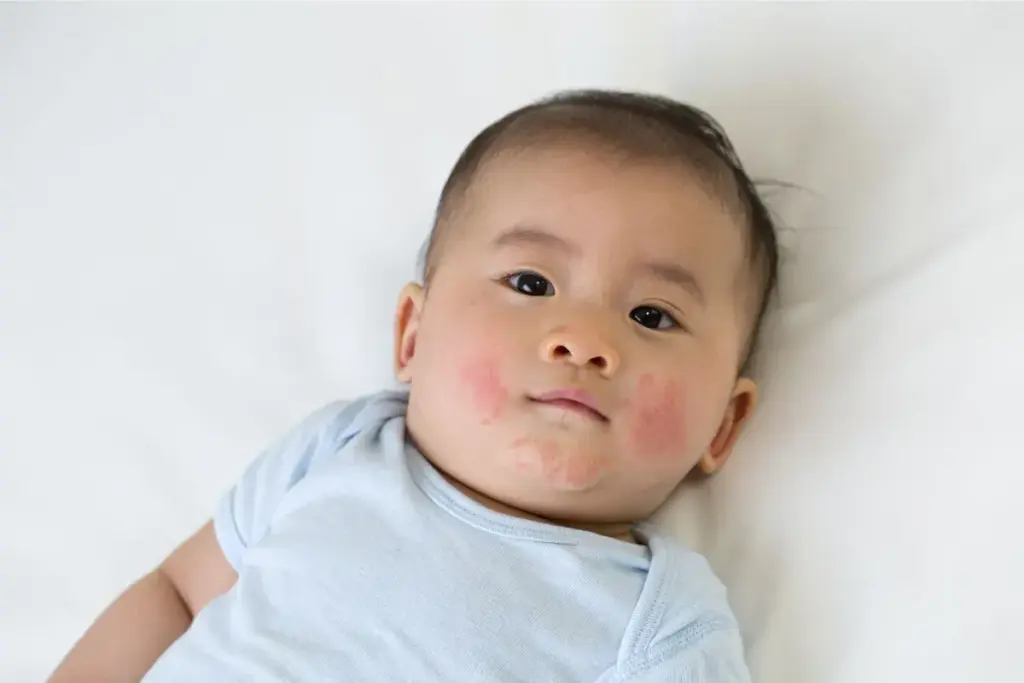
Seeing a rash on your baby can be scary. But knowing about baby rashes can help you feel better. A rash is when the skin gets swollen or irritated. It might look red, bumpy, or scaly. It can also itch and sometimes cause a fever.
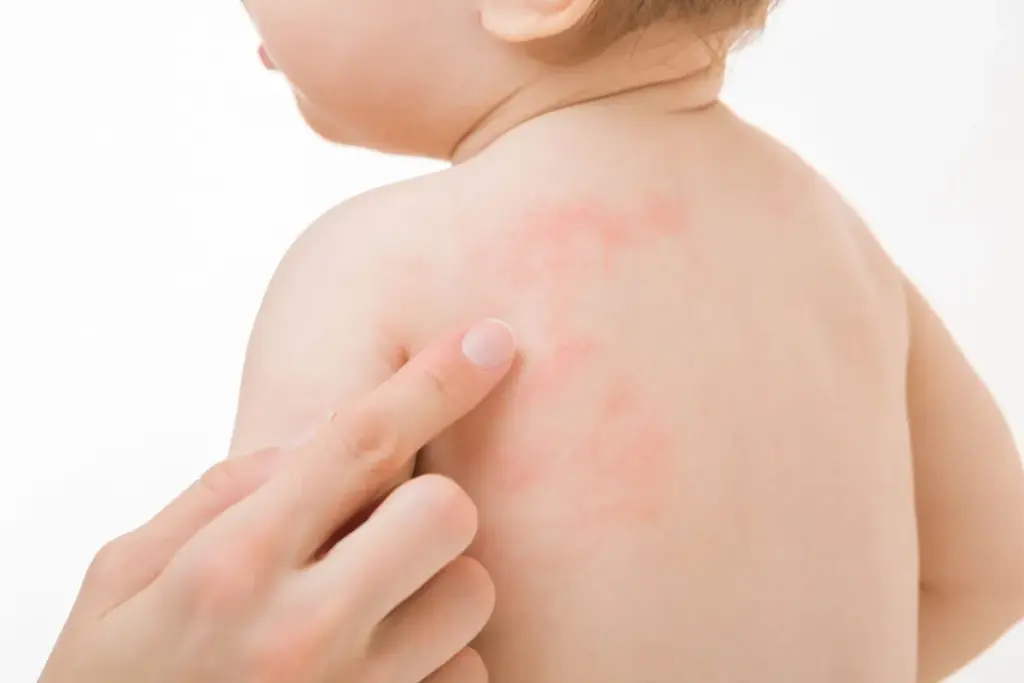
Baby rashes can look different, making them hard to spot at first. Look for spots on your baby’s skin that are red, pink, or even colorless bumps. Also, dry patches that feel rough might be a rash sign.
As a parent, watching your baby’s skin is key. Rashes can come from allergies, infections, or the environment. Knowing about different rashes and their causes helps you care for your baby better.
Common Characteristics of Baby Rashes:
- Red, pink, or colorless bumps or spots
- Dry, rough patches on the skin
- Itchiness or discomfort
- Accompanying fever in some cases
To understand baby rashes better, let’s look at common types:
| Type of Rash | Common Causes | Typical Symptoms |
| Eczema (Atopic Dermatitis) | Allergies, environmental factors | Dry, itchy, inflamed skin |
| Diaper Rash | Irritation from diapers, moisture | Redness, irritation in diaper area |
| Heat Rash (Miliaria) | Overheating, blocked sweat glands | Small, red bumps or blisters |
By knowing what a baby rash is and the common types, you can start to manage it. Next, we’ll explore specific rashes and how to treat them.
7 Common Types of Baby Rash
[Add image here]
There are many types of baby rashes that parents should know about. These rashes can come from allergies or the environment. Knowing what causes them and how to treat them is key to helping your baby feel better.
1. Eczema (Atopic Dermatitis)
Eczema, or atopic dermatitis, makes a baby’s skin red and itchy. It’s common in kids but can happen at any age. Eczema on babies looks like dry, scaly patches, often on the face but can spread.
The exact cause of eczema is not known. But it’s thought to be a mix of genetics, environment, and the immune system. Moisturizing is important to manage eczema, as it keeps the skin moist and reduces itchiness.
2. Diaper Rash
Diaper rash is a red rash in the diaper area. It’s caused by wet or dirty diapers, and sometimes, products used in diapering. Keeping the area clean and dry is key to preventing and treating diaper rash.
Using a barrier cream can protect your baby’s skin. If the rash doesn’t get better or is very bad, you should talk to a healthcare provider.
3. Heat Rash (Miliaria)
Heat rash, or miliaria, happens when sweat glands get blocked and swell. It’s more common in hot, humid weather. The rash looks like small, clear or red bumps, often on the neck, chest, or diaper area.
To treat heat rash, keep your baby cool and dress them in light clothes. Usually, the rash goes away once the skin cools down.
4. Baby Acne
Baby acne is small red or white bumps on a newborn’s face, usually on the cheeks, nose, and forehead. The exact cause is unknown, but it’s thought to be related to hormones before birth.
Baby acne usually goes away on its own in a few months without treatment. Keeping the face clean with gentle washing helps. Avoid using harsh products, as they can make the skin worse.
Knowing about these common baby rashes helps parents identify and treat them. If you’re unsure about your baby’s rash, always consult a healthcare professional.
When to Seek Medical Attention for Your Baby’s Rash
Babies can get rashes for many reasons. Knowing when to get medical help is key for their health. It’s normal to worry when you see a rash on your baby, whether it’s on their face, hands, or feet.
Most rashes are mild and can be treated at home. But, some rashes might mean a serious issue. It’s important to watch your baby’s rash closely. If you see any of these signs, get medical help.
Signs that Indicate the Need for Medical Attention:
- Fever with the rash
- Rash getting worse over time
- Signs of infection like blisters, open sores, or oozing fluid
- Rash spreading to other parts of the body
If your baby has a fever with a rash, it means their body is fighting an infection. Also, if the rash gets worse or shows signs of infection, you should see a doctor.
| Signs to Watch Out For | Possible Indication |
| Fever with rash | Infection |
| Worsening rash | Allergic reaction or infection |
| Blisters or open sores | Signs of infection |
As a parent, it’s always better to be safe when it comes to your baby’s health. If you’re not sure about your baby’s rash or if it’s with other worrying symptoms, talk to a healthcare provider.
Conclusion
It’s very important to know how to spot and treat baby rashes. These rashes can show up on different parts of a baby’s body, like their face, neck, and chest. When a rash appears on a baby’s face, it can worry parents a lot.
We’ve talked about the common types of baby rashes, what causes them, and how to treat them. Knowing this helps parents take care of their baby’s skin. A rash might mean there’s something else going on, so it’s key to understand the different kinds.
At Liv Hospital, we stress the need to know about baby rashes. This knowledge helps ensure your baby gets the best care. By recognizing the signs of different rashes, you can help soothe and treat your baby’s skin. This keeps them comfortable and healthy.
FAQ
What are the different types of rashes on infants that parents should be aware of?
Common infant rashes include diaper rash, heat rash, eczema (atopic dermatitis), cradle cap, baby acne, allergic rashes, and viral rashes like roseola, each with different causes and appearances.
My child has an infant cheek rash and redness around the neck; what could this be?
This is often due to eczema, drool irritation, or heat rash, especially in skin folds where moisture builds up and causes redness and irritation.
Is a rash on an 18 month old treated differently than a newborn rash?
Yes, treatment may differ because older infants are exposed to more allergens, foods, and environmental triggers, while newborn rashes are often harmless and resolve on their own.
What should I do if I find a rash on baby hands or feet?
Keep the area clean and monitor for other symptoms; rashes on hands and feet could be irritation, eczema, or infections like hand, foot, and mouth disease if accompanied by fever or mouth sores.
Why is there a persistent rash on my baby’s back?
A long-lasting rash may be due to eczema, heat rash, fabric irritation, or an allergic reaction; if it doesn’t improve, a doctor should evaluate it.
When should I be concerned about a rash all over baby?
You should be concerned if the rash is widespread with fever, swelling, blisters, or if the baby seems unwell, as it may indicate an infection or allergic reaction needing medical attention.
References
National Center for Biotechnology Information. Evidence-Based Medical Insight. Retrieved from https://pmc.ncbi.nlm.nih.gov/articles/PMC5574071/



 Departments
 Related Videos
 Our Doctors
 News
News