
Getting a correct diagnosis and planning treatment for brain tumours needs top-notch imaging. We use advanced MRI and CT scans. They give us detailed views of the tumour, helping our team create the best treatment plans.
At Liv Hospital, we follow international standards and trusted methods for top healthcare. Our focus is on our patients, using powerful imaging like MRI sequences. These include T1, T2, FLAIR, and contrast-enhanced T1. They help us see the tumour’s shape and what’s inside.
Key Takeaways
- Advanced MRI and CT scans are key for brain tumour diagnosis and planning treatment.
- MRI sequences give us detailed views of tumour characteristics and anatomy.
- Our patient-first approach means personalized care and effective treatment plans.
- Liv Hospital mixes international standards and trusted methods for reliable healthcare.
- High-quality imaging is vital for accurate diagnosis and treatment planning.
The Critical Role of Brain Tumour Images in Diagnosis and Treatment
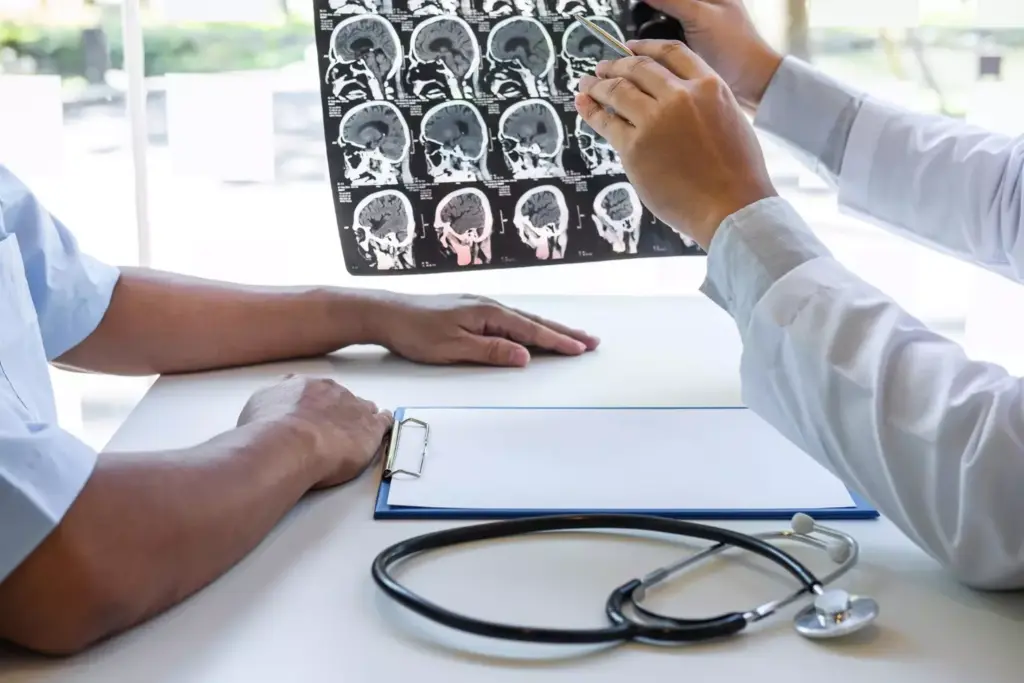
Medical imaging has changed neuro-oncology a lot. It gives us key insights for diagnosing and treating brain tumours. We use advanced imaging to make decisions, from the start to aftercare.
How Medical Imaging Revolutionized Brain Tumour Management
New imaging tools like MRI and CT scans have made a big difference. They help us see brain tumours clearly. This means we can plan treatments that really work for each patient.
Research shows that better imaging helps doctors diagnose and treat brain tumours better. For example, functional MRI and diffusion tensor imaging tell us a lot about tumours. They help surgeons plan and reduce risks for patients.
The Multidisciplinary Approach to Brain Tumour Imaging
It takes a team to understand brain tumour images and plan treatments. Our team includes neuroradiologists, neurosurgeons, and oncologists. We work together to make sure images guide patient care well.
By working together, we get a full picture of what brain tumour images show. This teamwork helps us make accurate diagnoses and treatments. It also supports patients every step of the way.
Understanding the Science Behind Brain Tumour Imaging

Diagnosing and treating brain tumours depend a lot on imaging tech. These technologies are based on complex science. We’ll explore how MRI and CT scans show brain tissue.
How Different Imaging Technologies Visualize Brain Tissue
MRI and CT scans are key in finding brain tumours. MRI uses a strong magnetic field and radio waves to show brain details. CT scans use X-rays to see the brain’s structure. MRI is great for soft tissue, while CT is better for bones and calcifications.
We use these techs to see the brain’s layout and find problems. The right choice depends on the case and what’s needed for treatment.
Key Features Radiologists Look for in Brain Tumour Scans
Radiologists check for certain things in brain tumour scans. They look at the tumour’s size, shape, and how it reacts to contrast. They also check for swelling, dead tissue, and how the tumour affects the brain. This info helps doctors plan the best treatment.
Knowing these details helps us understand how complex brain tumour diagnosis is. It shows how important imaging is in patient care.
T1-Weighted MRI: The Foundation of Brain Tumour Images
T1-weighted MRI is key for seeing brain tumours. It gives us detailed images needed for diagnosis and treatment plans.
How T1-Weighted Sequences Work
T1-weighted sequences highlight tissue differences. Fat looks bright, and water looks dark in these images. This helps us see brain structures clearly. For brain tumours, these images show where the tumour is, how big it is, and what it looks like.
Identifying Tumour Anatomy and Structure
T1-weighted MRI is great for seeing brain tumour details. It shows the tumour and the brain around it. This is important for planning surgery and radiation therapy.
Pre-Contrast vs. Post-Contrast T1 Imaging
Pre-contrast T1 imaging shows the tumour’s look before contrast is used. Post-contrast T1 imaging uses gadolinium-based agents to make some tumour features clearer. Looking at both types of images helps doctors understand the tumour better.
In summary, T1-weighted MRI is essential for brain tumour imaging. It gives us brain tumour images MRI that help doctors make decisions. Knowing how T1-weighted sequences work and their role in seeing tumour details is important in neuro-oncology.
T2-Weighted and FLAIR MRI: Visualizing Tumour Edema and Invasion
T2-weighted and FLAIR MRI are key in showing tumour edema and invasion. These scans give important details about brain tumours. They help doctors see how much the tumour affects the brain.
T2-Weighted Imaging: Highlighting Fluid and Edema
T2-weighted MRI spots changes in water in tissues well. Tumour edema, or fluid around the tumour, shows up bright on these images. This makes T2-weighted MRI great for seeing how much edema affects the brain.
It shows where fluid builds up, helping doctors plan surgery. This is key for knowing the risks of removing the tumour.
FLAIR Sequences: Suppressing CSF for Better Tumour Detection
FLAIR (Fluid Attenuated Inversion Recovery) sequences hide the cerebrospinal fluid (CSF) signal. This makes it easier to see lesions near CSF spaces. FLAIR MRI is great for finding lesions that CSF might hide on other scans.
By removing the CSF signal, FLAIR sequences make tumour changes clearer. This is vital for spotting small changes and seeing how far the tumour has spread.
Differentiating Tumour Types Using T2 and FLAIR Characteristics
The look of tumours on T2-weighted and FLAIR images tells us about their type and how they behave. Some tumours look the same everywhere on T2-weighted images, while others look different.
Doctors can learn about tumour biology by looking at these images. This helps them figure out what kind of tumour it is. Knowing this helps in making a better diagnosis and treatment plan.
Contrast-Enhanced MRI: Revealing Tumour Vascularity and BBB Disruption
Contrast-enhanced MRI is key in diagnosing and planning treatment for brain tumours. It shows tumour vascularity and blood-brain barrier disruption. This method uses a contrast agent, like gadolinium, to make tumour features clearer.
Gadolinium Enhancement in Brain Tumours
Gadolinium enhancement uses the blood-brain barrier’s difference between normal and tumour tissue. Tumours often have a broken blood-brain barrier. This lets gadolinium enter the tumour, showing up as bright spots on T1-weighted images.
The level and pattern of enhancement tell us about the tumour’s aggressiveness and grade. For example, high-grade tumours show more and varied enhancement than low-grade tumours.
Enhancement Patterns in Different Tumour Types
Brain tumours show different enhancement patterns after gadolinium. For example:
- Glioblastomas have irregular, ring-like enhancement.
- Meningiomas show strong, uniform enhancement.
- Pituitary adenomas may have varied patterns, sometimes looking like a “snowman.”
Knowing these patterns helps in diagnosing and planning treatment.
Using Enhancement to Assess Treatment Response
Contrast-enhanced MRI is also great for tracking treatment success. Changes in enhancement patterns show how a tumour is reacting to treatment. For example:
- Less enhancement means treatment is working well.
- More or new enhancement might mean the tumour is growing or not responding.
By studying these changes, doctors can adjust treatment plans as needed.
In summary, contrast-enhanced MRI is vital in managing brain tumours. It gives important details about tumour characteristics and treatment outcomes. Its ability to show tumour features makes it essential in neuro-oncology.
CT Scans: Essential Brain Tumour Images for Emergency and Surgical Planning
CT scans are key for quick diagnosis and planning treatment for brain tumours. They help us make fast decisions about patient care.
When CT Is the Preferred Imaging Modality
CT scans are top choice in emergencies because they’re fast and easy to get. They show us the tumour and how it affects nearby areas.
They’re great in urgent cases because they work even with metal implants or other MRI issues. This makes them vital for emergency brain tumour care.
Detecting Calcifications, Hemorrhage, and Bone Involvement
CT scans are best for spotting calcifications in tumours, a sign of some tumour types. They also find hemorrhage, a serious issue with brain tumours.
They show bones well, helping us see if tumours are affecting them. This info is key for planning surgery and how much to remove.
| Feature | CT Scan Utility | Clinical Significance |
|---|---|---|
| Calcifications | Highly visible | Diagnostic clue for certain tumour types |
| Hemorrhage | Easily detectable | Indicates possible tumour bleeding or rupture |
| Bone Involvement | Clear visualization | Important for surgery planning and tumour extent |
CT Perfusion and Angiography in Brain Tumour Assessment
Advanced CT methods like CT perfusion and CT angiography give more info on brain tumours. CT perfusion shows how blood flows to the tumour, helping us see how aggressive it is.
CT angiography shows the blood vessels feeding the tumour. This helps in planning surgery and spotting risks. These advanced CTs give a fuller picture of the tumour.
“The use of CT scans in brain tumour management has revolutionized our ability to rapidly diagnose and treat these complex conditions. By providing detailed images of tumour anatomy and surrounding structures, CT scans enable us to develop effective treatment plans and improve patient outcomes.”
Advanced MRI Techniques: The Cutting Edge of Brain Tumour Visualization
Advanced MRI techniques are changing how we see brain tumours. They give us new insights into tumour biology. These technologies help us diagnose and manage brain tumours better.
Diffusion and Perfusion Imaging: Assessing Tumour Cellularity and Blood Supply
Diffusion and perfusion imaging are key MRI methods. They tell us about tumour cell density and blood flow. Diffusion-weighted imaging shows where cells are packed tightly, often in aggressive tumours. Perfusion imaging looks at blood flow to the tumour, showing how it might react to treatment.
These methods are very useful in the clinic. They help doctors tell tumour types, check treatment success, and spot where tumours might come back.
MR Spectroscopy: The Biochemical Fingerprint of Brain Tumours
MR spectroscopy gives a biochemical view of brain tumours. It looks at the metabolic makeup of tumour tissue. This helps identify tumour types and track metabolic changes with treatment.
This info is key for making treatment plans tailored to each patient. It also helps check how well treatments are working.
Functional MRI and Tractography for Surgical Planning
Functional MRI (fMRI) and tractography are vital for planning brain tumour surgeries. fMRI shows brain function, helping avoid important areas during surgery. Tractography maps white matter tracts around the tumour, guiding surgeons through complex neural areas.
Using these MRI techniques in planning surgeries helps neurosurgeons remove tumours safely. This approach improves patient results by reducing the risk of brain damage.
Real Brain Tumour Photos: Clinical and Surgical Perspectives
Real brain tumour photos give us key insights into treating brain tumours. They help us diagnose, plan treatments, and care for patients.
Brain Tumour Photo Eye: Ocular Manifestations and Papilledema
Ocular signs can show if a brain tumour is present or growing. Papilledema, or swelling of the optic disc, is a sign of high pressure inside the skull. Patients often see blurry or double vision.
A study in the Journal of Neuro-Ophthalmology shows how important eye signs are. It says “papilledema is a critical finding that warrants immediate further investigation” (
Journal of Neuro-Ophthalmology, 2020
).
| Ocular Manifestation | Clinical Significance |
|---|---|
| Papilledema | Increased intracranial pressure |
| Blurred Vision | Optic nerve compression |
| Double Vision | Cranial nerve involvement |
Intraoperative and Pathological Brain Tumour Pics
Intraoperative images and pathological specimens are key to understanding tumour anatomy and histology. These intraoperative brain tumour images help surgeons during complex tumour removals.
Looking at tumour specimens helps us make a definitive diagnosis and plan further treatment. We use pathological brain tumour images to learn about tumour biology and behavior.
Visible External Signs of Intracranial Pressure
Visible signs of high pressure inside the skull, like changes in mental status and nerve palsies, are important. We watch for these signs closely to act quickly.
The table below lists common signs of high pressure inside the skull:
| Sign | Description |
|---|---|
| Headache | Persistent and severe |
| Nausea and Vomiting | Often projectile |
| Altered Mental Status | Ranging from confusion to coma |
In conclusion, real brain tumour photos are vital for understanding and treating brain tumours. By looking at eye signs, intraoperative images, and visible signs, we can better manage tumours and care for patients.
Imaging Features of Common Brain Tumour Types
It’s key to know how brain tumours look on scans for the right diagnosis and treatment. Each tumour type shows different signs on scans, helping doctors to diagnose and treat them.
Gliomas: From Low-Grade to Glioblastoma
Gliomas vary from low-grade to the aggressive glioblastoma. Low-grade gliomas look like non-enhancing spots on MRI. High-grade gliomas show up more on scans and have areas of dead cells.
Glioblastoma, the most aggressive, has mixed signs, dead areas, and swelling around it.
“The look of gliomas on scans is very important for treatment choices,” say neuro-oncology experts. Advanced imaging like perfusion and diffusion MRI helps figure out how aggressive a tumour is and what treatment to use.
Meningiomas and Extra-Axial Tumours
Meningiomas are usually not cancerous and grow from the meninges. They look like clear, outside-the-brain masses that light up well on scans. Their look and where they are helps tell them apart from other tumours.
- Meningiomas often have a dural tail sign on MRI.
- They are usually the same or a bit denser than the brain on CT scans.
- They often have calcium spots.
Pituitary Adenomas and Posterior Fossa Tumours
Pituitary adenomas are benign tumours of the pituitary gland. On MRI, they look like masses in the sellar or suprasellar area. Macroadenomas (over 10 mm) can push on nearby brain parts and need detailed scans for surgery planning.
Posterior fossa tumours, like medulloblastomas and ependymomas, are tricky because they’re near important brain areas. Scans are key for finding and treating these tumours.
“The exact look of posterior fossa tumours on scans is vital for picking the best treatment.” – Expert in Neuro-Oncology
Knowing how these common brain tumours look on scans helps doctors make better diagnoses and treatment plans. This leads to better care for patients.
Conclusion: The Future of Brain Tumour Imaging in Patient Care
Looking ahead, brain tumour imaging will be key in patient care. New research and tech will make diagnosis and treatment better.
Techniques like diffusion and perfusion MRI are getting better. They help doctors see tumours more clearly. This means they can plan treatments that really work for each patient.
Artificial intelligence and machine learning will soon be part of brain tumour imaging. These tools can make image analysis faster and more accurate. This will help doctors care for patients even better.
As imaging tech improves, so will patient care and life quality. The future of brain tumour imaging is bright. We’re dedicated to leading these advancements to give our patients the best care.
What is the role of MRI in brain tumour diagnosis?
MRI is key in finding brain tumours. It shows detailed images of the tumour’s shape and what it’s made of. This is done through different scans like T1, T2, FLAIR, and contrast-enhanced T1.
How do T1-weighted MRI sequences work in brain tumour imaging?
T1-weighted MRI sequences give basic images for diagnosing brain tumours. They help see the tumour’s structure and how it looks before and after contrast. This shows how the tumour’s blood vessels work.
What is the significance of T2-weighted and FLAIR MRI sequences in brain tumour evaluation?
T2-weighted and FLAIR MRI sequences are vital for seeing tumour swelling and how it spreads. They help figure out how big the tumour is and what type it is.
How does contrast-enhanced MRI contribute to brain tumour diagnosis?
Contrast-enhanced MRI uses gadolinium to show how the tumour’s blood vessels work. It shows if the tumour is affecting the blood-brain barrier. Different tumours show up differently, helping doctors diagnose and see how well treatments are working.
What is the role of CT scans in brain tumour management?
CT scans are important for quick checks in emergencies and for planning surgeries. They help spot problems like bleeding, bone issues, and tumour growth. They also help with studies on blood flow and blood vessels.
What advanced MRI techniques are used in brain tumour visualization?
Advanced MRI methods like diffusion, perfusion, spectroscopy, functional MRI, and tractography give deep insights into tumour biology. They help plan surgeries and treatments.
How do real brain tumour photos contribute to diagnosis and patient care?
Real photos of brain tumours, including how they look and what they do, are very helpful. They show how the tumour affects the body, helping doctors diagnose and care for patients.
What are the typical imaging features of common brain tumour types?
Different brain tumours, like gliomas, meningiomas, and pituitary adenomas, have unique features on scans. Knowing these helps doctors diagnose and plan treatments.
How do imaging modalities aid in differentiating between brain tumour types?
MRI and CT scans help tell tumour types apart. They look at how the tumour reacts to contrast, how it swells, and if it has calcium deposits.
What is the future of brain tumour imaging in patient care?
New imaging tech and methods will make diagnosing and treating brain tumours better. This will improve patient care and change how we manage brain tumours.
Reference
- Systematic Approach to Brain Tumors. Radiology Assistant. https://radiologyassistant.nl/neuroradiology/brain-tumor/systematic-approach
- PMC5581219. National Center for Biotechnology Information. https://pmc.ncbi.nlm.nih.gov/articles/PMC5581219
- Understanding Your Brain Tumor MRI: A Guide to Brain Tumor Diagnosis. DocPanel. https://docpanel.com/understanding-your-brain-tumor-mri-brain-tumor-diagnosis