

Is your child losing weight without trying, feeling very tired, or having trouble focusing? These could be signs of Graves’ disease. It’s a serious condition that affects more and more children every year.
Graves’ disease is an autoimmune disorder that causes the thyroid to work too hard. It shows up differently in children than in adults. Knowing the signs is very important for parents and caregivers.
Getting a diagnosis early is key. It helps your child get back to normal with the right help from pediatric endocrinologists.
Key Takeaways
- Graves’ disease is a serious autoimmune thyroid condition in children.
- Symptoms include unexplained weight loss, fatigue, and difficulty concentrating.
- Early diagnosis is key for effective treatment.
- Graves’ disease presents differently in children than in adults.
- Age plays a significant role in the variation of symptoms.
What Is Graves Disease in Children?
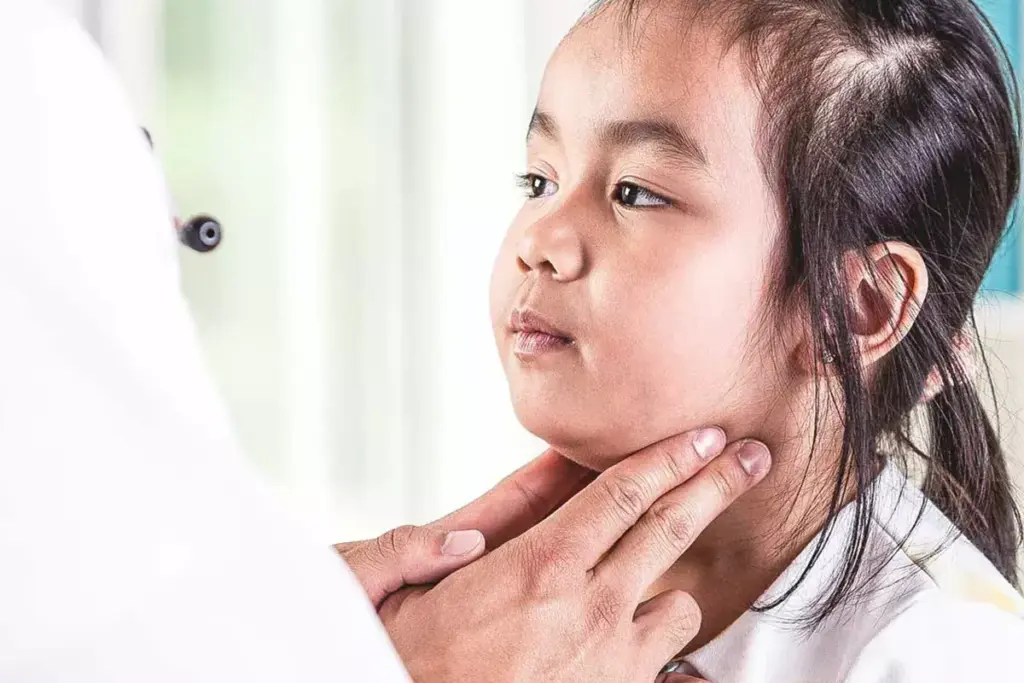
Graves disease in children is an autoimmune condition. It happens when the immune system attacks the thyroid gland. This makes the gland produce too much thyroid hormone.
This excess hormone causes hyperthyroidism. It can harm a child’s growth, development, and health.
The Autoimmune Nature of Graves Disease
Graves disease is an autoimmune disease. The immune system makes antibodies that tell the thyroid gland to make more thyroid hormones. This is the main problem in Graves disease.
The antibodies act like thyroid-stimulating hormone (TSH). They make the thyroid gland work too hard.
We don’t know what starts this autoimmune response. But genes and the environment might play a part. Knowing this helps doctors find the right treatment.
Prevalence and Risk Factors in Pediatric Patients
Graves disease is rare in kids but is the top cause of hyperthyroidism in them. It’s more common in girls who are just starting puberty or are in puberty. Girls are about 1.93 times more likely to get it than boys.
Girls might be at higher risk because of hormones or genes. This is why doctors look for these factors.
The risk factors for Graves disease in kids include:
- A family history of autoimmune thyroid diseases
- Presence of other autoimmune disorders
- Genetic predisposition
Knowing these risk factors helps doctors catch Graves disease early. Early treatment is important to avoid long-term problems. It ensures kids get the care they need.
7 Key Signs and Symptoms to Watch For

It’s important to know the signs of Graves’ disease in kids to get them help fast. Kids with Graves’ disease show many symptoms of Graves’ disease. These can affect their health and how they feel.
Physical Manifestations
Kids with Graves’ disease often have a big thyroid gland, or goiter. This happens because their thyroid gland gets too much stimulation. They might also have bulging eyes (exophthalmos), which is a key sign of the disease.
They might lose weight even when they’re hungry. This is because their body is working too fast because of too many thyroid hormones. They could also have a fast heart rate and sweat a lot. They might not be able to handle heat well because their body’s thermostat is off.
Behavioral and Cognitive Changes
Graves’ disease can also change how kids act and think. They might have trouble paying attention and do worse in school. These changes can upset kids and their families.
Some kids might feel their mood change quickly. This can be hard for parents to handle. It’s important to know these mood swings are part of the disease, not bad behavior.
Knowing these hyperthyroidism symptoms in kids and thyroid symptoms in children helps parents and doctors help kids. Spotting these signs early can make a big difference in a child’s life with Graves’ disease.
Diagnosis of Pediatric Graves Disease
Diagnosing Graves’ disease in kids takes a detailed approach. It includes both clinical checks and lab tests. Early detection is key to avoid serious issues and improve life quality for kids with Graves’ disease.
Recognizing the Need for Medical Attention
If your child loses weight without trying, has a fast heart rate, or seems really anxious, get them checked. These signs might mean their thyroid is working too hard. Seeing a doctor quickly can figure out what’s going on.
At the first visit, doctors will do a full check-up and ask about your child’s health history. This helps spot Graves’ disease signs and rule out other possible causes.
Diagnostic Tests and Procedures
Several tests are used to diagnose Graves’ disease:
- Thyroid Function Tests (TFTs): These check TSH (Thyroid-Stimulating Hormone), Free T4, and Free T3 levels. High Free T4 and Free T3, with low TSH, show hyperthyroidism.
- TRAb (TSH Receptor Antibodies) Test: This finds antibodies against the TSH receptor, a Graves’ disease sign.
| Diagnostic Test | Purpose | Indications for Graves’ Disease |
| TSH Test | Measures Thyroid-Stimulating Hormone levels | Low TSH levels |
| Free T4 and Free T3 Tests | Measures the levels of free thyroxine and triiodothyronine | Elevated levels |
| TRAb Test | Detects antibodies against the TSH receptor | Presence of TRAb antibodies |
Knowing about these tests and their meanings helps parents understand the diagnosis better. If your child is found to have Graves’ disease, it’s vital to work with your doctor to create a treatment plan that fits their needs.
Conclusion
Early diagnosis is key for kids with pediatric Graves’ disease. Spotting the signs early helps avoid serious problems later. We’ve talked about how to recognize Graves’ disease in kids, like fast heart rate and unexpected weight changes.
It’s also important to watch for changes in behavior, like trouble in school or mood swings. Knowing about Graves’ disease and its effects on kids is essential for parents and caregivers. Being alert to specific signs in different ages helps us act fast.
Tests like thyroid function tests and TRAb measurements help doctors figure out if it’s Graves’ disease. For more details on Graves’ disease in babies and kids, check out trusted health websites.
Keeping a record of symptoms is very important. It helps doctors understand the situation better. By working together, we can help kids with Graves’ disease stay healthy and happy.
FAQ
What is Graves’ disease in children?
Graves’ disease is an autoimmune condition that causes hyperthyroidism in children. This leads to symptoms that can affect their daily life.
What are the symptoms of Graves’ disease in children?
Symptoms include physical signs like goiter and bulging eyes. Children may also experience behavioral or cognitive changes, such as attention problems and mood swings.
Is Graves’ disease an autoimmune disease?
Yes, Graves’ disease is an autoimmune condition. It involves the production of antibodies that stimulate the thyroid gland, causing hyperthyroidism.
What hormone causes Graves’ disease?
Graves’ disease is caused by thyroid-stimulating immunoglobulins (TSI). These are antibodies that stimulate the thyroid gland to produce too many thyroid hormones.
How is Graves’ disease diagnosed in children?
Diagnosing Graves’ disease in children involves thyroid function tests and antibody assays. These tests confirm hyperthyroidism and the presence of TSI.
What are the risk factors for developing Graves’ disease in children?
Risk factors include a family history of the condition, being female, and certain genetic predispositions.
Can Graves’ disease be treated in children?
Yes, Graves’ disease can be treated in children. Treatment options include medications, radioactive iodine, and surgery, depending on the child’s health and the severity of the condition.
What are the possible complications of untreated Graves’ disease in children?
Untreated Graves’ disease can lead to serious complications. These include thyroid storm, heart problems, and osteoporosis. Early diagnosis and treatment are key to preventing these issues.
References
https://my.clevelandclinic.org/health/diseases/15244-graves-disease