
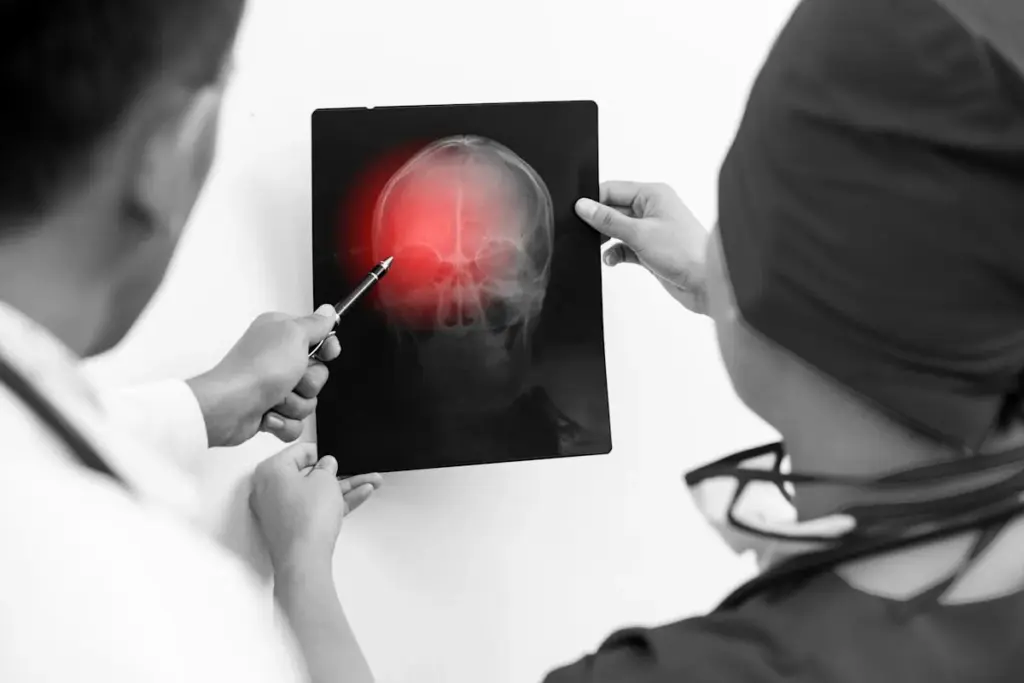
Traumatic Brain Injury (TBI) affects millions worldwide, leading to long-term disabilities. The complexity of TBI and its aftermath raises critical questions about eligibility for disability benefits. We aim to shed light on the complexities surrounding brain injuries and the eligibility criteria for disability benefits.
Conditions like cerebral palsy, multiple sclerosis, and neuropathy share similarities with TBI. By exploring these conditions alongside TBI and Parkinson’s disease, we can better comprehend the challenges faced by those affected.
Key Takeaways
- Understanding TBI and its implications for disability benefits.
- Exploring the relationship between TBI and other neurological conditions.
- The importance of medical documentation in disability claims.
- Legal considerations for individuals with TBI and related conditions.
- Support services available for individuals affected by TBI and similar conditions.
Understanding Traumatic Brain Injury (TBI)

TBI, or Traumatic Brain Injury, is a serious health issue. It happens when a sudden impact or force hits the head, messing with brain function. We’ll look into what TBI is, its types, causes, and how common it is.
Definition and Types o f TBI
Traumatic Brain Injury is when a head injury disrupts brain function. There are different kinds of TBI, including:
- Concussion: A mild TBI from a head or body blow, making the brain move inside the skull.
- Contusion: A brain bruise from a direct head hit.
- Penetrating Injury: When something pierces the skull and gets into the brain.
Knowing these types helps doctors diagnose and treat TBI.
Common Causes of Traumatic Brain Injury
TBI can come from many incidents, such as:
- Falls
- Motor vehicle accidents
- Sports injuries
- Violence or assault
The CDC says falls are the top cause of TBI, mainly in older adults and young kids.
The Impact of TBI on Daily Functioning
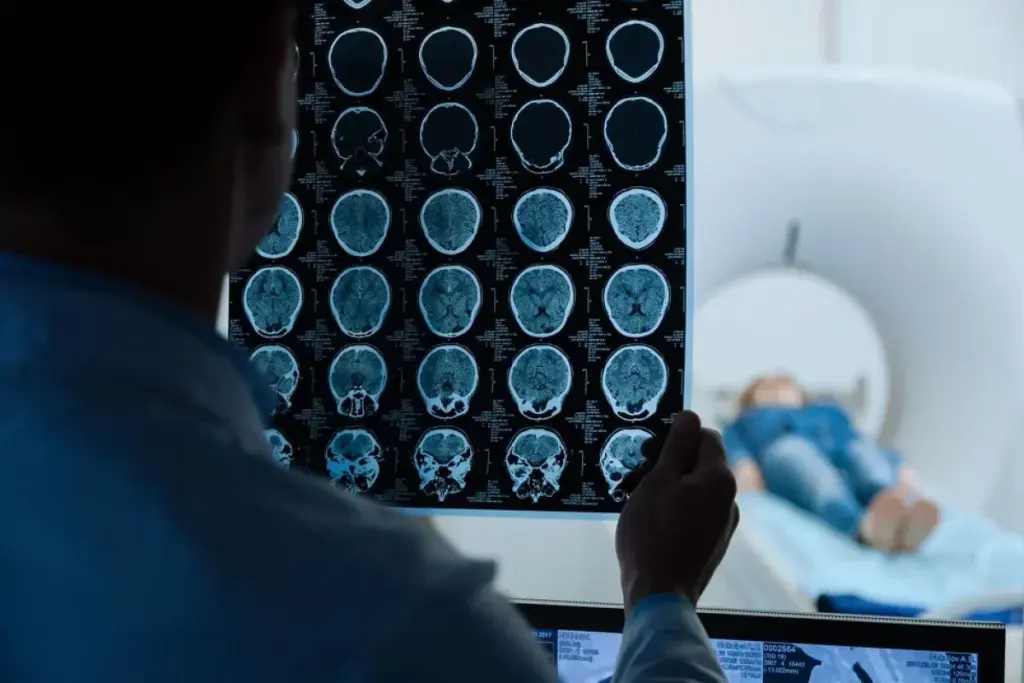
After a Traumatic Brain Injury, daily life can change a lot. People face physical, cognitive, and emotional challenges. The severity of these challenges depends on the injury.
Physical Limitations Following Brain Injury
Physical problems are common after TBI. They affect how well someone can move, balance, and coordinate. These issues can show up as:
- Difficulty with walking or maintaining balance
- Reduced strength or coordination in limbs
- Chronic pain or discomfort
- Fatigue or decreased endurance
These physical challenges make it hard to do daily tasks, stay active, or take care of oneself.
Cognitive Impairments and Their Effects
Cognitive problems after TBI can be as tough as physical ones. Common issues include:
- Memory loss or difficulty retaining new information
- Attention and concentration problems
- Executive function deficits, affecting planning and decision-making
- Language processing difficulties
These problems can make it hard to work, socialize, or manage daily life.
Emotional and Behavioral Changes
TBI can also cause big changes in emotions and behavior. These can include:
- Mood swings or increased irritability
- Depression or anxiety
- Impulsivity or decreased self-control
- Difficulty with emotional regulation
These changes can make it hard to keep relationships strong and can lower overall happiness.
It’s important to understand how TBI affects daily life. By recognizing physical, cognitive, and emotional challenges, we can help improve their lives. We can support them in returning to a normal life as much as possible.
Disability Benefits Overview in the United States
The Social Security Administration (SSA) offers two main disability programs. These programs help people who can’t work because of disabilities. It’s important to know about the different benefits and who can get them.
Types of Disability Programs Available
The SSA has two main programs: Social Security Disability Insurance (SSDI) and Supplemental Security Income (SSI). Both help people with disabilities financially. But, they have different rules for who can get them.
Social Security Disability Insurance (SSDI) Requirements
To get SSDI, you must have worked and earned Social Security credits. How many credits you need depends on your age when you become disabled. You also need a medical condition that the SSA says is disabling.
Supplemental Security Income (SSI) Eligibility
SSI is based on how much money you make and own. You must also be disabled, blind, or very old. The SSA has a strict rule for what counts as a disability for both SSDI and SSI.
|
Program |
Eligibility Criteria |
Benefits |
|---|---|---|
|
SSDI |
Work credits, disability status |
Cash benefits based on work history |
|
SSI |
Income/resources limits, disability status |
Cash benefits based on need |
TBI and Disability Qualification Criteria
To get disability benefits for Traumatic Brain Injury (TBI), knowing the Social Security Administration’s (SSA) rules is key. The SSA has a specific list for neurological disorders, like TBI, in its “Blue Book” of disabilities.
Social Security Administration’s Listing of Impairments
The SSA’s “Blue Book” lists neurological disorders, including TBI, under Section 11.00. To qualify, a person’s condition must match or be as severe as the criteria in this section.
Key criteria include:
- Documented evidence of TBI
- Detailed medical history
- Clinical findings
- Laboratory diagnostic tests
Meeting or Equaling a Listing with TBI
To get disability benefits, a person’s TBI must meet or equal the listing criteria. This means a detailed check of how severe the condition is and how it affects daily life.
“The SSA will assess the medical evidence to determine if the TBI meets or equals the listing criteria, considering factors such as cognitive function, motor function, and other relevant symptoms.”
Residual Functional Capacity Assessment
If a person’s TBI doesn’t meet or equal the listing, the SSA does an RFC assessment. This test finds out if someone can do work tasks despite their condition.
The RFC assessment considers:
- Mental abilities such as understanding, remembering, and carrying out instructions
- Physical abilities like lifting, carrying, and standing
- Other work-related skills and limitations
Knowing these criteria and how they apply to TBI cases is vital for the disability qualification process.
Medical Evidence Required for TBI Disability Claims
Having solid medical evidence is key to a successful TBI disability claim. It proves how severe the condition is. Knowing what medical records you need is vital for a strong claim.
Essential Medical Documentation
Several important medical documents are needed for a TBI disability claim. These include:
- Medical Records: Detailed records of all treatments, hospitalizations, and follow-up care related to the TBI.
- Diagnostic Tests: Results from imaging tests like MRI or CT scans, as well as other diagnostic assessments that confirm the presence and extent of TBI.
- Healthcare Professional Statements: Statements or reports from doctors, neurologists, and other healthcare professionals involved in the treatment, providing insight into the severity of the condition and its impact on daily functioning.
Importance of Neurological Evaluations
Neurological evaluations are critical in assessing TBI damage. These evaluations can include:
- Assessments of cognitive functions, such as memory, attention, and problem-solving abilities.
- Examinations to evaluate motor function, coordination, and balance.
- Tests to assess sensory functions and reflexes.
These evaluations help understand the severity of TBI. They show how it affects daily activities and work tasks.
Cognitive and Psychological Assessments
Cognitive and psychological assessments are key to understanding TBI’s mental and emotional effects. These assessments can reveal:
- Cognitive impairments, such as difficulties with concentration, memory, or decision-making.
- Psychological impacts, including depression, anxiety, or mood swings.
The Application Process for Disability with TBI
Understanding the application process for TBI disability benefits is key for those affected. The journey to get disability benefits has several steps. These include the initial application and the final decision.
Initial Application Steps
The first step is to gather all needed medical documents. This includes medical records, test results, and statements from doctors. It’s important to organize these documents well to support your claim.
After you have your medical documents ready, you can fill out the application form. The form asks for personal details, information about your TBI, and how it impacts your daily life. It’s important to be detailed and accurate when filling out the form.
Common Challenges in TBI Disability Applications
Applicants often face challenges in the application process. One common problem is not having enough medical evidence. Having detailed medical documents in your application can help with this.
Another challenge is understanding the SSA’s complex guidelines. Knowing these guidelines and how they apply to your case can improve your chances of success.
Timeline Expectations and Processing Times
The time it takes for the SSA to process applications varies. On average, it takes 3 to 5 months for the first decision. But, this time can be longer if more information is needed or if the application needs to be looked at again.
|
Stage |
Average Processing Time |
Description |
|---|---|---|
|
Initial Application |
3-5 months |
The SSA reviews your application and medical evidence. |
|
Reconsideration |
3-5 months |
If your initial application is denied, you can request a reconsideration. |
|
Administrative Hearing |
6-12 months |
If your claim is denied again, you can request a hearing with an Administrative Law Judge. |
Knowing these timelines and preparing can help manage expectations and reduce stress during the application process.
Parkinson’s Disease and Disability Benefits
Parkinson’s disease is a complex disorder that affects millions. It raises important questions about disability benefits. We need to know its symptoms, how it progresses, and if it meets the SSA’s guidelines for benefits.
Symptoms and Progression
Parkinson’s disease has motor and non-motor symptoms. The main motor symptoms are tremors, stiffness, and slow movement. As it gets worse, people find it hard to do daily tasks and move around.
The disease’s progression is different for everyone, but it usually makes things harder over time.
“The symptoms of Parkinson’s disease can be quite debilitating, affecting not just the individual but also their family and caregivers,” as noted by Parkinson’s Disease Foundation. Knowing these symptoms is key to seeing if someone needs disability benefits.
Qualification Under SSA Guidelines
The SSA checks Parkinson’s disease under its Listing of Impairments, focusing on neurological disorders. To get disability benefits, the disease must severely limit one’s ability to work. The SSA looks for symptoms like rigidity, slow movement, and tremors that make everyday tasks hard.
It’s important to show how the disease affects daily life and work ability for a successful claim.
- Detailed medical records showing the disease’s progression
- Documentation of symptoms and their impact on daily functioning
- Evidence of treatment and how well it works
Similarities with TBI Evaluations
There are similarities between the SSA’s evaluation of Parkinson’s disease and Traumatic Brain Injury (TBI). Both are neurological conditions that can greatly affect thinking and physical abilities. The SSA looks at symptom severity, daily life impact, and work ability for both conditions.
This shows how important detailed medical records are for disability claims.
Understanding Parkinson’s disease and its impact on disability benefits is key. With detailed medical evidence and knowledge of the SSA’s process, people can better get the benefits they need.
Neurological Conditions Related to TBI
Traumatic Brain Injury (TBI) can cause many secondary neurological conditions. These conditions can make life harder for the person affected. They can start right after the injury or take time to show up, making recovery harder and affecting health long-term.
Secondary Conditions Developing After TBI
People with TBI might face many secondary conditions. These can include problems with thinking, mood changes, and physical issues. It’s important to watch for these closely to help them get the right care and support.
Increased Risk of Parkinson’s Disease Following TBI
Studies show TBI might raise the chance of getting Parkinson’s Disease. This disease makes moving hard, causing tremors, stiffness, and slow movements. Knowing this risk helps both patients and doctors plan better and try to lower some risks early on.
Epilepsy and Seizure Disorders Post-TBI
Another big problem after TBI is epilepsy and seizure disorders. Seizures can happen right after the injury or later. To manage epilepsy, a detailed treatment plan is needed, which might include medicines and changes in daily life.
Other Qualifying Neurological Conditions
Many neurological conditions can qualify for disability benefits. These include multiple sclerosis, cerebral palsy, and others. These conditions can greatly affect a person’s life, making it hard to work and do daily tasks.
Multiple Sclerosis and Disability Benefits
Multiple sclerosis (MS) is a chronic disease that attacks the central nervous system. The Social Security Administration (SSA) sees MS as a condition that might qualify for disability benefits. To qualify, you need to provide detailed medical records, including:
- Diagnosis confirmation through MRI or other tests
- Detailed medical history and clinical findings
- Evidence of significant limitations in daily activities and ability to work
Multiple sclerosis can cause many symptoms, like vision problems and muscle weakness. It can also make it hard to coordinate and balance. How severe and how fast MS gets worse can affect if you qualify for disability benefits.
Cerebral Palsy Disability Qualification
Cerebral palsy is a group of permanent disorders that appear in early childhood. They affect movement, muscle tone, and coordination. The SSA sees cerebral palsy as a disabling condition that might qualify for disability benefits. They look at how severe the condition is and how it affects your ability to work and function.
Important factors in determining eligibility include:
- The level of motor impairment
- Presence of associated conditions such as epilepsy or intellectual disability
- The need for assistive devices for mobility or daily living activities
Cerebral palsy is not just one condition but a range of disorders with different levels of severity. Early diagnosis and treatment are key to managing the condition and improving life quality for those affected.
Peripheral Neuropathy and Nervous System Disorders
Peripheral neuropathy is damage or disease affecting peripheral nerves. It can impair sensation, movement, gland, or organ function, or other aspects of health. The SSA looks at how severe peripheral neuropathy is and how it limits your ability to do work-related activities.
To qualify for disability benefits, you need to provide:
- Electromyography (EMG) and nerve conduction studies
- Detailed descriptions of symptoms and clinical findings
- Evidence of how the condition limits daily activities and work capacity
Peripheral neuropathy can be caused by many things, like diabetes, nutritional deficiencies, and toxins. Its symptoms can range from mild numbness or tingling to severe pain or complete loss of sensation. This can greatly affect a person’s quality of life and ability to work.
The Role of Vocational Factors in TBI Disability Determinations
When deciding if someone with TBI is eligible for disability, looking at vocational factors is key. These include age, education, work history, and skills that can be used in other jobs. The Social Security Administration (SSA) uses these factors to decide on disability claims.
Age Considerations in Disability Decisions
Age is very important when deciding on disability. The SSA thinks about how well someone can adjust to new jobs based on their age. Older people might find it harder to learn new jobs, which affects disability decisions.
Education and Work Experience Factors
What someone learned in school and their work history also matter a lot. The SSA checks if these can help someone with TBI do other jobs. It’s about seeing if they have the skills for new jobs.
|
Vocational Factor |
Consideration in TBI Disability Claims |
|---|---|
|
Age |
Affects adaptability to new work environments |
|
Education |
Influences ability to learn new skills |
|
Work Experience |
Provides relevant skills for new jobs |
Transferable Skills Analysis
Transferable skills are skills from old jobs that can be used in new ones. The SSA looks at these skills to see if someone with TBI can do other jobs. They consider how well someone can do these jobs based on their abilities.
The SSA uses age, education, work history, and transferable skills to make decisions on TBI disability claims. Knowing about these factors helps people going through the disability application process.
Denied Claims and the Appeals Process
Many people face denials for their TBI disability claims at first. But, the appeals process gives them a second chance. It’s a complex journey, but knowing the steps can help improve your chances of success.
Understanding Why TBI Claims Get Denied
Claims are often denied for not having enough medical evidence. Or, it might be because the condition’s severity is unclear. Or, they might not meet the SSA’s specific criteria. It’s key to know why your claim was denied to tackle these issues in your appeal.
“The appeals process is a critical part of the disability claims system,” says the SSA. It gives applicants a chance to add more evidence and clear up any misunderstandings from the initial denial.
Reconsideration and Administrative Hearings
The first appeal step is a reconsideration of your denied claim. This involves a full review by someone not involved in the first decision. If it’s denied again, you can ask for a hearing before an Administrative Law Judge (ALJ).
- Reconsideration: A detailed review of the initial claim and any new evidence.
- Administrative Hearing: A personal hearing with an ALJ where you can present your case.
At the administrative hearing, it’s good to have a qualified attorney or advocate to help present your case. They can answer any questions the ALJ might have.
Appeals Council and Federal Court Reviews
If the ALJ denies your claim, you can ask the SSA’s Appeals Council to review it. The Appeals Council will look at the case and decide or send it back to an ALJ. If they deny your request, you can take it to federal court.
The appeals process for TBI disability claims needs patience and persistence. But, with the right support and understanding, you can get through this challenging journey.
Working with an Attorney or Advocate
When dealing with TBI disability claims, having an experienced attorney or advocate can make a big difference. They can help a lot in the application process.
Benefits of Professional Representation
Having a professional by your side can greatly improve your chances of winning a disability claim. Attorneys and advocates know the application process well. They offer great help.
- Expert guidance through the often-complex disability claims process
- Assistance in gathering and organizing necessary medical documentation
- Representation during hearings and appeals, if necessary
With their help, people with TBI can better understand the system. This can increase their chances of getting the benefits they need.
Finding Qualified Legal Assistance
Finding the right attorney or advocate is key for good representation. Here are some tips to help you:
|
Criteria |
Description |
|---|---|
|
Experience |
Look for attorneys or advocates with a proven track record in handling TBI disability claims. |
|
Specialization |
Ensure they specialize in Social Security Disability law. |
|
Reputation |
Check for client testimonials and reviews to gauge their reputation. |
Fee Structures for Disability Representatives
It’s important to understand how attorneys and advocates get paid. This way, you won’t face unexpected costs. Fees are usually based on the case’s outcome.
Most often, they work on a contingency fee. This means they get a percentage of the back pay if you win your claim.
Temporary vs. Permanent Disability for TBI
It’s important to know the difference between temporary and permanent disability for those with Traumatic Brain Injury (TBI). The severity of TBI can greatly affect the outcome, leading to different levels of disability.
Short-term Disability Options
Short-term disability benefits offer financial help during the early stages of recovery from TBI. These benefits usually last up to 90 or 180 days, based on the insurance or disability program.
These options are for those expected to get better quickly. But, TBI can be unpredictable, and some might need more time to recover.
Long-term and Permanent Disability Considerations
If TBI causes lasting problems, long-term or permanent disability benefits might be needed. The Social Security Administration (SSA) offers benefits for those with conditions lasting at least a year or leading to death.
To get permanent disability benefits, a detailed assessment of Residual Functional Capacity (RFC) is required. This checks how well someone can do work-related tasks despite their disabilities.
Continuing Disability Reviews
People getting disability benefits, like those with TBI, face Continuing Disability Reviews (CDRs). These reviews check if their condition has improved or if they’re truly unable to work.
These reviews are key to making sure people get the right support. It’s also important for them to understand the CDR process and be ready to provide new medical evidence.
Veterans and TBI Disability Benefits
TBI can have lasting effects on veterans. It’s important to look into disability benefits from the VA. Veterans who got TBI in service might get disability compensation.
VA Disability Compensation for TBI
The VA gives disability compensation for injuries or diseases from military service. For TBI, they check how bad the injury is and how it affects daily life and work.
Key factors in determining VA disability compensation for TBI include:
- The severity of the TBI
- The presence of any residual symptoms or deficits
- The impact on the veteran’s ability to perform daily tasks and maintain employment
Service-Connected TBI Claims
To get VA disability for TBI, veterans must file a claim. They need to show their TBI is from service. This means providing medical records and testimony linking the TBI to their military time.
The process for filing a service-connected TBI claim includes:
- Gathering medical records and documentation of the TBI
- Completing and submitting the VA’s claim application
- Attending a medical examination scheduled by the VA to assess the TBI
Differences Between VA and Social Security Disability
The VA and SSA both offer disability benefits, but they’re different. The VA focuses on service-connected disabilities. The SSA looks at work history and ability to work.
Key differences include:
- Eligibility criteria: VA benefits require a service connection, while SSA benefits are based on work history and disability severity
- Benefit amounts: VA benefits can vary based on the veteran’s dependents and the severity of their disability, while SSA benefits are standardized
- Application process: The VA and SSA have different application and evaluation processes
It’s key for veterans to know these differences. This helps them get the right benefits they deserve.
Living with TBI While Receiving Disability Benefits
Receiving disability benefits can help financially for those with TBI. But, it’s also key to know how to use these benefits well. This means getting medical care, rehabilitation, and sometimes, help to go back to work.
Work Incentive Programs
Understanding work incentive programs is vital for TBI patients. These programs let people with disabilities work without losing their benefits. Ticket to Work is a program by the Social Security Administration (SSA). It offers support like vocational rehabilitation and training to help people find jobs.
These programs offer financial help and check if someone can work with their disability. This is a big step towards getting better and being independent for TBI patients.
Rehabilitation and Treatment Options
Rehabilitation is key for TBI management. It includes physical, occupational, and speech therapy to help regain skills. Rehabilitation programs are made for each person’s needs and can greatly improve their life.
Also, ongoing medical care is important for managing TBI symptoms and secondary conditions. This includes taking medicine, counseling, and other therapies.
Managing Benefits and Healthcare
Managing disability benefits and healthcare is essential for TBI patients. It means knowing about Social Security Disability Insurance (SSDI) and Supplemental Security Income (SSI). It also involves understanding how they work with Medicare and Medicaid.
Good management of benefits and healthcare needs teamwork. This includes healthcare providers, the individual, and sometimes, legal or advocacy help. It makes sure the person gets all the care and support they need.
Resources and Support for TBI and Parkinson’s Patients
For those with TBI and Parkinson’s, finding the right help is key. Many groups and programs offer support, advice, and a sense of community. This can greatly improve life quality.
National Organizations and Advocacy Groups
National groups are essential for those with TBI and Parkinson’s. They provide help, support, and advocate for their needs. Some well-known ones are:
- The Brain Injury Association of America (BIAA) helps TBI survivors and their families with education and support.
- The Parkinson’s Disease Foundation (PDF) offers information on treatments, support, and research updates.
- The Michael J. Fox Foundation for Parkinson’s Research (MJFF) focuses on funding research and helping patients.
These groups have local chapters. They share a lot of information on managing symptoms and finding treatments.
State Programs and Local Resources
State and local resources also help those with TBI and Parkinson’s. They include:
- State brain injury associations offer support groups, rehab services, and advocacy.
- Local Parkinson’s groups provide a community for patients and caregivers.
- Regional clinics offer treatments tailored to individual needs.
Using these resources can really improve life for those with TBI and Parkinson’s.
Conclusion
Understanding Traumatic Brain Injury (TBI) and other neurological conditions is key. We’ve looked into TBI’s definition, causes, and how it affects daily life. We’ve also seen how it ties into getting disability benefits.
People with TBI and other conditions face big challenges every day. The disability system aims to help them, but getting benefits can be tough.
Knowing what medical proof is needed for TBI claims helps a lot. So does understanding how work skills play a part in decisions. Working with a lawyer or advocate can make things easier.
In short, TBI and other conditions greatly affect a person’s life. We aim to help people understand the disability system better. This way, they can get the support they need to live better.
FAQ
What is Traumatic Brain Injury (TBI) and how does it affect daily functioning?
TBI is caused by external forces that damage the brain. It leads to physical, cognitive, and emotional impairments. It can affect daily tasks, employment, and social activities.
How does TBI qualify for disability benefits under the Social Security Administration (SSA)?
The SSA checks TBI’s severity using the Listing of Impairments or Residual Functional Capacity (RFC). The RFC looks at work abilities despite the condition.
What medical evidence is required for a TBI disability claim?
You need neurological, cognitive, and psychological assessments. Also, detailed medical records are essential. They show the condition’s severity and its impact.
Can TBI increase the risk of developing other neurological conditions like Parkinson’s disease or epilepsy?
Yes, TBI can raise the risk of Parkinson’s disease and epilepsy. These conditions can worsen health and affect disability benefits.
How do vocational factors influence TBI disability determinations?
Age, education, work experience, and skills are considered. They help assess job adaptability or previous role continuation.
What is the difference between temporary and permanent disability for TBI?
Temporary benefits are for short-term conditions. Permanent benefits are for long-term or irreversible ones. This is key for the right benefits and future reviews.
Are there specific considerations for veterans with TBI when applying for disability benefits?
Yes, veterans with TBI might get VA disability compensation. The VA process is different from SSA’s. Knowing this is important for applying.
What resources are available for individuals living with TBI and Parkinson’s disease?
There are national organizations, state programs, and online communities. They offer information, advocacy, and support for managing conditions and benefits.
How can an attorney or advocate assist with TBI disability claims?
An attorney or advocate can greatly help. They guide through the application, gather evidence, and represent in appeals if needed.
What are the work incentives available for individuals receiving disability benefits for TBI?
Work incentives let people with benefits try work without losing them. They support rehabilitation and work reintegration.
Can individuals with TBI and other neurological conditions like Multiple Sclerosis or Cerebral Palsy qualify for disability benefits?
Yes, people with neurological conditions like Multiple Sclerosis and Cerebral Palsy can qualify. They must meet SSA’s criteria or show significant work impairment.
Reference
Centers for Disease Control and Prevention. Evidence-Based Medical Insight. Retrieved from https://www.cdc.gov/traumatic-brain-injury/index.html