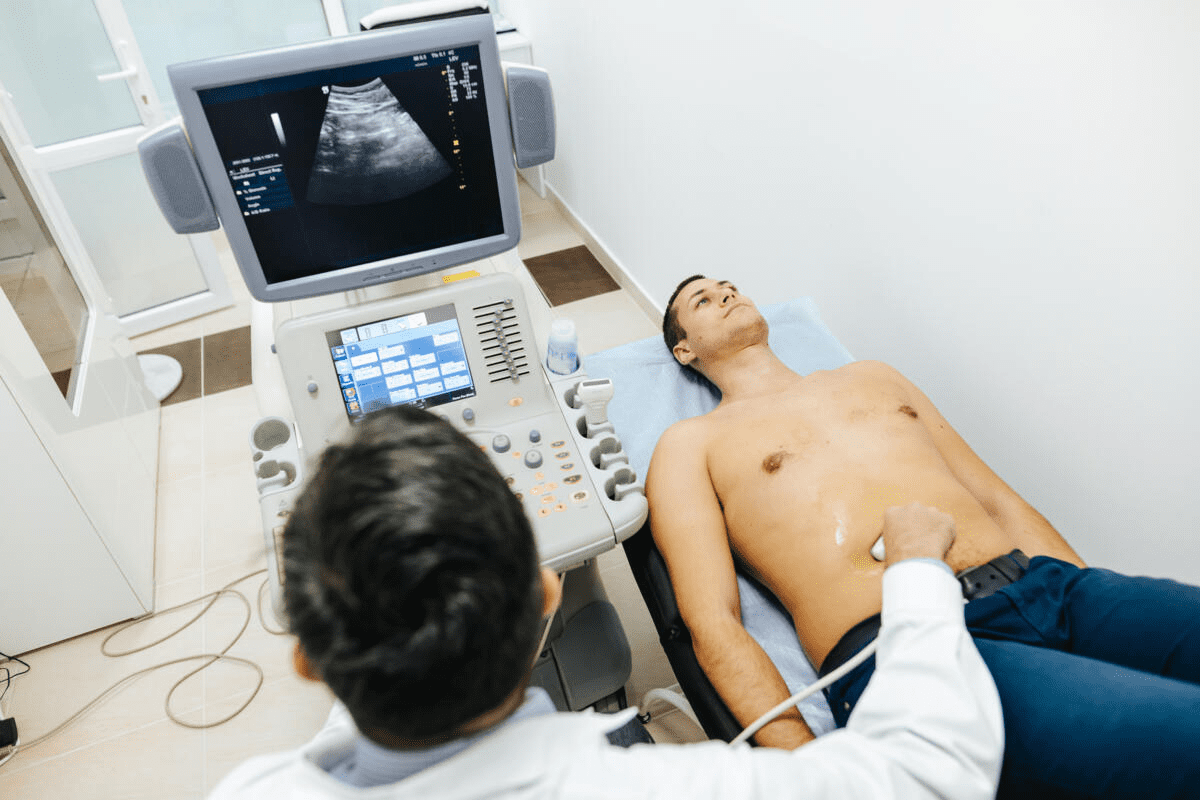
The abdominal cavity is the biggest hollow area in our bodies. It holds many important organ systems. It goes from the diaphragm up to the pelvic inlet down, helping us stay alive.This is your ultimate guide to abdominal cavity anatomy. Learn 7 amazing key organs, their locations, and their vital functions.
It’s key to know about the organs in this complex area. They help with digestion, getting rid of waste, and making babies. The intricate systems in the abdominal cavity are vital for our health.
At Liv Hospital, we focus on the latest medical knowledge and care that puts patients first. We use a deep understanding of anatomy to help our patients.
Key Takeaways
- The abdominal cavity houses multiple vital organs.
- It extends from the diaphragm to the pelvic inlet.
- Understanding the organs within is key for our health.
- The abdominal cavity has systems for digestion, urine, and making babies.
- Liv Hospital offers care that puts patients first, based on deep anatomy knowledge.
The Abdominal Cavity: Definition and Boundaries
The abdominal cavity is a key space for many organs. It houses the digestive, urinary, and reproductive systems. Knowing about it helps us understand how our body works.
Location and Anatomical Borders
The abdominal cavity has clear boundaries. The upper boundary is the diaphragm, a muscle that separates it from the chest. The lower boundary is the pelvic inlet, leading to the pelvic cavity. It’s surrounded by the vertebral column and abdominal muscles, keeping organs safe.
Relationship to Other Body Cavities
The abdominal cavity is connected to the pelvic cavity. They form the abdominopelvic cavity, housing vital organs. Knowing this connection is key for diagnosing and treating abdominal and pelvic issues.
Let’s look at what’s inside the abdominal cavity. It holds organs like the stomach, liver, kidneys, and intestines. These organs are essential for digestion, filtration, and other vital functions.
The table below lists the main organs in the abdominal cavity and their roles:
Organ | Primary Function |
Stomach | Digestion of food |
Liver | Detoxification, metabolism |
Kidneys | Filtration of blood, urine production |
Intestines | Absorption of nutrients |
Understanding the abdominal cavity’s definition, boundaries, and contents is vital. It helps us appreciate the complexity of human anatomy and its role in health.
Understanding Abdominal Cavity Anatomy
Knowing the anatomy of the abdominal cavity is key for diagnosing and treating health issues. This space is complex and holds vital organs, like those in the digestive system.
Structural Organization
The abdominal cavity is set up to protect its contents. It’s surrounded by abdominal muscles and the spine. This creates a safe space for the organs inside. It’s split into two main areas: the peritoneal cavity and the retroperitoneal space.
The peritoneal cavity is between the peritoneum’s two layers. The retroperitoneal space holds organs like the kidneys and pancreas, hidden behind the peritoneum.
Quadrants and Regions
Healthcare experts divide the abdominal cavity into quadrants and regions for better understanding. It’s split into four quadrants: right upper, left upper, right lower, and left lower.
It’s also divided into nine regions for more detail. These include the right and left hypochondriac regions, the epigastric region, and more.
Understanding the cavity’s structure and divisions helps us locate organs and their functions. The abdominal cavity is home to key digestive system organs, like the stomach and liver.
The Peritoneum: The Cavity’s Protective Lining
The peritoneum is a vital lining for the abdominal cavity. It helps internal organs work smoothly. This membrane lines the cavity and surrounds the organs, giving them support and protection.
Structure of the Peritoneum
The peritoneum has two layers: the parietal and visceral peritoneum. The parietal peritoneum covers the abdominal wall. The visceral peritoneum wraps around the organs.
Between these layers is the peritoneal cavity. It has a small amount of fluid. This fluid makes it easier for organs to move without friction.
Peritoneal Fluid and Its Functions
Peritoneal fluid is key to keeping organs healthy. It reduces friction and helps with nutrient and waste exchange. This exchange is vital for organ function.
Function | Description |
Friction Reduction | Peritoneal fluid minimizes friction between organs and the abdominal wall, facilitating smooth movement. |
Nutrient and Waste Exchange | It serves as a medium for the exchange of nutrients and waste products between organs and the bloodstream. |
Infection Control | Peritoneal fluid contains cells and proteins that help in fighting infections within the peritoneal cavity. |
Understanding the peritoneum is key to grasping the abdominal cavity’s anatomy. It shows how organs are connected and work together.
Digestive Organs in the Abdominal Cavity
Our abdominal cavity is home to vital digestive organs. These organs are key to breaking down food and absorbing nutrients. They work together to make digestion possible, each with its own important role.
Stomach and Its Functions
The stomach is a vital part of our digestive system. It stores and mixes food with digestive enzymes and acids. It makes gastric juice with pepsin and hydrochloric acid to break down proteins.
The stomach’s muscles churn the food into a semi-liquid called chyme. This chyme then moves to the small intestine for more digestion.
Liver and Gallbladder
The liver is the largest organ inside us. It’s key for metabolism, detoxification, and making bile. The gallbladder, a small organ, stores bile under the liver.
The gallbladder sends bile to the small intestine through the bile duct. There, it helps digest fats and absorb fat-soluble vitamins.
Pancreas: Both Digestive and Endocrine Functions
The pancreas is special because it does two jobs. It makes digestive enzymes to break down food and hormones like insulin and glucagon to control blood sugar.
These enzymes go to the small intestine to help digest nutrients. The pancreas also produces hormones that regulate blood sugar levels.
Small Intestine: Duodenum, Jejunum, and Ileum
The small intestine is a long, thin tube with three parts: the duodenum, jejunum, and ileum. It’s where most nutrient absorption happens.
The small intestine’s walls have villi, which increase the surface area for absorption. The duodenum gets bile and pancreatic juice for more digestion.
Organ | Function |
Stomach | Stores and mixes food with digestive enzymes and acids |
Liver | Produces bile for fat digestion and aids in metabolism and detoxification |
Gallbladder | Stores and releases bile into the small intestine |
Pancreas | Produces digestive enzymes and hormones regulating blood sugar |
Small Intestine | Primary site for nutrient absorption |
Accessory Digestive Organs and Structures
There are many accessory structures in the abdominal cavity that help with digestion. They play a big role in keeping the digestive process going smoothly. These parts are key to the health of the abdominal area.
Spleen: Structure and Functions
The spleen is an organ that many people don’t understand. It’s in the upper left part of the belly. It helps clean the blood and supports the immune system.
“The spleen acts as a filter for the blood, removing pathogens and other foreign substances,” showing its role in fighting off infections.
Mesenteries and Omenta
Mesenteries and omenta are folds of tissue that support the digestive organs. They help move blood vessels and nerves around. The mesentery holds the intestine to the back of the belly. The omenta connect the stomach to other organs.
These parts are vital for keeping the digestive organs in place. They allow these organs to work right. As we said, “the peritoneum supports organ fixation through attachments,” which is true for mesenteries and omenta.
Peritoneal Ligaments
Peritoneal ligaments are fibrous connections between organs or the organs and the belly wall. They give extra support to the digestive organs. They help keep these organs in their right spot in the belly.
The mix of mesenteries, omenta, and peritoneal ligaments makes a complex network. This network supports the digestive organs and helps them work well. Knowing about these structures helps us understand the belly’s complexity.
Urinary System Components in the Abdominal Cavity
The abdominal cavity is home to key parts of the urinary system. Knowing about these parts helps us understand how they help us get rid of waste and stay healthy.
Kidneys: Structure and Function
The kidneys are shaped like beans and sit on either side of the spine. They are vital for filtering waste from our blood and controlling many body functions.
Kidney Structure: Inside, each kidney has an outer cortex, an inner medulla, and a renal pelvis. The cortex has nephrons, which are the kidney’s filters.
Ureters: Pathway to the Bladder
The ureters are muscular tubes that carry urine from the kidneys to the bladder. They use muscle contractions to push urine down.
Ureter Function: The ureters are key in keeping urine flowing one way. This ensures waste is efficiently removed from our bodies.
Adrenal Glands: Sitting Atop the Kidneys
The adrenal glands are small, triangular glands on top of each kidney. They make hormones that help control stress and balance electrolytes.
Organ | Location | Primary Function |
Kidneys | Either side of the spine | Filtering waste from blood |
Ureters | Between kidneys and bladder | Transporting urine |
Adrenal Glands | On top of kidneys | Producing hormones |
In conclusion, the abdominal cavity is where the kidneys, ureters, and adrenal glands live. Each one is important for our health and body functions.
Reproductive Connections to the Abdominal Cavity
The abdominal cavity is key for housing parts of the reproductive system. It’s vital for understanding human anatomy and reproductive health. We’ll look at both female and male reproductive structures in this context.
Female Reproductive Structures
The female reproductive system in the abdominal cavity includes the uterus and ovaries. These organs are essential for reproductive functions like conception and fetal development.
The uterus supports fetal growth during pregnancy. The ovaries produce eggs and hormones vital for female reproductive health.
Male Reproductive Connections
In males, the abdominal cavity houses parts of the reproductive system, like the testicular vessels and the ductus deferens. These structures are key for sperm transport.
The testicular vessels supply blood to the testes. The ductus deferens is involved in sperm storage and transport.
Reproductive Structures | Female | Male |
Organs within the Abdominal Cavity | Uterus, Ovaries | Testicular vessels, Ductus deferens |
Functions | Conception, Fetal development, Hormone production | Sperm transport, Testicular blood supply |
Understanding the connection between the abdominal cavity and the reproductive system is key. It helps us appreciate human anatomy and address reproductive health issues. Both female and male reproductive structures have important relationships with the abdominal cavity.
Vascular and Nervous Supply to Abdominal Organs
It’s key to know how blood and nerves reach the abdominal organs. This knowledge helps in diagnosing and treating many conditions. The organs get their blood and nerve supply from a complex network.
Major Blood Vessels
The aorta, the biggest artery, branches into several major vessels. The aorta gives rise to several key branches, like the celiac trunk and the superior mesenteric artery. These supply blood to the digestive system. The renal arteries directly branch from the aorta to the kidneys.
The hepatic artery comes from the celiac trunk and goes to the liver. The splenic artery goes to the spleen. The superior and inferior mesenteric arteries feed different parts of the intestines. Knowing each organ’s blood supply is vital for surgery and diagnosing vascular issues.
Nerve Innervation
The autonomic nervous system, with sympathetic and parasympathetic parts, supplies nerves to the organs. The sympathetic nervous system helps in the ‘fight or flight’ response. The parasympathetic nervous system supports ‘rest and digest’ activities.
The celiac plexus, or solar plexus, is a complex nerve network. It’s made of sympathetic and parasympathetic nerves. The vagus nerve, a key parasympathetic nerve, affects many organs’ functions.
Lymphatic System Components
The lymphatic system is vital for the immune function in the abdominal cavity. Lymph nodes are found throughout, filtering lymph and trapping pathogens. The mesenteric lymph nodes are key, draining lymph from the intestines.
Lymphatic vessels follow blood vessels, helping to drain lymph from organs. Knowing about lymphatic drainage is important for understanding infection and cancer spread in the abdominal cavity.
Conclusion
The abdominal cavity is a key part of our body. It holds organs from the digestive, urinary, and reproductive systems. Knowing what’s inside and how these organs work together is important for understanding human anatomy.
We’ve looked at the organs in the abdominal cavity. This includes the stomach, liver, and pancreas for digestion. The kidneys and ureters help with urine. All these work together to keep us healthy.
Knowing about the abdominal cavity and its organs helps us stay healthy. The way these organs interact shows how complex our bodies are.
Understanding the organs in the abdominal cavity is vital. It shows why we need to take care of this area. The abdominal cavity is essential for many body functions.
FAQ
What is the abdominal cavity?
The abdominal cavity is a complex space in the body. It holds vital organs for digestion, waste, and reproduction.
What organs are found in the abdominal cavity?
Inside the abdominal cavity are organs from the digestive, urinary, and reproductive systems. You’ll find the stomach, liver, pancreas, kidneys, and more.
What is the peritoneum, and what is its role?
The peritoneum is a protective lining in the abdominal cavity. It helps organs move smoothly and reduces friction between them.
What are the boundaries of the abdominal cavity?
The abdominal cavity is surrounded by the vertebral column and abdominal muscles. This makes it a safe space for vital organs.
How is the abdominal cavity organized anatomically?
The abdominal cavity is divided into quadrants and regions. This helps us locate and understand the functions of various organs.
What is the function of the digestive organs in the abdominal cavity?
Digestive organs like the stomach, liver, and small intestine break down food. They also absorb nutrients for the body.
What are accessory digestive organs, and what is their significance?
Accessory digestive organs, such as the spleen and mesenteries, support the digestive system. They help with digestion and nutrient absorption.
What components of the urinary system are found in the abdominal cavity?
The kidneys, ureters, and adrenal glands are part of the urinary system in the abdominal cavity.
How does the abdominal cavity relate to the reproductive system?
The abdominal cavity houses reproductive structures in both males and females. This shows the complexity and interconnectedness of the human body.
What is the vascular and nervous supply to the abdominal organs?
Abdominal organs get their blood supply and nerve innervation from major vessels and nerves. The lymphatic system also plays a key role in their function.
Why is understanding the abdominal cavity important?
Knowing about the abdominal cavity helps us appreciate human anatomy. It aids in diagnosing conditions and maintaining health.
References:
World Health Organization. Abdominal Cavity: Organ Systems and Location. Retrieved from https://www.who.int/human-anatomy-abdominal-cavity