Cardiac arrhythmias affect millions globally, making daily life tough. Cardiac ablation is a treatment that aims to fix this by targeting the arrhythmia’s source.
Choosing to have ablation surgery means looking at its good points and bad. It can change lives, but knowing what it means is key.
Get the definitive answer: is ablation worth the risk? Understand the risk-benefit analysis for the procedure clearly.
Key Takeaways
- Cardiac ablation treats irregular heartbeats by destroying abnormal electrical pathways.
- The procedure can significantly improve quality of life for those with arrhythmias.
- Understanding the risks and benefits is critical for making an informed choice.
- Ablation is considered when other treatments have failed or are not suitable.
- The meaning of ablation in a medical context refers to the removal or destruction of tissue.
What is Cardiac Ablation?
Cardiac ablation is a medical procedure that treats heart rhythm disorders. It destroys or scars the heart tissue causing the abnormal rhythm. This helps restore a normal heartbeat.
Definition and Basic Concept
Cardiac ablation is a minimally invasive procedure. It uses energy to destroy or scar heart tissue causing abnormal heart rhythms. This is done by using catheters to deliver energy to the heart’s specific areas.
Historical Development of Ablation Techniques
The first catheter ablations were done in the 1980s. At first, direct current (DC) shock was used, but it had big risks. Then, radiofrequency ablation came along, making treatments safer and more controlled.
Over time, new techniques have been developed. These advancements in electrophysiology have made treatments more precise and effective for different arrhythmias.
| Technique | Description | Advantages |
| Radiofrequency Ablation | Uses heat to destroy abnormal electrical pathways. | High success rate, minimal damage to surrounding tissue. |
| Cryoablation | Uses extreme cold to freeze abnormal electrical pathways. | Less risk of damaging surrounding tissue, reversible. |
| Laser Ablation | Uses laser energy to destroy abnormal electrical pathways. | Precise, can be used for complex arrhythmias. |
Common Types of Ablation Procedures
Cardiac ablation procedures have grown to include many techniques. Each has its own benefits and uses. The right method depends on the heart condition, the patient’s health, and the doctor’s advice.
Radiofrequency Ablation
Radiofrequency ablation is a popular choice. It uses high-frequency energy to make precise lesions on heart tissue. This stops abnormal electrical pathways. It’s great for treating atrial fibrillation and supraventricular tachycardia.
Cryoablation
Cryoablation, or cryotherapy, freezes abnormal heart tissue. It’s gentler on nearby tissue than radiofrequency. It’s good for some arrhythmias, mainly in younger patients or those with certain heart issues.
Laser and Ultrasound Ablation
Laser ablation and ultrasound ablation are less common but useful. Laser ablation uses a strong laser beam, while ultrasound uses sound waves. These options are for patients not fit for other methods.
Having many ablation techniques helps doctors find the best treatment for each patient. This improves results and lowers risks.
Medical Conditions Treated with Ablation
Ablation therapy helps manage several heart rhythm problems. It targets specific heart areas causing irregular beats. This can offer relief for those with various heart conditions.
Atrial Fibrillation (AFib)
Atrial fibrillation, or AFib, is a common heart issue. It causes an irregular and fast heart rate. Ablation for AFib creates lesions to block abnormal signals. This can help restore a normal heart rhythm and ease symptoms.
Supraventricular Tachycardia (SVT)
Supraventricular tachycardia (SVT) makes the heart beat too fast. SVT ablation aims at the heart pathways causing this. It offers a chance to cure this condition.
Ventricular Arrhythmias
Ventricular arrhythmias start in the heart’s ventricles and can be dangerous. Ablation treats these by destroying bad electrical paths. The table below lists conditions treated with ablation:
| Condition | Description | Ablation Treatment |
| Atrial Fibrillation (AFib) | Irregular, rapid heart rate | Creating lesions to isolate abnormal signals |
| Supraventricular Tachycardia (SVT) | Rapid heartbeat due to abnormal impulses | Targeting pathways responsible for rapid heartbeat |
| Ventricular Arrhythmias | Life-threatening arrhythmias originating in ventricles | Destroying abnormal electrical pathways |
The Ablation Procedure: Step by Step
The cardiac ablation process starts with preparation, a precise procedure, and care after. It’s designed to help patients with heart rhythm disorders. Each step is important for the best results.
Pre-Procedure Preparation
Before the ablation procedure, tests are done to understand the heart. These include an electrophysiology study, echocardiogram, and blood tests. Doctors also talk about medication, diet, and other steps to keep patients safe.
During the Procedure
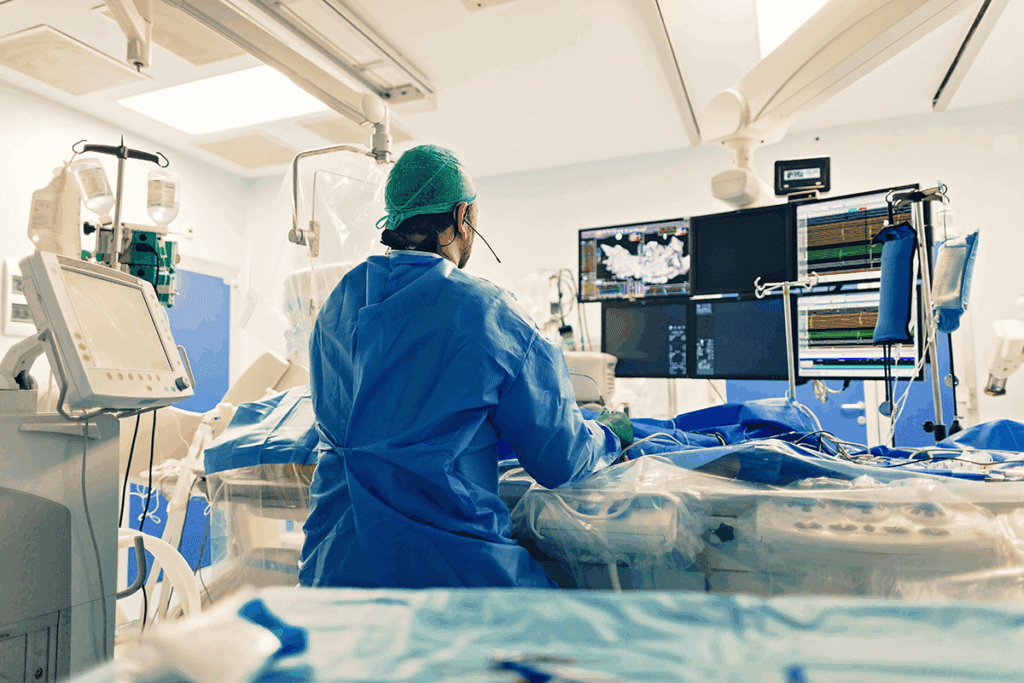
During the catheter ablation, patients get sedation to relax. Catheters are inserted through a leg vein and guided to the heart. They deliver energy to stop the abnormal heart rhythm.
The procedure happens in an electrophysiology laboratory. It’s done by a team of experts. It usually takes a few hours.
Immediate Post-Procedure Care
After the procedure, patients are watched for hours in a recovery area. They’re told to rest and avoid heavy lifting. Some might feel sore or have a strange heart feeling, but these usually go away.
Potential Benefits of Ablation
For many patients, ablation is a game-changer. It provides significant relief from symptoms of heart rhythm disorders. This procedure can offer numerous benefits, improving the quality of life for those affected.
Symptom Relief and Quality of Life Improvements
One of the main advantages of cardiac ablation is symptom relief. It corrects the heart rhythm issue, reducing symptoms like palpitations and shortness of breath. This leads to improvements in quality of life, allowing people to do daily activities without arrhythmia symptoms.
Studies show successful ablation can greatly improve patients’ well-being. It enables them to live more active and fulfilling lives.
Reduced Medication Dependency
Ablation can also lead to reduced dependency on antiarrhythmic medications. For some, it can eliminate the need for long-term medication. This avoids side effects and simplifies treatment, improving health.
Potential for Complete Cure
In some cases, cardiac ablation offers the chance for a complete cure of certain arrhythmias. It targets and eliminates the source of the abnormal heart rhythm. This can restore a normal heart rhythm, effectively curing the condition. This makes ablation a good option for some patients.
Short-Term Risks of Cardiac Ablation
Cardiac ablation is usually safe but has short-term risks. It’s important for patients to know these risks. This knowledge helps in making informed decisions.
Common Side Effects
Common side effects include pain at the catheter site, fatigue, and mild chest pain. These usually go away in a few days.
- Discomfort at the catheter insertion site
- Fatigue
- Mild chest discomfort
Serious Complications
Though rare, serious complications can happen. These include cardiac tamponade and pulmonary vein stenosis. Other risks are stroke, heart attack, or damage to the heart’s electrical system.
Serious complications may include:
- Cardiac tamponade
- Pulmonary vein stenosis
- Stroke or heart attack
- Damage to the heart’s electrical system
Procedure-Related Mortality Rates
The risk of death from cardiac ablation is very low, under 1%. This risk depends on the patient’s health, the procedure’s complexity, and the doctor’s experience.
Knowing the risks of cardiac ablation is key for patients. It helps in understanding the procedure’s safety. Being aware of possible complications helps manage expectations and outcomes.
Long-Term Risks and Considerations
Cardiac ablation can treat arrhythmias, but it’s important to know its long-term effects. This knowledge helps patients and doctors make better choices.
Arrhythmia Recurrence Rates
One big risk is arrhythmias coming back. The chance of this happening depends on the type of arrhythmia and the treatment method. For example, atrial fibrillation (AFib) might return in 20% to 50% of people within a few years.
Many things can affect if arrhythmias come back. These include the doctor’s skill, the technology used, and the patient’s health.
Pulmonary Vein Stenosis
Pulmonary vein stenosis is another risk, often seen in AFib treatments. It’s when the pulmonary veins narrow, causing shortness of breath and chest pain. Thanks to new techniques and technology, this problem is less common now.
Knowing about these risks helps manage what patients expect and improves their care. Doctors can give better advice on the benefits and risks of cardiac ablation.
Recovery After Ablation
Knowing what to expect during recovery after ablation is key. It helps manage hopes and leads to the best results. The recovery time is very important. It affects how well the procedure works and how quickly you can get back to your usual life.
Typical Recovery Timeline
The time it takes to recover from cardiac ablation varies. Most people need a few days to a week at home before they can do normal things again. Some might heal faster, while others might take longer.
Activity Restrictions and Limitations
During recovery, some activities are off-limits. This is to avoid problems and help you heal well. You might not be able to lift heavy things, do hard exercises, or drive for a while. Eating well and taking your medicine as told is also important.
Knowing about these recovery steps helps you prepare for the time after your procedure. It sets you up for the best possible outcome.
Success Rates of Ablation by Condition
The success of ablation procedures changes a lot based on the heart condition being treated. It’s used for many arrhythmias like Atrial Fibrillation (AFib), Supraventricular Tachycardia (SVT), and Ventricular Arrhythmias. Knowing the success rates for each condition helps both patients and doctors make better choices.
Success Rates for AFib Ablation
Ablation for AFib is a complex process with varying success rates. Research shows that the success rate for AFib ablation can be between 50% to 80% at one year after the procedure. Success depends on how long the AFib has lasted, who is chosen for the procedure, and the skill of the doctor.
Success Rates for SVT Ablation
SVT ablation usually has higher success rates than AFib. It’s often a simpler procedure, with success rates over 90%. SVT is usually more focused, making it easier to target and remove during the procedure.
| Condition | Success Rate Range |
| AFib | 50-80% |
| SVT | 90%+ |
In conclusion, ablation success rates differ by condition. SVT ablation has higher success rates than AFib ablation. It’s important to understand these differences to manage patient hopes and make informed treatment choices.
Life Expectancy and Quality of Life After Ablation
Ablation is a key treatment for heart rhythm disorders. It greatly affects patients’ life expectancy and quality of life. The procedure helps treat conditions like atrial fibrillation and supraventricular tachycardia, leading to better outcomes for patients.
Statistical Outcomes on Mortality
Studies show ablation can improve life expectancy for heart rhythm disorder patients. Compared to medication alone, ablation lowers mortality rates. For example, a study in the Journal of the American College of Cardiology found it cuts death and stroke risks in atrial fibrillation patients.
Patient-Reported Quality of Life Improvements
Ablation also boosts quality of life for many patients. Patient-reported outcomes show fewer symptoms, better physical function, and higher well-being. A study in the Journal of Cardiovascular Electrophysiology found atrial fibrillation patients greatly improved their quality of life after ablation.
Alternatives to Cardiac Ablation
Cardiac ablation works well for many, but others might prefer other treatments. Some might see the risks as too high, or they might not fit the treatment due to health issues.
Other treatments aim to manage symptoms and improve life quality. Two main options are antiarrhythmic medications and rate control strategies.
Antiarrhythmic Medications
Antiarrhythmic drugs are used when ablation isn’t right or preferred. They help control heart rhythm and lessen symptoms. A cardiologist, says “These medications are key in managing arrhythmias, providing a non-invasive way to control heart rhythm.”
There are many types of antiarrhythmic drugs, each working in its own way. The right drug depends on the arrhythmia type, patient health, and other factors.
Rate Control Strategies
Rate control strategies aim to manage heart rate, not change the arrhythmia. This method is often used for atrial fibrillation patients.
“Rate control is a valid strategy, mainly for patients with mild symptoms,” a study in the Journal of the American College of Cardiology notes.
Medications like beta-blockers, calcium channel blockers, or digoxin can help control rate. The goal is to make symptoms better and improve life quality by keeping the heart rate normal during activity and rest.
In summary, while cardiac ablation is a good option, alternatives like antiarrhythmic medications and rate control strategies are also viable. They depend on the patient’s specific needs and situation.
Patient Selection: Who Should Consider Ablation
Not all patients are the same when it comes to cardiac ablation. Finding the right candidates is key. It’s important for the procedure’s success and the patient’s life after it.
Ideal Candidates for Ablation
Who should get cardiac ablation? They usually have certain traits. These include:
- Symptoms from arrhythmias that really hurt their life quality
- Failed or can’t take antiarrhythmic meds
- Arrhythmias like AVNRT or AVRT that ablation works well for
- A heart that’s structurally normal or has only a little disease
Ideal candidates often feel much better and live better after ablation. Doctors decide on ablation after checking with tests like echocardiography and electrophysiological studies.
Contraindications and High-Risk Patients
Cardiac ablation is effective but not for everyone. Some patients are too high-risk. These include:
- Those with big heart disease, like advanced heart failure
- People with active infections or serious health problems
- Pregnant women, unless it’s really needed and after thinking it over
For high-risk patients, weighing the benefits against the risks is important. Being older isn’t a reason not to have it. But older people often have more health issues, making things harder.
Cost Considerations of Ablation in the United States
It’s important for patients to understand the costs of cardiac ablation. The price can change based on the procedure type, where it’s done, and insurance.
Average Procedure Costs
In the U.S., cardiac ablation costs between $20,000 and $40,000 or more. This depends on the procedure’s complexity and hospital stay length. Costs are influenced by hospital fees, doctor charges, and technology like 3D mapping systems.
Insurance Coverage and Out-of-Pocket Expenses
Most insurance covers cardiac ablation, but coverage varies. Patients face deductibles, copays, and coinsurance, adding thousands of dollars. Patients should check their insurance to know their costs.
Cost-Effectiveness Analysis
Research shows cardiac ablation can save money in the long run. It reduces the need for long-term meds and hospital stays.
Understanding these costs helps patients make better treatment choices.
Recent Advancements in Ablation Technology
The field of cardiac ablation has seen big changes. These changes have made treatments safer and more effective. They have also helped more people get better.
3D Mapping and Navigation Systems
One big step forward is 3D mapping and navigation systems. These tools help doctors find and treat problems more accurately. A study in the Journal of Cardiovascular Electrophysiology found they lead to better results and fewer complications.
| Feature | Traditional Methods | 3D Mapping Systems |
| Precision | Limited | High |
| Success Rate | Variable | Higher |
| Complication Rate | Higher | Lower |
Contact Force Sensing Technology
Contact force sensing technology is another big leap. It lets doctors see how hard they’re pressing on the heart in real-time. This helps make sure the treatment works well.
“The integration of contact force sensing technology has significantly enhanced the precision and efficacy of our ablation procedures, leading to better patient outcomes.”
Future Directions in Ablation Technology
Looking to the future, we can expect even more improvements. New ideas like using artificial intelligence and different energy sources are on the horizon. These advancements will likely make treatments even better and help more people.
Real Patient Experiences with Ablation
Patient experiences with ablation vary a lot. Some see big improvements in their health. The procedure has helped many, easing their symptoms and making life better.
Success Stories and Positive Outcomes
Many patients have seen great results after ablation. For example, a person with atrial fibrillation (AFib) could start hiking and traveling again. These stories show how ablation can change lives.
“Ablation was a game-changer for me. I can now enjoy life without the constant fear of an arrhythmia episode.”
Success rates depend on the condition treated. But, many patients feel a big relief from their symptoms.
| Condition | Success Rate | Reported Benefits |
| Atrial Fibrillation (AFib) | 60-70% | Reduced symptoms, improved quality of life |
| Supraventricular Tachycardia (SVT) | 80-90% | Significant reduction in episode frequency |
Challenging Cases and Complications
Not all patients have positive experiences. Some face challenges and complications. For instance, a patient might see their arrhythmia come back or face problems during the procedure.
It’s key for patients to talk about their risks and possible outcomes with their doctor. This helps them make the best choice for their treatment.
Conclusion: Is Ablation Worth the Risk?
Cardiac ablation is a complex procedure that can cure heart rhythm disorders. We’ve looked at the different types of ablation, what they treat, and the risks and benefits.
Choosing to have ablation is a personal decision. It depends on your health and how bad your symptoms are. Ablation can greatly improve your life and reduce the need for medication. But, it’s not without risks.
Patients need to think about their own situation and talk to their doctor. Things like your condition, health, and the doctor’s team are important in making a decision.
In the end, whether ablation is worth it depends on weighing the benefits against the risks. Knowing about the procedure helps patients make a choice that fits their health goals.
FAQ
What is cardiac ablation?
Cardiac ablation is a medical procedure. It treats irregular heartbeats by destroying the bad electrical pathways in the heart.
What are the common types of ablation procedures?
There are several types of ablation procedures. These include radiofrequency ablation, cryoablation, laser ablation, and ultrasound ablation.
What medical conditions are treated with ablation?
Ablation treats many conditions. These include atrial fibrillation (AFib), supraventricular tachycardia (SVT), and ventricular arrhythmias.
What is the ablation procedure like?
The procedure starts with preparation. Then, a catheter is inserted into the heart. It destroys the bad electrical pathways.
What are the short-term risks of cardiac ablation?
Short-term risks include side effects and serious complications. There’s also a small risk of death during the procedure.
What are the long-term risks and considerations of cardiac ablation?
Long-term risks include the arrhythmia coming back. There’s also a risk of pulmonary vein stenosis.
How long does it take to recover from ablation?
Recovery time varies. Most people can get back to normal in a few days to a week.
What are the success rates of ablation for different conditions?
Success rates differ by condition. AFib and SVT have different success rates.
How does ablation affect life expectancy and quality of life?
Ablation can improve life expectancy and quality of life. It shows better mortality rates and quality of life improvements.
What are the alternatives to cardiac ablation?
Alternatives include antiarrhythmic medications and rate control strategies.
Who is a good candidate for cardiac ablation?
Good candidates have certain arrhythmias. They should not have responded to other treatments or have significant symptoms.
How much does cardiac ablation cost?
Costs vary. Average procedure costs, insurance coverage, and out-of-pocket expenses can be significant.
What are the recent advancements in ablation technology?
Recent advancements include 3D mapping and navigation systems. There’s also contact force sensing technology and future directions.
What are the real patient experiences with ablation?
Patients share success stories and positive outcomes. There are also challenging cases and complications.
Is cardiac ablation a safe procedure?
Cardiac ablation is generally safe. But, like any procedure, it carries risks and complications.
Can cardiac ablation cure atrial fibrillation?
Ablation can cure AFib in some patients. But, success rates vary based on individual factors.
How soon can I resume normal activities after ablation?
Most people can get back to normal in a few days to a week. But, follow your healthcare provider’s instructions.
Can I drink alcohol after cardiac ablation?
It’s best to avoid or limit alcohol after ablation. It can affect the heart and interact with medications.
References
New England Journal of Medicine. Evidence-Based Medical Insight. Retrieved from https://www.nejm.org/doi/full/10.1056/NEJMoa1707855