
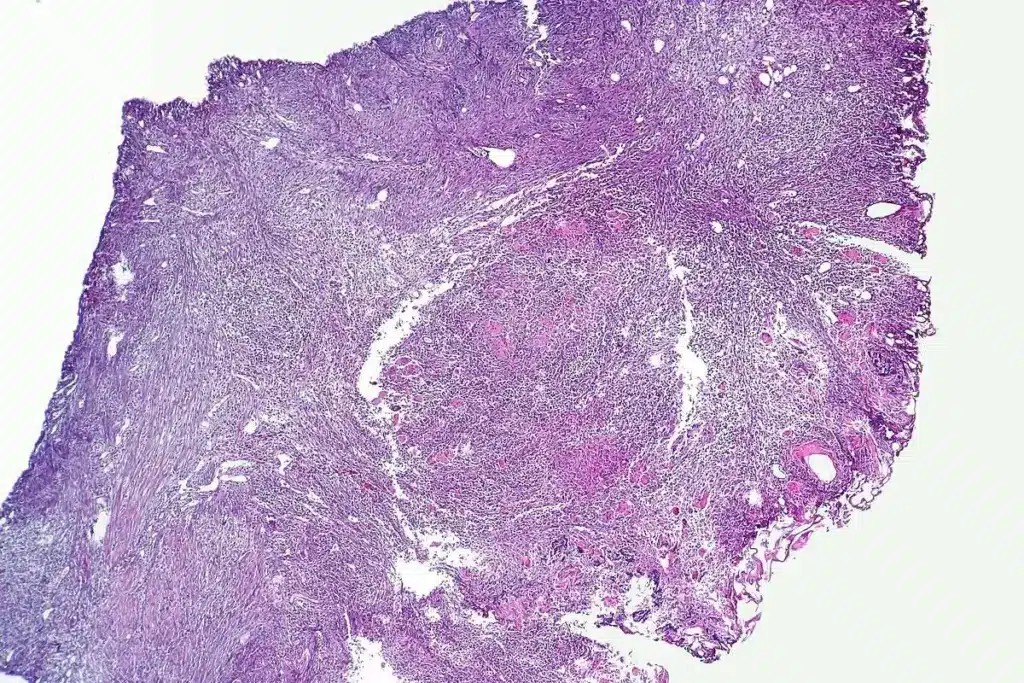
Most people have moles on their skin, and they are usually harmless. These skin bumps can grow or get darker over time. This is often because of sun exposure. Answering are most moles benign (yes, the vast majority) and providing key facts about moles and skin health.
It’s important to know about these moles for skin health. While most are okay, watching them for changes is key. This helps spot any serious problems early.
Key Takeaways
- Most moles are benign and not cancerous.
- Moles can change in appearance over time.
- Monitoring moles is key for early detection of issues.
- Knowing why moles form can help prevent them.
- Regular visits to a dermatologist are a good idea.
What Are Moles and How Do They Form?
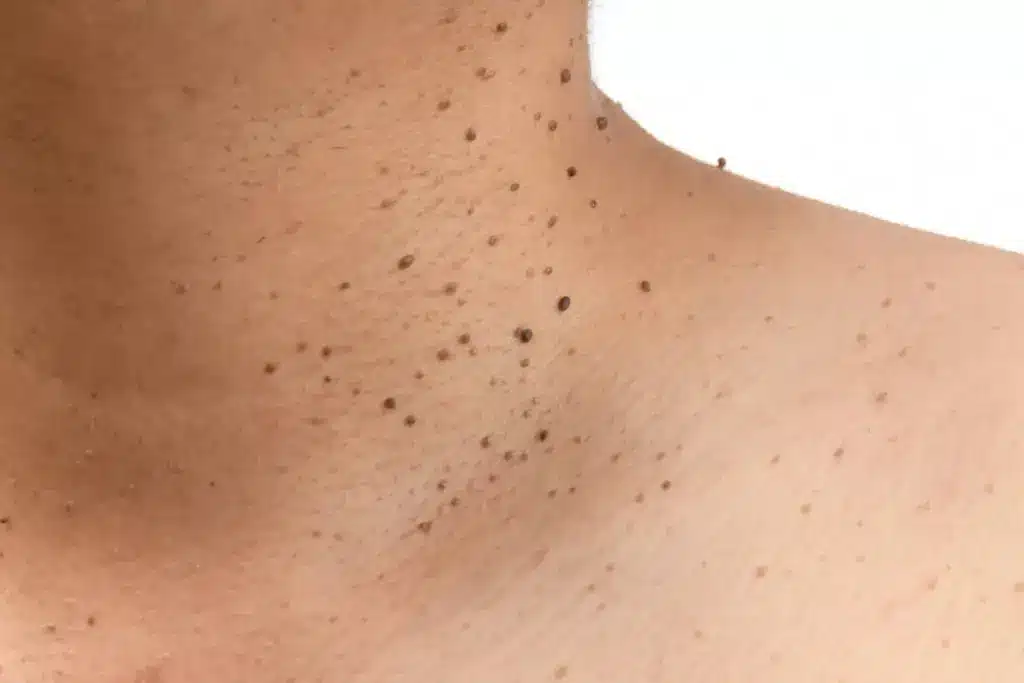
Moles, or nevi, form when pigment-producing cells called melanocytes cluster together. This results in a small, usually harmless, skin mark.
Definition and Biological Formation
Moles are growths on the skin caused by melanocytes. They can be flat or raised and vary in color. The formation of moles is influenced by genetics and sun exposure.
Common Locations on the Body
Moles can appear anywhere on the body. But they are more common in sun-exposed areas like the face, neck, and hands. They can also show up on the scalp, back, and other areas not exposed to sunlight.
Normal Development Throughout Life
Moles can develop at any age, but they usually appear in childhood and adolescence. It’s normal for new moles to appear until about age 40. Some moles may fade or disappear over time, while others stay the same.
Key Facts About Moles:
- Most people have between 10 to 40 moles.
- Moles can be smooth or rough, flat or raised.
- Some moles contain hair.
Moles are often compared to other skin growths like little bumps on skin or raised skin bumps. But they have distinct characteristics. Knowing these differences is key to identifying potentially problematic skin lesions.
The Truth About Moles and Skin: Benign vs. Concerning
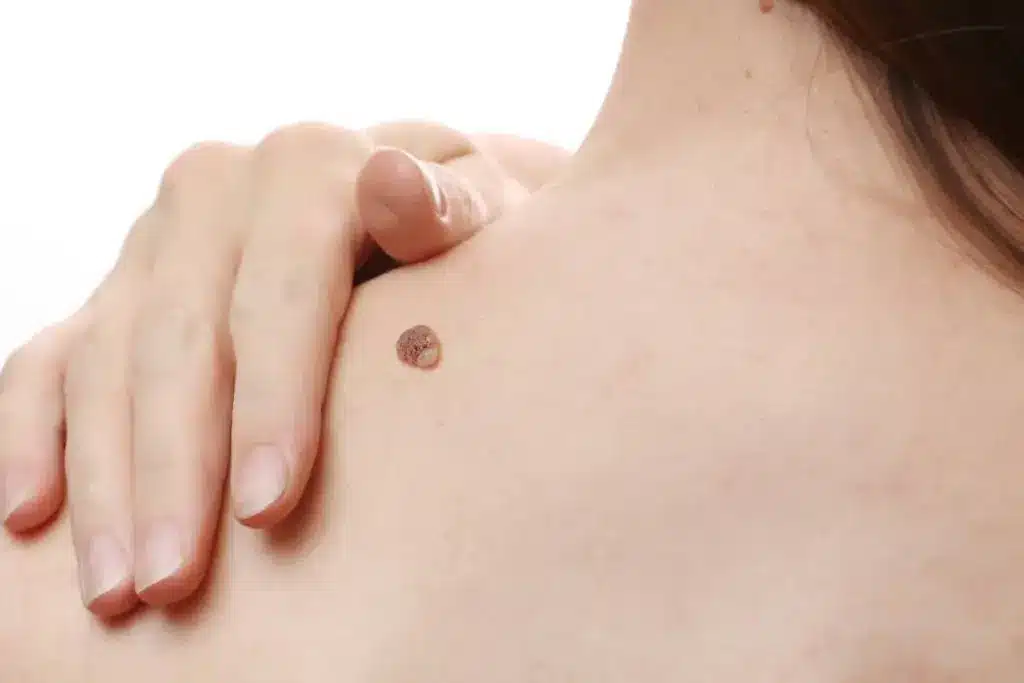
Knowing about moles is key to keeping your skin healthy. Moles, or nevi, are common skin spots that can pop up anywhere. While most are harmless, some might signal a bigger problem.
Statistics on Benign vs. Malignant Moles
Most moles are not cancerous. The American Academy of Dermatology says most people have 10 to 40 moles. The chance of these moles being cancerous is pretty low.
|
Type of Mole |
Characteristics |
Cancer Risk |
|---|---|---|
|
Benign Moles |
Uniform in color, round or oval shape |
Low |
|
Dysplastic Nevi |
Irregular shape, varied color |
Moderate to High |
|
Congenital Moles |
Present at birth, can be large |
Higher if large |
Why the Vast Majority of Moles Are Harmless
Most moles are harmless because they don’t grow into other tissues or spread. These non-cancerous tumors are usually watched, not treated right away.
Risk Factors That Increase Concern
Some things can make a mole more likely to be cancerous. These include having lots of moles, atypical moles, a family history of skin cancer, and lots of sun exposure. People with these risks should watch their moles closely.
Understanding the difference between harmless and concerning moles helps manage skin health. Regular self-checks and doctor visits are key for catching any problems early.
Identifying Different Types of Moles on Skin
It’s important to know the different types of moles on the skin. Moles can be flat or raised, smooth or rough, and some have hair. Most moles are dark brown or black, but some can be skin-colored or yellowish.
Common Moles (Nevi)
Common moles, or nevi, are small, usually round spots on the skin. They can be flat or raised and are often brown or black. These moles are very common and are usually harmless.
Dysplastic Nevi (Atypical Moles)
Dysplastic nevi, or atypical moles, are irregularly shaped and often larger than common moles. They can be a mix of colors, including brown, black, and pink. These moles are considered abnormal and may have a higher risk of becoming cancerous.
Congenital Moles
Congenital moles are present at birth and can vary in size. Larger congenital moles have a higher risk of developing into melanoma, a type of skin cancer. It’s essential to monitor these moles closely.
Spitz Nevi
Spitz nevi are a type of benign mole that can appear as a pink or red bump. They are often dome-shaped and can be mistaken for melanoma due to their appearance. While typically harmless, it’s important to have them examined by a dermatologist.
|
Type of Mole |
Characteristics |
Risk Level |
|---|---|---|
|
Common Moles (Nevi) |
Small, round, brown or black |
Low |
|
Dysplastic Nevi (Atypical Moles) |
Irregular shape, mix of colors |
Moderate to High |
|
Congenital Moles |
Present at birth, varying sizes |
Higher for larger moles |
|
Spitz Nevi |
Pink or red, dome-shaped |
Low, but requires examination |
Dermatological experts say, “The key to managing moles is awareness and regular monitoring.” Regular self-examinations and professional check-ups can help identify any changes or issues early on.
Other Common Skin Growths Often Confused with Moles
It’s easy to mix up skin tags, warts, and other growths with moles because they look similar. Moles are common, but knowing about other skin growths helps us tell what’s normal and what’s not.
Skin Tags and Where They Typically Appear
Skin tags are small, harmless growths that are usually the same color as your skin or a bit darker. They often pop up on the neck, armpits, or groin. These tags are soft and can be annoying because they rub against clothes or jewelry.
Seborrheic Keratoses
Seborrheic keratoses are non-cancerous growths that look like warts. They can be flesh-colored, brown, or black. They’re more common in middle-aged and older people. These growths are harmless but can look bad.
“Seborrheic keratoses are among the most common skin growths seen in older adults, often appearing on the face, chest, or back.”
Raised Skin Bumps and Little Bumps on Skin
Raised skin bumps can come from many things, like keratosis pilaris or eczema. These bumps might itch or feel rough. Knowing why they’re there is key to treating them right.
Warts and Their Distinction from Moles
Warts are caused by the human papillomavirus (HPV) and can show up anywhere. Unlike moles, warts are usually rough and can hurt if they’re on a spot that gets a lot of pressure. It’s important to tell warts apart from moles for the right treatment.
In conclusion, while moles are a big worry, other growths like skin tags, seborrheic keratoses, and warts are common too. Knowing what they look like helps us understand our skin better and when to get medical help.
Warning Signs: When to Be Concerned About a Mole
It’s important to know the warning signs of a mole that might be cancerous. Most moles are harmless, but some signs can mean trouble. Knowing these signs can help you catch problems early.
The ABCDE Rule for Evaluating Moles
The ABCDE rule helps spot moles that might be cancerous. It stands for Asymmetry, Border irregularity, Color variation, Diameter, and Evolving size, shape, or color.
- Asymmetry: If a mole is not symmetrical, it could be a warning sign.
- Border: A mole with an irregular, notched, or scalloped border may be concerning.
- Color: Moles with multiple colors or uneven color distribution are potentially problematic.
- Diameter: Moles larger than a pencil eraser (about 6mm) are considered suspicious.
- Evolving: Changes in size, shape, or color over time are a significant concern.
Changes That Warrant Medical Attention
Any big change in a mole’s look or if it itches or bleeds, see a doctor. Checking your skin regularly can catch these changes early.
Distinguishing Between Cancerous and Non-Cancerous Skin Lesions
Telling cancerous from non-cancerous skin lesions is hard without a doctor’s help. But, some visual and symptom clues can help.
Visual Differences
|
Characteristics |
Benign Lesions |
Potentially Cancerous Lesions |
|---|---|---|
|
Symmetry |
Typically symmetrical |
Often asymmetrical |
|
Border |
Smooth, well-defined border |
Irregular, notched border |
|
Color |
Uniform color |
Multiple colors or uneven color |
Symptomatic Differences
Many skin lesions don’t hurt or itch, but cancerous ones might. If a mole or skin lesion starts to hurt, itch, or bleed, see a doctor.
Watching for changes in your skin and knowing the warning signs can help find and treat skin cancer early.
Factors That Influence Mole Development
Knowing what affects mole growth can help keep your skin healthy. Many things can cause moles to form or change.
Genetic Predisposition
Genetics are key in mole growth. If you have light skin or a family history of moles or skin cancer, you’re more likely to get moles. People with a genetic risk should watch their skin closely.
Sun Exposure and UV Damage
Sun and UV damage are big factors in mole growth. UV rays can make skin cells abnormal, leading to new moles or changes in old ones. It’s important to protect your skin from the sun.
Hormonal Changes
Hormonal shifts, like during pregnancy, can affect mole growth. These changes can make moles appear or change.
Age-Related Development
Moles can show up at any age, but new ones after 30 need a doctor’s check. Watching your skin as you get older is key for catching problems early.
|
Factor |
Influence on Mole Development |
|---|---|
|
Genetic Predisposition |
Increases risk if family history includes numerous or atypical moles |
|
Sun Exposure and UV Damage |
Can cause new moles or changes in existing moles |
|
Hormonal Changes |
Can lead to appearance or changes in moles |
|
Age-Related Development |
New moles after 30 should be dermatologically examined |
Understanding these factors helps you keep an eye on your skin health. If you notice anything unusual, get medical advice.
How to Monitor Your Moles and Skin
Checking your skin for mole changes is easy and important. Dermatologists say to do this every month. It helps spot new or changing moles on your skin.
Monthly Self-Examination Techniques
Start by looking at your skin in a bright area. Use a full-length mirror and a handheld one. Look for any small bumps on skin that are new or have changed. Pay extra attention to sun-exposed areas, as they’re more likely to get moles.
Tracking Changes with Photography
Photographing your moles can track changes over time. Take clear, close-up photos of each mole. Consider using a mole mapping app to organize and compare your images.
When to Schedule Professional Skin Checks
If a mole changes in size, color, or shape, or if you get a new one, see a dermatologist. It’s very important.
Digital Tools for Skin Monitoring
There are digital tools to help monitor your skin. Apps let you track mole changes and set reminders for checks.
|
Tool |
Description |
Benefit |
|---|---|---|
|
Mole Mapping Apps |
Organize and compare photos of moles over time |
Early detection of changes |
|
Dermatologist Visits |
Professional examination of skin and moles |
Expert advice and diagnosis |
|
Skin Monitoring Devices |
Track changes in skin lesions and moles |
Personalized skin health tracking |
Medical Evaluation and Diagnosis of Suspicious Moles
A dermatological exam is key to figuring out if a mole is safe or might be cancer. If a mole looks odd, seeing a dermatologist is a must. They use special tools and methods to check it out.
What to Expect During a Dermatological Exam
The doctor will look at your skin closely during the exam. They’ll search for any moles or spots that don’t look right. They might use a dermatoscope to get a better look at the mole.
The doctor will also check your whole skin, not just the mole. This helps find any other skin problems early.
Dermoscopy and Advanced Imaging
Dermoscopy is a way to look at skin without hurting it. It helps doctors see things they can’t see with their eyes. This helps tell if a mole is safe or not.
They might also use digital dermoscopy and confocal microscopy. These tools give detailed pictures of the mole.
Biopsy Procedures and What Results Mean
If a mole looks suspicious, a biopsy might be needed. This means taking a small piece of the mole to check for cancer cells.
The biopsy results will show if the mole is safe or not. If it’s not safe, the doctor will talk about treatment options.
Understanding Your Diagnosis
Getting a diagnosis can be tough, but it’s important to understand it. If the mole is safe, it means it’s not cancer. But if it’s not safe, you’ll need to talk about treatment with your doctor.
|
Diagnosis Type |
Description |
Next Steps |
|---|---|---|
|
Benign |
The mole is non-cancerous. |
Monitoring for changes; possible removal for cosmetic reasons. |
|
Malignant |
The mole is cancerous. |
Discuss treatment options with a dermatologist, potentially including surgical removal, further testing. |
Treatment Options for Benign and Problematic Moles
The way to treat moles depends on their type. This includes benign, atypical, or malignant moles. Knowing the treatment options is key for managing moles well.
Removal Methods for Benign Moles
Benign moles can be removed for looks or if they bother you. Surgical excision and shave excision are common methods. The choice depends on the mole’s size, where it is, and how deep it is.
Treatment Approaches for Atypical or Malignant Moles
Atypical or malignant moles need quick action. Treatment might include wide excision to take out the mole and some healthy skin too. Sometimes, more treatments like sentinel lymph node biopsy are needed.
|
Treatment Method |
Benign Moles |
Atypical/Malignant Moles |
|---|---|---|
|
Surgical Excision |
Yes |
Yes |
|
Shave Excision |
Yes |
No |
|
Wide Excision |
No |
Yes |
Cosmetic Considerations and Scarring
Looking good is a big deal when removing moles. Doctors try to avoid scars, which is important for areas you can see.
Recovery and Follow-up Care
After removing a mole, keep the area clean and dry. You’ll need to see a doctor again to check how it’s healing and watch for any problems.
Conclusion: Maintaining Healthy Skin and Peace of Mind
Being proactive about your skin health is key for your overall well-being. Regular checks on your moles can help catch skin cancers early. This includes melanoma and other types.
Knowing about different moles and skin bumps helps you take care of your skin. By following the tips in this article, you can watch your skin closely. This way, you can make smart choices about your health.
Healthy skin is more than just looking good; it’s about feeling good too. Stay alert and see a dermatologist if your skin looks different. This is important for your health and peace of mind.
FAQ
What is the difference between a mole and a skin tag?
Moles are growths that can be flat or raised and are pigmented. Skin tags are small, flesh-colored growths that hang off the skin.
Are all raised skin bumps moles?
No, not all raised skin bumps are moles. Other growths like seborrheic keratoses, warts, or skin tags can also appear as raised bumps.
Can moles be cancerous?
While most moles are not cancerous, some can be. It’s important to watch for changes and see a dermatologist if you notice anything suspicious.
What are the warning signs of a potentially cancerous mole?
Use the ABCDE rule: Asymmetry, Border irregularity, Color variation, Diameter increase, and Evolving shape or size.
How often should I check my moles?
Check your moles monthly to watch for any changes.
Can I remove a mole at home?
No, it’s best not to remove a mole at home. See a dermatologist for safe removal.
Are congenital moles more likely to be cancerous?
Congenital moles have a slightly higher risk of becoming cancerous. But most stay benign.
Can sun exposure cause new moles to appear?
Yes, sun exposure and UV damage can lead to new moles and increase skin cancer risk.
How can I distinguish between a wart and a mole?
Warts are rough, raised, and look stuck on. Moles are smoother and more pigmented.
What is dermoscopy, and how is it used in mole evaluation?
Dermoscopy is a non-invasive method to examine moles in detail. It helps dermatologists diagnose and monitor skin lesions.
Can hormonal changes affect mole development?
Yes, hormonal changes during pregnancy, puberty, or menopause can cause mole changes or new ones.



 Departments
 Related Videos
 Our Doctors
 News
News