
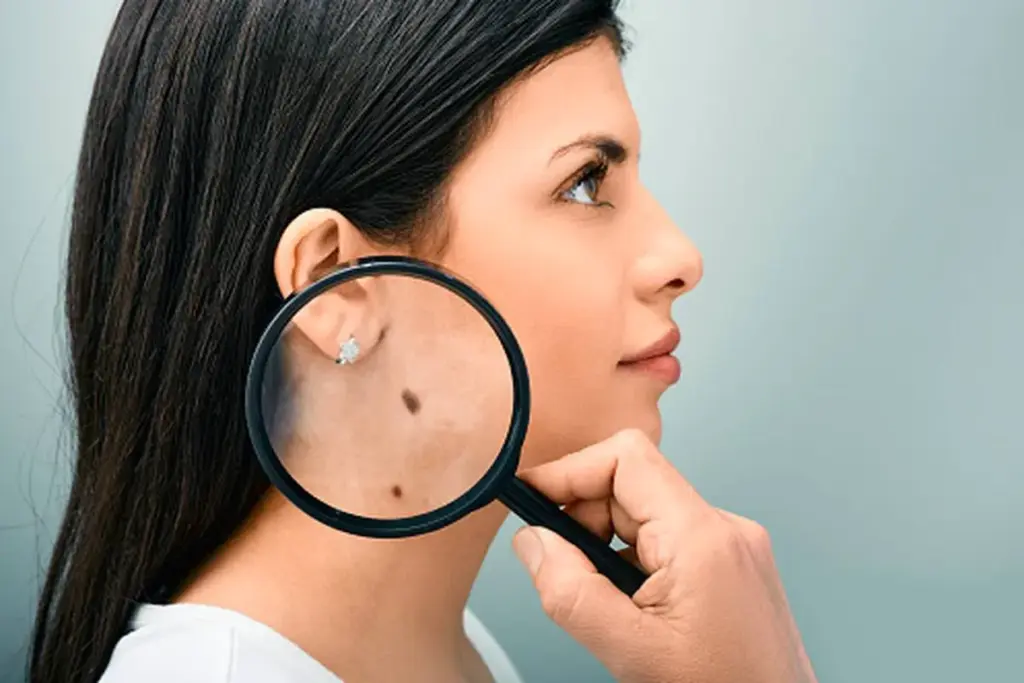
Melanoma, a type of skin cancer, affects thousands of people worldwide each year. Jess Hurrell, a beauty YouTuber, recently shared her personal experience with melanoma. She stressed the importance of catching it early melanoma.
It’s key to know what melanoma is and its warning signs. The ABCDE rule is a common way to spot moles that might be cancerous.
This article will show you how to spot cancerous moles. It will also give you tips to keep your skin healthy.
Key Takeaways
- Understanding the ABCDE rule for identifying potentially cancerous moles.
- Recognizing the warning signs of melanoma.
- The importance of early detection in treating skin cancer.
- Steps to protect your skin health.
- Personal stories highlighting the significance of awareness.
Understanding Skin Cancer and Melanoma
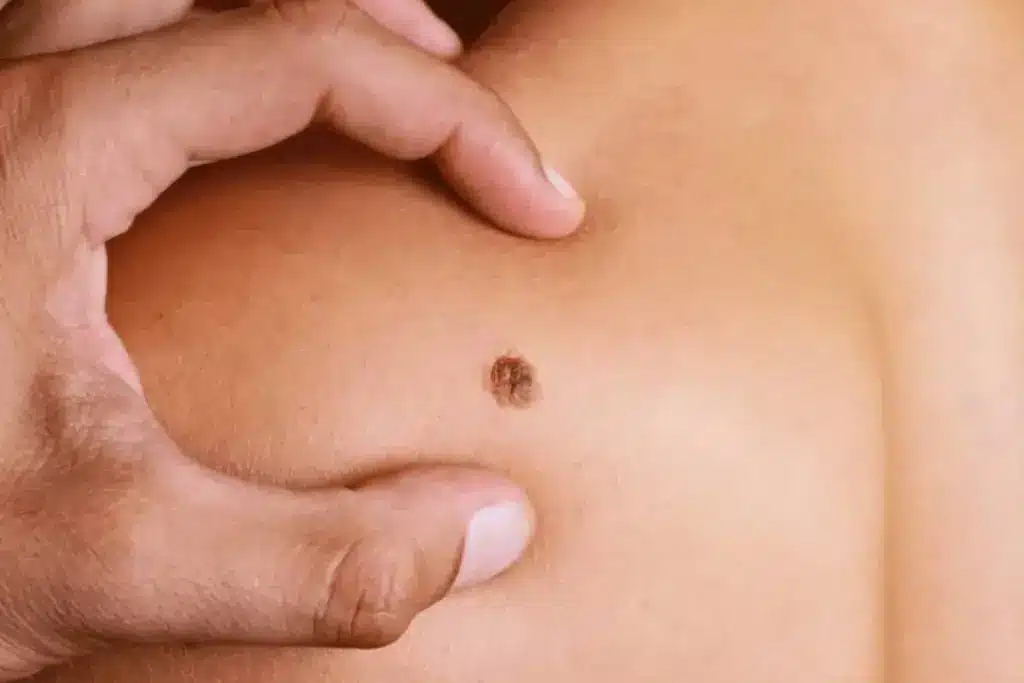
It’s important to know about skin cancer and melanoma to catch them early. Skin cancer has many types, but melanoma is the most dangerous. It can grow fast and spread to other parts of the body. Doctors like Medical Expert’s key to understand how skin cancers look, like basal cell carcinomas.
What is melanoma and why is it dangerous?
Melanoma starts in the cells that make our skin color. It’s very dangerous because it can spread to other parts of the body. Early detection is critical to increase chances of survival.
- Melanoma can grow from moles or show up as new spots.
- It can quickly move deeper into the skin and spread.
The difference between benign moles and cancerous lesions
It’s important to tell the difference between harmless moles and ones that might be cancer. Benign moles are usually the same color and shape, with clear edges. Cancerous spots are different.
Look for changes in color, irregular shapes, and uneven edges. Knowing these signs can help spot dangerous moles.
- Asymmetry: One half of the mole doesn’t match the other.
- Border: The edges are irregular, ragged, or blurred.
- Color: The color is not uniform and may include shades of brown, black, or even patches of red, white, or blue.
The ABCDE Rule for Identifying Melanoma
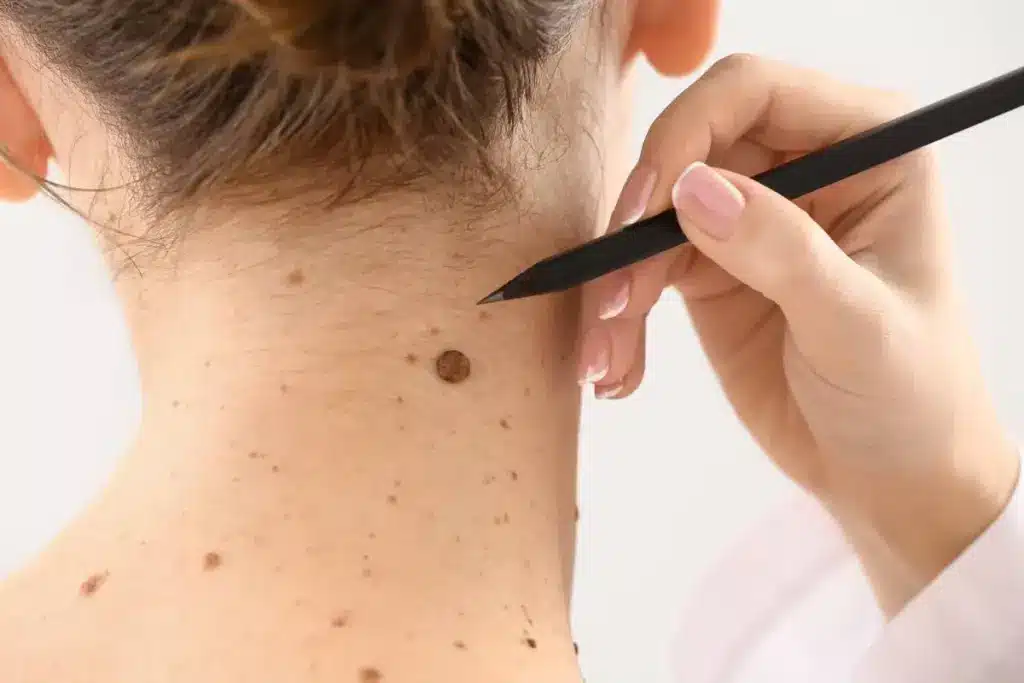
The ABCDE rule helps spot melanoma early. It’s a simple way to check moles for cancer signs.
Asymmetry: When half the mole doesn’t match the other
Moles that don’t look symmetrical might be melanoma. Benign moles are usually symmetrical. If you draw a line through a benign mole, both sides will look the same. But, melanoma moles might not match, showing different sizes, shapes, or colors.
Border: Irregular, ragged, or blurred edges
Melanoma borders are often odd, with notches or blurry lines. Early stage melanoma might show small changes in the border. It’s key to watch moles closely for these signs.
Color: Variation in shade or color distribution
Melanomas have different colors or uneven color patterns. Benign moles are usually one color, but melanomas can be many colors. They might be brown, black, or even red, white, or blue.
Diameter: Larger than 6mm (about the size of a pencil eraser)
Melanomas are often bigger than benign moles. While size isn’t the only factor, larger moles are more likely to be cancerous. Measuring a mole’s size can help figure out if it’s a concern.
Using the ABCDE rule helps spot moles that might be cancerous. It’s important to get these checked by a doctor. Regular skin checks and knowing the signs of melanoma are key to catching it early.
Beyond ABCDE: Additional Warning Signs
Spotting melanoma is more than just the ABCDE rule. Other signs are just as key. The ABCDE rule helps spot cancerous moles. But, knowing more signs can help catch melanoma early.
The “Ugly Duckling” Sign
The “Ugly Duckling” sign in dermatology means a mole looks different from others. It’s based on melanomas often looking unlike normal moles. Jess Hurrell, who had melanoma, said noticing moles that don’t fit in is key.
“I noticed that one of my moles looked different from the others, which ultimately led to my diagnosis.” – Jess Hurrell
This sign is great for people with many moles. It helps them compare their skin lesions.
Other Concerning Symptoms
There are more signs than just the ABCDE rule and the “Ugly Duckling” sign. These include:
- Changes in sensation, such as itching or tenderness
- Moles that bleed or ooze
- Redness or swelling around a mole
- Sores that don’t heal
Watching for these signs can lead to catching melanoma or skin cancer early. This can improve treatment outcomes.
|
Symptom |
Description |
|---|---|
|
Change in Sensation |
Itching or tenderness around a mole |
|
Bleeding or Oozing |
Moles that bleed or ooze fluid |
|
Redness or Swelling |
Inflammation around a mole |
Looking at early stage skin cancer and melanoma pictures can help. Knowing these signs can help spot melanomas better.
Early detection is key in treating melanoma. Knowing the ABCDE rule, the “Ugly Duckling” sign, and other symptoms helps protect your skin.
What Does Melanoma Look Like? Visual Guide
Knowing what melanoma looks like can save lives. This dangerous skin cancer can show up in many ways. It’s key to understand its different looks.
Early Stage Melanoma Appearance
In the early stages, melanoma can look like a normal mole. But, there are signs to watch for. Look for a new mole or a change in an old one.
- Asymmetry: One half of the mole doesn’t match the other.
- Border: The edges are irregular, ragged, or blurred.
- Color: The color is not uniform and may include shades of brown, black, or even patches of red, white, or blue.
- Diameter: The mole is larger than 6mm (about the size of a pencil eraser).
- Evolving: Changes in size, shape, or color over time.
Advanced Melanoma Characteristics
As melanoma gets worse, it looks more serious. Advanced melanoma is bigger, has more irregular edges, and shows more colors.
|
Characteristic |
Description |
|---|---|
|
Size |
Often larger and more irregular |
|
Color Variation |
May include darker shades or new colors |
|
Surface |
Can become ulcerated or bleed |
Gordon Ramsay’s story about getting basal cell carcinoma shows why sun protection and early detection are key. Basal cell carcinoma is different from melanoma. But, catching it early is important for all skin cancers.
Types of Melanoma You Should Know
It’s important to know about the different types of melanoma. This is because melanoma, a serious skin cancer, can show up in many ways. Knowing what to look for can help catch it early.
Superficial Spreading Melanoma
Superficial spreading melanoma is the most common type, making up about 70% of cases. It looks like a flat or slightly raised spot with irregular edges and different colors. It can pop up anywhere on the body, but it’s more common in sun-exposed areas.
Nodular Melanoma
Nodular melanoma is a fast-growing, aggressive type. It looks like a firm, dome-shaped bump, which can be black, pink, or red. It can show up anywhere and is more common in men.
Lentigo Maligna Melanoma
Lentigo maligna melanoma is common in older people on sun-damaged skin. It starts as a flat, tan or brown spot that gets darker over time. It’s linked to long-term sun exposure.
Acral Lentiginous Melanoma
Acral lentiginous melanoma is rare and shows up on the palms, soles, or under nails. It looks like a dark streak or patch and can be mistaken for a bruise or fungal infection. It’s more common in people with darker skin.
The following table summarizes the key characteristics of the different types of melanoma:
|
Type of Melanoma |
Common Locations |
Appearance |
|---|---|---|
|
Superficial Spreading |
Anywhere, often sun-exposed areas |
Flat or slightly raised, irregular borders, varying colors |
|
Nodular |
Anywhere |
Firm, dome-shaped nodule, often black, sometimes pink or red |
|
Lentigo Maligna |
Sun-damaged skin, face, ears, arms |
Flat, tan or brown patch, darkens over time |
|
Acral Lentiginous |
Palms, soles, under nails |
Dark streak or patch, can be mistaken for bruise or fungal infection |
Knowing the different types of melanoma is key for early detection and treatment. If you think you might have melanoma, see a dermatologist right away.
Common Locations for Melanoma Development
Knowing where melanoma often starts can help find skin cancer early. Melanoma can pop up anywhere on the body. But some spots are more likely to get this serious skin cancer.
Sun-exposed areas
Melanoma often shows up in sun-kissed spots like the face, neck, arms, and legs. These areas get more UV rays, which increases the risk of melanoma. Medical Expert.
- Face and neck: These areas get a lot of sun and should be checked often for new or changing moles.
- Arms and legs: Both sides of these limbs are at risk, mainly for those who spend a lot of time outside.
Hidden areas often overlooked
While sun-exposed spots are common, don’t forget to check less obvious areas. Melanomas can hide in these spots, often not seen until later.
- Scalp: The scalp is a common spot for melanoma, more so for those with thinning hair or baldness.
- Palms and soles: Though rare, melanomas can appear on palms and soles, areas not usually in the sun.
- Nails: Melanoma can also show up under the nails, known as subungual melanoma.
Regular self-examination is key. It’s best to check skin from head to toe, including these often-missed spots.
In summary, knowing where melanoma often starts is key for early detection. Regular skin checks, as dermatologists like Medical Expert, can help catch melanoma early. This makes treatment more effective.
Risk Factors for Developing Melanoma
Knowing the risk factors for melanoma is key to catching it early and preventing it. Melanoma is a serious skin cancer. It can be influenced by genetics, the environment, and past skin conditions.
Genetic and Family History Factors
People with a family history of melanoma are at higher risk. Genetic mutations in genes like CDKN2A and CDK4 increase this risk. Those with fair skin, light hair, and eyes are also more at risk. This is because they have less melanin, which doesn’t protect as well against UV rays.
Environmental and Lifestyle Factors
UV radiation is a big risk factor for melanoma. This can come from the sun or artificial sources like tanning beds. Severe sunburns, even as a child, raise the risk. Spending a lot of time outside without sun protection also increases the risk.
Previous Skin Conditions and Moles
Having atypical moles or many moles raises the risk of melanoma. Certain skin conditions also increase the risk. It’s important to check your skin regularly and see a dermatologist if you have suspicious moles or lesions.
To better understand the risk factors, let’s examine the data in the following table:
|
Risk Factor |
Description |
Level of Risk |
|---|---|---|
|
Family History of Melanoma |
Having close relatives diagnosed with melanoma |
High |
|
Genetic Mutations |
Specific genetic mutations like CDKN2A and CDK4 |
High |
|
Fair Skin, Light Hair, Light Eyes |
Reduced melanin levels, less UV protection |
Moderate to High |
|
Severe Sunburns |
Especially during childhood |
Moderate to High |
|
History of Atypical Moles |
Presence of unusual moles |
Moderate |
As shown in the table, both genetics and the environment play big roles in melanoma risk. People like Jess Hurrell, who got immunotherapy for melanoma, show why it’s important to know and tackle these risks.
How Dermatologists Diagnose Suspicious Moles
Diagnosing suspicious moles is a detailed process. It involves looking at the mole, using dermoscopy, and sometimes taking a biopsy. These steps help find out if a mole is safe or not.
Visual Examination Techniques
The first step is a careful look at the mole. Dermatologists check for signs like asymmetry, irregular borders, color changes, size, and shape changes. They use the ABCDE rule to decide if more tests are needed.
Key factors examined visually include:
- Asymmetry: If the mole is not symmetrical.
- Border: Irregular, ragged, or blurred edges.
- Color: Variation in color or an unusual color.
- Diameter: Moles larger than 6mm.
- Evolving: Changes in size, shape, or color over time.
Dermoscopy and Imaging Tools
Dermatologists use dermoscopy for a closer look. This method uses a special microscope to light up and enlarge the skin. It helps see the mole’s details better.
Dermoscopy can reveal features not visible to the naked eye. It shows specific patterns and colors in the mole that might mean melanoma. Some places also use advanced tools to look at these images more closely.
Biopsy Procedures Explained
If a mole looks suspicious, a biopsy might be done. This means taking out the mole or a piece of it to check for cancer cells under a microscope.
Types of biopsies include:
|
Biopsy Type |
Description |
|---|---|
|
Shave Biopsy |
Removing the top layers of the skin where the mole is located. |
|
Punch Biopsy |
Removing a small, cylindrical sample of skin. |
|
Excisional Biopsy |
Removing the entire mole along with a margin of surrounding skin. |
The type of biopsy depends on the mole’s size, location, and what it looks like. The results of the biopsy tell if the mole is cancerous and what to do next.
Early Stage Melanoma: Signs and Significance
Knowing the early signs of melanoma is key for better treatment and survival. Catching melanoma early can greatly improve treatment results and survival chances.
Recognizing Early Melanoma Symptoms
Early melanoma often shows small changes that are easy to miss. Look out for changes in size, shape, or color of a mole. The ABCDE rule helps: Asymmetry, Border irregularity, Color variation, Diameter increase, and Evolving shape or size.
Also, watch for the “Ugly Duckling” sign. This is when a mole looks different from others. Jess Hurrell’s story with stage 2 and stage 4 melanoma shows why catching it early is so important.
Survival Rates and Importance of Early Detection
Finding melanoma early can greatly increase survival chances. When caught early, the five-year survival rate is much better than in later stages.
- Regular self-exams and doctor visits are vital.
- Knowing your risk factors, like family history and too much sun, helps catch it early.
- Knowing what melanoma looks like early can save lives.
By spotting early signs of melanoma and understanding its importance, people can act early. This can lead to better treatment and outcomes.
When to See a Doctor About a Suspicious Mole
Knowing when a mole needs a doctor’s check is key. A suspicious mole can worry you. Seeing a healthcare expert quickly is important.
Urgent Warning Signs that Require Immediate Attention
Look out for these signs to get medical help fast:
- A mole that is growing in size or changing shape
- A mole with irregular borders or uneven color
- A mole that is bleeding, itching, or painful
- A mole that is significantly different from others on your skin (the “Ugly Duckling” sign)
The NHS says to see a doctor if a skin growth is getting bigger, changing color or texture, or if it hurts, itches, or bleeds. These signs might mean melanoma skin cancer, a serious skin cancer that needs early treatment.
Preparing for Your Dermatologist Appointment
Getting ready for your dermatologist visit helps. Here’s how:
- Gather information: List any changes in the mole, when you first saw them.
- Be prepared to describe your symptoms: Tell your dermatologist about any itching, bleeding, or pain.
- Bring relevant medical history: Share any past skin issues or cancer diagnoses.
Being aware of cancerous moles and preparing for your dermatologist visit helps protect your skin. Regular checks of moles and skin are vital for your health and catching problems early.
Treatment Options for Skin Cancer Moles
The treatment for skin cancer moles, like melanoma, has changed a lot. This is thanks to new medical tech and research. Finding and treating melanoma early is key.
Surgery and Local Treatments
Surgery is the main treatment for most skin cancers, including melanoma. The goal is to take out the cancerous mole and some nearby tissue. This makes sure all cancer cells are gone. Wide local excision is a common surgery used.
- Surgical Margins: The amount of tissue removed around the melanoma depends on the tumor’s thickness.
- Mohs Surgery: This precise method removes the tumor layer by layer. Each layer is checked under a microscope until no cancer cells are found.
Systemic Treatments for Advanced Melanoma
When melanoma spreads beyond the first site, systemic treatments are needed. These treatments aim at cancer cells all over the body.
Jess Hurrell’s story shows how important systemic treatments are for advanced melanoma. Immunotherapy boosts the body’s immune system to fight cancer cells better.
- Targeted Therapy: Drugs that target specific genes or proteins in melanoma cells.
- Chemotherapy: Though not often used for melanoma, it can be an option in some cases.
New and Emerging Therapies
Research on melanoma treatment is always going on. New and promising therapies are being developed.
- Combination Therapies: Using treatments like immunotherapy and targeted therapy together to work better.
- Clinical Trials: Joining clinical trials can give access to new treatments not yet widely available.
Keeping up with the latest in melanoma treatment helps patients and doctors make better choices.
Prevention Strategies to Reduce Melanoma Risk
To protect your skin from melanoma, use sun protection, do self-exams, and get professional checks. These steps can lower your risk of getting melanoma.
Sun Protection Best Practices
Protecting your skin from the sun is key. Use sunscreen with a high SPF, wear protective clothes, and stay in the shade when the sun is strong.
Use Sunscreen Correctly: Put sunscreen on all exposed skin 15-30 minutes before going outside. Reapply every two hours or right after swimming or sweating.
Wear Protective Clothing: Pick clothes that cover your skin, like long-sleeved shirts and pants. A wide-brimmed hat helps protect your face and neck.
Regular Skin Self-Examinations
Doing regular skin checks is important for catching problems early. Check your skin every month, using a mirror to see hard-to-see spots. Look for any changes in mole size, shape, or color.
- Use a full-length mirror and a hand-held mirror to check all areas of your body.
- Check your scalp, using a comb or hair dryer to part your hair.
- Take note of any new moles or changes in existing moles.
Professional Skin Checks: How Often and Why
Getting skin checks from a dermatologist is key for early detection. How often you need these checks depends on your risk factors.
High-Risk Individuals: If you’ve had melanoma, have many moles, or come from a family with skin cancer, get annual checks.
General Population: For those at average risk, a skin check every 2-3 years is recommended. Start at age 25 or as your dermatologist advises.
By using sun protection, doing regular self-exams, and getting professional checks, you can greatly lower your risk of melanoma.
Conclusion
It’s vital to know the risks and signs of melanoma to fight skin cancer. Jess Hurrell’s story shows how important awareness and early detection are. This can help fight a disease that’s potentially deadly.
Learning the ABCDE rule and other warning signs helps protect your skin. Regular self-checks and doctor visits are key. They help spot suspicious moles and skin cancer early.
Preventing melanoma is essential. Use sun protection, watch for genetic and environmental risks, and stay updated on treatments. This way, you can take charge of your skin health.
Being alert and informed can lower your melanoma risk. It also helps catch it early and treat it effectively if needed.
FAQ
What are the common signs of melanoma skin cancer?
Melanoma skin cancer shows up in different ways. You might notice changes in a mole’s size, shape, or color. Or, you might see new moles. The ABCDE rule helps: look for Asymmetry, Border irregularity, Color variation, Diameter larger than 6mm, and Evolving over time.
How can I identify a cancerous mole?
To spot a cancerous mole, check for Asymmetry, irregular Borders, and multiple Colors. Also, look for a diameter bigger than 6mm and changes over time. Remember the “Ugly Duckling” sign, where a mole looks different from others.
What does early stage melanoma look like?
Early melanoma might look like a new mole or a change in an old one. It could be asymmetrical, have irregular borders, or show many colors. It’s usually bigger than 6mm and changes over time.
Are all cancerous moles melanoma?
No, not all cancerous moles are melanoma. Melanoma is a type of skin cancer, but others like basal cell carcinoma and squamous cell carcinoma can also look like moles.
How is melanoma diagnosed?
Doctors use a few ways to diagnose melanoma. They’ll look at the mole, use tools like dermoscopy, and might take a biopsy. This helps confirm if it’s melanoma.
What are the risk factors for developing melanoma?
Certain things increase your risk of melanoma. These include genetic factors, family history, fair skin, sunburns, too much sun, and certain moles or skin conditions.
Can melanoma be treated if caught early?
Yes, early melanoma can be treated well. Catching it early can greatly improve your chances of survival. Treatment might include surgery, local treatments, or systemic therapies, based on the melanoma’s stage and type.
How can I reduce my risk of developing melanoma?
To lower your risk of melanoma, protect your skin from the sun. Use sunscreen, wear protective clothes, and stay in the shade. Also, check your skin regularly and get professional checks to catch any issues early.
What are the different types of melanoma?
There are several types of melanoma. These include superficial spreading melanoma, nodular melanoma, lentigo maligna melanoma, and acral lentiginous melanoma. Each type has its own features and might need different treatments.
Where do melanomas typically develop?
Melanomas can appear in many places. They often show up in sun-exposed areas like the face, arms, and legs. But they can also hide in places like the scalp, soles of the feet, and palms of the hands.
References
National Center for Biotechnology Information. Evidence-Based Medical Insight. Retrieved from https://pubmed.ncbi.nlm.nih.gov/35107069/