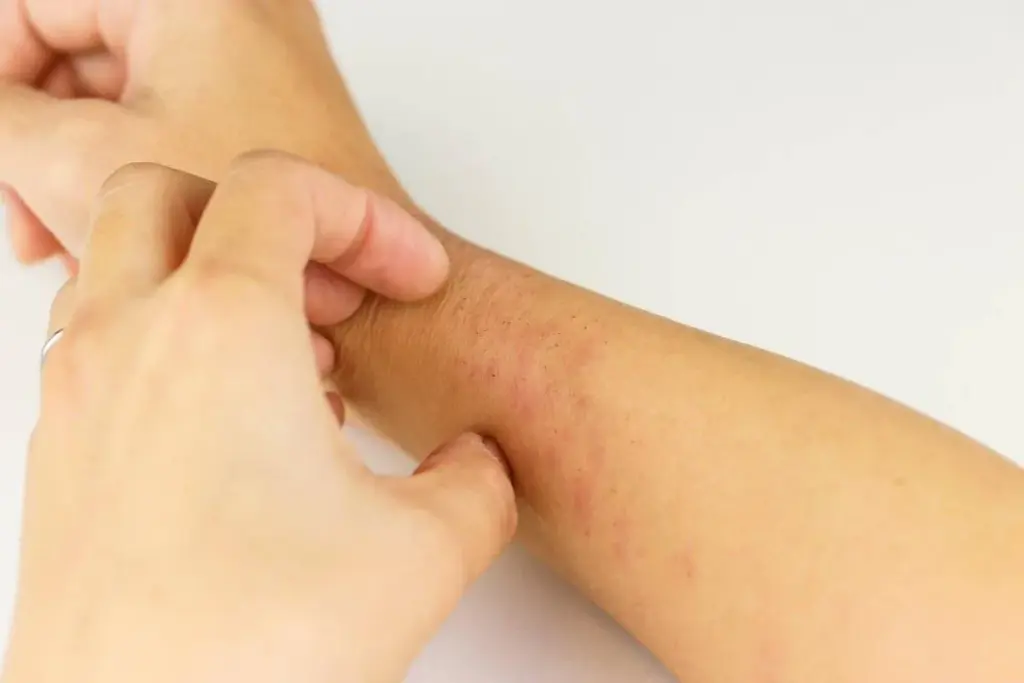
Did you know that nearly 20% of the population will get hives rash, also known as urticaria, at some point? This common skin issue is marked by itchy welts. It can be either acute or chronic, really affecting one’s life quality. Let’s look into how antihistamines help manage hives rash and how they work.
We’ll dive into why antihistamines are key for hives rash, a tough condition to handle. Knowing the treatment options helps people make better choices for their care.
Key Takeaways
- Antihistamines are a main treatment for hives rash.
- They block histamine, a chemical that causes itching and swelling.
- Antihistamine treatment can ease itchy welts and lessen hives rash severity.
- There are various antihistamines, including over-the-counter and prescription ones.
- It’s important to know the benefits and side effects of antihistamine treatment for hives rash.
What Are Hives and Their Symptoms?

Hives, also known as urticaria, are a common skin condition. They are itchy welts that can appear anywhere on the body. These welts can vary in size and shape, causing discomfort due to their itchiness.
Common Symptoms of Hives
The symptoms of hives are quite distinctive. They include:
- Itchy, raised welts or patches on the skin
- Redness or inflammation around the welts
- Swollen areas that can be tender to the touch
These symptoms can appear suddenly. They may come and go over hours or days. In some cases, the welts can merge to form larger patches.
Types of Hives
There are different types of hives, including:
- Acute Hives: These last less than six weeks. They are often triggered by allergic reactions to food, infections, or medications.
- Chronic Hives: These persist for more than six weeks. They can be caused by a variety of factors, including autoimmune disorders, thyroid issues, or other health conditions.
Understanding the type of hives is key to finding the right treatment.
How Hives Affect Daily Life
Hives can significantly impact daily life. They cause discomfort and distress due to their itchiness and appearance. They can disrupt sleep, affect concentration, and lead to emotional distress.
Managing hives effectively is essential. It helps minimize their impact on daily activities and overall well-being.
The Role of Antihistamines in Managing Hives
[PLACE THE IMAGE HERE]
For those with hives, antihistamines can be a helpful treatment. They work by blocking histamine, a chemical that causes hives symptoms. This makes them a key part of hives treatment.
How Antihistamines Work
Antihistamines bind to histamine receptors on cells. This stops histamine from causing an allergic reaction. It helps lessen itching, redness, and swelling in hives.
Key benefits of antihistamines include:
- Rapid relief from itching and discomfort
- Reduction in the severity of hives symptoms
- Availability in both over-the-counter and prescription forms
Different Types of Antihistamines
There are many types of antihistamines for hives. They are mainly divided into first-generation and second-generation antihistamines.
|
Type of Antihistamine |
Characteristics |
Examples |
|---|---|---|
|
First-generation |
Cross the blood-brain barrier, causing sedation |
Diphenhydramine (Benadryl) |
|
Second-generation |
Less likely to cross the blood-brain barrier, less sedating |
Loratadine (Claritin), Cetirizine (Zyrtec) |
Prescription vs. Over-the-Counter Options
Antihistamines come in OTC and prescription forms. OTC ones are good for mild to moderate hives. Prescription ones are for more severe cases or when OTC doesn’t work.
It’s essential to consult a healthcare professional to determine the best treatment plan for your specific condition.
Can Drinking Water Help with Urticaria?
Drinking water is key for our health, and it’s interesting to see how it affects urticaria. We’ll look into how staying hydrated impacts hives, the effects of not drinking enough water, and how water can boost antihistamines.
Hydration and Skin Health
Keeping our skin hydrated is essential. Water helps our skin stay flexible and strong. This makes our skin better at fighting off things that can cause hives.
Key Benefits of Hydration for Skin Health:
- Maintains skin elasticity
- Supports the skin’s natural barrier function
- Helps in flushing out toxins
The Impact of Dehydration
Not drinking enough water can harm our skin, making urticaria worse. Dry, irritated skin is more likely to get hives.
|
Effects of Dehydration |
Impact on Skin |
|---|---|
|
Dryness |
Increased irritation and itchiness |
|
Reduced skin elasticity |
More prone to cracking and damage |
|
Impaired toxin removal |
Potential buildup of toxins, worsening urticaria |
Water’s Role in Antihistamine Effectiveness
Drinking water can also help antihistamines work better. When we’re hydrated, our bodies can absorb these medicines more easily. This can help control symptoms better.
Remember, while drinking water is important, it’s just one part of treating urticaria. We also need medical help and changes in our lifestyle.
When to Seek Medical Attention for Hives
Severe hives symptoms can mean a serious issue, so getting medical help fast is key. Antihistamines usually help with hives, but sometimes, you need to see a doctor to avoid bigger problems.
Recognizing Severe Symptoms
It’s important to know when symptoms are serious. Look out for:
- Difficulty breathing or swallowing
- Rapid heartbeat or palpitations
- Dizziness or fainting
- Swelling of the face, lips, tongue, or throat
- Abdominal cramps or diarrhea
If you have any of these, get help right away. Waiting too long can be very dangerous, like with anaphylaxis.
Importance of Professional Diagnosis
Getting a doctor’s opinion is vital to find out why you have hives. See a healthcare professional if:
- You keep getting hives
- You don’t know why you have hives
- You have allergies or other health issues
A doctor can run tests to find out what’s causing your hives. They will then suggest the best treatment. As doctors say,
“Knowing what’s causing your hives is the first step to feeling better.”
Treatment Options Beyond Antihistamines
Antihistamines are common for hives, but sometimes, you need more. For serious or ongoing cases, you might need:
- Corticosteroids to lessen swelling
- Immunosuppressants for hives linked to the immune system
- Biologics to target specific hives triggers
We’ll create a treatment plan just for you. It will make sure you get the right care for your hives.
Natural Remedies for Hives Rash
Natural remedies, like herbal treatments and dietary changes, can help manage hives. They offer a good complement to antihistamines. These natural options can provide extra relief and help ease symptoms.
Herbal Remedies
Several herbal remedies are effective for hives. Here are a few:
- Licorice Root: It has anti-inflammatory properties that soothe skin irritations.
- Turmeric: Turmeric contains curcumin, which is anti-inflammatory and antioxidant.
- Nettle Leaf: It’s believed to have antihistamine properties, reducing hives symptoms.
|
Herbal Remedy |
Benefits |
Form |
|---|---|---|
|
Licorice Root |
Anti-inflammatory |
Tea, Capsules |
|
Turmeric |
Anti-inflammatory, Antioxidant |
Powder, Capsules |
|
Nettle Leaf |
Antihistamine |
Tea, Capsules |
Dietary Changes to Consider
Some dietary changes can help manage hives. Here are a few suggestions:
- Increasing Omega-3 Intake: Omega-3 fatty acids, found in fish and flaxseeds, are anti-inflammatory.
- Avoiding Trigger Foods: It’s important to identify and avoid foods that trigger or worsen hives.
- Staying Hydrated: Drinking plenty of water helps flush out toxins and keeps the skin healthy.
Lifestyle Adjustments
Along with dietary changes, certain lifestyle adjustments can help with hives symptoms. Here are a few:
- Stress Management: Techniques like meditation and yoga can help reduce stress, a common hives trigger.
- Avoiding Extreme Temperatures: Sudden temperature changes can trigger or worsen hives.
- Wearing Loose Clothing: Tight clothing can irritate the skin and make hives worse.
By using these natural remedies, making dietary changes, and adjusting your lifestyle, you can find more relief from hives. This can improve your overall well-being.
Food Allergies: A Common Cause of Hives
Food allergies and hives are closely linked. Knowing this helps in managing the condition. When the body sees certain foods as threats, it reacts. This reaction can cause hives by releasing histamine.
Identifying Trigger Foods
Finding out which foods cause hives is key. Common offenders include nuts, shellfish, dairy, and eggs. Keeping a food diary can help spot patterns in symptoms.
- Nuts: peanuts, tree nuts
- Shellfish: shrimp, crab, lobster
- Dairy products: milk, cheese, yogurt
- Eggs: often associated with allergic reactions
Testing for Food Allergies
Testing for food allergies involves several steps. These include medical history, physical exams, and tests. Skin prick tests and blood tests are used to find out what you’re allergic to.
|
Test Type |
Description |
Benefits |
|---|---|---|
|
Skin Prick Test |
Involves placing a small amount of an allergen on the skin |
Quick results, relatively painless |
|
Blood Test |
Measures the level of allergy-related antibodies in the blood |
Can be used for individuals with skin conditions, provides quantitative results |
Managing Food Allergies to Prevent Hives
Effective management of food allergies can help prevent hives. This means avoiding trigger foods, checking food labels, and being ready for unexpected exposures.
Strategies for Managing Food Allergies:
- Avoiding known allergens
- Reading food labels for hidden allergens
- Informing others about food allergies
- Carrying an EpiPen or other emergency medication
Understanding the link between food allergies and hives is vital. By managing these allergies, people can lessen their symptoms and live better lives.
The Importance of Stress Management
Stress is often a hidden cause of hives, showing the need for good stress management. It can take many forms, from physical to emotional, and deeply affects our bodies.
Stress as a Trigger for Urticaria
Stress makes our bodies release chemicals that can cause blood vessels to widen and histamine to be released. Managing stress is key to lessening hives episodes.
A study in the Journal of Allergy and Clinical Immunology showed stress can make hives worse. It stressed the role of stress management in treating hives.
Effective Stress Relief Techniques
There are many ways to reduce stress and, in turn, hives. These include:
- Meditation and mindfulness practices
- Yoga and other activities that help relax
- Deep breathing exercises
- Progressive muscle relaxation
Relaxation techniques can lower stress levels and improve overall health. Adding these to our daily lives can help manage stress and possibly reduce hives.
“The mind-body connection is powerful, and by addressing stress, we can have a positive impact on our physical health, including reducing the occurrence of hives.”
— An Allergist
The Mind-Body Connection
The link between stress, mental health, and hives is complex. Stress can start or be caused by mental health issues like anxiety and depression. A holistic approach to treating hives, including stress management and mental health support, is vital.
|
Stress Relief Technique |
Description |
Benefits |
|---|---|---|
|
Meditation |
A practice that involves focusing the mind |
Reduces stress, improves mental clarity |
|
Yoga |
A physical practice that combines postures, breathing, and meditation |
Enhances flexibility, reduces stress |
|
Deep Breathing Exercises |
Techniques that promote slow, deep breathing |
Calms the nervous system, reduces anxiety |
Understanding the importance of stress management and using effective stress relief techniques can help manage hives. It can also improve our overall quality of life.
Long-Term Management of Chronic Hives
Managing chronic hives for the long term means knowing a lot about the condition and what causes it. Chronic hives, or chronic urticaria, need a detailed plan to control symptoms and improve life quality. We will look at how to manage chronic hives, including making a plan, tracking symptoms and triggers, and the role of patient education and resources.
Developing a Management Plan
Creating a management plan is the first step in controlling chronic hives. This plan should be personalized to fit the individual’s needs. It’s best to work with a healthcare provider to find the best treatments, which might include antihistamines, lifestyle changes, and avoiding known triggers.
A good management plan also sets realistic goals. It’s important to remember that managing chronic hives is a long-term effort. It takes patience, persistence, and flexibility. Regular check-ups with healthcare providers are key to adjusting the plan as needed.
Monitoring Symptoms and Triggers
Tracking symptoms and finding triggers are key parts of managing chronic hives. Keeping a symptom diary helps track when symptoms happen and what might cause them. This info helps avoid triggers and make better treatment choices.
Common triggers include certain foods, stress, and environmental factors. Knowing and avoiding these can greatly reduce symptoms.
Patient Education and Resources
Teaching patients about chronic hives is very important. Learning about their condition, treatment options, and symptom management helps them take charge of their care. We offer resources and support to help them understand their condition and make informed decisions.
Staying up-to-date with the latest research and treatments is also key. We encourage patients to stay in touch with their healthcare providers and seek out reliable information sources.
Conclusion: Finding Relief from Hives Rash
Finding relief from hives requires a mix of medical treatment, lifestyle changes, and self-care. We’ve seen how antihistamines help manage hives. We also talked about the role of staying hydrated in keeping skin healthy.
Effective Management Strategies
Knowing how antihistamines work and staying hydrated can help manage symptoms. We also highlighted the importance of self-care for urticaria. This includes managing stress and making lifestyle changes to ease symptoms.
Taking Control of Hives Management
For those dealing with hives, creating a detailed management plan is key. This involves tracking symptoms, finding out what triggers them, and choosing the right treatments. By being proactive, people can find relief and improve their health.
FAQ
What is urticaria, and how is it related to hives?
Urticaria is another name for hives. It’s a skin condition with itchy, raised welts. Hives can last a short time or a long time. Doctors often use antihistamines to treat them.
How do antihistamines work to treat hives?
Antihistamines block histamine, a chemical that makes blood vessels leak. This leads to hives symptoms. By stopping histamine, they reduce itching, redness, and swelling.
What are the different types of antihistamines available for hives treatment?
There are two main types: sedating and non-sedating. Non-sedating ones are better for hives because they don’t make you sleepy.
Can drinking water help alleviate symptoms of hives?
Yes, drinking water helps keep your skin healthy. It can also make antihistamines work better.
How can I identify trigger foods that cause my hives?
Keep a food diary to track what you eat and when hives happen. Common culprits include shellfish, nuts, and dairy. Talking to a doctor about food allergy tests is also a good idea.
What are some natural remedies that can help with hives rash?
Natural remedies include herbal options like chamomile and calendula. Avoiding trigger foods and managing stress are also helpful.
How can stress management help in reducing hives episodes?
Stress can trigger hives. Stress relief techniques like meditation, yoga, or deep breathing can help lessen hives episodes.
When should I seek medical attention for my hives?
See a doctor if symptoms are severe, breathing is hard, or if hives are with other worrying symptoms. A doctor can give the right diagnosis and treatment.
What are the long-term management strategies for chronic hives?
Managing chronic hives long-term means working with a doctor. Keep track of symptoms and triggers. Use patient education and resources to stay in control.
How can I manage chronic hives to lead an active life?
Know your triggers and stick to your treatment plan. Make lifestyle changes and take care of yourself. This way, you can manage chronic hives and live an active life.
References
National Center for Biotechnology Information. Evidence-Based Medical Insight. Retrieved from https://pubmed.ncbi.nlm.nih.gov/40663028/