
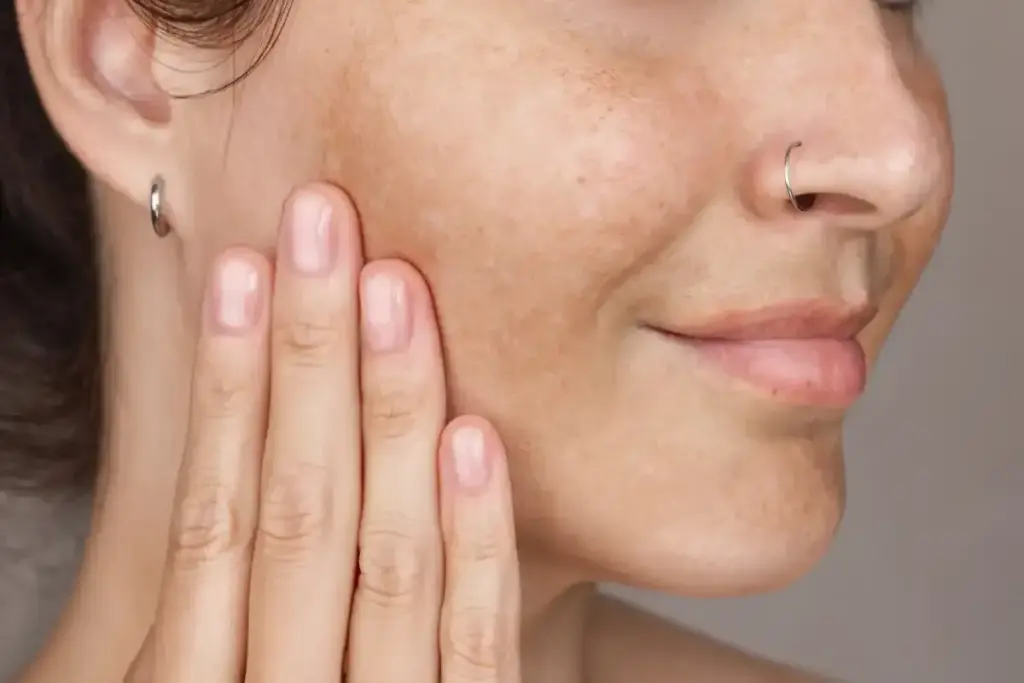
Seeing a dark spot on your skin can worry you. Knowing what’s normal helps you spot any unusual changes. Standard spots usually stay light tan. But, many wonder, are black freckles normal or could they be something serious?
At Liv Hospital, we offer compassionate care and cutting-edge tests to check your skin. While most spots lighten with less sun, some dark spots might be moles or sun damage. Our team aims to catch any issues early to give your skin the best care.
Telling a harmless mark from a possible problem is key to your health. We help you through the screening with medical authority and care. Regular skin checks let you feel sure about your skincare.
Key Takeaways
- Typical skin spots are usually light to medium brown in tone.
- Sun exposure often causes these marks to deepen or fade seasonally.
- New or changing black spots require a professional medical evaluation.
- We utilize advanced technology to distinguish harmless marks from lesions.
- Early detection is the most effective way to manage skin health risks.
- Regular self-exams help you track changes in size, shape, or color.
Understanding Different Types of Dark Freckles on Your Body
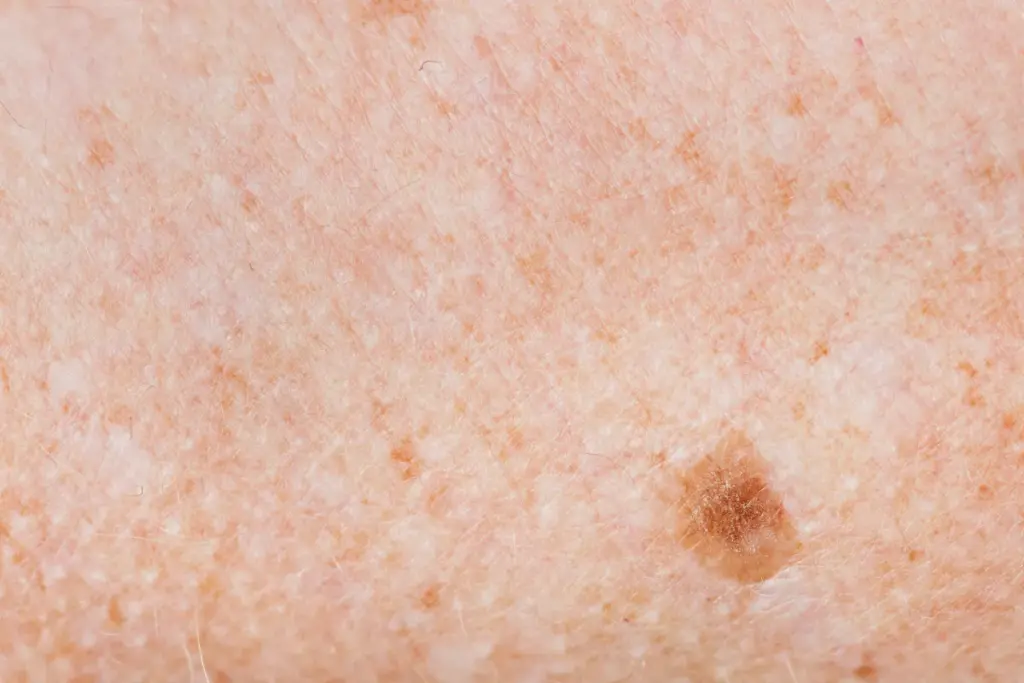
Freckles are usually harmless, but very dark or black ones might worry you about your skin. They can show up due to sun exposure and genetics. Knowing about the types of dark freckles and why they happen can help you figure out if they’re a health risk.
What Causes Very Dark Freckles and Black Freckles?
Very dark freckles and black freckles happen when your skin makes more melanin. Things like genetic predisposition, sun exposure, and hormonal changes can cause this. When your skin gets sun, it makes more melanin to protect itself, leading to freckles.
The color of freckles can depend on your skin tone. Fair skin might get lighter freckles, while darker skin might get darker ones. Where on your body you have a freckle can also change how it looks because of sun exposure.
Normal Black Freckle Characteristics
Normal black freckles are usually the same color all over and have a clear edge. They’re flat and don’t grow or change color over time. But, watch out for any freckle that doesn’t act like this, as it could be a sign of something serious.
Common Locations: Black Freckle on Face, Leg, and Body
Black freckles can pop up anywhere but are more common in sun-exposed areas like the face and legs. Having a black freckle on your face or leg is pretty common. It’s because of the same reasons freckles show up elsewhere on your body.
| Characteristics | Normal Freckle | Potentially Problematic Freckle |
| Color | Uniform, typically brown or black | Variegated, with shades of brown, black, and sometimes red or white |
| Border | Clear and well-defined | Irregular, notched, or scalloped |
| Size and Change | Stable in size and color | Changing in size, color, or both |
Understanding dark freckles and their causes helps you keep an eye on your skin health. Watch your freckles for any changes and see a dermatologist if you’re worried. This is a smart way to take care of your skin.
Are Black Freckles Normal or Is a Black Freckle Dangerous?

Black freckles can make us worry about our health. Seeing a new or changing freckle can be scary. We might think it could be a sign of something serious.
Most black freckles, or melanocytic nevi, are harmless. But sometimes, they can be a sign of something serious like melanoma. To know if a freckle is normal or not, we need to look at it closely.
Warning Signs: Can a Freckle Be Skin Cancer?
Black freckles can sometimes be a sign of skin cancer, like melanoma. The ABCDE rule helps us spot potentially cancerous freckles:
- Asymmetry: If the freckle is not symmetrical, it could be a warning sign.
- Border irregularity: A freckle with a notched, ragged, or irregular border may be a cause for concern.
- Color variation: Freckles that display multiple colors or an uneven distribution of color could be potentially dangerous.
- Diameter: If a freckle is larger in diameter than a pencil eraser, it warrants further examination.
- Evolving: Changes in size, shape, or color over time are a significant warning sign.
When New Dark Freckles on Body Require Attention
New dark freckles can be a worry, even more so if they appear suddenly or change fast. Keep an eye on any new freckles for the warning signs mentioned. Also, if a freckle itches or bleeds, get it checked by a doctor.
Distinguishing Benign Dark Freckles from Melanoma
Telling apart benign dark freckles from melanoma can be hard without a doctor’s help. Most freckles are okay, but melanoma can look like a tiny black freckle early on. A dermatologist can do a detailed check, maybe using dermoscopy, to figure out what the freckle is.
Knowing the warning signs and watching our skin can help us avoid risks with black freckles. This way, we can catch any serious issues early.
Conclusion: Get Professional Evaluation for Dark Freckles
If you’re worried about a new or changing dark freckle, see a dermatologist. At Liv Hospital, our team is ready to help international patients. We ensure you get top-notch care for your skin.
Getting a professional check is key to know if a freckle is safe or not. Dermatologists can look at spots and tell you if they’re okay or not. This is important for treating them right.
Spotting problems early is important. Our dermatologists have the skills to help. Don’t guess about your skin; talk to a pro for a detailed check.
FAQ
Are black freckles normal or should I be concerned?
Most freckles are harmless, but a new black freckle or one that changes in size, shape, or color should be checked by a doctor. It could indicate early skin changes that need attention.
Can freckles be black, or are they always brown?
Freckles are usually light to dark brown, but some can appear very dark or black. Very dark freckles may require evaluation to rule out skin issues.
Can a freckle be skin cancer, even if it is small?
Yes, even small freckles can sometimes be melanoma or other skin cancers. Any changes in appearance or new dark spots should be evaluated by a healthcare professional.
What should I do if I find a new dark freckle on my body?
Monitor the freckle for changes in size, color, or shape and consult a dermatologist. Early assessment ensures proper diagnosis and treatment if needed.
Is a black freckle dangerous if it appears on my leg or face?
A black freckle can be concerning regardless of location. Prompt medical evaluation is important to determine if it is harmless or requires further testing.
What does a freckle with a black dot inside it mean?
A black dot inside a freckle could indicate pigment concentration or an early sign of skin abnormality. It should be examined by a doctor to rule out melanoma.
Are dark skinned freckles different from those on lighter skin tones?
Freckles on darker skin may appear less obvious and darker in color. The underlying cause—sun exposure or genetics—remains similar, but monitoring for changes is still important.
References
National Center for Biotechnology Information. Evidence-Based Medical Insight. Retrieved from https://pubmed.ncbi.nlm.nih.gov/7635560/



 Departments
 Related Videos
 Our Doctors
 News
News