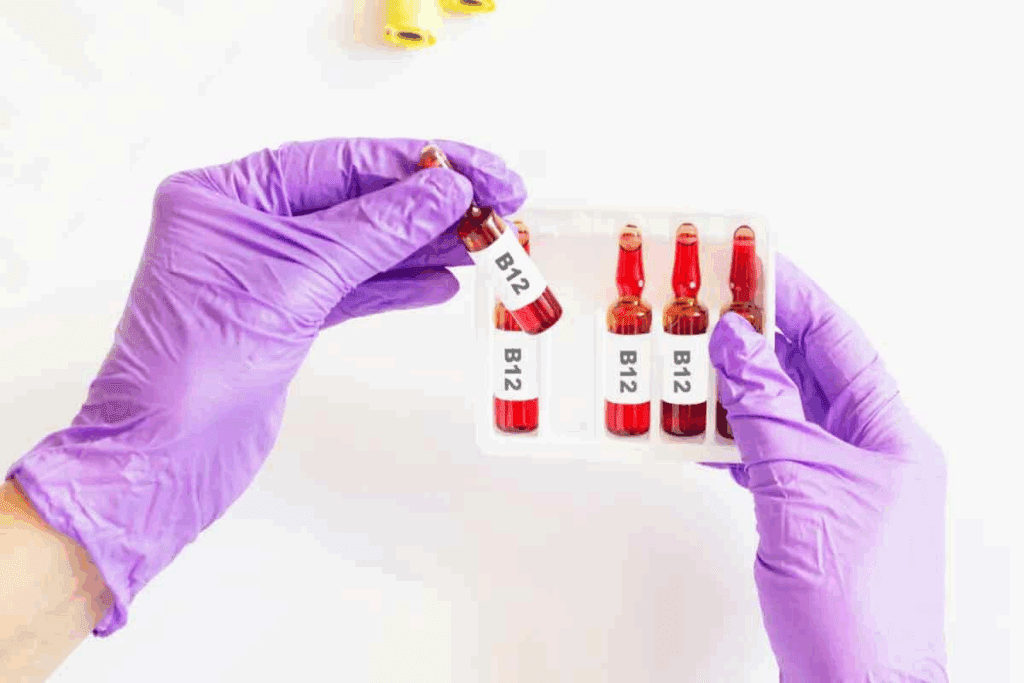
Vitamin B12 is key for healthy red blood cells, nerve function, and DNA. Deficiencies in vitamin B12 can cause fatigue, weakness, and nerve issues. At Liv Hospital, we focus on the right vitamin B12 injection dosage to fix these problems, mainly for those with low levels.Learn proper B12 shots dosage for adults, how often to take them, and safe injection practices.
The usual dose for vitamin B12 injections is 1000 mcg (1 mg), given by injection. How often you get these shots depends on how bad the deficiency is and how well you react to treatment. At first, you might need shots more often. Then, you’ll move to a schedule to keep your B12 levels up.
Key Takeaways
- Vitamin B12 is essential for healthy red blood cells, nerve function, and DNA synthesis.
- The typical dosage for vitamin B12 injections is 1000 mcg (1 mg).
- Administration frequency varies based on deficiency severity and individual response.
- Initial intensive regimens are followed by maintenance schedules.
- Proper vitamin B12 dosage is key to restoring healthy levels.
Understanding Vitamin B12 and Its Importance

Keeping vitamin B12 levels up is key to staying healthy. Vitamin B12, or cobalamin, is a water-soluble vitamin. It’s vital for many body functions.
The Role of B12 in Adult Health
Vitamin B12 helps make red blood cells, supports nerve function, and aids in DNA creation. It’s essential for the brain and nervous system’s health. Without enough B12, you might face anemia, nerve issues, and heart disease risks.
The importance of vitamin B12 in adult health is huge. It’s needed for:
- Red blood cell formation
- Nervous system function
- DNA synthesis
- Energy production
Signs and Symptoms of B12 Deficiency
Spotting vitamin B12 deficiency signs early is vital. Look out for:
- Fatigue and weakness
- Numbness or tingling in hands and feet
- Difficulty walking
- Mood changes, such as depression
Dr. Jane Smith, a nutrition expert, says, “Vitamin B12 deficiency can show up in many ways. It’s hard to diagnose. But, being careful is key, mainly for those at high risk.”
“Vitamin B12 is key for making myelin, the fatty stuff around nerve fibers. It helps nerves send signals.”
Who Needs B12 Supplementation
Some groups are more likely to need B12 supplements. These include:
| Risk Group | Reason for Supplementation |
| Vegans and vegetarians | Limited dietary sources of B12 |
| Older adults | Decreased absorption with age |
| Individuals with gastrointestinal disorders | Impaired absorption due to disease |
It’s wise to talk to a doctor about B12 supplements. They can check your health and risk factors to suggest what’s best for you.
B12 Shots Dosage for Adults: Standard Recommendations

Knowing the right dosage for B12 shots is key for adults wanting to boost their vitamin levels. The amount needed can change based on several things. These include how severe the deficiency is, the person’s health needs, and how the shot is given.
Typical 1000 mcg (1 mg) Dosing Protocol
Adults usually get 1000 mcg (1 mg) of B12 through shots. These shots are given either in the muscle (IM) or under the skin (subcutaneously). This amount is often suggested for those with a B12 deficiency or at risk of it.
It’s best to stick to a regular schedule with B12 shots. The 1000 mcg dose is seen as effective. It helps fill up B12 stores and can ease symptoms of deficiency.
Factors Affecting Individual Dosage Requirements
Even though 1000 mcg is the usual dose, some people might need more or less. This depends on several things. These include how bad the B12 deficiency is, any health issues, and how well the body responds to the treatment.
- Severity of Deficiency: Those with more severe deficiencies might need more shots or higher doses at first.
- Absorption Issues: People with problems absorbing B12, like pernicious anemia or certain gut issues, might need different doses.
- Clinical Response: Doctors might change the dose based on how well the patient is doing. This includes if symptoms get better and B12 levels in the blood rise.
Comparing Different Measurement Units (mcg vs mg)
It’s important to know the difference between micrograms (mcg) and milligrams (mg) when talking about B12 doses. One milligram (mg) is the same as 1000 micrograms (mcg). So, a 1 mg dose of B12 is the same as 1000 mcg.
Both units are used, but mcg is more common for B12 doses, mainly for smaller amounts. Knowing this helps make sure the dose is right and avoids any mix-ups.
B12 Injection Administration Schedules
Knowing the best B12 injection schedule is vital for effective treatment. The schedule can change based on the person’s health, how bad the deficiency is, and how well they respond to treatment.
Initial Loading Phase for Deficiency Treatment
In the initial phase, B12 injections are often given to quickly fill up the body’s stores. This is very important for those with severe deficiencies.
Typical loading phase protocols:
- Daily injections for the first week
- Weekly injections for the next 4-6 weeks
This intense schedule quickly boosts B12 levels. It helps ease symptoms like tiredness, weakness, and neurological problems.
Weekly to Monthly Maintenance Dosing
After the initial phase, B12 injections are given less often. This maintenance phase is key to keeping the benefits from the first phase.
Maintenance dosing schedules:
- Weekly injections for the first few months
- Bi-weekly or monthly injections after that
| Maintenance Schedule | Injection Frequency | Duration |
| Initial Maintenance | Weekly | First few months |
| Long-term Maintenance | Bi-weekly or Monthly | Ongoing |
Adjusting Frequency Based on Clinical Response
The B12 injection schedule might need to change based on how well the treatment works. This depends on the severity of symptoms, B12 levels, and overall health.
Monitoring and adjustments:
- Regular blood tests to check B12 levels
- Assessing if symptoms get better or worse
- Changing the injection frequency as needed
By customizing the B12 injection schedule, healthcare providers can make treatment more effective. This improves the patient’s quality of life.
Intramuscular B12 Injection Guidelines
To get the most out of B12 therapy, knowing how to do intramuscular injections is key. These injections put vitamin B12 right into the muscle. This helps it get absorbed better.
B12 Intramuscular Dose Recommendations
The usual dose for vitamin B12 injections is 1000 mcg (1 mg). Doctors often suggest this for adults with B12 deficiency or those at risk.
- At first, injections might be given more often. This can change based on how well the patient responds.
- For keeping up the treatment, doses are usually given weekly to monthly.
Proper IM Injection Techniques
When giving intramuscular B12 injections, it’s important to follow the right steps. This ensures the injections are safe and work well. Here are the main steps:
- Choose the right spot for the injection, like the deltoid or gluteal muscle.
- Use a clean needle and syringe for each shot.
- Put the needle straight into the muscle at a 90-degree angle.
- Check for blood before injecting the medicine.
- Give the injection slowly and evenly.
Injection Sites and Rotation Practices
To avoid problems like muscle irritation or nerve damage, it’s vital to change where you inject. You can use:
- The deltoid muscle is in the upper arm.
- The gluteal muscle is in the buttocks.
- The vastus lateralis muscle in the thigh.
Switching up where you inject helps spread out the medicine. It also lowers the chance of bad side effects. Patients need to learn how to do this safely, if they need to do it themselves.
Intravenous B12 Administration
For those with severe vitamin B12 deficiency, getting B12 through an IV is a quick and effective way to treat it. This method is great when taking pills doesn’t work because the body can’t absorb them well.
With IV B12, the vitamin goes straight into the blood, skipping the digestive system. This way, the body gets the B12 it needs without any absorption problems.
B12 Intravenous Dose Guidelines
The amount of B12 given through an IV can change based on how bad the deficiency is and the patient’s health. Usually, 1000 mcg (1 mg) is given, but it might be adjusted for each person.
It’s important to follow certain rules to make sure the treatment is safe and works well. The dose and how often it’s given should be decided by a doctor based on tests and how the patient is doing.
IV Infusion Protocols and Timing
When giving B12 through an IV, it’s infused slowly to avoid side effects. The rate of infusion is set to give the dose over 30 minutes to 1 hour.
How often IV B12 is given can vary from weekly to monthly, depending on how the patient responds and the reason for the deficiency. Keeping a close eye on how the patient is doing is key to adjusting the treatment as needed.
Clinical Scenarios for IV Administration
IV B12 is very helpful in some situations, like when the deficiency is severe and causing neurological problems, in cases of malabsorption like Crohn’s disease, or when taking pills doesn’t work.
| Clinical Scenario | Typical IV B12 Dose | Frequency |
| Severe B12 Deficiency with Neurological Symptoms | 1000 mcg | Weekly for 4 weeks |
| Malabsorption Conditions (e.g., Crohn’s Disease) | 1000 mcg | Monthly |
| Oral Supplementation Ineffective | 1000 mcg | Every 2 weeks |
Knowing the rules and protocols for giving B12 through an IV helps doctors treat patients with B12 deficiency effectively. This improves their quality of life.
Subcutaneous B12 Injection Methods
Subcutaneous B12 injections are a good choice for those who find traditional shots hard to take. This method puts vitamin B12 into the fatty tissue under the skin. It’s often more comfortable and works better for some people.
These injections are great for those who have trouble absorbing B12 or get hurt by shots in muscles. The B12 is absorbed more slowly, helping keep levels steady over time.
Dosing Recommendations
The usual dose for subcutaneous shots is similar to muscle shots. Most people get 1000 mcg (1 mg) of B12 once or twice a week. The exact schedule depends on how well the patient responds and their specific needs.
| Condition | Initial Dose | Maintenance Dose | Frequency |
| B12 Deficiency | 1000 mcg | 1000 mcg | Weekly for 4 weeks, then monthly |
| Maintenance Therapy | N/A | 1000 mcg | Monthly |
| Severe Deficiency | 2000 mcg | 1000 mcg | Twice weekly for 4 weeks, then weekly |
Self-Administration Techniques
Many patients like to give themselves subcutaneous B12 shots. Here’s how to do it:
- Choose a spot, like the belly or upper arm.
- Clean the area with alcohol.
- Pinch the skin to make a fold.
- Put the needle in at a 45-degree angle.
- Give the shot slowly.
- Take the needle out and press gently with a cotton ball.
Patients need to learn from a healthcare pro. This way, they feel sure and comfortable with giving themselves shots.
Benefits for Patients with Absorption Issues
Subcutaneous B12 shots are a big help for those who can’t absorb B12 well. They skip the stomach and go straight into the blood. This makes it easier to keep B12 levels up.
For people with pernicious anemia or after stomach surgery, these shots are a real game-changer. They help keep B12 levels stable, improving health and life quality.
Special B12 Formulations and Combinations
Specialized B12 formulations, like Tiaminal B12 injections, offer unique benefits for specific conditions. Vitamin B12 injections come in various preparations to meet different patient needs. These include combinations with other vitamins and nutrients, boosting their effectiveness.
Tiaminal B12 Injection Overview
Tiaminal B12 injection combines thiamine (Vitamin B1) and vitamin B12. It’s great for patients needing both nutrients, as it simplifies injections and may improve treatment outcomes. Tiaminal B12 injections are given based on a doctor’s evaluation of the patient’s needs and health.
Combination Products with Other Vitamins
B12 injections can be mixed with other vitamins and nutrients to meet various health needs. For example, adding B12 to other B vitamins helps those with complex nutritional deficiencies. The Office of Dietary Supplements notes that B12 is key for energy and nerve health, making combo therapies a valuable option for some conditions.
| Combination Type | Components | Potential Benefits |
| B12 + Thiamine | Vitamin B12, Thiamine (B1) | Enhanced energy production, nerve health |
| B Complex | Multiple B vitamins, including B12 | Comprehensive support for energy metabolism and neurological function |
Selecting the Appropriate Formulation
Choosing the right B12 formulation depends on several factors. These include the patient’s health needs, any deficiencies in other vitamins, and their overall health. Healthcare providers must consider these to pick the best formulation and dosage.
For adults, a common dosage is weekly injections of 1000 mcg (1 mg) of vitamin B12. Adjustments are made based on how the patient responds. When picking a B12 formulation, it’s key to think about the patient’s specific needs and any possible interactions with other drugs. This helps healthcare providers maximize the benefits of B12 injections while reducing risks.
Prescription Guidelines and Dosage Conversion
The rules for B12 injections help make sure people get the right amount. It’s important for doctors and patients to know these rules. This helps make sure treatment works well.
Standard Medical Protocols
Doctors usually start with a strong phase of treatment. This phase includes 1000 mcg (1 mg) injections daily for the first week. Then, they do weekly injections for a month. After that, they switch to monthly shots.
How long and how often you get shots can change. It depends on how bad your deficiency is and how you react to treatment. Doctors might change the dose or how often you get shots based on what they see and lab tests.
Converting Dosages from mcg to mL
It’s key to know how to change dosages from mcg to mL when giving B12 shots. Most shots are 1000 mcg/mL. To change mcg to mL, use this formula: mL = mcg / 1000.
For example, 1000 mcg is the same as 1 mL of a 1000 mcg/mL solution. Getting the dosage right is very important.
Insurance Coverage and Accessibility
How much insurance covers B12 shots can really vary. It depends on your insurance and policy. Many plans cover shots if they’re needed for a medical reason, like a deficiency.
It’s a good idea to talk to your insurance about what they cover. You might have to pay some money out of pocket. Doctors can also help find ways to make treatment more affordable.
Safety, Side Effects, and Storage
B12 injections are usually safe, but they can have side effects and safety concerns. It’s important for adults thinking about or getting B12 injections to know about these.
Potential Side Effects and Contraindications
Side effects from B12 injections are rare but can happen. Common ones are mild and might include pain or redness at the injection site, mild diarrhea, or itching. But serious side effects like allergic reactions are rare.
Contraindications for B12 injections are few but key. People with Leber’s disease or allergies to cobalt or the injection’s components should not get B12 injections.
| Side Effect | Frequency | Action |
| Pain or redness at the injection site | Common | Monitor and report if persistent |
| Mild diarrhea | Common | Stay hydrated, consult if severe |
| Allergic reactions | Rare | Seek immediate medical attention |
Proper Storage and Handling of B12 Injections
Keeping B12 injections stored properly is key to their safety and effectiveness. They should be kept in a cool, dry place, away from sunlight and out of children’s reach.
- Check expiration dates regularly.
- Store vials in their original packaging
- Avoid freezing or exposure to extreme temperatures
When to Consult Healthcare Providers
It’s vital for those getting B12 injections to talk openly with their healthcare providers. If you have side effects, concerns, or notice health changes, talk to your provider.
Regular check-ups are important to make sure your B12 therapy is working right. Your healthcare provider can change your dosage or schedule if needed.
Conclusion: Optimizing Your B12 Therapy
Getting the right B12 therapy is key for adults wanting to fix deficiencies or keep their health up. Knowing the B12 shots dosage for adults is the first step to good treatment.
We’ve looked at different ways to get B12, like shots, IV infusions, and subcutaneous injections. Each method has its own rules, like the vitamin B12 IV infusion dose. It’s important to follow these to get the best results.
Creating a treatment plan that fits each person is vital. Healthcare providers need to know how much B12 each patient needs. They also need to adjust the schedule of treatments. This way, patients get the care they need most.
As we’ve learned, optimizing B12 therapy means looking at each patient’s unique needs. By following the advice in this article, people can manage their B12 treatment better. This can lead to better health overall.
FAQ
What is the typical dosage of vitamin B12 injections for adults?
Adults usually get 1000 mcg (1 mg) of vitamin B12 per injection. But, this can change based on how bad the deficiency is and what each person needs.
How often should B12 injections be administered for deficiency treatment?
For deficiency, B12 shots are given weekly or every other week at first. Then, they are given monthly to keep symptoms away.
What is the difference between mcg and mg in B12 dosing?
mcg and mg are units of measurement. 1 mg is equal to 1000 mcg. So, 1000 mcg of B12 is the same as 1 mg.
Can the dosage of B12 injections be adjusted based on clinical response?
Yes, the dose and how often B12 shots are given can change. This is based on how well the patient responds and the severity of their deficiency.
What are the guidelines for intramuscular B12 injections?
B12 shots are given in the deltoid or gluteal muscle. The dose is 1000 mcg (1 mg). It’s important to switch injection sites to avoid problems.
Are there any special formulations of B12 injections, such as Tiaminal B12?
Yes, there are special B12 shots like Tiaminal B12. They might have extra vitamins. The right one depends on what the patient needs.
How do I convert B12 dosage from mcg to mL?
To change B12 dosage from mcg to mL, you need to know the solution’s concentration. For example, a 1 mL solution with 1000 mcg/mL is the same as 1 mg/mL.
Is insurance coverage available for B12 injections?
Insurance for B12 shots varies. It depends on the insurance and the patient’s condition. It’s best to ask your insurance about it.
What are the possible side effects of B12 injections?
Side effects of B12 shots are rare but can include pain or redness at the site. Serious side effects are rare but can happen in some people.
How should B12 injections be stored and handled?
B12 shots should be kept cool, dry, and away from light. Always check the expiration date before using them.
When should I consult a healthcare provider regarding B12 injections?
See a healthcare provider if you have side effects, if your symptoms get worse, or if you have questions about your treatment.
References:
- Office of Dietary Supplements, NIH. (2025). Vitamin B12 – Health Professional Fact Sheet. https://ods.od.nih.gov/factsheets/VitaminB12-HealthProfessional/