
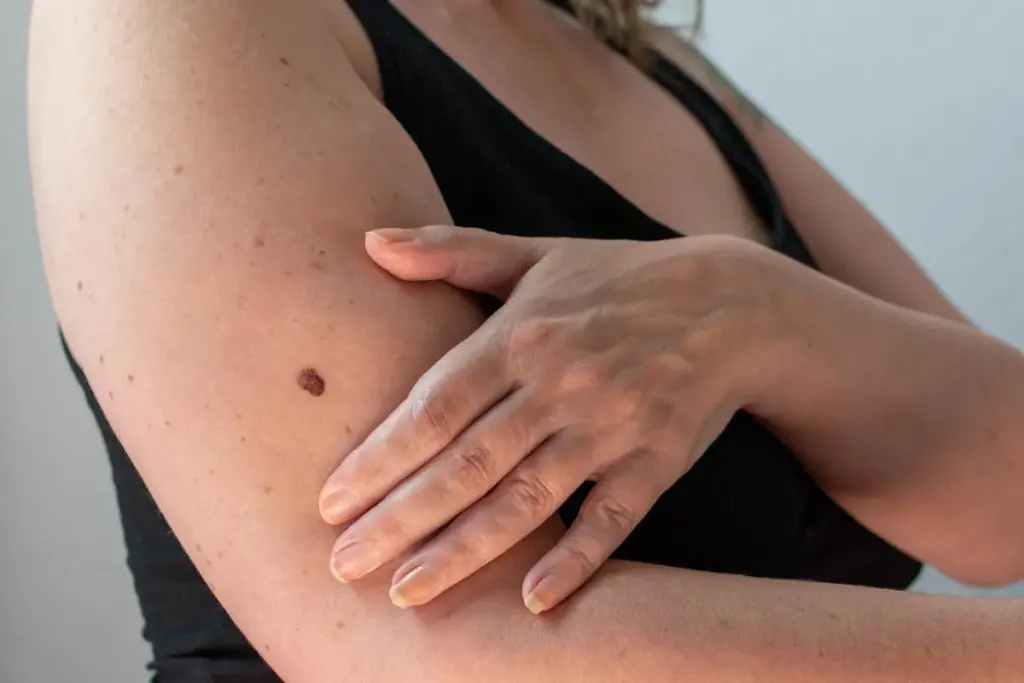
When we talk about suspicious moles, the big worry is melanoma. Finding a new or changing mole can really scare you. It makes you want to see a doctor right away for a check-up.
A study looked at about 80,000 mole biopsies. It found that 4.1% of suspicious moles were invasive melanoma. Another 4.5% were melanoma in situ. This means about 8.6% of biopsied suspicious moles were actually melanoma.
These numbers show how important it is to get a mole checked by a pro early on. At our place, we focus on careful checks to catch problems fast. This helps us treat them right away.
Key Takeaways
- A lot of mole biopsies are done because of suspicious signs.
- Almost 9% of biopsied suspicious moles are found to be melanoma.
- Catching melanoma early is key to managing it well.
- Getting a mole checked by an expert is vital for a correct diagnosis.
- Using strict check-up methods helps patients get better faster.
The Reality of Suspicious Moles and Cancer Risk
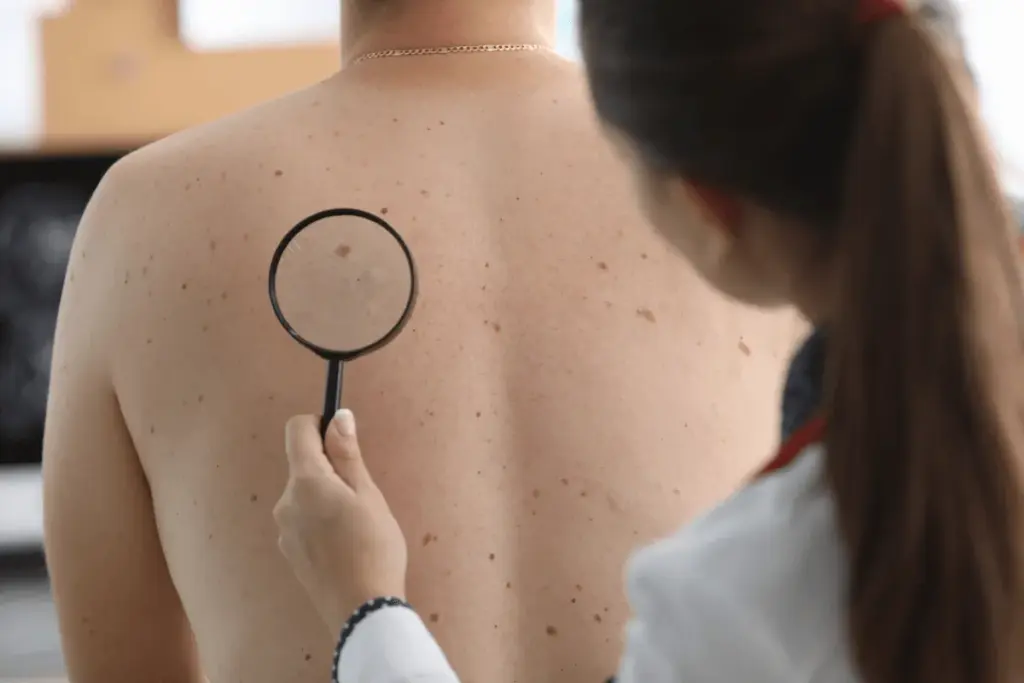
It’s important to know about the risks of suspicious moles for early melanoma detection. These moles can look different from normal moles. Spotting these differences is key to understanding cancer risk.
What Makes a Mole “Suspicious”
A mole is suspicious if it looks irregular, like it could be melanoma or skin cancer. Benign moles are usually symmetrical and round with a smooth edge. But, suspicious moles might be odd-shaped, have uneven edges, or show different colors.
The ABCDE Rule for Melanoma Detection
The ABCDE rule is a helpful guide for spotting cancerous moles. It stands for Asymmetry, Border irregularity, Color variation, Diameter, and Evolving size, shape, or color. “The ABCDE rule helps people and doctors spot melanoma warning signs”, says a famous dermatologist.
- A: Asymmetry – One half of the mole doesn’t match the other.
- B: Border – The edges are irregular, ragged, or blurred.
- C: Color – The color is not uniform and may include shades of brown, black, or even patches of red, white, or blue.
- D: Diameter – The mole is larger than 6mm (about the size of a pencil eraser).
- E: Evolving – The mole is changing in size, shape, or color.
Real-World Application of Detection Guidelines
Using the ABCDE rule means doing self-exams and getting skin checks from doctors. Being watchful for mole changes can help find melanoma early.
“Early detection is key to surviving melanoma. By understanding and applying the ABCDE rule, we can identify potentially dangerous moles before they become life-threatening.”
Statistical Breakdown: From Suspicion to Diagnosis
When a mole is biopsied, the anxiety that follows can be overwhelming. But knowing the stats on melanoma confirmation rates can help. A big study with 80,000 mole biopsies shows how likely a suspicious mole is to be melanoma.
The 8.6% Reality: Melanoma Confirmation Rates
About 8.6% of biopsied moles are found to be melanoma. This comes from a detailed study of mole biopsies. It helps us understand the risk better.
More precisely, about 4.1% of suspicious moles are invasive melanoma. And around 4.5% are melanoma in situ.
Understanding the 80,000 Mole Biopsy Study
The study of 80,000 mole biopsies is a big deal. It has helped us learn a lot about diagnosing melanoma. By looking at such a huge dataset, researchers found important patterns and trends.
Invasive Melanoma vs. Melanoma In Situ
Distinguishing between invasive melanoma and melanoma in situ is key. Invasive melanoma has gone deeper into the skin and can spread. Melanoma in situ stays in the outer skin layer.
Characteristics of a Benign Mole: What to Look For
It’s important to know how to tell benign moles from cancerous ones. Benign moles are common skin growths found anywhere on the body. They are not cancerous.
Common Types of Non-Cancerous Moles
There are different types of benign moles. These include congenital moles, acquired moles, and atypical moles, also known as dysplastic nevi. Congenital moles are present at birth. Acquired moles appear later in life, often due to sun exposure or hormonal changes.
- Congenital moles: Present at birth, these moles can vary in size and color.
- Acquired moles: Develop later in life, often due to sun exposure or hormonal changes.
- Atypical moles: Also known as dysplastic nevi, these moles have an irregular shape and color.
Visual Identification of Benign Moles
Benign moles have a uniform color, round or oval shape, and smooth edges. They are usually smaller than 5 millimeters in diameter. To identify them, look at their appearance and any changes over time.
Pictures of Non-Cancerous Moles
Looking at pictures of non-cancerous moles can help you understand their typical look. They often have a symmetrical shape and a uniform color. This color can range from flesh-colored to dark brown.
Normal Evolution of Human Moles Throughout Life
Moles can change over time due to aging, sun exposure, and hormonal changes. It’s normal for new moles to appear, mainly in childhood and adolescence. As people get older, some moles may fade or disappear.
It’s a good idea to keep an eye on moles for any changes in size, shape, or color. Early detection is key to addressing any issues.
Dysplastic Nevi: Understanding the Gray Area
Atypical moles, or dysplastic nevi, are moles that look different. They might be precancerous. We’ll look at the levels of dysplasia and what they mean for cancer risk.
Low-Grade Dysplasia: Minimal Risk Assessment
Low-grade dysplasia means the mole is not too different from a normal one. Moles with this level have a lower chance of turning into melanoma. But, it’s important to watch them for any changes.
Moderate Dysplasia: When Increased Monitoring Is Necessary
Moderate dysplasia shows a bigger difference from a normal mole. This means you need to see a doctor more often. Regular check-ups can help catch any problems early.
Severe Dysplasia: The Precancerous Concern
Severe dysplasia is a big worry. It means the mole might be precancerous or already have cancer. If you have a mole with severe dysplasia, you need to see a doctor right away.
Different Levels of Atypical Moles
The level of dysplasia in atypical moles is key to understanding the risk. The table below shows the different levels and their risks.
|
Level of Dysplasia |
Risk Assessment |
Recommended Action |
|---|---|---|
|
Low-Grade |
Minimal Risk |
Regular Monitoring |
|
Moderate |
Moderate Risk |
Increased Monitoring |
|
Severe |
High Risk |
Immediate Medical Evaluation |
Dermatologists say that knowing the level of dysplasia helps in managing each patient. It’s important for both patients and doctors to understand these levels.
The Complete Mole Biopsy Process
Biopsying a mole is a detailed process. It helps doctors find and treat skin cancer. A mole biopsy removes a part of the skin with the mole for lab tests.
Medical Criteria for Biopsying a Mole
Doctors have rules to decide if a mole needs a biopsy. The ABCDE rule is key. It looks for moles that might be cancerous by checking for Asymmetry, Border irregularity, Color variation, Diameter larger than 6mm, and Evolving shape or size.
Types of Mole Biopsies and Their Applications
There are different biopsies, like shave, punch, and excisional biopsies. The type chosen depends on the mole’s size, location, and the doctor’s cancer suspicion.
|
Biopsy Type |
Description |
Application |
|---|---|---|
|
Shave Biopsy |
Removes the mole by shaving it off at the surface of the skin. |
Used for moles that are raised or suspected to be benign. |
|
Punch Biopsy |
Removes a small cylindrical sample of skin that includes the mole. |
Used for moles that are flat or suspected to be cancerous. |
|
Excisional Biopsy |
Removes the entire mole along with a margin of surrounding skin. |
Used for highly suspicious moles or those that are likely to be cancerous. |
Recovery and Result Interpretation
After the biopsy, the wound is stitched up. The sample goes for lab tests. Results come in a few days to a week.
What Your Biopsy Results Actually Mean
Biopsy results show if the mole is benign or malignant. If it’s malignant, the results will tell you the type and stage of cancer. This information helps plan the next steps in treatment.
Melanoma: Beyond the Statistics
Numbers give us a basic idea, but to really get melanoma, we need to look deeper. It’s the deadliest skin cancer, and its effects go beyond just numbers.
Why Melanoma Is the Deadliest Form of Skin Cancer
Melanoma is aggressive and can spread fast if caught late. We’ll look at why it’s so deadly and why finding it early is key.
Current Incidence Rates and 2025 Projections
Recent data shows a worrying rise in melanoma cases. Over 104,000 new cases are expected in the US by 2025. It’s important to understand these trends for health planning.
Survival Rates by Stage and Detection Timing
Survival rates for melanoma patients depend a lot on when it’s found. Finding it early can greatly improve chances of survival. This shows how important regular skin checks are.
Distinguishing Benign Melanoma Mole Characteristics
Not all melanoma moles are cancerous; some are benign. Knowing the difference helps avoid unnecessary biopsies and eases patient worries.
We must keep learning and teaching others about melanoma risks and the need for early detection. This way, we can help improve survival rates and lower the number of cases of this deadly skin cancer.
Demographic Patterns in Melanoma Diagnosis
Demographic factors greatly affect who gets melanoma. Looking at trends, we see some groups face a higher risk.
Age-Related Risk Variations
The risk of melanoma goes up with age, mostly after 50. Yet, it can happen to anyone, and it’s worrying to see more cases in the young.
The Rising Concern for Women Over 50
Women over 50 are seeing more melanoma cases. This highlights the need for regular skin checks and awareness for this group.
Geographical and Ethnic Risk Factors
Where you live and your ethnicity also matter. People near the equator face more risk due to UV rays. Those with fair skin are also more at risk because they have less melanin.
Genetic Predisposition Considerations
Genetics play a big role too. If your family has a history of melanoma, you’re at higher risk. Certain genes can greatly increase your chance of getting it.
Early Detection: The Critical Difference Maker
Early detection is key to better survival rates in melanoma patients. It’s important to be proactive about skin health. Spotting suspicious moles early can greatly improve treatment results.
Effective Self-Examination Techniques
Regular self-exams are a vital first step. We suggest using the ABCDE rule to spot cancerous moles: Asymmetry, Border irregularity, Color variation, Diameter increase, and Evolving shape or size. By knowing your skin and watching for changes, you can catch moles early.
Professional Skin Screening Recommendations
While self-exams are important, dermatologists can do a deeper check. We recommend yearly skin checks for those with melanoma history or many atypical moles. Dermatologists can spot issues that self-exams might miss.
Technological Advancements in Melanoma Detection
Technology is changing how we find melanoma. Digital dermoscopy lets us see moles in detail. AI-assisted diagnosis tools then look at these images to find melanomas.
Digital Dermoscopy and AI-Assisted Diagnosis
Digital dermoscopy gives us clear images of skin lesions. AI tools then compare these images to huge databases. This helps find melanoma patterns early, improving detection.
Differentiating Between Moles Benign and Malignant
Knowing if a mole is harmless or cancerous is very important. We will show you how to tell the difference between safe moles and those that might be dangerous.
Side-by-Side Visual Comparison
Benign moles look symmetrical and have smooth edges. Malignant moles are irregular and not symmetrical. Looking closely can help spot these differences.
Symptomatic Differences Beyond Appearance
Benign and malignant moles also have other signs. Malignant moles might itch, bleed, or change in size or color. These changes are important to notice.
When to Seek Immediate Medical Attention
Knowing when to see a doctor is key. If a mole shows certain signs, you should get help right away.
Common Benign Cancer Mole Mimickers
Some harmless conditions can look like cancerous moles. Knowing this can help you not worry too much.
|
Characteristics |
Benign Moles |
Malignant Moles |
|---|---|---|
|
Symmetry |
Symmetrical |
Asymmetrical |
|
Edges |
Smooth Edges |
Irregular Edges |
|
Color |
Uniform Color |
Multiple Colors or Changes in Color |
Early detection is key to treating melanoma effectively. By understanding the differences between benign and malignant moles, you can take proactive steps towards your skin health.
Liv Hospital’s Approach to Suspicious Mole Evaluation
Liv Hospital focuses on early detection and accurate diagnosis for skin cancers. We use top-notch diagnostic methods and a team of experts. This is key for managing skin cancers, like melanoma.
Internationally Competitive Diagnostic Protocols
We make sure every patient gets a detailed and accurate check-up. Our team uses the latest technology and proven methods. This includes looking closely at moles and sometimes taking biopsies.
Key components of our diagnostic protocols include:
- Comprehensive dermoscopic evaluation
- Advanced imaging techniques for detailed analysis
- Histopathological examination for definitive diagnosis
Multidisciplinary Care Approach
At Liv Hospital, we believe in a team effort for patient care. Our team includes experts in dermatology, oncology, surgery, and more. They work together to care for patients with suspicious moles.
Our multidisciplinary team collaborates to:
- Develop personalized treatment plans
- Ensure timely and effective interventions
- Provide ongoing support and monitoring
Patient-Centered Preventive Screening Programs
Prevention and early detection are key in fighting skin cancer. Our programs aim to find and help those at risk. We give them the education and support they need.
Innovation in Dermatological Diagnostics
We’re always looking for new ways to improve in dermatology. We use the latest technologies, like AI tools. This helps us better diagnose and treat skin conditions.
|
Diagnostic Tool |
Description |
Benefit |
|---|---|---|
|
Dermoscopy |
Non-invasive examination of skin lesions |
Early detection of melanoma |
|
AI-Assisted Diagnostics |
Advanced image analysis using AI algorithms |
Improved diagnostic accuracy |
|
Histopathology |
Microscopic examination of tissue samples |
Definitive diagnosis of skin cancers |
Management Strategies for Living with Atypical Moles
Atypical moles need a careful plan that includes watching them closely, making lifestyle changes, and dealing with emotional issues. This approach is key to lower the risk of melanoma for those with atypical moles.
Monitoring Protocols Based on Risk Level
Each person’s risk level is different. It depends on how many moles they have, their family history, and if they’ve had melanoma before. Getting regular skin checks is important to catch any changes early.
|
Risk Level |
Monitoring Frequency |
Lifestyle Recommendations |
|---|---|---|
|
Low |
Annual check-ups |
Sun protection, self-examinations |
|
Moderate |
Bi-annual check-ups |
Sun protection, regular self-examinations, avoid tanning beds |
|
High |
Quarterly check-ups |
Strict sun protection, frequent self-examinations, genetic counseling |
Lifestyle Modifications for Skin Health
Changing your lifestyle is important for managing atypical moles. This means using sunscreen, wearing protective clothes, and staying away from tanning beds. Also, check your skin regularly.
Psychological Aspects and Coping Mechanisms
Atypical moles can affect your mind, causing worry and fear of melanoma. Having a good relationship with your dermatologist and getting counseling can help you cope.
Building a Relationship with Your Dermatologist
It’s important to have a good relationship with your dermatologist. Regular visits and talking openly about your concerns can make a big difference in your care plan.
Conclusion
Understanding and spotting suspicious moles is key to catching melanoma early. The stats and how doctors check for it show how important it is to act fast.
At Liv Hospital, we know early detection is vital for beating melanoma. Knowing the difference between safe and dangerous moles helps people watch their skin. They should get help if they notice anything odd.
We use detailed checks and a team of experts to handle moles that might be a problem. Our goal is to give top-notch care and support to our patients. We want them to get the best results.
In short, finding and treating melanoma early is all about spotting moles that don’t look right. We urge everyone to take care of their skin and see a doctor if they’re worried about a mole or skin spot.
FAQ
What percentage of suspicious moles are diagnosed as melanoma?
Around 8.6% of biopsied moles are found to be melanoma. This shows how important it is to check moles carefully.
How can I identify if a mole is suspicious or benign?
Use the ABCDE rule to check moles. Look for Asymmetry, Border irregularity, Color variation, Diameter increase, and Evolving shape or size. If you see any, see a dermatologist.
What is the difference between invasive melanoma and melanoma in situ?
Invasive melanoma has spread deeper into the skin. Melanoma in situ stays in the outer layer of the skin. It hasn’t spread deeper.
What are the common characteristics of benign moles?
Benign moles are usually symmetrical and have a clear border. They have a uniform color and are small. They can change over time but usually stay harmless.
What are dysplastic nevi, and how do they relate to cancer risk?
Dysplastic nevi are unusual moles that can be low-grade to severe. They’re not cancerous but can raise your risk of melanoma, mainly if they’re severe.
When should a mole be biopsied, and what does the process involve?
Get a mole biopsied if it looks suspicious or has changed a lot. The biopsy removes the mole or a sample. It’s then checked for cancer cells.
How can I differentiate between benign and malignant moles?
Benign moles are uniform in color, symmetrical, and small. Malignant moles are irregular, have uneven borders, and vary in color. If unsure, see a dermatologist.
What is Liv Hospital’s approach to diagnosing suspicious moles?
Liv Hospital uses top-notch diagnostic methods and a team approach. They focus on patient care and preventive screening for accurate diagnosis.
How can I manage atypical moles and reduce my risk of melanoma?
Watch atypical moles closely based on your risk. Make healthy lifestyle choices, like avoiding too much sun. Also, find ways to deal with the emotional side.
Why is early detection critical in melanoma diagnosis?
Finding melanoma early greatly improves survival chances. Regular self-checks, professional screenings, and new detection tech help catch it early.
References
National Center for Biotechnology Information (NCBI): https://pmc.ncbi.nlm.nih.gov/articles/PMC10703395/



 Departments
 Related Videos
 Our Doctors
 News
News